
Animal cells and plant cells differ significantly in structure and function, reflecting their unique roles in nature. While both are eukaryotic cells, plant cells have cell walls and chloroplasts, which animal cells lack. To learn more about these differences, check out our article on Plant Cell vs Animal Cell: Main Differences Explained.
Table of Contents
Understanding Cell Types
What are Animal Cells?
Animal cells are the building blocks of animal life. I remember learning about them in school and being fascinated by how they function. These cells are typically round or irregular in shape and lack a rigid cell wall, which allows for a variety of forms and functions. They contain several organelles, including the nucleus, mitochondria, and endoplasmic reticulum, which work together to maintain cellular processes. Animal cells are primarily concerned with functions like movement, sensory perception, and energy production.
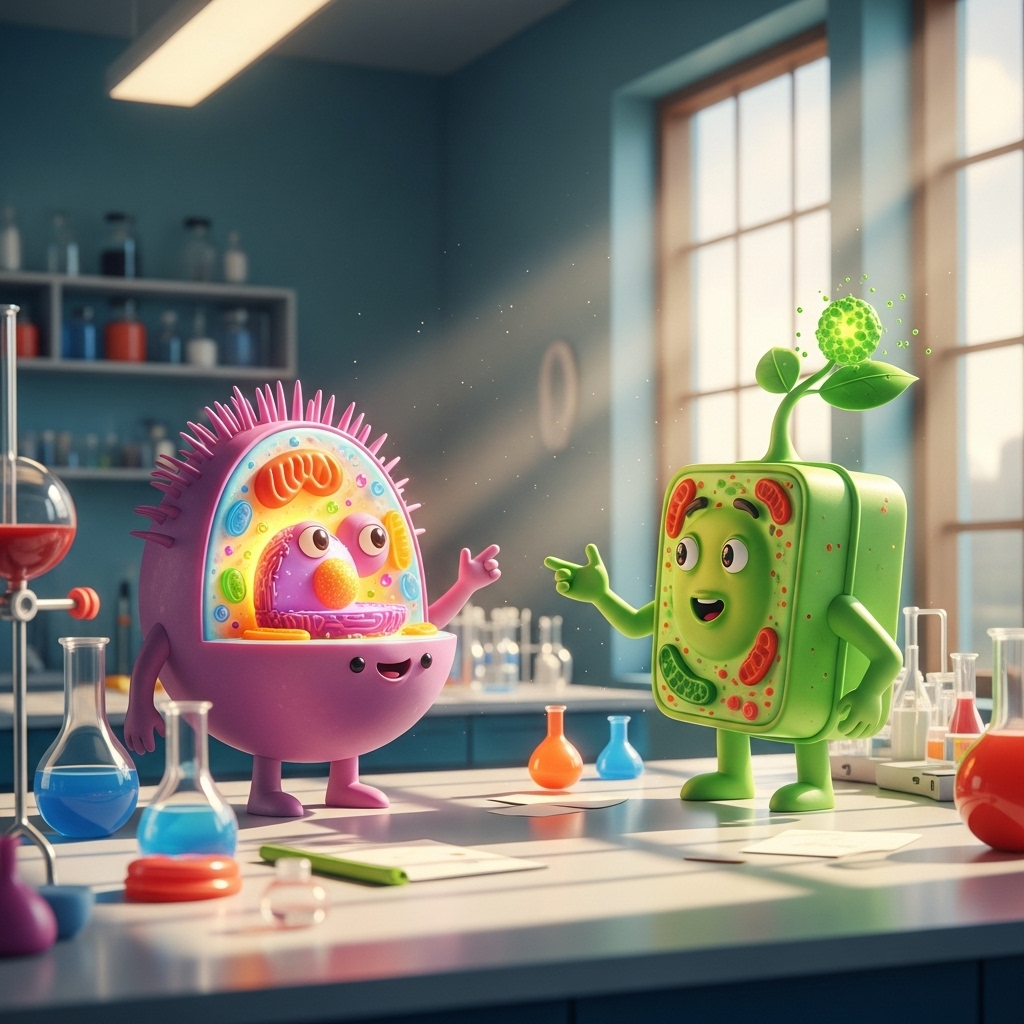
One thing I found interesting is that animal cells can vary greatly depending on their specific function in the body. For example, muscle cells are elongated and designed for contraction, while nerve cells have long extensions to transmit signals. This adaptability contributes to the incredible diversity of animal life.
What are Plant Cells?
Plant cells, on the other hand, are quite unique and often display a more rigid structure compared to their animal counterparts. I recall being amazed when I first learned that plant cells have a cell wall made of cellulose, which provides protection and support. Plant cells also contain chloroplasts, the organelles responsible for photosynthesis—the process that allows plants to convert sunlight into energy. This ability to make their own food sets plants apart from animals, which must consume organic material for energy. For more insights on this topic, visit What Is the Difference Between Plant and Animal Cells?.
Additionally, plant cells generally have larger vacuoles that store water and nutrients, contributing to the plant’s structural integrity and overall health. I think this is a key reason why plants can thrive in various environments, from deserts to wetlands, each requiring different adaptations.
Structural Differences
Cell Membrane vs. Cell Wall
One of the first things we notice when comparing animal cells to plant cells is the presence of the cell wall in plant cells. The cell wall is a rigid outer layer that provides strength and structure. In my experience, this is one of the most significant differences. The absence of a cell wall in animal cells allows them to be more flexible, which is essential for their varied functions like movement and shape-shifting. I often think of it like the difference between a balloon and a rigid box; one can change shape easily, while the other holds a defined form.
The cell membrane, found in both types of cells, plays a crucial role in regulating what goes in and out of the cell. It is semi-permeable, allowing certain substances to pass while blocking others. This is vital for maintaining homeostasis, which is something I found particularly fascinating when studying biology.
Nucleus: Similarities and Differences
The nucleus, often referred to as the control center of the cell, is present in both animal and plant cells. It houses the cell’s DNA and is responsible for regulating cellular activities like growth and reproduction. I remember being surprised to learn that, despite the structural differences in other organelles, the nucleus functions similarly in both cell types. It’s almost like a small command center, directing all cellular operations.
However, there are small distinctions in how the nucleus operates within plant and animal cells, largely due to the additional organelles present in plant cells. For instance, the surrounding structures in plant cells can influence how the nucleus interacts with the cytoplasm, which I found to be an intriguing idea—how interconnected everything is within the cell.
Cytoplasm Composition
Cytoplasm is the gel-like substance that fills both animal and plant cells, providing a medium for organelles to function. What struck me while studying cytoplasm is that it contains various molecules and ions that are essential for cellular processes. In my observations, the composition of cytoplasm can differ slightly between cell types, often due to the distinct organelles present in plant cells. For example, the presence of starch granules or oils can be found in plant cell cytoplasm, which I thought was fascinating because it highlights the unique functions these cells perform.
Organelles Unique to Plant Cells
Chloroplasts and Photosynthesis
Chloroplasts are perhaps the most well-known organelles unique to plant cells. I found it truly remarkable that these organelles enable plants to harness sunlight and convert it into chemical energy through photosynthesis. This process not only fuels the plant’s growth but also releases oxygen, which is vital for all aerobic life. I remember being in awe of how something as simple as sunlight can be transformed into energy, making plants the foundation of most ecosystems.
Cellulose Cell Wall Function
The cellulose cell wall is another standout feature of plant cells. It provides structural support and protection, allowing plants to grow tall and wide. I’ve always wondered how trees can reach such great heights, and now I understand that this rigid wall plays a crucial role in maintaining their structure against gravity and environmental stressors. The cellulose also aids in water retention, which is especially vital for plants in dry environments.
Organelles Unique to Animal Cells
Lysosomes and their Functions
Lysosomes are unique to animal cells and function as the cell’s waste disposal system. I remember learning how they contain enzymes that break down waste materials and cellular debris. This process is crucial for cellular health—without lysosomes, waste would accumulate, leading to various health issues. Their role in recycling cellular components is fascinating, and I often think about how this is similar to how we manage waste in our communities.
Centriole and Cell Division
Centriole is another organelle unique to animal cells, playing a critical role during cell division. They help organize the microtubules that separate chromosomes, ensuring that genetic material is evenly divided between daughter cells. I recall how learning about this made me appreciate the complexity of cellular division, a process that is essential for growth and repair in animals.
These differences in structure between animal and plant cells not only illustrate the diversity of life but also highlight the specific adaptations that each type of cell has developed to thrive in its environment. Understanding these distinctions has deepened my appreciation for the complexity of biology and the interconnectedness of all living organisms.
Functional Differences
Energy Production: Mitochondria vs. Chloroplasts
When it comes to energy production, there’s a fascinating contrast between animal and plant cells. Animal cells rely heavily on mitochondria, often referred to as the powerhouse of the cell. I remember the first time I learned about mitochondria and how they convert glucose and oxygen into ATP, which is the energy currency of the cell. This process, known as cellular respiration, is what allows us to perform daily activities like walking, thinking, and even just breathing.
On the other hand, plant cells have chloroplasts for energy production through photosynthesis. I find it truly inspiring that plants can take sunlight, carbon dioxide, and water to produce glucose and oxygen. It feels almost magical to think that these cells can create their own food while giving us the oxygen we breathe. In essence, while both organelles play critical roles in energy production, they do so through different processes that reflect the unique lifestyles of animals and plants.
Growth Patterns and Cell Division
Growth and cell division are yet another area where animal and plant cells diverge significantly. Animal cells typically undergo a process called mitosis, where the cell divides into two identical daughter cells. I remember being amazed by how this process ensures that each new cell has the same genetic material as the original. What’s particularly interesting is that animal cells can divide in various shapes and arrangements, which allows them to form diverse tissues and organs.
In contrast, plant cells grow and divide in a more structured manner due to their rigid cell wall. They often go through a process called cytokinesis, which is a bit different from what happens in animal cells. I’ve always found it intriguing that during cytokinesis, plant cells form a structure known as the cell plate that eventually develops into a new cell wall, allowing them to maintain structure and integrity. This difference in growth patterns contributes to the overall architecture of plants versus animals and is a big reason why plants can grow in such stable, towering structures.
Storage Functions: Vacuoles in Plant vs. Animal Cells
Storage is another area where plant and animal cells show marked differences, particularly when it comes to vacuoles. Plant cells typically have a large central vacuole that serves multiple purposes, such as storing water, nutrients, and waste products. I recall learning that this vacuole can take up to 90% of a plant cell’s volume, which really emphasizes how important it is for the plant’s overall function and health. This central vacuole also plays a role in maintaining turgor pressure, which helps keep plants upright and strong.
In comparison, animal cells contain smaller vacuoles, which are not as prominent or multifunctional as those in plant cells. These animal vacuoles primarily store small amounts of substances like ions and nutrients. I think of it like the difference between a large communal pantry in a house (the plant central vacuole) and small individual cupboards in each room (animal cell vacuoles). This storage capability allows plants to adapt to their environments better, especially in terms of water retention and nutrient availability.
Similarities Between Animal and Plant Cells
Common Organelles
Despite their many differences, animal and plant cells share a variety of common organelles that perform essential functions. For instance, both cell types contain mitochondria, endoplasmic reticulum, and ribosomes, which all play critical roles in cellular activities. I often think about how remarkable it is that, at their core, both types of cells are built upon similar structures, emphasizing the unity of life. The presence of these common organelles highlights the shared ancestry of all eukaryotic cells, bridging the gap between plants and animals.
Basic Cellular Functions
At a fundamental level, animal and plant cells also perform many of the same basic cellular functions, such as protein synthesis, energy production, and waste elimination. I’ve always appreciated how these essential processes keep living organisms functioning effectively, regardless of whether they are plants or animals. For example, both types of cells utilize ribosomes to synthesize proteins, which are vital for growth and repair. It’s fascinating to think about how similar mechanisms operate in such diverse forms of life, connecting us all on a cellular level.
Microscopic Examination
How to Observe Animal Cells
Observing animal cells under a microscope can be quite an enlightening experience. I remember my first time looking at cheek cells; it was so exciting to see these tiny structures come to life. To prepare a sample, you can gently scrape the inside of your cheek with a clean toothpick and place it on a microscope slide. Adding a drop of methylene blue stain helps to highlight the cell structures, making it easier to see the nucleus and other organelles. Through the lens, you can appreciate the diverse shapes and sizes of the cells, showcasing the complexity of animal life.
How to Observe Plant Cells
Observing plant cells can be equally fascinating, especially because of their unique structures. A great way to see plant cells is to use a small piece of onion skin. I remember peeling a thin layer off the onion and placing it on a slide with a drop of water. Once again, a few drops of iodine can enhance the visibility of the cell walls and organelles, making the cells stand out against the background. It’s remarkable to witness the regular arrangement and uniformity of plant cells, reflecting their rigid structure and functionality.
Staining Techniques for Cell Visualization
Staining techniques play a crucial role in enhancing our ability to visualize cellular structures. I’ve learned that different stains can highlight various components of the cell. For instance, using a blue dye can help illuminate the nucleus, while other stains can tag specific organelles. This process not only makes the cells more visible under the microscope but also provides insights into their functions and interactions. Understanding staining techniques has deepened my appreciation for how we study and learn about cells and their roles in life.
Frequently Asked Questions
What are the main differences between animal cells and plant cells?
Animal cells lack a rigid cell wall and chloroplasts, which are present in plant cells. Plant cells have a more rigid structure due to their cell wall made of cellulose, while animal cells are typically round or irregular in shape, allowing for flexibility.
What role do chloroplasts play in plant cells?
Chloroplasts are organelles unique to plant cells that enable photosynthesis, allowing plants to convert sunlight into chemical energy. This process is essential for plant growth and also produces oxygen, which is vital for aerobic life.
How do animal cells produce energy?
Animal cells rely on mitochondria, often referred to as the powerhouse of the cell, to convert glucose and oxygen into ATP through a process called cellular respiration, which provides the energy necessary for various cellular functions.
What is the function of lysosomes in animal cells?
Lysosomes function as the waste disposal system of animal cells, containing enzymes that break down waste materials and cellular debris. This process is crucial for maintaining cellular health and preventing the accumulation of waste.
What is the significance of the central vacuole in plant cells?
The central vacuole in plant cells can occupy up to 90% of a cell’s volume and serves multiple purposes, including storing water, nutrients, and waste products. It also plays a critical role in maintaining turgor pressure, which helps keep plants upright and strong.
What are the unique organelles found in plant cells?
Plant cells contain unique organelles such as chloroplasts, which enable photosynthesis, and a cellulose cell wall that provides structural support and protection. These features distinguish them from animal cells.
How do animal and plant cells differ in their growth and cell division?
Animal cells typically undergo mitosis, allowing them to divide into two identical daughter cells in various shapes and arrangements. In contrast, plant cells undergo cytokinesis, forming a cell plate that develops into a new cell wall, maintaining their structural integrity.
What are some common organelles shared by both animal and plant cells?
Both animal and plant cells share several common organelles, including mitochondria, endoplasmic reticulum, and ribosomes, which perform critical cellular functions such as energy production and protein synthesis.
How can one observe animal cells under a microscope?
To observe animal cells, a sample can be prepared by gently scraping the inside of the cheek with a clean toothpick and placing it on a microscope slide. Adding a drop of methylene blue stain helps highlight the cell structures, making it easier to see the nucleus and organelles.
What is the process to observe plant cells under a microscope?
To observe plant cells, a small piece of onion skin can be used. A thin layer is placed on a slide with a drop of water, and a few drops of iodine enhance the visibility of the cell walls and organelles, showcasing the arrangement and uniformity of plant cells.