
Animal cells and plant cells differ significantly in structure and function, with plant cells featuring a rigid cell wall and chloroplasts, while animal cells have lysosomes and centrioles. Understanding these differences helps us grasp how these two cell types adapt to their environments. For a deeper insight, check out Animal Cell vs Plant Cell: What? the Difference?.
Table of Contents
Overview of Cell Types
Definition of Animal Cells
Animal cells are eukaryotic cells that make up various tissues and organs in animals. These cells are characterized by their lack of a cell wall, which allows for a more flexible shape. One thing I’ve always found fascinating about animal cells is their ability to form diverse structures; they can be elongated, round, or even branched, depending on their function. You can find them in muscles, nerves, and blood, each with a unique role that contributes to the overall functioning of an organism.
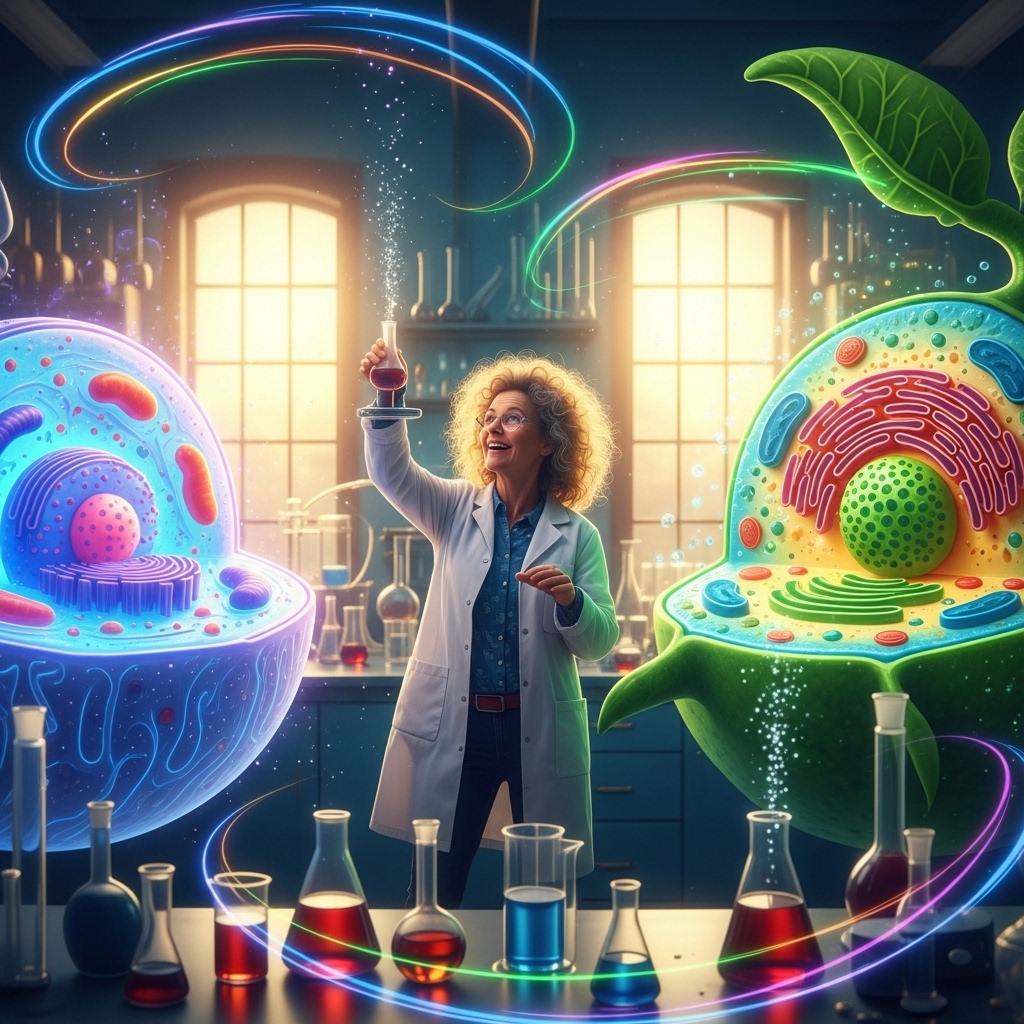
Definition of Plant Cells
Plant cells, also eukaryotic, are the building blocks of plant life. They are distinct from animal cells due to several key features, such as a rigid cell wall made of cellulose, which provides structural support. This rigidity allows plants to grow tall and remain upright, which is something I appreciate when I’m in a forest or a garden. Additionally, plant cells contain chloroplasts, enabling them to carry out photosynthesis, which is essential for producing energy from sunlight. This fascinating process is one of the many ways plants contribute to our ecosystem. For more details, refer to Animal Cell vs Plant Cell: Differences Explained.
Key Structural Differences
Cell Membrane vs. Cell Wall
One of the most noticeable differences between animal and plant cells is their outer structure. Animal cells are encased in a flexible cell membrane, which allows for a range of shapes and enables the cells to move and interact freely. I remember learning that this flexibility facilitates processes like endocytosis, where cells can engulf substances from their environment. On the other hand, plant cells have a rigid cell wall made of cellulose. This wall provides support and protection, giving plants their sturdy structure. It’s remarkable to see how this feature allows plants to reach for the sky without collapsing under their weight.
Cytoplasm Differences
The cytoplasm in both animal and plant cells contains the organelles necessary for cellular function, but I’ve noticed that the composition can differ. In plant cells, the cytoplasm is often more organized due to the presence of larger organelles, whereas the cytoplasm in animal cells is more fluid, allowing for greater movement of materials within the cell. This fluidity is essential for processes like cellular respiration and nutrient transportation, which are vital for animal survival. It’s interesting to think about how these differences enable each type of cell to thrive in its respective environment.
Organelles Unique to Plant Cells
Plant cells possess several organelles that are not found in animal cells, which contribute to their unique functions.
Chloroplasts
Chloroplasts are one of the most iconic organelles in plant cells. They contain chlorophyll, the pigment responsible for the green color in plants, and are crucial for photosynthesis. As I’ve learned, this process converts sunlight into chemical energy, allowing plants to produce their own food. I find it amazing that while we rely on plants for oxygen and food, they depend on sunlight to fuel their growth. It’s a beautiful cycle!
Central Vacuole
Another key feature of plant cells is the large central vacuole. This organelle serves multiple purposes, including storing nutrients and waste products, maintaining turgor pressure, and contributing to cell growth. I remember visiting a botanical garden and seeing how some plants appeared plump and healthy, thanks to their vacuoles. The central vacuole helps plants stand tall and strong, making it an essential component of plant health.
Cell Wall Composition
The composition of the plant cell wall further distinguishes it from animal cells. Made primarily of cellulose, hemicellulose, and pectin, the cell wall provides both strength and flexibility. I’ve often thought about how this combination allows plants to withstand various environmental stresses, like wind and rain, while still being able to grow and expand. It’s a perfect example of nature’s ingenuity!
Organelles Unique to Animal Cells
While plant cells have their unique features, animal cells also contain organelles that are absent in plant cells.
Lysosomes
Lysosomes are often referred to as the “clean-up crew” of animal cells. These organelles contain digestive enzymes that break down waste materials and cellular debris. I’ve learned that this process is vital for maintaining cellular health and recycling components for new cell growth. Without lysosomes, animal cells would struggle to get rid of unwanted materials, leading to possible dysfunction.
Centrioles
Centrioles play a crucial role in cell division in animal cells. They help organize the microtubules that separate chromosomes during mitosis. I remember being amazed at how this tiny structure can have such a significant impact on the reproduction of cells. In contrast, plant cells do not have centrioles, as they utilize a different mechanism for cell division.
Functional Differences
Photosynthesis in Plant Cells
One of the most fascinating aspects of plant cells is their ability to perform photosynthesis. This process not only sustains the plant but also supports life on Earth as a whole. I often marvel at how plants convert sunlight into energy. The chloroplasts in plant cells capture light energy and use it to transform carbon dioxide and water into glucose and oxygen. This not only allows plants to grow but also provides the oxygen we breathe. I’ve found it inspiring to think that while I’m enjoying the shade of a tree, that very tree is working hard to produce the air I need to live. It’s a brilliant reminder of the interconnectedness of life.
Energy Storage Differences
When it comes to energy storage, plant and animal cells are quite different. Plant cells primarily store energy in the form of starch, a polysaccharide that can be broken down into glucose when the plant needs energy. I remember learning how some plants can store significant amounts of starch in their roots, which helps them survive during periods of low sunlight or drought. On the other hand, animal cells store energy as glycogen, which is a more branched form of glucose. When I think about how my body uses glycogen during exercise, it makes me appreciate the different strategies that these two types of cells employ to manage their energy needs.
Cell Division Processes
Cell division is another area where animal and plant cells diverge significantly. Although both types of cells undergo division to grow and repair themselves, the processes differ in their mechanics and structures.
Mitotic Process in Animal Cells
In animal cells, the mitotic process is often described as a pinch-off mechanism. During cytokinesis, the cell membrane constricts around the center of the cell, eventually dividing it into two daughter cells. I’ve found it fascinating to watch this process under a microscope; it’s like seeing a balloon slowly squeeze until it pops into two smaller balloons. This method allows for quick and efficient cell division, which is essential for growth and healing in multicellular organisms.
Mitotic Process in Plant Cells
In contrast, plant cells have a unique way of dividing that reflects their rigid cell walls. Instead of pinching, plant cells form a cell plate during cytokinesis. This plate develops in the center of the cell and eventually fuses with the existing cell wall, creating two new plant cells. I remember being awestruck by how this process highlights the differences in structure between plant and animal cells. The formation of the cell plate is a beautiful example of how plants adapt their division process to maintain their structural integrity.
Size and Shape Variations
Typical Sizes of Animal vs. Plant Cells
Size is another factor that sets animal cells apart from plant cells. Generally, plant cells tend to be larger than animal cells. I’ve noticed that typical plant cells can range from 10 to 100 micrometers in diameter, while animal cells often fall within the 10 to 30 micrometers range. This size difference can be attributed to the presence of the central vacuole in plant cells, which takes up a significant amount of space. I often think about how the size of these cells relates to their functions; larger cells can store more nutrients and maintain greater structural support.
Shape Differences
The shapes of animal and plant cells are also quite distinct. Animal cells often have a variety of shapes, depending on their function. For example, muscle cells are long and cylindrical, while nerve cells have a more intricate branched structure. I find it interesting how the shape of these cells allows them to perform their specific roles in the body.
On the other hand, plant cells usually maintain a more regular, rectangular shape due to their rigid cell walls. This uniformity helps plants grow upright and efficiently pack together, which I appreciate when I see rows of plants in a garden or field. It’s a great example of how form follows function in nature.
Examples of Animal and Plant Cells
Common Animal Cell Types
Animal cells are incredibly diverse, with each type tailored to serve specific functions within the body. Some common examples include:
Muscle Cells
Muscle cells, or myocytes, are specialized for contraction. I remember being fascinated by how these cells can shorten and generate force, allowing movement in our bodies. There are different types of muscle cells, including skeletal, cardiac, and smooth muscle cells, each with unique structures and functions.
Nerve Cells
Nerve cells, or neurons, are responsible for transmitting signals throughout the body. Their long, branching structure allows them to connect with many other cells, helping to coordinate responses and processes. I’ve always been intrigued by how quickly these signals can travel, making it possible for us to react to our environment almost instantaneously.
Common Plant Cell Types
Just like animal cells, plant cells come in different types, each serving unique roles. Some examples include:
Parenchyma Cells
Parenchyma cells are the most common type of plant cell. They are versatile and can be found in various parts of the plant, usually involved in storage, photosynthesis, and tissue repair. I’ve learned that these cells can even change functions depending on the plant’s needs, which is pretty remarkable.
Xylem and Phloem Cells
Xylem and phloem cells are essential for transporting water and nutrients throughout the plant. Xylem cells carry water from the roots to the leaves, while phloem cells distribute sugars produced during photosynthesis. I often think about how these specialized cells work together to keep a plant healthy and thriving. For a comprehensive overview, you can read Plant Cell vs Animal Cell: Main Differences Explained.
Importance of Understanding Differences
Applications in Biotechnology
Understanding the differences between animal and plant cells has significant implications in biotechnology. Scientists often use plant cells for genetic engineering, allowing them to modify crops for better yield or resistance to pests. I believe this knowledge can lead to more sustainable agricultural practices.
Implications in Medicine
In medicine, knowing how different cells function can help develop treatments for diseases. For example, understanding how lysosomes work in animal cells can lead to new therapies for lysosomal storage disorders. I find it inspiring to think that cellular knowledge can help improve lives.
Impact on Environmental Science
In environmental science, understanding plant cells aids in biodiversity conservation and ecosystem management. Recognizing how different cells contribute to ecological balance can guide efforts to protect endangered species and habitats. I often reflect on how vital this knowledge is for our planet’s future.
Frequently Asked Questions
Can animal cells perform photosynthesis?
Why do plant cells have a rigid structure?
How do animal and plant cells interact in ecosystems?
Frequently Asked Questions
Can animal cells perform photosynthesis?
No, animal cells cannot perform photosynthesis. This process is unique to plant cells, algae, and some bacteria. I’ve always found it intriguing how plants have developed the ability to convert light energy into chemical energy using chloroplasts. In contrast, animal cells do not have chloroplasts, which means they must obtain energy by consuming other organisms, whether plant or animal. It’s a fascinating difference that highlights the unique adaptations of each cell type to their environments and roles in the ecosystem.
Why do plant cells have a rigid structure?
Plant cells have a rigid structure mainly because of their cell wall, which is composed of cellulose. I remember reading about how this rigidity is crucial for maintaining the plant’s shape and providing structural support. It allows plants to grow tall and withstand various environmental stresses, such as wind and rain. Without this rigid structure, plants would struggle to remain upright and could be easily damaged. I’ve seen firsthand how the strength of a tree’s trunk, thanks to its cell wall, enables it to stand tall against strong winds. It’s a perfect example of how form and function are beautifully intertwined in nature.
How do animal and plant cells interact in ecosystems?
Animal and plant cells interact in ecosystems in many meaningful ways. I’ve often marveled at the interconnectedness of life, where plants and animals form a delicate balance. Plants provide oxygen and food, which are essential for animal survival. In return, animals produce carbon dioxide through respiration, which plants need for photosynthesis. This cycle is vital for maintaining ecological balance and supporting diverse life forms. Additionally, animals help in the pollination of plants and in the dispersal of seeds, further promoting plant growth and reproduction. Understanding these interactions helps us appreciate the complexity of ecosystems and the importance of each cell type in maintaining life on Earth.
Frequently Asked Questions
“`html
Can animal cells perform photosynthesis?
No, animal cells cannot perform photosynthesis. This process is unique to plant cells, algae, and some bacteria. Animal cells do not have chloroplasts, which means they must obtain energy by consuming other organisms, whether plant or animal.
Why do plant cells have a rigid structure?
Plant cells have a rigid structure mainly because of their cell wall, which is composed of cellulose. This rigidity is crucial for maintaining the plant’s shape and providing structural support, allowing plants to grow tall and withstand various environmental stresses.
How do animal and plant cells interact in ecosystems?
Animal and plant cells interact in ecosystems in meaningful ways. Plants provide oxygen and food essential for animal survival, while animals produce carbon dioxide through respiration, which plants need for photosynthesis. This cycle is vital for maintaining ecological balance and supporting diverse life forms.
What are lysosomes and their function in animal cells?
Lysosomes are organelles in animal cells that contain digestive enzymes. They break down waste materials and cellular debris, playing a vital role in maintaining cellular health and recycling components for new cell growth.
What is the function of chloroplasts in plant cells?
Chloroplasts are organelles in plant cells that contain chlorophyll, the pigment responsible for the green color in plants. They are crucial for photosynthesis, allowing plants to convert sunlight into chemical energy.
How do animal cells store energy?
Animal cells store energy in the form of glycogen, which is a branched form of glucose. This energy storage strategy helps the cells manage their energy needs effectively.
What is the role of the central vacuole in plant cells?
The central vacuole in plant cells serves multiple purposes, including storing nutrients and waste products, maintaining turgor pressure, and contributing to cell growth. It is essential for plant health and structural support.
What are the differences in cell division between animal and plant cells?
In animal cells, cell division occurs through a pinch-off mechanism during cytokinesis. In contrast, plant cells form a cell plate during cytokinesis, which eventually fuses with the existing cell wall to create two new plant cells.
What shapes do animal and plant cells typically have?
Animal cells often have a variety of shapes depending on their function, such as elongated muscle cells or branched nerve cells. Plant cells, on the other hand, usually maintain a more regular, rectangular shape due to their rigid cell walls.
What are some common types of animal and plant cells?
Common types of animal cells include muscle cells, which are specialized for contraction, and nerve cells, which transmit signals. Common plant cells include parenchyma cells, involved in storage and photosynthesis, and xylem and phloem cells, which transport water and nutrients.
“`