
Animal cells and plant cells are both types of eukaryotic cells, but they have distinct differences in structure and function that reflect their unique roles in nature. While animal cells are more flexible and lack cell walls, plant cells have rigid walls and contain chloroplasts for photosynthesis. Plant vs Animal Cell: Differences Explained provides a deeper insight into these differences.
Overview of Cells
What are Cells?
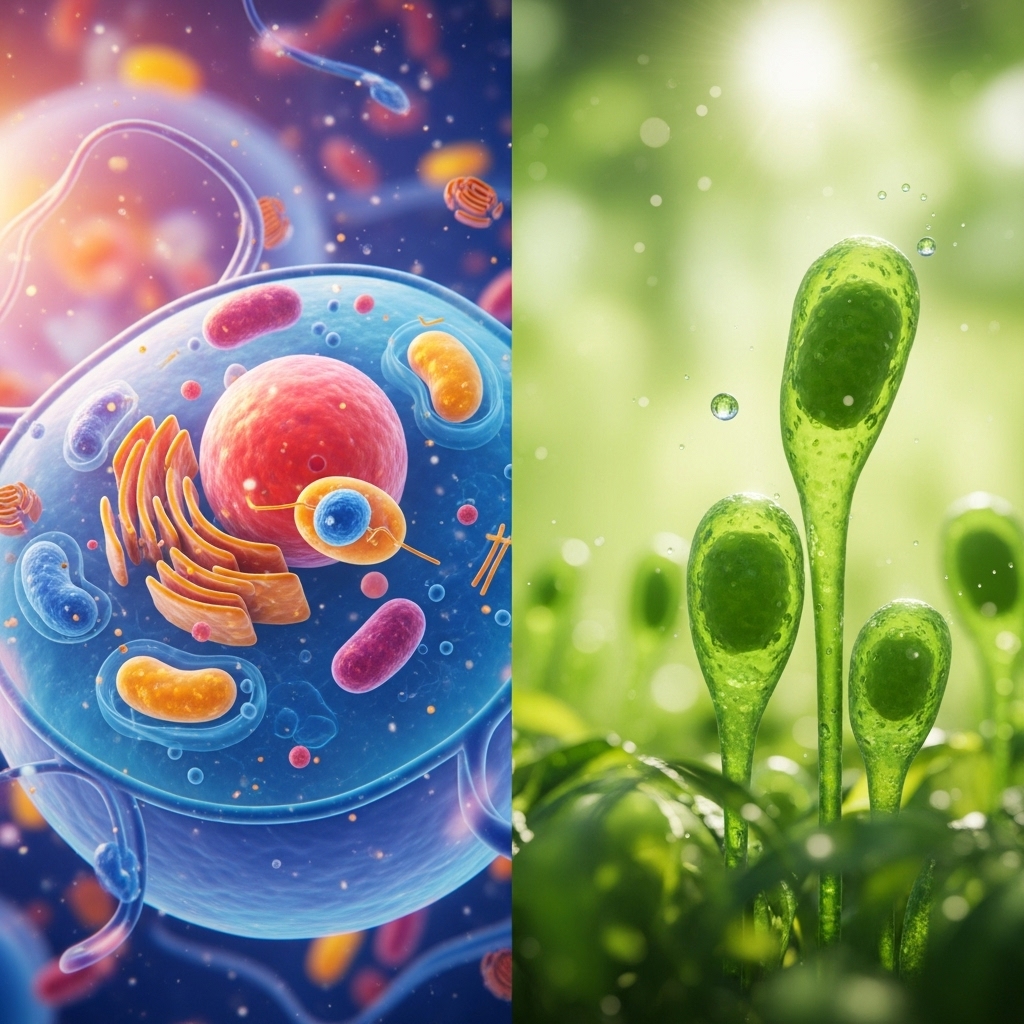
Cells are the basic building blocks of all living organisms. I remember the first time I learned about cells in school; it was fascinating to think that every living thing, no matter how big or small, is made up of these tiny units. Cells come in many shapes and sizes, and they perform a variety of functions that are essential for life. Essentially, each cell operates like a small factory, carrying out processes that keep organisms alive.
The Basic Unit of Life
What I find particularly intriguing about cells is that they are considered the fundamental unit of life. Every cell has specific functions, but collectively, they contribute to the larger system — whether it’s a simple bacterium or a complex animal. In my own experiences studying biology, I’ve learned that understanding cells helps us grasp how life functions at every level. Cells replicate, grow, and respond to their environment, making them incredibly dynamic. This foundational role is why understanding cells is key to biology and medicine.
Types of Cells
Prokaryotic Cells
Before diving into animal and plant cells, it’s essential to understand the two main types of cells: prokaryotic and eukaryotic. Prokaryotic cells are simpler and smaller than eukaryotic cells. I remember being amazed to learn that these cells lack a nucleus and other membrane-bound organelles. Instead, their genetic material floats freely in the cell. Bacteria are the most common examples of prokaryotic cells, and their simplicity allows them to thrive in diverse environments. This adaptability is something I find quite impressive.
Eukaryotic Cells
Eukaryotic cells, on the other hand, are more complex and larger. They have a defined nucleus that houses their DNA and various organelles that perform specific functions. I was amazed to discover that both plant and animal cells are eukaryotic, which means they share some common features, but they also have distinct differences that set them apart. Understanding these two types of cells laid the groundwork for my exploration of the fascinating world of cellular biology.
Key Differences Between Animal Cells and Plant Cells
Cell Structure
When it comes to the structure of animal and plant cells, the differences start to really shine through. Animal cells typically have a more irregular shape, often appearing rounded or oval. This shape allows them to be flexible and adapt to different functions and environments. I’ve seen how this flexibility is crucial for various tissues, like muscle cells, which need to contract and expand. On the other hand, plant cells have a more rigid structure due to their cell walls. This rigidity helps plants maintain their shape and provides support as they grow. I remember being struck by how the structure of these cells is so closely tied to their functions in living organisms.
Cell Walls vs. Cell Membranes
One of the most significant differences between plant and animal cells is the presence of a cell wall. Plant cells have a thick cell wall made of cellulose, which adds strength and structure. I’ve always found it fascinating how this wall allows plants to stand tall and remain upright despite the force of gravity. In contrast, animal cells only have a cell membrane, which is flexible and allows for movement and interaction with the environment. This difference is a key reason why plants and animals have such distinct forms and functions.
Shape and Size
The shape and size of these cells vary as well. Animal cells are generally smaller and more varied in shape, which I think is a reflection of their diverse functions in the body. For instance, nerve cells are long and thin to transmit signals, while red blood cells are disc-shaped to carry oxygen efficiently. Plant cells, on the other hand, tend to be larger and more uniform in shape, often appearing rectangular or boxy. This uniformity supports their growth patterns and helps them develop into the structured forms we see in plants.
Organelles
Both plant and animal cells contain organelles, but there are notable differences in the types they possess. Understanding these organelles has always been a key part of my studies, as they perform vital functions that keep the cells alive and functioning. Plant Cell vs Animal Cell: Full Difference Explained discusses these organelles in detail.
Nucleus
Every eukaryotic cell, including both animal and plant cells, contains a nucleus. The nucleus is the command center of the cell, housing the cell’s genetic material. I’ve learned that it plays a crucial role in regulating activities like growth and reproduction, making it essential for the life of the cell.
Mitochondria
Mitochondria are known as the powerhouses of the cell, converting nutrients into energy. Both animal and plant cells have mitochondria, and I find it interesting that these organelles are crucial for cellular respiration, which is how cells generate energy. Regardless of the type of cell, the ability to produce energy is fundamental to life.
Chloroplasts
Chloroplasts are unique to plant cells and are responsible for photosynthesis. I remember learning how these organelles capture sunlight and convert it into chemical energy, allowing plants to produce their own food. This process is not only vital for the survival of plants but also for the entire ecosystem, as it provides energy for other organisms, including us.
Vacuoles
Vacuoles are another difference I find fascinating. While both plant and animal cells have vacuoles, plant cells usually contain a large central vacuole that holds water, nutrients, and waste products. This large vacuole helps maintain turgor pressure, which keeps plants upright. In animal cells, vacuoles are smaller and more numerous, serving various roles, but they don’t perform the same structural function as in plant cells.
Energy Production
When it comes to energy production, the differences between animal and plant cells are striking. As I’ve learned, animal cells rely solely on cellular respiration to produce energy. This process takes place in the mitochondria, where glucose is broken down in the presence of oxygen. On the other hand, plant cells have a dual capability: they can perform photosynthesis in chloroplasts and also rely on cellular respiration. I find this fascinating because it gives plants a unique advantage in producing their energy, making them self-sufficient in a way that animals are not.
Photosynthesis vs. Cellular Respiration
Photosynthesis and cellular respiration are two critical processes that highlight the differences between plant and animal cells. Plants use sunlight to convert carbon dioxide and water into glucose and oxygen — a process I find truly inspiring. This not only provides energy for the plants themselves but also releases oxygen into the atmosphere, which is essential for animal life. In contrast, animal cells engage solely in cellular respiration, breaking down glucose obtained from food to release energy. This reliance on other organisms for energy sources is a fundamental difference that shapes how we view life on Earth.
Functions and Roles
Animal Cell Functions
Animal cells have a variety of functions that cater to the complex needs of multicellular organisms like us. I find it fascinating that these cells specialize to perform very specific jobs. For instance, red blood cells are designed to transport oxygen, which is crucial for our survival. They have no nucleus, allowing more space for hemoglobin, the protein that carries oxygen. I remember learning about how their unique shape helps them easily navigate through blood vessels — it’s like a little delivery system running throughout our bodies!
Muscle cells are another great example. They contain many mitochondria, which produce the energy needed for contraction. When I think about how these cells work together to enable movement, it really makes me appreciate the intricate design of our bodies. Nerve cells, or neurons, have long extensions that allow them to send signals across great distances, enabling communication throughout the body. Each of these specialized functions highlights how animal cells are perfectly adapted to meet the unique demands of life.
Plant Cell Functions
On the flip side, plant cells also have specialized functions that are essential for their survival and the overall health of our planet. One of their primary roles is to carry out photosynthesis, which I’ve always found to be one of the most amazing processes in nature. Chloroplasts within these cells capture sunlight and use it to transform carbon dioxide and water into glucose and oxygen. This not only feeds the plants but also produces the oxygen we breathe. It’s incredible to think about how something as simple as a leaf is doing so much for the environment!
Plant cells also help support the plant and allow it to grow upwards towards sunlight. The rigid cell walls provide structural integrity, which is vital for plants to resist external pressures and remain upright. Additionally, the large central vacuole in plant cells stores water and nutrients, helping maintain turgor pressure. This is especially important in drought conditions, where the vacuole acts like a water reservoir, ensuring the plant stays healthy. Learning about how plant cells function has deepened my appreciation for the role they play in our ecosystem.
Reproduction and Growth
Cell Division in Animal Cells
Cell division is a fascinating process that ensures growth and repair in multicellular organisms. In animal cells, this process primarily occurs through mitosis, where a single cell divides into two identical daughter cells. I remember being surprised by how organized this process is. The cell goes through several stages to ensure that each daughter cell receives an exact copy of the DNA. This is crucial for maintaining the organism’s genetic consistency. I’ve seen diagrams showing how chromosomes condense and align in neat rows during metaphase — it’s like watching a well-rehearsed dance performance!
Another important aspect of cell division in animals is the role of cytokinesis, where the cytoplasm divides. This is essential for physical separation of the daughter cells. I think about how this process allows us to grow, heal wounds, and even replace old or damaged cells. It’s incredible to think that this microscopic event happens billions of times in our bodies every day!
Cell Division in Plant Cells
Cell division in plant cells also occurs through mitosis, but there are some unique differences due to the presence of the rigid cell wall. During cytokinesis, plant cells form a structure called a cell plate that eventually develops into a new cell wall separating the two daughter cells. I remember learning how this process is essential for plants to grow taller and expand. The cell plate formation is a fascinating aspect, as it reflects how plants adapt their division to accommodate their structure.
Additionally, plants have a type of growth called meristematic growth, which occurs in specific areas known as meristems. These regions are responsible for continuous growth throughout the plant’s life, whether it’s in the roots or shoots. I find it amazing to think that while most animal cells stop dividing once they reach a certain point, plant cells have the potential to keep growing and adapting. This is part of what allows plants to thrive in a variety of environments, and it’s a vital aspect of their life cycle.
Common Misconceptions
Do Plant Cells Have Mitochondria?
One common misconception I’ve encountered is whether plant cells have mitochondria. I used to think that since plants perform photosynthesis, they wouldn’t need mitochondria. However, I learned that plant cells do contain mitochondria! While chloroplasts capture sunlight for energy, mitochondria are essential for cellular respiration. They help break down glucose produced during photosynthesis to release energy when sunlight isn’t available, like at night. Understanding this has really changed how I view plant energy processes.
Animal Cells and Chloroplasts
Another misconception is the idea that animal cells can have chloroplasts. I remember being surprised when I first learned this isn’t the case. Animal cells do not have chloroplasts because they do not perform photosynthesis. Instead, they rely on consuming plants or other organisms to obtain energy. This distinction highlights the interconnectedness of life, as animals depend on plants for nutritional energy but cannot produce it themselves. It’s a reminder of the balance within ecosystems and how each organism plays its part.
Frequently Asked Questions
What are the main differences between animal cells and plant cells?
Animal cells are more flexible and lack cell walls, while plant cells have rigid cell walls made of cellulose and contain chloroplasts for photosynthesis.
What is the basic unit of life?
Cells are considered the basic building blocks of all living organisms and are the fundamental unit of life, performing essential functions that keep organisms alive.
What is a prokaryotic cell?
A prokaryotic cell is a simpler and smaller type of cell that lacks a nucleus and other membrane-bound organelles. Bacteria are common examples of prokaryotic cells.
What are organelles?
Organelles are specialized structures within a cell that perform specific functions essential for the life of the cell. Both plant and animal cells contain various organelles.
What role do chloroplasts play in plant cells?
Chloroplasts are unique to plant cells and are responsible for photosynthesis, capturing sunlight and converting it into chemical energy to produce food for the plant.
How do animal cells produce energy?
Animal cells produce energy solely through cellular respiration, which occurs in the mitochondria where glucose is broken down in the presence of oxygen.
What is the function of vacuoles in plant and animal cells?
Plant cells usually contain a large central vacuole that holds water, nutrients, and waste, maintaining turgor pressure. In contrast, animal cells have smaller, more numerous vacuoles serving various roles.
How do plant cells divide?
Plant cells divide through mitosis, forming a structure called a cell plate during cytokinesis, which develops into a new cell wall separating the daughter cells.
Do plant cells have mitochondria?
Yes, plant cells do contain mitochondria, which are essential for cellular respiration, helping to break down glucose produced during photosynthesis to release energy.
Can animal cells perform photosynthesis?
No, animal cells do not have chloroplasts and cannot perform photosynthesis. They rely on consuming plants or other organisms for energy.
Read Interesting article: Do Plant Cells Have Lysosomes? Science Answer