
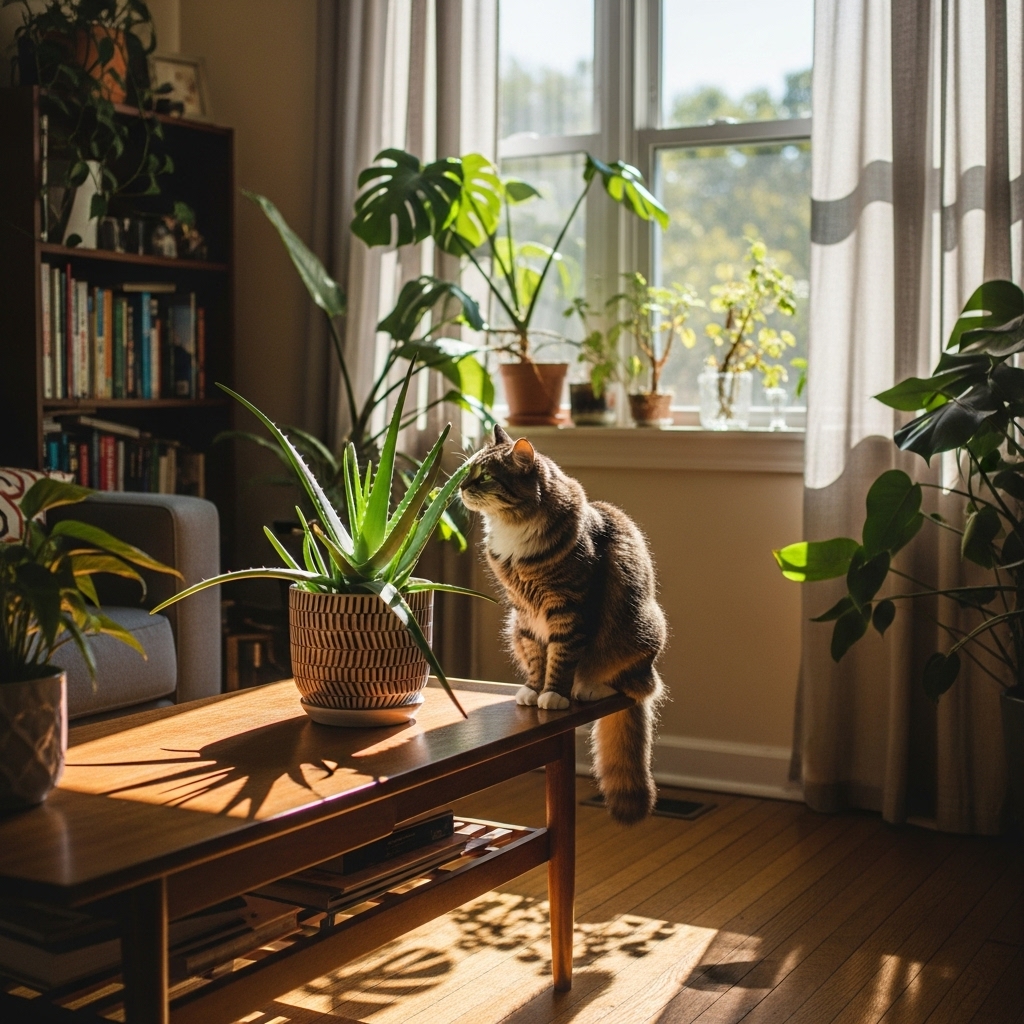
Aloe plants are toxic to cats, and ingestion can lead to serious health issues. As a cat owner, it’s crucial to be aware of the risks associated with having these plants in your home. Read Interesting article: Is Aloe Vera Plant Poisonous to Cats? Safety Guide
Understanding Aloe Plants
What is an Aloe Plant?
Aloe plants are a group of succulent plants belonging to the genus Aloe. They are known for their fleshy, green leaves that often have serrated edges. These plants thrive in warm climates and are popular for their medicinal properties, particularly Aloe vera, which is widely used in skincare and health products. I’ve always been drawn to their unique appearance and ease of care, making them a favorite in many households. However, it’s essential to understand what these plants are truly about, especially if you have pets.
Common Types of Aloe Plants
There are over 500 species of Aloe, but some of the most common types you might encounter include:
- Aloe Vera: Perhaps the most famous variety, Aloe vera is known for its healing properties and is often used in lotions and gels.
- Aloe Aristata: This type has a rosette formation and is smaller, making it perfect for indoor settings.
- Aloe Brevifolia: Also known as the short-leaved aloe, this plant has thick, fleshy leaves and is often used in landscaping.
- Aloe Ferox: Known as Cape Aloe, it has tall flowering stalks and is native to South Africa.
While these plants are stunning and relatively easy to care for, they also come with a significant warning for pet owners.
Characteristics of Aloe Vera
Aloe vera stands out for its thick, spiky leaves filled with a gel-like substance, which is often praised for its soothing and healing properties. It is commonly used to treat skin irritations, burns, and even digestive issues in humans. However, I’ve learned that this beneficial plant conceals a dark side when it comes to our furry companions. Aloe vera contains compounds called saponins and anthraquinones, which are primarily responsible for its toxic effects on cats. While we may enjoy the benefits of aloe, our pets can experience adverse effects, making it essential to be cautious.
Aloe Plants and Cat Safety
Are Aloe Plants Poisonous to Cats?
Yes, aloe plants are indeed poisonous to cats. The ingestion of any part of the plant can lead to various health problems, ranging from mild to severe. I remember when I first learned about the dangers of certain houseplants. I used to think that if a plant was safe for humans, it must be safe for pets too. Unfortunately, aloe is one of those plants that can pose a significant risk for our feline friends.
Why Aloe is Toxic to Cats
The toxicity of aloe plants comes primarily from the compounds mentioned earlier. Saponins can cause gastrointestinal issues, while anthraquinones can lead to more severe reactions, such as changes in heart rate and increased sensitivity to light. I’ve seen many cat owners unaware of these dangers, believing that since they grow the plants indoors, their pets would stay away from them. However, cats are naturally curious creatures, and they may chew on the leaves out of curiosity or boredom.
Symptoms of Aloe Plant Poisoning in Cats
If a cat ingests aloe, it may exhibit various symptoms, which can manifest within a few hours. I remember feeling anxious when my friend’s cat accidentally nibbled on some aloe leaves, and I quickly learned the signs to watch for. Some of the most common symptoms of aloe poisoning include:
- Vomiting
- Diarrhea
- Lethargy
- Loss of appetite
- Abdominal pain
- Changes in urine color
In more severe cases, a cat might experience tremors or an increased heart rate. If you notice any of these symptoms after your cat has been around aloe plants, it’s crucial to act quickly. Understanding these signs can make a significant difference in how quickly a cat receives the care it needs.
What to Do If Your Cat Ingests Aloe
Immediate Steps to Take
If you suspect that your cat has ingested aloe, it’s important to stay calm and take immediate action. I remember the panic I felt when my neighbor’s cat nibbled on a succulent, and it really drove home the importance of being prepared. First, try to determine how much aloe your cat may have eaten. If it was just a small amount, you might observe your cat for symptoms, but always err on the side of caution. Remove any remaining aloe from your home to prevent further ingestion.
Next, I recommend flushing your cat’s mouth with water if you can do so safely. This can help remove any residual plant material that may still be in their mouth. However, be careful not to force water down their throat, as this can cause choking. Instead, gently use a syringe or a small cup to rinse their mouth, if they’re cooperative. I’ve found that keeping calm can help your pet remain calm too, which is crucial in these situations.
When to Contact a Veterinarian
It’s vital to know when to seek professional help. If your cat shows any of the symptoms previously mentioned, like vomiting or lethargy, it’s time to reach out to your veterinarian. I’ve learned that even if the symptoms seem mild, it’s best to consult a professional because they can provide you with the right guidance based on your cat’s health history. If you have any doubts, don’t hesitate to call. In my experience, it’s always better to be safe than sorry.
In cases of severe symptoms, such as tremors, seizures, or difficulty breathing, you should seek emergency veterinary care immediately. I recall a friend who faced a similar situation and rushed her cat to the clinic, which ended up saving him from severe complications. Time can be of the essence in these scenarios, so don’t delay in getting help.
Potential Treatments for Aloe Poisoning
Once at the veterinary clinic, treatment for aloe poisoning can vary depending on the severity of the symptoms. I’ve seen how different situations call for different approaches. Some common treatments may include inducing vomiting if the ingestion was recent, administering activated charcoal to prevent further absorption of toxins, and providing supportive care, such as intravenous fluids to counteract dehydration.
In less severe cases, the vet may suggest monitoring your cat at home, especially if they only exhibit mild symptoms. It’s comforting to know that with prompt care, many cats recover fully from aloe poisoning. I remember hearing stories of cats bouncing back after treatment, and it gave me hope during those stressful moments.
Preventing Aloe Plant Exposure
Safe Plant Alternatives for Cat Owners
As a cat owner, I know how challenging it can be to find safe plants to keep in our homes. Luckily, there are many beautiful and non-toxic alternatives to aloe. Some of my favorites include spider plants, Boston ferns, and cat grass. These plants not only brighten up your space but also keep our furry friends safe from harm. I discovered that not all houseplants are dangerous, and I started exploring options that would complement my home without posing risks to my cats. Read Interesting article: What Plants Are Toxic to Cats? Full List + Symptoms
- Spider Plant: This hardy plant is safe for cats and can help purify the air. I love how easy it is to care for!
- Boston Fern: A classic houseplant that thrives in humid environments, making it perfect for bathrooms.
- Cat Grass: This is a delightful treat for cats and can aid in their digestion, plus it’s a safe way for them to nibble on greenery.
How to Keep Your Cat Away from Aloe Plants
Keeping aloe plants out of reach is crucial, especially if you have a curious cat. I’ve learned a few helpful strategies over the years. One effective method is to place plants on high shelves or hang them in decorative pots. Cats are natural climbers, so it’s essential to choose locations that are truly out of their reach. I’ve also found that using deterrents like citrus peels or sprays can help discourage cats from approaching certain areas of the house.
Another approach is to create a designated space for your plants that is off-limits to your cat. Using baby gates or closing doors can be an effective way to keep your plants safe. I’ve seen how setting boundaries can help maintain harmony in the home while still allowing us to enjoy our beloved plants.
Common Myths About Aloe and Cats
Are All Succulents Dangerous to Cats?
As a cat owner, I often hear the concern that all succulents pose a danger to our furry friends. It’s a common myth that can cause a lot of unnecessary anxiety. While it’s true that some succulents are toxic, many are actually safe for cats. I remember when I first started collecting succulents and felt overwhelmed trying to determine which ones were cat-friendly. It turns out that plants like Echeveria, Haworthia, and even jade plants are non-toxic. I found it helpful to do a bit of research and learn about the specific types of succulents I could safely keep around my feline companions.
It’s important to remember that not all houseplants within the succulent family are dangerous, but identifying the right ones is key. Before bringing any new plants into my home, I always check if they are safe for cats. This way, I can enjoy my greenery without worrying about my pets’ health.
Understanding Plant Toxicity in Cats
Another myth I’ve encountered is the idea that a plant’s toxicity level is the same for all pets. I used to think that if a plant was considered toxic to one type of animal, it must be toxic to all. However, toxicity can vary significantly between species. For instance, some plants that are harmful to cats may not pose a risk to dogs and vice versa. This realization was a game-changer for me.
In my experience, it’s essential to understand the specific effects a plant can have on cats. For example, while aloe is toxic, other plants like catnip are safe and even beneficial. I’ve found that educating myself about each plant and its effects on cats has made me a more responsible pet owner. Keeping a list of plants known to be toxic to cats handy can help dispel any myths I might encounter.
Additional Resources
Where to Find More Information on Plant Toxicity
If you’re as passionate about plants as I am, it’s crucial to stay informed about which ones are safe for our furry friends. I recommend checking out resources like the ASPCA’s website, which has a comprehensive list of toxic and non-toxic plants. I often refer to it when I’m considering adding a new plant to my collection. They provide clear, detailed information that can help alleviate concerns and answer questions about various plants. Read Interesting article: How to Care for Air Plants (Easy Tillandsia Guide)
Additionally, local gardening groups and forums can be a great source of information. I’ve found that connecting with fellow plant enthusiasts who are also pet owners can provide valuable insights and recommendations. Sharing experiences and learning from others can make the journey of keeping plants and pets together much more enjoyable.
Consulting with a Veterinarian
Sometimes, despite our best efforts, we might still have questions about plant safety or our pets’ health. I’ve learned that consulting a veterinarian is one of the best ways to get accurate information. They can provide tailored advice based on your cat’s breed, age, and health history. I remember taking my cat in for a routine check-up and discussing my houseplants with the vet. They offered great insights into which plants I should avoid and which ones were safe.
Moreover, if your cat has specific health concerns or dietary restrictions, discussing these with your veterinarian can help you make informed choices about the plants you bring into your home. In my experience, having that professional guidance is invaluable in ensuring the safety and well-being of my pets.
Final Thoughts
As a dedicated cat owner, I understand the joy that comes from having both plants and pets in our lives. It’s essential to strike a balance between appreciating the beauty of our indoor gardens and ensuring the safety of our furry friends. Aloe plants, while lovely and beneficial for humans, can be a hidden danger for our cats, and being aware of this has changed how I approach my home environment.
Having learned about the toxic nature of aloe, I’ve become much more diligent in my plant choices. The experience has taught me the importance of research and preparation. I recommend taking the time to familiarize yourself with the plants in your home, as I’ve done, to avoid any potential risks. When I decided to fill my space with greenery, I made it a point to choose non-toxic plants that add vibrancy without jeopardizing my cats’ safety.
Additionally, I strongly believe in the power of communication. Sharing this knowledge with other pet owners in my community has been rewarding. I’ve participated in discussions about plant safety, and I’ve found it incredibly helpful to learn from others’ experiences. We can all benefit from supporting one another in our journey to create a safe home for our beloved pets.
Every day, I look at my plants and my cats, and I feel grateful that I took the steps to educate myself. I encourage you to do the same—whether it’s consulting resources, talking to professionals, or simply being mindful of your choices. Together, we can create environments that bring joy without the worry of our pets’ health hanging in the balance. Remember, knowledge is power, and it’s up to us to ensure our homes are safe havens for all our family members, furry or otherwise.
Let’s keep our homes beautiful and our pets safe, embracing the wonderful world of plants while being vigilant guardians of our cats’ health.
Frequently Asked Questions
Are Aloe Plants Poisonous to Cats?
Yes, aloe plants are indeed poisonous to cats. The ingestion of any part of the plant can lead to various health problems, ranging from mild to severe.
What compounds in Aloe are toxic to cats?
The toxicity of aloe plants comes primarily from compounds called saponins and anthraquinones, which can cause gastrointestinal issues and more severe reactions, respectively.
What are the symptoms of Aloe plant poisoning in cats?
Common symptoms of aloe poisoning in cats include vomiting, diarrhea, lethargy, loss of appetite, abdominal pain, and changes in urine color. In severe cases, symptoms may include tremors or an increased heart rate.
What should I do if my cat ingests aloe?
If you suspect that your cat has ingested aloe, try to determine how much was eaten and observe your cat for symptoms. Remove any remaining aloe from your home and consider flushing your cat’s mouth with water, but do it safely.
When should I contact a veterinarian regarding aloe ingestion?
If your cat shows symptoms like vomiting or lethargy, it’s time to reach out to your veterinarian. In cases of severe symptoms, such as tremors or difficulty breathing, seek emergency veterinary care immediately.
What treatments are available for aloe poisoning in cats?
Treatment for aloe poisoning can vary depending on the severity of the symptoms. Common treatments may include inducing vomiting, administering activated charcoal, and providing supportive care such as intravenous fluids.
What are some safe plant alternatives for cat owners?
Some safe plant alternatives for cat owners include spider plants, Boston ferns, and cat grass. These plants are non-toxic and can brighten up your home without posing risks to your pets.
How can I keep my cat away from aloe plants?
To keep cats away from aloe plants, place them on high shelves, hang them in decorative pots, or create designated spaces that are off-limits to your cat using baby gates or closed doors.
Are all succulents dangerous to cats?
No, not all succulents are dangerous to cats. While some are toxic, many are safe, such as Echeveria, Haworthia, and jade plants. It’s important to research the specific types of succulents before keeping them around your pets.
Where can I find more information on plant toxicity related to cats?
You can find more information on plant toxicity by checking resources like the ASPCA’s website, which provides a comprehensive list of toxic and non-toxic plants. Consulting with a veterinarian can also provide tailored advice based on your cat’s health.