
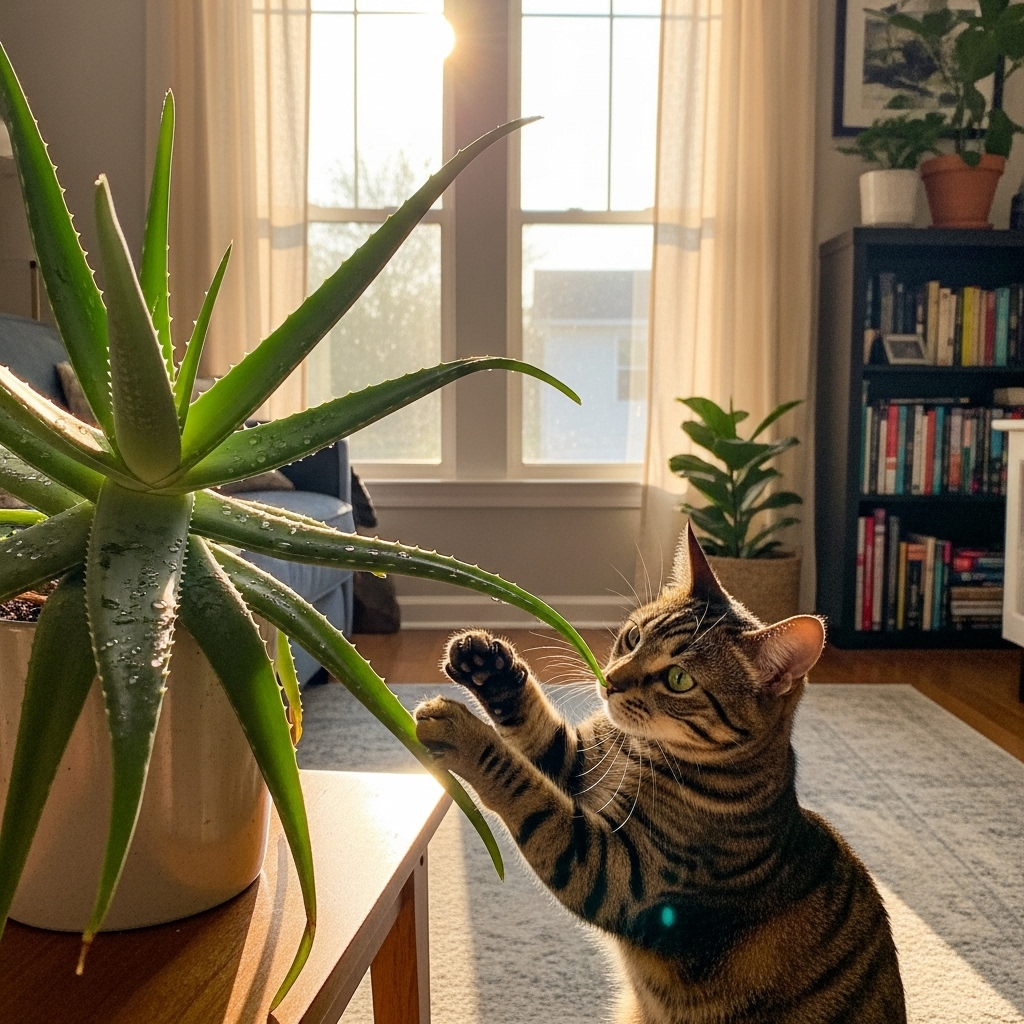
Aloe plants are toxic to cats, particularly due to a compound called saponins. If ingested, these plants can lead to various health issues for your feline friend.
Table of Contents
Understanding Aloe Plants
What Are Aloe Plants?
Aloe plants are succulent plants that belong to the genus Aloe. These hardy plants are well-known for their fleshy leaves that store water, making them easy to care for and ideal for both indoor and outdoor settings. Most people recognize aloe for its soothing gel, commonly used for skin care and healing minor burns. I remember the first time I came across an aloe plant; it was a sunny afternoon, and my friend shared how she used the gel to treat her sunburn. That magical gel seemed like a remedy from nature, and I couldn’t help but admire how resilient these plants were.
Types of Aloe Plants Commonly Found
There are over 500 species of aloe plants, but a few are especially popular among plant enthusiasts and gardeners. Some of the most common types include:
- Aloe Vera: This is the most well-known species, famous for its medicinal properties. People often keep it at home for its gel, which is used in lotions and soothing balms.
- Aloe Ferox: Also known as Cape Aloe, it has a more bitter sap and is often used in natural healing products.
- Aloe Aristata: This smaller variety has attractive rosettes of thick, spiky leaves and is often used in decorative arrangements.
- Aloe Polyphylla: Known as the spiral aloe, it’s visually striking and often sought after for its unique appearance.
Each type of aloe has its own distinct characteristics, and I’ve found that they can be rewarding to grow, both for their beauty and their utility. However, as a cat owner, it’s essential to understand which types might pose a risk to our furry friends.
Uses of Aloe Plants in Homes
Aloe plants have become a staple in many homes, not just for their aesthetic appeal but also for their practical uses. Many people, including myself, appreciate having aloe vera on hand for its soothing properties. It’s soothing for burns, cuts, and even for minor skin irritations. I’ve often sliced a leaf open to apply the gel directly to my skin after a long day in the sun.
Beyond its medicinal uses, aloe can also improve indoor air quality. Studies have shown that these plants can help remove toxins from the air, making our living spaces healthier. I remember reading about this and thinking about how nice it would be to have a natural air purifier right in my living room. Their low maintenance needs also appeal to those of us who might not have the greenest thumbs. Just a little water and indirect sunlight, and they thrive!
However, the more I learned about aloe plants, the more I realized that while they offer many benefits, they can also pose dangerous risks if we share our homes with pets, especially cats. Read Interesting article: What Plants Are Not Toxic to Cats? Safe Plant List
Aloe Plants and Cat Safety
Are Aloe Plants Toxic to Cats?
Yes, aloe plants are toxic to cats primarily due to the presence of saponins and anthraquinones. When a cat chews or ingests any part of an aloe plant, it can lead to various health complications. I know this might be shocking to many cat owners, as aloe plants are so common and beloved. It’s a harsh reality that we have to consider the safety of our pets when choosing plants for our homes.
The toxicity level can vary, and while some cats might experience mild symptoms, others could have more severe reactions. I remember when I first learned about this; I checked every corner of my home for any potential hazards after realizing how harmless I thought the aloe plant was. The safety of our pets should always come first.
Symptoms of Aloe Poisoning in Cats
If a cat ingests aloe, it can exhibit various symptoms. Common signs of aloe poisoning include:
- Vomiting
- Diarrhea
- Loss of appetite
- Lethargy
- Abdominal pain
When I heard about these symptoms, I felt a wave of concern wash over me. It’s heartbreaking to think that a plant I love could cause my beloved pet distress. If you notice any of these signs in your cat, it’s crucial to consult a veterinarian immediately. Early intervention can make a significant difference in outcomes. I always recommend having the number of your vet handy, just in case something unexpected happens.
What to Do If Your Cat Ingests Aloe
If you suspect your cat has ingested aloe, the first step is to stay calm. I know that panic can set in quickly, but keeping a level head can help you think clearly. Here’s what you should do:
- Contact your veterinarian immediately. Provide details about how much your cat may have ingested and any symptoms they are showing.
- Do not induce vomiting unless your vet specifically tells you to. Sometimes this can cause more harm than good.
- Follow your vet’s instructions carefully. They may recommend bringing your cat in for an examination.
- Monitor your cat closely for any changes in behavior or health.
I once had a scare with my own cat after he got into a plant I thought was safe. Thankfully, I had the vet’s number on hand, and we were able to address the situation quickly. It’s a reminder that knowledge is power, especially when it comes to the safety of our pets.
Common Misconceptions About Aloe Plants
Are All Aloe Varieties Toxic?
Many people assume that if one type of aloe plant is toxic, all varieties must be. However, that’s not entirely accurate. While it’s true that the most commonly recognized species, like Aloe Vera, contain compounds harmful to cats, not all aloes are created equal when it comes to toxicity. I’ve spent quite a bit of time researching this because it perplexed me at first. It turns out that some lesser-known species might not pose the same risks, but I still wouldn’t recommend taking chances with any aloe plant around curious cats. It’s better to be safe than sorry.
In my exploration, I learned that while saponins and anthraquinones are key players in aloe’s toxicity, the concentration of these compounds can vary significantly among species. This means that some plants may be less harmful than others, but the potential for adverse effects is still there. That’s why I personally recommend erring on the side of caution and keeping all aloe varieties out of reach of our feline companions.
Difference Between Aloe Vera and Other Aloe Species
Aloe Vera is the star of the show when it comes to its uses in skincare and health. I remember using Aloe Vera gel to soothe my skin after a sunburn, and it felt like a miracle. But this beloved plant is also the one that poses a risk to our cats. What surprised me was discovering that other aloe species, while still potentially harmful, may have different effects or varying levels of toxicity.
For instance, Aloe Ferox, known for its bitter sap, and Aloe Aristata may also be harmful, but they are often less favored for household use compared to Aloe Vera. I once had a friend who swore by Aloe Ferox for its healing properties, but I couldn’t help but wonder about the hidden dangers for her cat. It’s essential for us as pet owners to understand that while some aloe species might be beneficial for humans, we need to prioritize our pets’ safety above all. Read Interesting article: Can You Eat an Aloe Plant? Safety Guide
Alternatives to Aloe Plants for Cat Owners
Pet-Safe Indoor Plants
As a cat owner, finding beautiful yet safe plants for our homes can feel like a daunting task. I remember feeling overwhelmed by the sheer number of options out there, but I discovered a few pet-safe indoor plants that can brighten up any space without causing harm. Here are some of my favorites:
- Spider Plant: These lush, green plants are not only easy to care for but also great for air purification. I’ve seen them thrive in almost any environment! Read Interesting article: Are Spider Plants Poisonous to Dogs? Safety Guide
- Ponytail Palm: This quirky plant adds a fun touch to your decor and is safe for cats. It has a unique look that I find charming.
- Bamboo Palm: Not only is it safe for our furry friends, but it also helps improve indoor air quality. I’ve always loved how graceful they look.
- Boston Fern: This beautiful greenery can add a touch of elegance to your home, and it’s completely safe for pets.
Exploring these options reminded me that there are many choices out there that can enhance our living spaces without putting our pets at risk.
Herbs That Are Safe for Cats
If you enjoy cooking or want to add some aromatic herbs to your home, there are plenty of cat-safe options. I’ve found that many common culinary herbs can thrive indoors and are perfectly safe for our feline friends. Here are some that I love:
- Basil: Not only does it smell amazing, but it can also elevate your dishes. Plus, cats often enjoy nibbling on it!
- Catnip: This herb isn’t just safe; it’s often a favorite among cats. I’ve seen my cat go wild over it!
- Parsley: This is another great option that can be used in cooking and is safe for our pets.
- Thyme: A fantastic addition to many recipes and safe for curious cats, thyme is a versatile herb that I always keep on hand.
Incorporating these herbs into my home has been a win-win. I can cook with them, and my cat can enjoy a safe nibble or two!
Caring for Aloe Plants in a Cat-Friendly Home
Placement of Aloe Plants to Ensure Cat Safety
If you still want to keep aloe plants despite their toxicity to cats, it’s essential to think about their placement. I remember when I first brought an aloe plant home; I made sure to put it on a high shelf out of my cat’s reach. This way, I could enjoy its beauty and benefits without worrying about my furry friend getting into trouble. It’s all about finding that perfect balance!
Consider placing your aloe plant in a hanging planter or a room that your cat doesn’t access. This not only keeps the plant safe but also adds a unique touch to your home decor. I’ve found that elevating plants helps create an interesting visual dynamic while ensuring that my cat stays safe. Just remember to check frequently that the plant is stable and secure, so it doesn’t become a hazard itself.
Preventing Cat Access to Toxic Plants
Aside from careful placement, there are other strategies to ensure our pets don’t get into any trouble with toxic plants. I’ve learned a few tricks that can help cat owners create a safer environment. One method I found effective is using deterrents. Spraying a little citrus-scented spray around the base of the plant can deter most cats because they generally dislike citrus scents. I’ve used this trick with other plants, and it worked wonders!
Additionally, training your cat to stay away from certain areas can also be beneficial. I started with basic commands, rewarding my cat when he stayed away from the plants. Consistency is key, and while it might take some time, it’s worth it for the peace of mind knowing that my plants and my cat can coexist safely.
Expert Opinions and Research on Aloe Toxicity
Veterinarian Insights on Aloe and Cats
When it comes to understanding the risks of aloe plants for our feline companions, I find that hearing from veterinarians can provide invaluable insights. I recall speaking with my own veterinarian about the dangers of different houseplants. She emphasized that while many plants are considered safe, the toxic ones, like aloe, require immediate awareness and action. Vets often see cases of plant poisoning, and their experiences can shed light on how we can better protect our pets.
During our conversation, she explained that saponins, the compounds found in aloe, can cause gastrointestinal distress in cats. This made me think twice about the plants I had in my home. She suggested regularly reviewing my houseplant collection and even checking for new additions that might be harmful. I learned that the symptoms of toxicity can vary widely among cats. Some may display only mild signs, while others could face severe reactions, highlighting the need for pet owners to stay vigilant.
Furthermore, my vet mentioned the importance of educating ourselves about common household plants. She often shares resources with her clients, helping them become aware of which plants to avoid. I took her advice to heart and started researching plant toxicity, realizing that it’s not just aloe; many other common houseplants can be harmful to cats as well.
Recent Studies on Plant Toxicity in Pets
As I delved deeper into the topic of plant toxicity, I stumbled upon some recent studies that really caught my attention. Researchers have been investigating the effects of various household plants on pets, and the findings are quite enlightening. I found it fascinating to learn that the level of toxicity in plants is not just a matter of the plant species but can also depend on the amount ingested and the individual pet’s sensitivity.
One study I came across highlighted that certain plants, including aloe, can lead to poisoning incidents more frequently than others. The researchers conducted surveys with pet owners and veterinarians, analyzing the types of plants involved in poisoning cases. I was surprised to find that aloe was consistently mentioned as a common culprit. This further reinforced my commitment to keeping it away from my cat.
Additionally, some studies have shown that young pets, especially kittens, tend to be more susceptible to plant toxins. I reflected on this, realizing how curious and adventurous my own cat was as a kitten. It made me appreciate even more the need to create a safe environment for pets, particularly during their formative years. Understanding these dynamics has helped me think critically about the plants I bring into my home.
Another interesting finding from the research was the role of education in preventing plant poisoning. Many pet owners simply don’t realize that some of the plants they cherish could pose risks. I remember being in that position myself, blissfully unaware of the potential hazards. The studies indicated that awareness campaigns and clear labeling on plant care can significantly reduce poisoning incidents. This kind of information is crucial in helping us keep our furry friends safe.
As I absorbed these insights, I felt grateful that there are researchers and veterinarians dedicated to studying these issues. Their work is vital in spreading awareness about plant safety for pets. I often share these findings with fellow cat owners, encouraging them to educate themselves and reconsider their plant choices. It’s a small step, but collectively, it can make a big difference in ensuring the safety of our beloved pets.
Frequently Asked Questions
Are aloe plants toxic to cats?
Yes, aloe plants are toxic to cats primarily due to the presence of saponins and anthraquinones. Ingestion can lead to various health complications for your feline friend.
What symptoms might indicate aloe poisoning in cats?
Common symptoms of aloe poisoning in cats include vomiting, diarrhea, loss of appetite, lethargy, and abdominal pain. If you notice any of these signs, it’s important to consult a veterinarian immediately.
What should I do if my cat ingests aloe?
If you suspect your cat has ingested aloe, stay calm and contact your veterinarian immediately. Provide details about the amount ingested and any symptoms shown. Do not induce vomiting unless instructed by your vet.
Are all types of aloe plants toxic to cats?
While the most commonly recognized species, like Aloe Vera, contain harmful compounds, not all aloe varieties are equally toxic. However, it is safest to keep all aloe plants out of reach of cats.
What is the difference between Aloe Vera and other aloe species?
Aloe Vera is well-known for its medicinal uses but is also toxic to cats. Other species, like Aloe Ferox and Aloe Aristata, may have different effects or levels of toxicity, but caution is advised with all aloe plants around cats.
What are some cat-safe indoor plants?
Some cat-safe indoor plants include Spider Plants, Ponytail Palms, Bamboo Palms, and Boston Ferns. These plants can brighten your home without posing a risk to your pets.
What herbs are safe for cats?
Safe herbs for cats include Basil, Catnip, Parsley, and Thyme. These culinary herbs can thrive indoors and are enjoyable for both cooking and for your cat to nibble on.
How can I ensure the safety of aloe plants in a cat-friendly home?
To ensure safety, place aloe plants on high shelves or in hanging planters out of reach of cats. Additionally, consider using deterrents like citrus scents to keep cats away from the plants.
What do veterinarians say about aloe and cats?
Veterinarians emphasize the importance of awareness regarding toxic plants like aloe. They recommend regularly reviewing houseplants and educating pet owners about potential hazards to prevent plant poisoning.
What recent studies highlight regarding plant toxicity in pets?
Recent studies indicate that certain plants, including aloe, are common causes of poisoning incidents among pets. The level of toxicity can depend on the amount ingested and the pet’s sensitivity, especially in young animals.