
Hydrangea plants are mildly toxic to cats, but serious poisoning is rare. If ingested, cats may experience gastrointestinal upset, so it’s best to keep these beautiful flowers out of reach.
Understanding Hydrangea Plants
Hydrangeas are stunning flowering plants that many of us adore for their large, vibrant blooms. I remember when I first saw a hydrangea bush in full bloom; the colors were so captivating, ranging from blues and pinks to whites and purples. These plants are popular choices for gardens and landscaping, but as a cat owner, I often find myself questioning how they might affect my furry friends. Let’s dive deeper into what makes hydrangeas so special, and the potential risks they pose to our cats. Read Interesting article: Yew Tree Poisoning: Why Yew Is Toxic to Humans & Pets
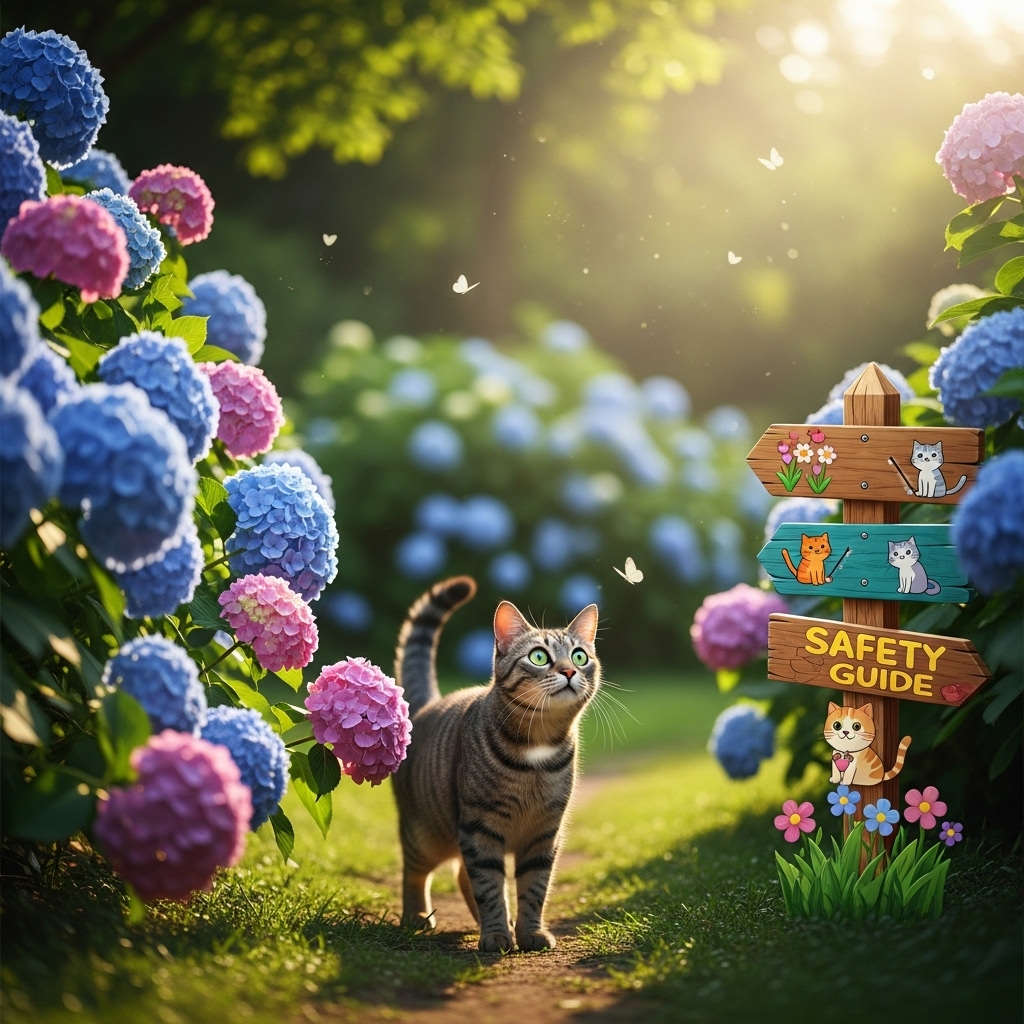
Overview of Hydrangea Species
Hydrangeas belong to the family Hydrangeaceae and include a variety of species that thrive in different environments. The most common species we see in gardens are Hydrangea macrophylla, known for its big, showy blooms, and Hydrangea paniculata, which features conical flower clusters. I’ve often found myself drawn to the lush foliage and the impressive size of some of these plants. However, I’ve also learned that not all hydrangeas are created equal when it comes to their effects on pets.
The hydrangea plant has a unique structure, with thick, green leaves and large flower heads that can create a stunning visual display. The flowers bloom in summer and can last well into fall, depending on the climate. While they are a joy to have around, understanding their composition is essential for pet owners. The leaves and flowers contain compounds called cyanogenic glycosides, which can release cyanide when metabolized. This is where the concern for toxicity arises for cats and other pets.
Common Varieties of Hydrangeas
When choosing hydrangeas for your garden, it’s helpful to know the common varieties. The bigleaf hydrangea (Hydrangea macrophylla) is popular for its ability to change color based on soil pH. Then there’s the smooth hydrangea (Hydrangea arborescens), which has a more rounded flower head and is often used in cottage gardens. Another favorite is the oakleaf hydrangea (Hydrangea quercifolia), known for its distinctive leaf shape and autumn color display.
I remember planting a few of these varieties in my yard and was amazed by how they transformed the space. However, I always kept an eye on my curious cat, who loved to explore every inch of the garden. It’s crucial to consider which types might be more appealing to our pets and how we can create a safe environment while still enjoying their beauty. Read Interesting article: What Does Wisteria Smell Like? (All You Need to Know)
Are Hydrangeas Toxic to Cats?
The question of whether hydrangeas are toxic to cats often arises among pet owners. While the toxicity is not classified as severe, it’s essential to understand the potential risks involved. Cats are naturally curious creatures, and they may nibble on plants out of curiosity or boredom. I’ve often seen my own cat sniffing and pawing at flowers, so it’s vital for us to be aware of what’s safe.
Identifying Toxic Compounds in Hydrangeas
The toxic compounds found in hydrangeas are primarily cyanogenic glycosides, which can lead to the release of cyanide in the body if ingested. Although the levels of these compounds are relatively low, it’s still enough to cause some gastrointestinal upset. I learned that the young leaves and flower buds contain higher concentrations of these compounds, making them the most dangerous parts of the plant for our feline friends.
Research indicates that when cats consume hydrangeas, the cyanogenic glycosides can interfere with their ability to transport oxygen in the bloodstream. This is a serious concern, even if the symptoms are usually mild. Being aware of these compounds has made me more cautious about where I plant hydrangeas, as I want to ensure my cat’s safety while enjoying the beauty they bring to my garden.
Symptoms of Hydrangea Poisoning in Cats
In the event that a cat does ingest hydrangeas, it’s important to recognize the symptoms of poisoning. I’ve read that the most common signs include vomiting, diarrhea, and a general sense of lethargy. My experience has shown that even if symptoms appear mild, it’s better to err on the side of caution. Other signs can include difficulty breathing, a rapid heart rate, and changes in behavior, which can indicate more severe reactions.
If you notice any of these symptoms after your cat has been around hydrangeas, it’s crucial to monitor their condition closely. Sometimes, cats may exhibit these signs shortly after ingestion, while in other cases, it might take a bit longer for symptoms to manifest. I’ve learned from personal experience that staying vigilant and informed about potential hazards is key to keeping our pets safe.
In summary, while hydrangeas can add beauty to our gardens, they do pose some risks to cats. With the right precautions and knowledge, we can enjoy these lovely plants while ensuring our furry friends remain safe and healthy. In the next sections, we’ll explore safety precautions for cat owners and what to do if your cat does happen to ingest hydrangeas.
Safety Precautions for Cat Owners
As a cat owner, I’ve learned that taking safety precautions is vital when it comes to having plants in our homes and gardens. Hydrangeas may be beautiful, but I want to ensure my feline friend is safe while I enjoy their colorful blooms. Here are some practical tips that I’ve found helpful for safely growing hydrangeas at home. Read Interesting article: How to Plant Asparagus (Complete Beginner Guide)
How to Safely Grow Hydrangeas at Home
Growing hydrangeas can be a rewarding experience, but we need to be mindful of our pets. I remember when I first planted my hydrangeas; I was excited but also concerned about what my cat might do. Here are some steps I’ve taken to create a safer environment:
- Choose the Right Location: I’ve learned that placing hydrangeas in areas that are harder for my cat to access can help reduce the risk of ingestion. Elevating them on a patio or planting them in a fenced-off area has worked well for me.
- Monitor Growth: Keeping an eye on the growth of hydrangeas is essential. I regularly check my plants to ensure they aren’t attracting my cat’s attention too much. If I notice my cat sniffing or pawing at them, I might consider relocating the plants.
- Regular Maintenance: Maintaining my hydrangeas is more than just pruning. I’ve found it helpful to remove any fallen leaves or petals regularly. This minimizes the chances of my cat finding and munching on them.
- Teach Boundaries: Training my cat to understand which areas are off-limits has been beneficial. Using positive reinforcement, I’ve encouraged my cat to stay away from certain plants, including my hydrangeas.
- Use Barriers: If I notice my cat is particularly curious, I sometimes use decorative fencing or plant cages around the hydrangeas. This adds an extra layer of protection without detracting from the beauty of my garden.
Alternatives to Hydrangeas for Cat-Friendly Gardens
If you’re like me and love having vibrant plants around but want to ensure your cat’s safety, there are plenty of beautiful alternatives to consider. I’ve explored various options and found some delightful cat-friendly plants that can brighten up any garden:
- Catnip: As the name suggests, this herb is a favorite among cats. I’ve seen my cat go crazy for catnip, and it’s a great way to keep them entertained while adding greenery to my garden.
- Spider Plant: These resilient plants are safe for cats and even have air-purifying qualities. I’ve had several in my home, and they thrive without much care.
- Boston Fern: A lush, leafy plant, the Boston fern is not only safe for pets but also adds a nice touch of greenery. It’s been a beautiful addition to my indoor space.
- Calathea: Known for their stunning leaf patterns, calatheas are non-toxic to cats. I’ve fallen in love with their unique designs and how they make my living space feel vibrant.
- Areca Palm: This palm adds a tropical vibe and is safe for our furry companions. I’ve found they can thrive indoors or outdoors, depending on your climate.
By choosing cat-friendly plants, we can create a vibrant space that both we and our pets can enjoy without worry. It’s all about finding balance and ensuring that our homes are safe havens for our beloved cats.
What to Do if Your Cat Ingests Hydrangeas
Even with all the precautions in place, accidents can happen. I’ve learned that it’s essential to know what to do if my cat happens to nibble on a hydrangea. Here’s a guide based on what I’ve discovered and experienced.
Immediate Steps to Take
If you suspect that your cat has ingested hydrangeas, the first thing to remember is to stay calm. I know that panic doesn’t help the situation. Here are the immediate steps I take:
- Remove Access: I would quickly move my cat away from the hydrangeas to prevent further ingestion. It’s crucial to limit their access to any part of the plant.
- Assess Symptoms: I check my cat for any signs of distress, like vomiting or lethargy. Documenting any symptoms I observe has been helpful, especially when seeking veterinary advice.
- Hydrate: Encouraging my cat to drink water can help flush out any toxins. I keep fresh water available at all times, especially in these situations.
- Stay Informed: I always keep the contact number of my veterinarian handy. If I notice any concerning symptoms, I’m ready to reach out for advice.
When to Contact a Veterinarian
In some cases, it’s crucial to consult a veterinarian. I’ve learned that if my cat shows serious symptoms—like difficulty breathing, excessive vomiting, or unresponsiveness—it’s vital to seek professional help immediately. Time can be of the essence in these situations, and knowing when to act can make all the difference.
Additionally, even if the symptoms seem mild, I’ve found it beneficial to call my vet for guidance. They can provide insight on whether to monitor my cat at home or bring them in for further evaluation.
Expert Opinions on Hydrangeas and Cat Safety
When it comes to understanding the relationship between hydrangeas and cat safety, I often find it valuable to seek out expert opinions. I’ve spoken with veterinarians and plant specialists to gather insights that can help us, as cat owners, make informed decisions about the plants we choose for our homes and gardens.
Veterinary Insights on Plant Toxicity
During my conversations with veterinarians, I learned that while hydrangeas are not among the most toxic plants for cats, they can still pose risks. One vet shared that the potential for toxicity varies depending on the individual cat’s health and sensitivity. I found it interesting that some cats can tolerate small amounts of the plant without any adverse effects, while others may react more severely even to minor ingestion. This made me realize how important it is to know our pets and their unique needs.
One piece of advice that stuck with me was about the importance of observing my cat’s behavior around plants. If I notice my cat frequently showing an interest in hydrangeas, it might be best to remove them or take extra precautions to keep them out of reach. The vet also emphasized that immediate veterinary care is crucial for any signs of distress. Waiting too long can complicate treatment, so trusting my instincts when it comes to my cat’s health is key.
Another expert highlighted the role of education in prevention. I’ve come to understand that sharing information about the potential dangers of certain plants with family and friends can help create a safer environment not just for our pets but for others’ as well. I often find myself sharing tips, especially with fellow cat owners, to raise awareness about plants that may be harmful.
Pet Safety Resources and Helplines
In my quest for knowledge, I discovered various pet safety resources that can provide support for cat owners. The ASPCA has a comprehensive list of toxic and non-toxic plants, which I refer to often. I appreciate having this resource at my fingertips, especially when I’m considering adding new plants to my garden. It makes me feel more confident knowing I can quickly check if a plant is safe for my feline companion.
Additionally, many local veterinarians offer resources and helplines for pet owners. I’ve used these services more than once to ask specific questions about plants or potential poisoning scenarios. Having a direct line to a professional can be incredibly reassuring, especially in a moment of concern. I recommend saving your vet’s contact information in an easily accessible place, just in case you ever need it.
Another handy resource is the Pet Poison Helpline, which provides immediate assistance and guidance. I remember a time when I had concerns about a different plant my cat had encountered. A quick call to the helpline provided me with the information I needed to respond effectively. Knowing these resources are available helps me feel more prepared in any situation.
As we navigate the beautiful world of gardening, it’s essential to stay informed about the plants we choose. Seeking expert opinions and knowing where to find reliable information has made a significant difference in how I approach plant safety with my cat. By being proactive and educated, I believe we can create beautiful spaces while keeping our furry friends safe.
Frequently Asked Questions
Are hydrangeas toxic to cats?
Hydrangeas are mildly toxic to cats, but serious poisoning is rare. If ingested, cats may experience gastrointestinal upset.
What compounds in hydrangeas are toxic to cats?
The toxic compounds in hydrangeas are primarily cyanogenic glycosides, which can release cyanide when metabolized.
What symptoms might a cat show if it ingests hydrangeas?
Common symptoms of hydrangea poisoning in cats include vomiting, diarrhea, lethargy, difficulty breathing, rapid heart rate, and changes in behavior.
Which parts of the hydrangea plant are most dangerous to cats?
The young leaves and flower buds contain higher concentrations of toxic compounds, making them the most dangerous parts of the plant for cats.
What safety precautions can cat owners take when growing hydrangeas?
Cat owners can take several precautions, such as choosing hard-to-access locations for hydrangeas, regularly monitoring plant growth, maintaining the plants, teaching boundaries to their cats, and using barriers around the plants.
What are some cat-friendly alternatives to hydrangeas for gardens?
Some cat-friendly alternatives include catnip, spider plants, Boston ferns, calatheas, and areca palms.
What should I do if my cat ingests hydrangeas?
If your cat ingests hydrangeas, remove access to the plant, assess symptoms, encourage hydration, and stay informed by keeping your veterinarian’s contact number handy.
When should I contact a veterinarian if my cat has ingested hydrangeas?
Contact a veterinarian if your cat shows serious symptoms like difficulty breathing, excessive vomiting, or unresponsiveness. Even if symptoms seem mild, it’s beneficial to call for guidance.
What do veterinarians say about the toxicity of hydrangeas for cats?
Veterinarians indicate that while hydrangeas are not among the most toxic plants for cats, the potential for toxicity varies depending on the individual cat’s health and sensitivity.
What resources are available for pet safety regarding plants?
Resources include the ASPCA’s list of toxic and non-toxic plants, local veterinarians’ resources and helplines, and the Pet Poison Helpline for immediate assistance and guidance.