
Plant cells are eukaryotic, meaning they have a defined nucleus and specialized organelles. This classification is essential for understanding how plants function and interact with their environment. Are Plants Eukaryotes or Prokaryotes? Explained Simply
Understanding Cell Types
Definition of Prokaryotic Cells
Prokaryotic cells are the simplest forms of life and are characterized by their lack of a nucleus and membrane-bound organelles. These cells are generally smaller and less complex than eukaryotic cells. The genetic material in prokaryotic cells is not enclosed within a nucleus but is instead found in a region called the nucleoid. Bacteria and archaea are the primary types of prokaryotic organisms. From my experience studying these cells, they are fascinating in their own right, showcasing how life can thrive in varied environments despite their simplicity.
Definition of Eukaryotic Cells
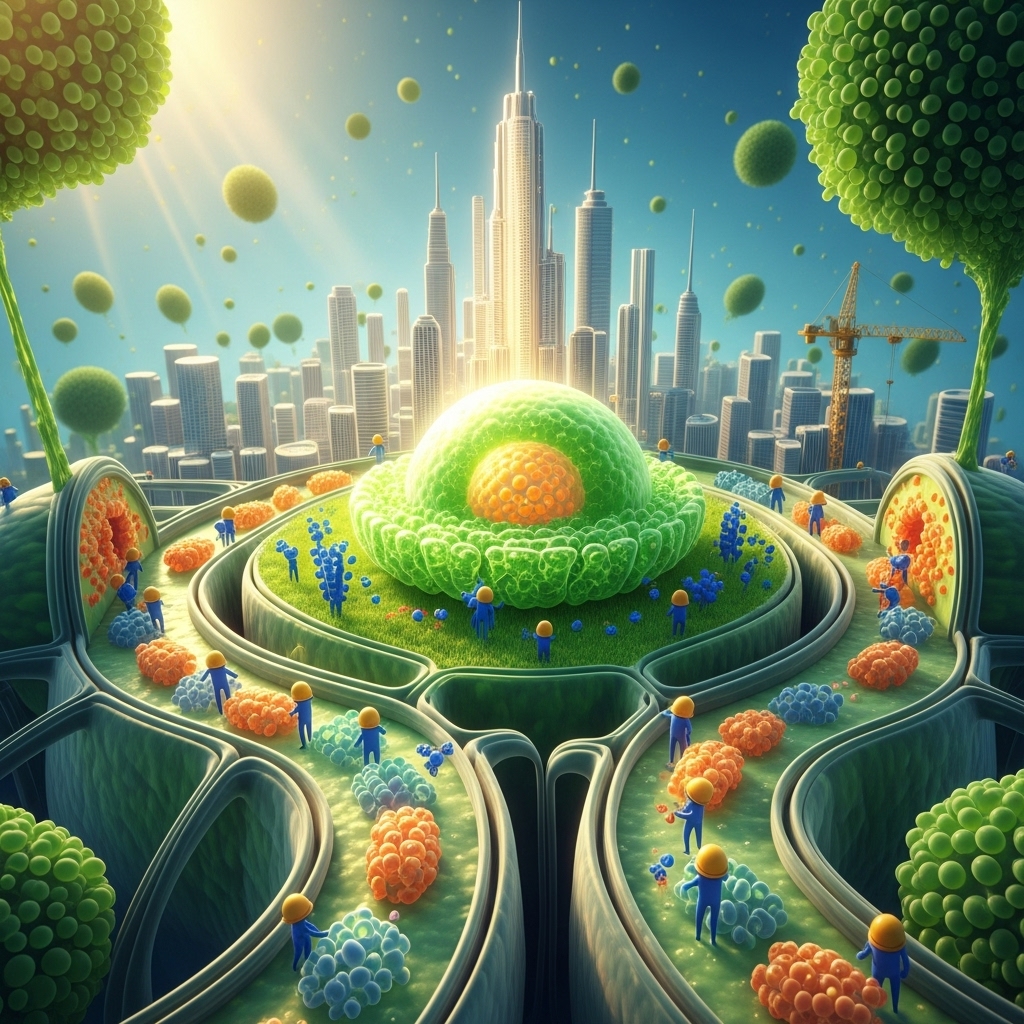
Eukaryotic cells, on the other hand, are more complex and larger than prokaryotic cells. They possess a true nucleus that houses their DNA, along with various organelles, each performing specific functions crucial for the cell’s survival and operation. Organelles such as mitochondria, endoplasmic reticulum, and Golgi apparatus are key components that help in processes like energy production, protein synthesis, and cell regulation. It’s intriguing how this level of complexity allows eukaryotic organisms, including plants, animals, and fungi, to carry out sophisticated functions. I find it remarkable how these cells work together to create life as we know it. If you’re interested in the differences between plant and animal cells, check out How Are Plant Cells and Animal Cells Different?
Characteristics of Plant Cells
Cell Structure and Organelles
When I first learned about plant cells, I was amazed by their unique structure. Unlike animal cells, plant cells have a rigid cell wall made of cellulose, which provides strength and protection. Within the plant cell, there are several key organelles that play vital roles. For instance, the nucleus contains the cell’s genetic material, while the mitochondria generate energy through cellular respiration. The endoplasmic reticulum and Golgi apparatus work together in synthesizing and transporting proteins and lipids. Additionally, the large central vacuole is crucial for maintaining turgor pressure, which keeps the plant upright and helps in storing nutrients. It’s fascinating how each part of the plant cell contributes to its lifecycle and overall health.
Cell Wall Composition
The composition of the cell wall in plant cells is something that sets them apart from other eukaryotic cells. I remember being surprised to find out that plant cell walls are primarily made of cellulose, a carbohydrate that provides structural support. This is different from the cell walls of fungi, which contain chitin, and bacteria, which have peptidoglycan. The presence of cellulose not only contributes to the rigidity of the plant but also plays a role in the plant’s ability to absorb water and nutrients. This unique aspect of plant cells highlights how evolution has shaped different life forms based on their environments and needs.
Chloroplasts and Photosynthesis
One of my favorite topics when learning about plant cells was chloroplasts. These organelles are essential for photosynthesis, allowing plants to convert sunlight into energy. Chloroplasts contain chlorophyll, the green pigment that captures light energy. I’ve always been fascinated by the idea that plants can create their food using sunlight, water, and carbon dioxide. This process not only sustains the plant but also produces oxygen as a byproduct, which is vital for many forms of life on Earth. The intricate process of photosynthesis underscores the importance of plant cells in our ecosystem and their role in maintaining life as we know it.
Comparison: Prokaryotic vs. Eukaryotic Cells
Genetic Material Organization
The organization of genetic material is one of the most significant differences between prokaryotic and eukaryotic cells. In prokaryotes, DNA is typically a single, circular chromosome located in the nucleoid region. In contrast, eukaryotic cells, including plant cells, have linear chromosomes housed within a membrane-bound nucleus. I found it interesting to learn that this organization allows for more complex regulation of gene expression and DNA replication in eukaryotes, which is crucial for development and adaptability.
Cell Division Processes
Cell division also differs notably between these two cell types. Prokaryotic cells divide through a process called binary fission, which is relatively straightforward. Eukaryotic cells, however, undergo mitosis for somatic cell division and meiosis for the production of gametes. I remember grappling with the stages of mitosis, as they involve complex processes of chromosome alignment and separation, which are necessary for maintaining genetic integrity. This complexity allows for greater genetic variation and adaptability in eukaryotic organisms.
Size Differences
Another key difference lies in the size of the cells. Generally, prokaryotic cells are smaller, typically ranging from 0.1 to 5.0 micrometers, while eukaryotic cells, including plant cells, are larger, often ranging from 10 to 100 micrometers. This size difference can be attributed to the complexity of eukaryotic cells, which need to accommodate various organelles and a more extensive cytoskeleton. I’ve found that this size difference can often influence the way we study these cells, as larger cells tend to be easier to observe and manipulate in a laboratory setting.
Are Plant Cells Prokaryotic or Eukaryotic?
Scientific Consensus
I often find myself reflecting on the fundamental nature of plant cells and their classification. It’s clear from what I’ve learned that plant cells are eukaryotic. This classification stems from their defined nucleus and the presence of membrane-bound organelles. Scientists have built a robust consensus on this topic, emphasizing the complexity and organization found within eukaryotic cells. The defining features of plant cells, such as their cell wall, chloroplasts, and large central vacuole, reinforce their eukaryotic status. I remember diving into this subject and being amazed by how these characteristics contribute not only to the plant’s function but also to its interaction with the environment around it.
Examples of Eukaryotic Organisms
In my exploration of cell biology, I discovered that many organisms are categorized as eukaryotic, including animals, fungi, and, of course, plants. Each of these groups exhibits unique traits that highlight their eukaryotic nature. For instance, animals have their own set of specialized cells—think about muscle and nerve cells—that allow for complex movement and signaling. Fungi, on the other hand, have a unique structure that enables them to decompose organic material. When I think of plants, I am reminded of their remarkable diversity, from towering trees to tiny mosses. All these organisms, while vastly different, share the eukaryotic framework that provides them with the intricacies needed for life. It’s fascinating to consider how this shared classification underpins so much diversity in the living world.
Importance of Plant Cells in Ecosystems
Role in Photosynthesis
One of the most significant contributions of plant cells to our ecosystems is their role in photosynthesis. I’ve come to appreciate this process not just in a biological sense but also in terms of its broader implications. Through photosynthesis, plants convert sunlight into chemical energy, creating glucose that fuels their growth and development. This process also produces oxygen, which is essential for the survival of many organisms, including us humans. I often think about how every breath we take is linked to the photosynthetic activities of plants. Knowing that a simple process occurring in the leaves of a plant has such a profound impact on the planet fills me with a sense of wonder. The interconnectedness of life is truly extraordinary.
Impact on Food Chains
Plant cells also play a crucial role in food chains and ecosystems. As primary producers, plants create the base of the food web. I remember learning how herbivores rely on plants for nourishment, and in turn, carnivores feed on these herbivores. This relationship illustrates the importance of plant cells in supporting diverse life forms. The energy captured by plant cells through photosynthesis is transferred through various levels of the food chain, sustaining ecosystems. I find it fascinating to think about how a single plant cell, engaged in photosynthesis, can support an entire community of organisms, demonstrating the intricate balance of nature. We often overlook the foundational role that plants play, but without them, life as we know it would not be possible.
Common Misconceptions
Are Bacteria Related to Plant Cells?
This topic often comes up in discussions about cell types: Are bacteria related to plant cells? While both bacteria and plant cells fall under the umbrella of life, they belong to different categories—prokaryotic and eukaryotic, respectively. I used to think that because both are essential to life, they must be closely related. However, I learned that bacteria are much simpler in structure, lacking a nucleus and most organelles that define eukaryotic cells. This distinction is critical for understanding how different life forms interact with their environments and fulfill their roles in ecosystems. It’s a common misconception, but recognizing these differences can deepen our appreciation for the diversity of life.
Understanding Cell Complexity
Another misconception I’ve encountered is the belief that all cells are fundamentally similar. In my studies, I realized that while all cells share some basic characteristics, their complexity can vary significantly. Plant cells, as eukaryotic cells, have specialized structures and functions that are not present in prokaryotic cells. For example, the presence of chloroplasts in plant cells is a defining feature that allows them to perform photosynthesis. Understanding this complexity helps us appreciate how different cells adapt to their specific roles in the ecosystem. I’ve found that acknowledging these differences can lead to a greater understanding of biology and the interconnectedness of life forms.
Further Reading and Resources
Recommended Textbooks
As I delved deeper into the world of plant cells and cellular biology, I found that having the right resources made a significant difference in my understanding. One of my go-to textbooks has been “Molecular Biology of the Cell” by Alberts et al. This book provides comprehensive insights into cell structure and function, and the illustrations really helped me visualize complex concepts. I remember spending hours flipping through its pages, captivated by the diagrams that brought the inner workings of cells to life.
Another excellent resource is “Plant Biology” by Taiz and Zeiger. This book focuses specifically on plants and offers a detailed exploration of plant physiology, including the roles of various cell types and organelles. I appreciated how the authors integrated real-world applications, discussing how plant cells contribute to agriculture and ecology, which made the material even more relatable for me.
If you’re looking for something more focused on cell biology basics, “Cell Biology” by Thomas D. Pollard and William C. Earnshaw is a great choice. It’s straightforward and accessible, making it perfect for beginners or anyone wanting a refresher. I found it particularly helpful when I needed to clarify concepts I had learned in class.
Online Courses and Lectures
In addition to textbooks, I can’t recommend online courses enough! Platforms like Coursera and edX offer various courses on cell biology that cover both prokaryotic and eukaryotic cells. One course that stood out to me was “Cell Biology: Mitochondria” on Coursera, which dives into the energy-producing organelles that are crucial for cellular function. I remember feeling a rush of excitement as I learned about the role of mitochondria, and how understanding them can help us appreciate cellular energy dynamics.
There are also free resources available on YouTube, where educators break down complex topics into digestible segments. Channels like CrashCourse provide engaging videos on cellular structures and processes. I often found myself watching these videos late at night, motivated by the energetic presentations that made learning feel less like a chore and more like an adventure. I learned a lot just from watching those short clips, and I found it helpful to see information presented in multiple ways.
Additionally, websites like Khan Academy offer interactive lessons and quizzes that can reinforce what you learn. I remember taking their quizzes after watching a lesson on plant cells and feeling proud when I got the answers right. It’s a rewarding experience that reinforces the knowledge in a fun way.
If you’re someone who enjoys hands-on learning, there are lab courses available at local community colleges or universities. Participating in these labs can provide a practical experience that complements theoretical knowledge. I participated in a lab course during my studies, and it was fascinating to see plant cells under a microscope, experiencing that ‘aha’ moment when I could relate what I was reading in textbooks to what I was observing in real life.
Lastly, I always recommend checking out research articles and journals like “The Plant Cell” or “Plant Physiology.” These journals provide cutting-edge research and reviews in the field of plant biology. Although some of these articles can be dense, I found that reading them helped me stay updated on the latest discoveries and advancements related to plant cells. It’s exciting to see how science progresses and deepens our understanding of these essential organisms.
Frequently Asked Questions
What type of cells are plant cells classified as?
Plant cells are classified as eukaryotic cells, which means they have a defined nucleus and specialized organelles.
What are the main differences between prokaryotic and eukaryotic cells?
Prokaryotic cells lack a nucleus and membrane-bound organelles and are generally smaller and simpler. In contrast, eukaryotic cells have a true nucleus that houses DNA and various organelles that perform specific functions.
What is the function of chloroplasts in plant cells?
Chloroplasts are essential for photosynthesis, allowing plants to convert sunlight into energy. They contain chlorophyll, which captures light energy to produce glucose and oxygen.
What is the role of the cell wall in plant cells?
The cell wall, primarily made of cellulose, provides strength and protection to plant cells. It also plays a role in the absorption of water and nutrients.
How do eukaryotic cells divide compared to prokaryotic cells?
Eukaryotic cells undergo mitosis for somatic cell division and meiosis for gamete production, while prokaryotic cells divide through a simpler process called binary fission.
What are some key organelles found in plant cells?
Key organelles in plant cells include the nucleus, mitochondria, endoplasmic reticulum, Golgi apparatus, and large central vacuole, each performing vital functions for the cell’s survival and operation.
Why are plant cells important for ecosystems?
Plant cells play a crucial role in ecosystems by performing photosynthesis, which produces oxygen and glucose, and serving as primary producers in food chains that support diverse life forms.
What is the composition of plant cell walls?
The composition of plant cell walls is primarily cellulose, a carbohydrate that provides structural support, differing from the cell walls of fungi (which contain chitin) and bacteria (which have peptidoglycan).
How does the size of plant cells compare to prokaryotic cells?
Plant cells are generally larger than prokaryotic cells, often ranging from 10 to 100 micrometers, while prokaryotic cells typically range from 0.1 to 5.0 micrometers.
Can bacteria be classified as eukaryotic cells?
No, bacteria are classified as prokaryotic cells, which are structurally simpler than eukaryotic cells like plant cells, lacking a nucleus and most organelles.