
Spathiphyllum, popularly known as the Peace Lily, is considered toxic to cats. Ingesting parts of this plant can lead to mild to moderate health issues for our feline friends. If you’re interested in learning about other plants and their meanings, check out Monstera Plant Meaning – Symbolism, Beliefs, Religious Teachings.
Overview of Spathiphyllum (Peace Lily)
What is a Spathiphyllum Plant?
The Spathiphyllum, or Peace Lily, is a beautiful, evergreen plant cherished for its lush green leaves and striking white flowers. Originally from tropical regions of Central and South America, these plants have become popular houseplants due to their ability to thrive in low-light conditions and their air-purifying qualities. When I first brought home my Peace Lily, I was drawn to its elegance and the calming presence it brought to my living space. However, I soon learned that there’s more to this plant than meets the eye, especially when it comes to pet safety.
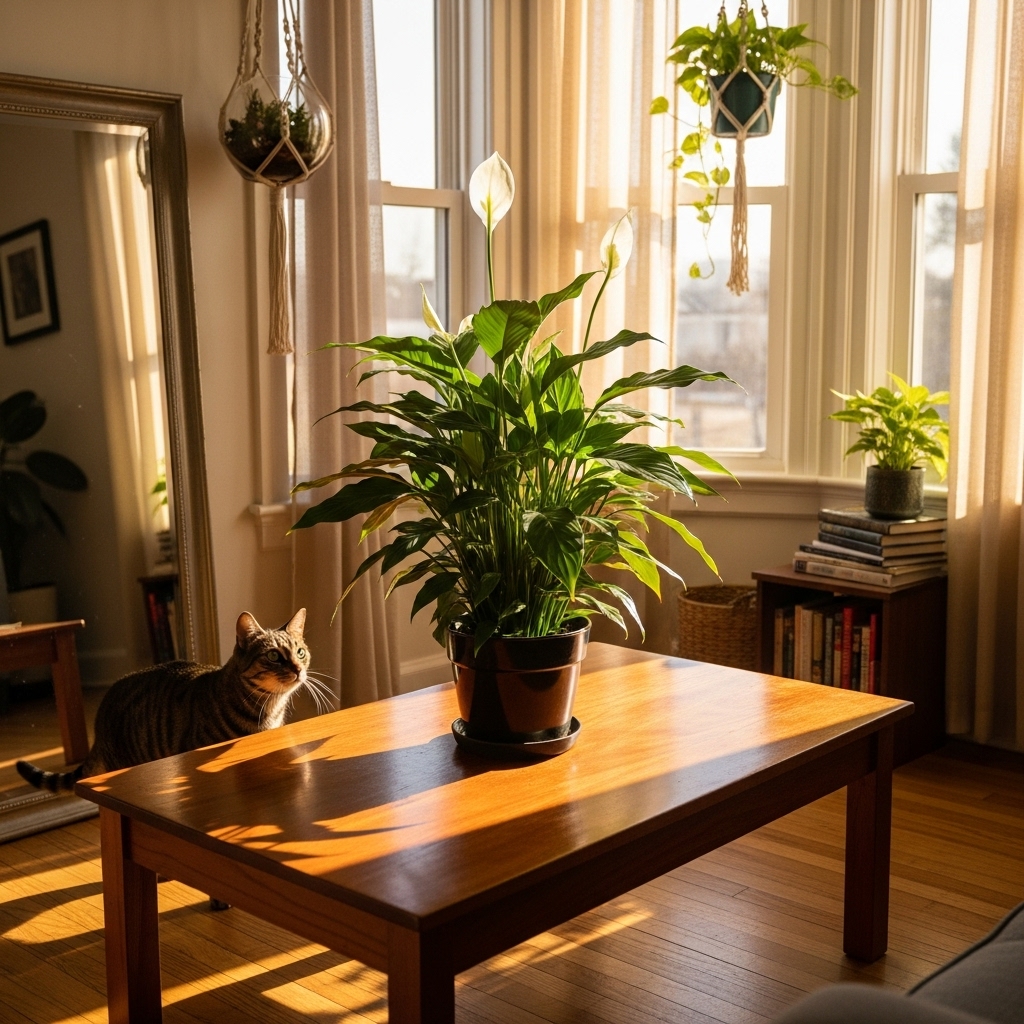
Common Varieties of Peace Lilies
There are several varieties of Peace Lilies, each with unique features. The most common ones include:
- Spathiphyllum wallisii: This variety is known for its classic white blooms and glossy leaves.
- Spathiphyllum ‘Mauna Loa’: Larger than the wallisii, it produces more prominent white flowers and can grow up to 4 feet tall.
- Spathiphyllum ‘Clevelandii’: This variety has elongated leaves and is prized for its striking appearance.
Each variety has its charm, but as a cat owner, it’s essential to remember that they all carry the same toxicity risk.
Characteristics and Care Requirements
Peace Lilies are known for their low maintenance requirements, making them a favorite for both novice and seasoned plant lovers. They prefer indirect sunlight and can thrive in various soil types as long as they are well-draining. I’ve found that watering them once a week works well, but I always check the soil moisture first to avoid overwatering. They also benefit from a humid environment, which is why I often mist my plants or place them in bathrooms or kitchens where humidity levels are higher. However, while they’re easy to care for, their toxic nature can pose a risk to curious cats who might be tempted to nibble on their leaves. If you’re interested in native plants, consider reading Planting for a Purpose: A Guide to Michigan’s Native Flora.
Understanding Plant Toxicity
What Does ‘Poisonous’ Mean?
When we talk about plant toxicity, we refer to the potential harm a plant can cause if ingested. For pet owners, this is a crucial consideration. A poisonous plant can cause a range of reactions, from mild stomach upset to severe health issues. I remember when I first learned about plant toxicity— it was an eye-opener for me. I realized that many common houseplants are not safe for pets, and it made me think twice before bringing a new plant home.
How Plant Toxicity is Determined
The toxicity of plants is often determined by their chemical composition. Many plants contain compounds that can be harmful to pets, including alkaloids, calcium oxalates, and saponins. Calcium oxalates, for instance, are found in Peace Lilies and can irritate the mouth and throat if ingested. Toxicity is classified based on the severity of symptoms and the likelihood of serious health issues. Various organizations, like the ASPCA, maintain lists of toxic plants, which I often refer to when considering new plants for my home.
Common Symptoms of Plant Poisoning in Cats
As a cat owner, it’s vital to recognize the symptoms of plant poisoning. If a cat ingests a toxic plant, they may exhibit a range of symptoms, such as:
- Drooling
- Vomiting
- Diarrhea
- Difficulty swallowing
- Oral irritation or swelling
When my cat, Luna, accidentally chewed on a toxic plant once, I noticed excessive drooling and some vomiting. It was alarming, and that experience taught me to keep a close eye on what plants I have around her. The symptoms can vary based on the amount ingested and the individual cat’s health, but being aware of these signs can help ensure timely action.
Are Spathiphyllum Plants Poisonous to Cats?
Scientific Consensus on Peace Lilies and Cats
As a cat owner, it can be quite worrying to learn which plants in our homes could potentially harm our furry friends. The scientific consensus is clear: Peace Lilies are indeed considered toxic to cats. The ASPCA and other reputable organizations have classified Spathiphyllum as toxic, confirming that ingestion can lead to various health issues. I remember my initial reaction when I read this; I felt a mix of concern and determination to ensure my home is safe for Luna. Knowing that these beautiful plants could pose a risk made me more vigilant in my choices as a plant lover.
Specific Toxic Compounds in Spathiphyllum
What makes Peace Lilies harmful to cats are specific compounds found in the plant. The primary culprits are calcium oxalates. These tiny, needle-like crystals can cause irritation and inflammation in the mouth and throat of our pets when ingested. In my research, I found that even small amounts of Peace Lily can have an adverse effect. I learned that these compounds can also trigger discomfort in humans, but it’s particularly concerning for our pets, whose reactions can be much more severe. It’s a sobering reminder of how beautiful plants can sometimes hide dangers.
Severity of Poisoning Symptoms in Cats
The severity of symptoms that cats might experience after ingesting Peace Lilies can vary widely. In many cases, symptoms may be mild, leading to drooling or upset stomach. However, in more serious cases, cats can experience significant oral discomfort, which can lead to more severe reactions like difficulty swallowing or even respiratory distress. I think it’s essential for us as pet owners to be aware of the potential risks, as not all cats react the same way. For instance, Luna has a sensitive stomach, so I know she might react more severely than another cat might. Being informed about these variations can help us prepare and respond appropriately should an incident occur.
What to Do If Your Cat Ingests a Peace Lily
Immediate Actions to Take
If you suspect that your cat has ingested any part of a Peace Lily, it’s important to act quickly. First, I recommend staying calm. Panic can make it harder to think clearly. The first step is to remove the plant from your cat’s reach to prevent further ingestion. Then, you should examine your cat for any immediate symptoms like excessive drooling or signs of distress. In my experience, having a first-aid kit for pets on hand can be extremely helpful during such emergencies. It can include things like a digital thermometer, gauze, and the phone numbers of your vet and the nearest emergency animal hospital.
When to Contact Your Veterinarian
If your cat shows any signs of distress after ingesting a Peace Lily, such as persistent vomiting, difficulty swallowing, or unusual lethargy, it’s crucial to contact your veterinarian right away. I remember when Luna had a similar scare; her vet reassured me that it’s always better to be safe than sorry. They have the knowledge and tools to assess the situation accurately and can provide the best advice on what to do next. Also, if you can, try to take a piece of the plant with you or capture a photo to show the vet; this can help them understand the potential toxicity better.
Potential Treatment Options
When it comes to treatment, your veterinarian may suggest several options based on the severity of the situation. For mild cases, they might recommend monitoring your cat at home and providing supportive care, such as ensuring they stay hydrated. In more severe cases, your vet may administer medications to relieve symptoms or, in some instances, induce vomiting to prevent further absorption of the toxins. I once had to take Luna to the vet for a similar incident, and I was grateful for their swift action, which made a world of difference. Being prepared and knowing what to expect can help ease the anxiety of such situations. If you’re in the mood for a treat afterward, consider checking out How Are Maple Bars Made? Recipe Overview.
Safe Alternatives to Spathiphyllum for Cat Owners
Non-Toxic Houseplants for Cats
Finding non-toxic plants that are safe for our feline companions can be a rewarding experience. There are many beautiful houseplants that won’t pose a risk to our pets. Some of my favorites include spider plants, Boston ferns, and calathea. I’ve noticed that these plants not only enhance my home’s decor but also give me peace of mind knowing that Luna can freely explore without the risk of getting sick. Each of these plants offers unique aesthetics while being safe choices for our furry friends.
Benefits of Choosing Cat-Friendly Plants
Choosing cat-friendly plants comes with numerous benefits. Aside from ensuring the safety of our pets, many of these plants also improve indoor air quality and add a lively touch to our homes. They can help create a more vibrant living space, and I’ve found that having plants around boosts my mood and well-being. Plus, having a pet-friendly plant collection allows me to enjoy my gardening hobby without worrying about Luna’s safety. It’s a win-win!
Preventing Cat Access to Toxic Plants
Best Practices for Plant Placement
As a cat owner, I know how curious our feline friends can be. They’re always exploring, jumping, and sometimes getting into places we wish they wouldn’t. To keep my Peace Lily and other potentially toxic plants safe from Luna, I’ve learned a few effective strategies. One of the best practices I’ve adopted is to place my plants in locations that are out of reach. For example, I often put my Peace Lily on a high shelf or a hanging planter. This way, Luna can’t easily access it, and I can still enjoy the beauty of the plant. I also try to think about where to put new plants before bringing them home; considering the layout of my living space helps me create a safe environment for her.
Using Deterrents to Keep Cats Away
Sometimes, even with the best placement, I found that Luna still managed to find her way to the plants. That’s when I turned to deterrents. I’ve used citrus peels and sprays, as cats generally dislike citrus scents. Sprinkling some peels around the base of my Peace Lily or using a citrus-scented spray has been an excellent way to keep her at bay. Additionally, I discovered some commercial cat deterrent sprays that are safe to use around plants. It’s been fascinating to see how effective these simple solutions can be. I’ve found that using deterrents not only protects my plants but also helps to keep Luna safe.
Creating a Safe Indoor Environment
Creating a safe indoor environment goes beyond just plant placement and deterrents. I’ve learned to curate my home to make it as pet-friendly as possible. This includes regularly checking my plants and removing any dead leaves or flowers that might attract Luna’s attention. I also keep an eye on her behavior; if I notice her showing too much interest in a plant, I’ll take steps to remove it from her reach or replace it with a safer option. A few weeks ago, I decided to create a dedicated space for Luna filled with her favorite toys and climbing structures. This not only keeps her entertained but also diverts her attention away from the plants. It’s amazing how a little creativity and foresight can make a big difference in ensuring our furry companions are safe and happy.
Frequently Asked Questions (FAQs)
Can Peace Lilies cause long-term health issues in cats?
In my research, I found that while Peace Lilies can cause immediate discomfort and symptoms in cats if ingested, they typically do not lead to long-term health issues. Most cats will recover fairly quickly with proper care. However, it’s always wise to consult your veterinarian if you’re concerned about potential long-term effects, especially if your cat has ingested a significant amount. Just to be safe, I keep a close watch on Luna after any incident and make sure she’s back to her usual self.
Are there any symptoms that are particularly dangerous?
Yes, some symptoms can signal a more serious reaction. I learned that if a cat exhibits severe difficulty breathing or shows extreme lethargy after ingesting a Peace Lily, it’s crucial to seek veterinary assistance immediately. While most symptoms like drooling and vomiting can be managed, severe respiratory distress or persistent gastrointestinal upset warrants urgent care. It’s always better to err on the side of caution, as I’ve learned from my own experiences.
How can I tell if my cat is experiencing distress from a plant?
Recognizing distress in our furry friends can sometimes be challenging. I’ve found that paying attention to changes in behavior is key. If Luna suddenly becomes more lethargic than usual, stops eating, or starts hiding, it could indicate something is wrong. Other signs to look for include excessive drooling, vomiting, or changes in vocalization. Keeping a close eye on her and being familiar with her normal behavior has helped me detect any issues early on, allowing me to take action quickly.
What other common houseplants are toxic to cats?
As a plant lover, I’ve had to educate myself on various houseplants to keep my home safe for Luna. Some common plants that are toxic to cats include lilies (not just Peace Lilies), philodendrons, pothos, and certain types of ferns. It’s been eye-opening to discover how many popular houseplants can pose risks. I recommend checking resources like the ASPCA’s list of toxic plants when considering new additions to your home. This way, I can enjoy my greenery without the worry of harming my pet.
Frequently Asked Questions
Is Spathiphyllum (Peace Lily) toxic to cats?
Yes, Spathiphyllum, commonly known as Peace Lily, is considered toxic to cats. Ingesting parts of this plant can lead to mild to moderate health issues for felines.
What symptoms might indicate a cat has ingested a Peace Lily?
Common symptoms of plant poisoning in cats include drooling, vomiting, diarrhea, difficulty swallowing, and oral irritation or swelling.
What specific compounds in Peace Lilies make them toxic to cats?
The primary toxic compounds in Peace Lilies are calcium oxalates, which can cause irritation and inflammation in the mouth and throat if ingested by cats.
What should I do if my cat ingests a Peace Lily?
If you suspect your cat has ingested a Peace Lily, stay calm and remove the plant from their reach. Examine your cat for symptoms and contact your veterinarian if they show any signs of distress.
Can Peace Lilies cause long-term health issues in cats?
While Peace Lilies can cause immediate discomfort and symptoms in cats if ingested, they typically do not lead to long-term health issues. Most cats recover fairly quickly with proper care.
How can I tell if my cat is experiencing distress from a plant?
Signs of distress in cats may include lethargy, loss of appetite, hiding, excessive drooling, vomiting, or changes in vocalization. Observing your cat’s normal behavior can help detect issues early.
Are there any particular symptoms that are considered dangerous?
Yes, severe difficulty breathing or extreme lethargy after ingesting a Peace Lily are serious symptoms that require immediate veterinary assistance.
What are some other common houseplants that are toxic to cats?
Other common plants that are toxic to cats include lilies, philodendrons, pothos, and certain types of ferns. It’s important to check resources like the ASPCA’s list of toxic plants.
What are the care requirements for Peace Lilies?
Peace Lilies prefer indirect sunlight, well-draining soil, and benefit from a humid environment. They are low maintenance and typically require watering once a week, but it’s important to check the soil moisture first.
What are some non-toxic houseplants safe for cats?
Some non-toxic houseplants that are safe for cats include spider plants, Boston ferns, and calathea. These plants enhance home decor without posing a risk to pets.