
Spider plants are not poisonous to cats, making them a safe choice for pet owners. I’ve had spider plants in my home for years, and my cats have never shown any adverse reactions to them. For more information, you can read about Are Spider Plants Toxic to Cats? What Pet Owners Must Know.
Understanding Spider Plants
What Are Spider Plants?
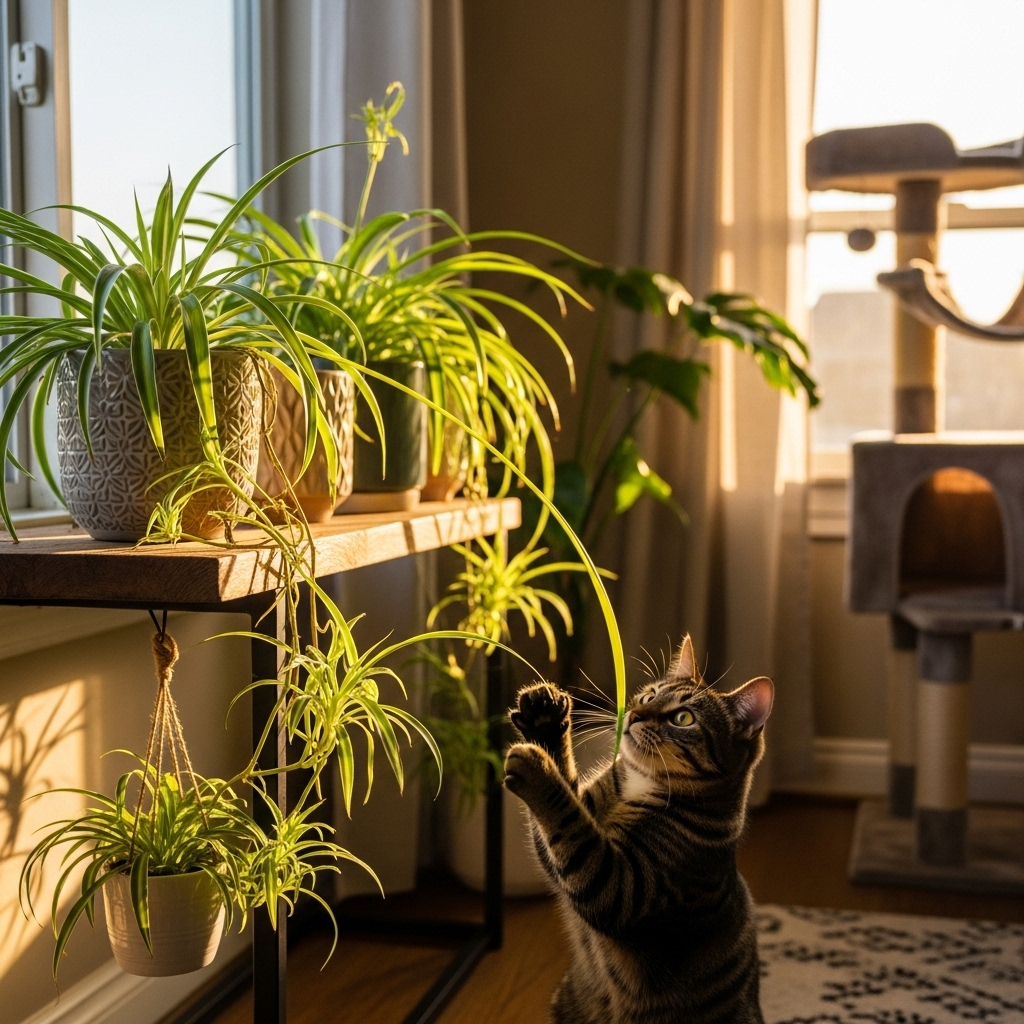
Spider plants, scientifically known as Chlorophytum comosum, are popular houseplants known for their attractive arching leaves and unique spider-like offshoots. These plants are relatively easy to care for, which is one reason they’ve become a staple in many homes. I remember the first time I brought a spider plant home; its vibrant green leaves instantly brightened up my living space. They thrive in a variety of conditions and can adapt well to different light settings, though they prefer bright, indirect sunlight. I’ve found that they are quite forgiving if you forget to water them occasionally, which is a plus for anyone with a busy lifestyle.
Common Varieties of Spider Plants
There are several varieties of spider plants, but the most common ones are the classic green spider plant and the variegated versions, which have creamy white stripes along their leaves. I personally lean towards the variegated type because I love how the different colors add a bit of flair to my decor. There’s also the ‘Bonnie’ variety, which has curly leaves, adding a unique twist to the traditional shape. Each type shares the same basic care requirements, making them all suitable for both novice and experienced plant owners.
Are Spider Plants Poisonous to Cats?
Overview of Toxicity Levels
When it comes to our feline friends, the good news is that spider plants are considered non-toxic. This means that if your cat decides to nibble on a leaf or two, they are unlikely to suffer any serious health issues. I remember the first time I saw my cat, Whiskers, munching on one of my spider plants. I panicked for just a moment, but then I did some research and found out that spider plants actually contain compounds that can be mildly hallucinogenic to cats, akin to catnip. While this might not be harmful, it’s always a good idea to keep an eye on them to ensure they aren’t eating too much.
Comparison with Other Common Houseplants
In the world of houseplants, not all are created equal when it comes to pet safety. Many popular plants, like lilies and philodendrons, can be toxic to cats, causing a range of symptoms from mild stomach upset to severe reactions. This contrast is why I always advocate for checking a plant’s toxicity before bringing it into a home with pets. I’ve found that spider plants stand out as a safe option among houseplants. Knowing that I can enjoy the beauty of these plants without worrying about my pets is incredibly reassuring. In fact, if you’re looking for non-toxic houseplants, spider plants are often recommended alongside others like Boston ferns and bamboo palms. For a comprehensive guide, check out What Plants Are Toxic to Cats? Full List + Symptoms.
Symptoms of Spider Plant Ingestion in Cats
Common Signs of Poisoning
While spider plants are non-toxic, if a cat eats too many leaves, they may experience some mild gastrointestinal upset. This could manifest as vomiting or diarrhea. I’ve seen this happen with my cats after they had a bit too much of the green goodness. It’s generally not serious, but it’s important to monitor their behavior. If your cat starts showing signs of distress, it’s best to keep an eye on them for a bit. The symptoms are usually mild and resolve on their own, but as a concerned pet owner, I always prefer to err on the side of caution.
When to Seek Veterinary Care
There are times when it’s crucial to seek veterinary care, even with non-toxic plants. If your cat is experiencing prolonged vomiting, severe lethargy, or any unusual behavior after nibbling on a spider plant, it’s a good idea to consult your veterinarian. In my experience, they appreciate being kept in the loop about any potential ingestion of plants, even if they are not toxic. It helps them provide the best care possible. I’ve learned that knowing when to act can make a significant difference in my pet’s health and well-being.
Safe Houseplants for Cat Owners
Non-Toxic Alternatives to Spider Plants
If you’re like me and love having greenery around but also want to ensure your furry friends are safe, there are plenty of non-toxic houseplants to consider. Besides spider plants, I’ve found several other options that add beauty to my home without the worry of harming my pets. Some of my favorites include:
- Boston Fern: This lush, leafy plant is not only safe for cats but also great for improving indoor air quality. I love how it adds a touch of elegance to any room.
- Ponytail Palm: With its unique appearance and minimal care requirements, the ponytail palm has become a staple in my home. It’s safe for pets and adds a fun twist to my plant collection.
- Parlor Palm: This low-light lover is perfect for those who might not have the brightest spots in their home. Plus, it’s non-toxic, which gives me peace of mind.
- Areca Palm: Known for its feathery leaves, the areca palm is another pet-friendly choice that brings a tropical vibe to any space.
Choosing these alternatives not only helps create a vibrant atmosphere but also ensures that my cats can roam freely without risking their health. I’ve often found them lounging near these plants without a care in the world.
Benefits of Choosing Safe Plants
Opting for non-toxic plants has many benefits beyond just ensuring the safety of our pets. For one, it creates a more harmonious living environment. Knowing that I can enjoy my plants without worrying about my cats getting sick brings such relief. I also think that having safe plants encourages a more relaxed atmosphere at home. My cats feel free to explore and play without the risk of getting into trouble.
Another advantage is the variety of options available. There’s such a wide range of colors, shapes, and sizes in non-toxic plants that I can easily find ones that match my style. Plus, these plants are often easier to care for since they tend to be hardy and resilient.
Lastly, having a collection of safe plants opens up opportunities for learning and sharing. I remember when I hosted a small gathering and showed off my non-toxic plant collection. It sparked some great conversations about plant care and safety, and it was nice to see my friends feel comfortable around my greenery.
How to Keep Your Cat Safe Around Spider Plants
Placement of Spider Plants in Your Home
Finding the right spot for my spider plants has been an important part of keeping my cats safe. While they’re not toxic, I still want to prevent my curious kitties from munching on them too much. I’ve learned that placing spider plants in places that are just out of reach for my cats works wonders. High shelves or hanging planters are excellent choices. I love the look of a trailing spider plant cascading down from a shelf; it’s beautiful and keeps the plant safe.
Another strategy I’ve employed is grouping my spider plants with other non-toxic plants. This not only creates a lovely display but also makes it a little more challenging for my cats to access them. I’ve noticed that when my plants are slightly elevated, my cats tend to lose interest, which gives me peace of mind.
Creating a Cat-Friendly Environment
Creating a cat-friendly environment goes beyond just plant placement. Over the years, I’ve realized that providing plenty of alternative distractions keeps my cats entertained and less likely to nibble on plants. Having a variety of toys, scratching posts, and cozy spots for napping has worked wonders. I often rotate the toys to keep things interesting, and I’ve noticed that my cats spend more time playing than exploring the plants.
Another tip is to encourage your cats to enjoy cat grass, which is safe and appealing to them. I’ve found that having a little patch of cat grass available keeps them occupied and satisfies their cravings for greens. This way, they’re less inclined to nibble on my beloved spider plants. Creating this balance has made our home a happier place for both my plants and my furry companions.
What to Do If Your Cat Ingests Spider Plants
Immediate Steps to Take
Even though spider plants are non-toxic, I’ve learned that it’s essential to be prepared just in case one of my cats decides to snack on them. If I catch my cat in the act of munching on a spider plant, my first instinct is to stay calm. I remember the first time this happened; my heart raced, but I knew panicking wouldn’t help. Instead, I gently removed the plant from their reach and checked to see how much they had eaten. It’s important to observe their behavior afterward. Are they acting normally? Or do they seem a bit off?
If my cat shows any signs of mild gastrointestinal upset, like a bit of vomiting or diarrhea, I make sure to keep them comfortable and hydrated. I’ve found that providing them with fresh water and a cozy spot to rest helps. Most of the time, they bounce back quickly, but if they seem lethargic or uncomfortable, I don’t hesitate to take further action. I’ve learned that it’s always best to be cautious and attentive when it comes to my pets.
Consulting Your Veterinarian
In my experience, it’s never a bad idea to consult with a veterinarian if there’s any uncertainty about a plant ingestion. I remember one occasion when my cat, Luna, ingested a few leaves. Even though I knew spider plants were safe, I still reached out to my vet for peace of mind. They appreciated that I called and were more than willing to answer my questions. The vet reassured me that while it was unlikely to be serious, keeping them informed about any plant ingestion is always helpful.
If my cat starts showing signs of distress after nibbling on a spider plant, I make sure to describe their symptoms to the vet. This includes details like how much they ate, any changes in behavior, and how long ago it happened. Being prepared with this information helps the vet provide the best advice. I’ve learned that open communication with my veterinarian is key to ensuring my cats stay healthy and happy.
Additional Safety Tips for Cat Owners
Educating Yourself on Plant Toxicity
One of the most important things I’ve done as a pet owner is educate myself about plant toxicity. I think it’s essential to know which plants are safe and which to avoid. I’ve spent time researching various houseplants and keeping a list of non-toxic options at hand. By knowing what I can safely bring into my home, I feel more confident in my choices. There are even apps available that help identify plants and their toxicity levels, which I find incredibly handy. Whenever I’m tempted to buy a new plant, I check the app to ensure it’s safe for my feline friends.
I also enjoy sharing this information with fellow cat owners. I’ve found that talking about plant safety can open up discussions about pet care in general. It’s comforting to connect with others who share the same concerns, and we often exchange tips about creating a safe environment for our pets.
Resources for Identifying Safe Plants
In addition to apps, there are excellent online resources and books available that focus on pet safety and houseplants. Some of my favorites include the ASPCA’s website, which has a comprehensive list of toxic and non-toxic plants. I often refer to it whenever I’m considering adding a new plant to my collection. I’ve also found local gardening clubs or pet forums to be great places for gathering information about safe houseplants. Connecting with like-minded individuals can make the journey of being a pet owner even more enjoyable.
Local nurseries are another fantastic resource. The staff usually have a wealth of knowledge about the plants they sell and can advise on pet safety. I remember visiting a local nursery where I struck up a conversation with the owner about my cats. They suggested several non-toxic plants that not only fit my style but were also safe for my pets. That personal touch made my plant shopping experience enjoyable and informative.
Ultimately, being proactive about plant safety has made a significant difference in my life as a cat owner. By learning about plant toxicity and utilizing the resources available, I feel empowered to create a safe and beautiful home for both my plants and my furry companions. It brings me so much joy to see my cats happily exploring our space, knowing I’ve made choices that keep them healthy and safe. For additional insights, you can also check out Are Snake Plants Toxic to Cats? Signs Symptoms & Help.
Frequently Asked Questions
Are spider plants safe for cats?
Yes, spider plants are not poisonous to cats, making them a safe choice for pet owners. If a cat nibbles on a leaf, they are unlikely to suffer any serious health issues.
What are spider plants?
Spider plants, scientifically known as Chlorophytum comosum, are popular houseplants known for their attractive arching leaves and unique spider-like offshoots. They are relatively easy to care for and thrive in a variety of conditions.
What varieties of spider plants are there?
The most common varieties of spider plants include the classic green spider plant, variegated versions with creamy white stripes, and the ‘Bonnie’ variety, which has curly leaves.
What symptoms may occur if a cat eats spider plants?
If a cat eats too many leaves of a spider plant, they may experience mild gastrointestinal upset, which could include vomiting or diarrhea. These symptoms are generally mild and resolve on their own.
When should I seek veterinary care for my cat?
If your cat experiences prolonged vomiting, severe lethargy, or any unusual behavior after nibbling on a spider plant, it’s important to consult your veterinarian.
What are some non-toxic alternatives to spider plants?
Some non-toxic houseplants to consider include Boston ferns, ponytail palms, parlor palms, and areca palms. These plants are safe for cats and add beauty to your home.
How can I keep my cat safe around spider plants?
To keep your cat safe, place spider plants in areas that are out of reach, such as high shelves or hanging planters. Grouping them with other non-toxic plants can also deter cats from accessing them.
What should I do if my cat ingests spider plants?
If you catch your cat munching on a spider plant, remain calm and gently remove the plant from their reach. Observe their behavior for any signs of gastrointestinal upset.
How can I educate myself about plant toxicity?
Educating yourself about plant toxicity is essential. You can research various houseplants, keep a list of non-toxic options, and use apps that identify plant toxicity levels to ensure safe choices for your home.
What resources are available for identifying safe plants?
Useful resources for identifying safe plants include the ASPCA’s website, local gardening clubs, pet forums, and local nurseries, where knowledgeable staff can advise on pet safety.