
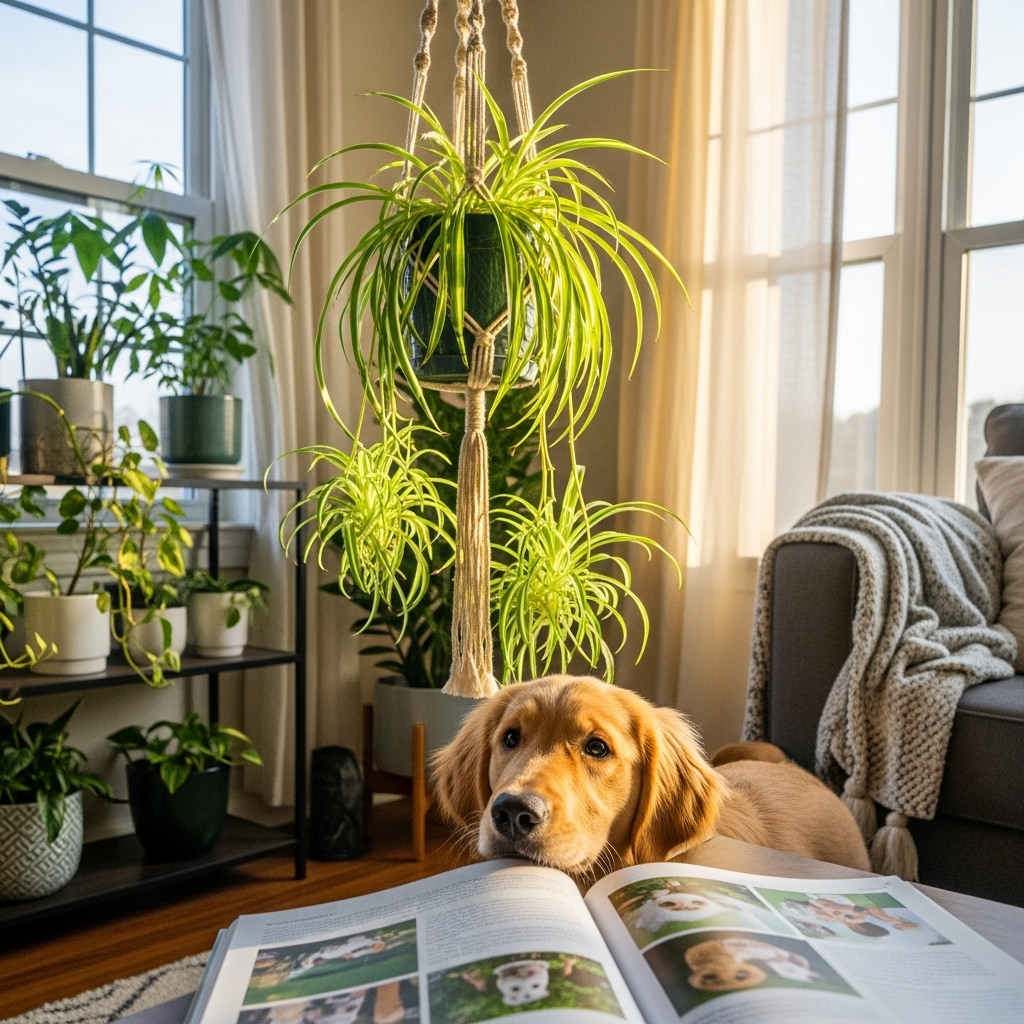
Spider plants are not considered poisonous to dogs, making them a safe choice for pet owners. However, while they won’t cause serious harm, ingestion can still lead to mild digestive upset. Read Interesting article: Are Spider Plants Toxic to Dogs? Safety Guide
Table of Contents
Understanding Spider Plants
What are Spider Plants?
Spider plants, scientifically known as Chlorophytum comosum, are popular houseplants known for their long, arching leaves and unique spider-like offshoots, or “pups.” I remember the first time I saw a spider plant at a friend’s house; its lush green foliage immediately drew me in. These plants are native to Africa, and they thrive in a variety of indoor conditions, making them a staple in many homes. They are often praised not just for their aesthetic appeal but also for their air-purifying qualities. I’ve had a few in my living space, and I can honestly say they add a vibrant touch to any room.
Common Characteristics of Spider Plants
Spider plants are characterized by their long, slender leaves that can grow up to 12 inches long. The leaves are typically green with a creamy white stripe running down the center, creating a beautiful contrast. One of the most fascinating things about these plants is their growth pattern. They produce small white flowers, which can develop into tiny plantlets that dangle down like spiders from a web, hence the name. I often found these little pups a joy to watch as they grow; it feels like watching a family expand. Spider plants are also known for being incredibly resilient, adapting well to various light conditions, though they do best in indirect sunlight.
Popular Varieties of Spider Plants
There are several varieties of spider plants that I’ve come across, each with its unique charm. The most common is the classic green spider plant, but there are also varieties like the variegated spider plant (Chlorophytum comosum ‘Variegatum’), which has green leaves with yellow edges. Another variety is the ‘Bonnie’, which has curly leaves, adding a whimsical touch to plant displays. I’ve tried both the classic and the Bonnie variety, and while I love the traditional look, the Bonnie really caught my eye with its playful twists. Each variety brings something special to the table, making it easy to find one that suits your style.
Are Spider Plants Poisonous to Dogs?
Overview of Toxicity in Plants
When it comes to our furry friends, it’s important to know which plants are safe and which are not. Many pet owners, including myself, worry about the potential dangers that houseplants might pose. Toxicity in plants can vary significantly, with some causing minor irritations and others leading to severe health issues. The ASPCA provides a great resource for identifying toxic and non-toxic plants. It’s comforting to know that spider plants fall into the non-toxic category for dogs, but it doesn’t mean we shouldn’t keep an eye on how our pets interact with them. Read Interesting article: Are Aloe Plants Poisonous to Cats? Important Safety Info
Specific Effects of Spider Plants on Dogs
While spider plants are generally safe for dogs, there can be some mild reactions if a dog ingests them. From my experience, many pet owners have reported that their dogs show curiosity towards these plants, often nibbling on the leaves or digging into the soil. If your dog happens to munch on a spider plant, the most common outcomes are usually mild gastrointestinal upset. This can mean a little vomiting or diarrhea, but nothing that typically requires serious medical attention. It’s always best to monitor their behavior after any ingestion, just to be safe.
Symptoms of Ingestion in Dogs
If a dog consumes part of a spider plant, here are a few symptoms that might arise. I’ve learned that while it’s rare for a serious reaction to occur, some signs can be quite common. Look out for vomiting, diarrhea, or changes in appetite. My dog once nibbled on my spider plant, and I noticed her stomach seemed a bit upset afterward. She had a couple of bouts of vomiting, but after a day of rest and a bland diet, she was back to her usual self. If you see these symptoms, it’s usually nothing too alarming, but it’s always good to consult your vet if you have concerns.
Safety and Precautions
How to Keep Your Dog Safe from Spider Plants
While spider plants are generally non-toxic to dogs, it’s still wise to take some precautions to ensure our furry friends are safe. One thing I’ve found helpful is placing my plants out of reach. This can mean using high shelves or hanging planters, especially if you have a curious pup who loves to explore. I remember when I first got my spider plant; I placed it on a windowsill, thinking it would be safe. However, I quickly realized my dog could easily reach it. Since then, I’ve made a habit of keeping my plants in spots that are both safe for my dog and aesthetically pleasing for me.
Another tip is to train your dog to understand boundaries. Teaching commands like “leave it” can help them resist the urge to chew on your plants. I started working on this command with my dog around the same time I introduced new plants into our home, and it really made a difference. It’s not just about spider plants; it’s a great way to ensure they don’t munch on anything harmful.
Alternative Non-Toxic Houseplants for Pet Owners
If you’re like me and want to fill your home with greenery without the worry, there are plenty of alternative non-toxic houseplants to consider. Some of my favorites include pothos, which have beautiful trailing vines, and peace lilies, which are known for their stunning white blooms. I’ve also enjoyed having a rubber plant, which adds a nice touch without being harmful to pets. It’s lovely to know there are options out there that are both beautiful and safe for our furry companions. Read Interesting article: What Do Plants Need to Grow? Complete Basics Guide
Other great choices include Boston ferns, bamboo palms, and parlor palms. I’ve found that mixing and matching these plants not only creates a lively environment but also adds layers and textures to my living space. Plus, knowing that my dog can safely roam around without getting into trouble brings me peace of mind.
Creating a Pet-Friendly Home Environment
Creating a pet-friendly home environment goes beyond just choosing the right plants. From my experience, it’s also about being mindful of where we place items in our homes. I’ve learned that keeping potential hazards, like cleaning supplies and certain foods, out of reach is essential. It’s amazing how curious dogs can be, and I’ve seen mine get into places I never thought possible!
We can also think about using decorative items that are safe for pets. For instance, I swapped out my glass vases for ceramic ones that won’t shatter if my dog accidentally bumps into them. I also keep a close eye on any small decorations that could pose a choking hazard. It’s all about being proactive in ensuring our homes are safe spaces for our pets to explore.
Additionally, creating cozy spaces just for our pets can help keep them occupied. I’ve set up a little reading nook with soft blankets and toys for my dog, which has become her favorite spot. By giving her a designated area, I’ve noticed she’s less likely to feel the need to investigate my plants as much.
What to Do If Your Dog Ingests a Spider Plant
Immediate Steps to Take
If you ever find yourself in the situation where your dog has ingested part of a spider plant, the first thing to do is to stay calm. I know it can be alarming, but panicking won’t help the situation. The next step is to assess how much your dog has eaten. If it seems like just a nibble, it’s likely that they’ll be fine. However, if they’ve consumed a larger amount, I recommend monitoring them closely for any symptoms that might arise.
In my case, when my dog nibbled my spider plant, I immediately checked her for any signs of distress. After confirming she was acting normally, I decided to keep an eye on her for the next few hours. It’s also a good idea to have some dog-safe treats or bland food on hand, just in case your pup needs a little something to settle their stomach.
When to Contact a Veterinarian
While many cases of spider plant ingestion are mild, there are times when it’s best to err on the side of caution. If you notice your dog showing any unusual behavior, like excessive vomiting, lethargy, or if they seem in pain, it’s important to contact your veterinarian. I’ve learned that it’s always better to reach out and get advice than to wait and see what happens. My vet has always been reassuring and helpful, especially when I’ve had concerns about my dog’s health.
Even if your dog only shows mild symptoms, if you’re ever in doubt, don’t hesitate to give them a call. They can provide guidance tailored to your dog’s specific needs and circumstances.
Potential Treatments and Outcomes
Most of the time, treatment for mild ingestion of spider plants involves managing the symptoms. Your vet may recommend keeping your dog hydrated and possibly feeding them a bland diet until they feel better. I once had to do this for my dog, and I was relieved at how quickly she bounced back after a day of rest and some plain rice. In more serious cases, your vet might suggest bringing your dog in for an examination and possible treatment.
Overall, the prognosis for dogs that ingest spider plants is usually good. In my experience, most pups recover quickly and without complications. I always feel more at ease knowing that there are many resources available for pet owners, and that most houseplants, like spider plants, are not a huge cause for concern.
Frequently Asked Questions
Can Spider Plants Cause Serious Health Issues in Dogs?
From my understanding and experience, spider plants are not known to cause serious health issues in dogs. While they can lead to mild digestive upset if ingested, the effects are generally temporary and not life-threatening. I’ve seen many pet owners worry about their furry friends munching on these plants, but the reassurance from my vet has always helped ease my mind. It’s important to remember that every dog is different; some may show no reaction at all while others could experience mild symptoms. If you ever find yourself in doubt, I recommend reaching out to your veterinarian for specific guidance tailored to your dog’s health.
What Other Common Houseplants Are Toxic to Dogs?
It’s crucial to be aware of the plants that can pose a threat to our pets. A few common houseplants that I’ve learned are toxic to dogs include philodendrons, pothos (which is a shame because they’re so beautiful!), and peace lilies. I remember when a friend of mine had to re-home her lovely philodendron after her dog had a bad reaction to it. I felt so bad for her! Other plants to watch out for are the sago palm, azaleas, and oleanders, which can be extremely harmful. Having a list of toxic plants handy has helped me make informed choices about what to bring into my home.
Are Spider Plants Safe for Other Pets?
While my focus has been primarily on dogs, I’ve often wondered about other pets as well. Thankfully, spider plants are generally considered safe for cats too! I’ve had friends with feline companions who have spider plants in their homes, and they’ve reported no issues. However, just like dogs, every cat is unique, and some may decide to chew on the leaves out of curiosity. I’ve noticed my cat, who was once a little plant enthusiast, learned to leave my spider plant alone after a few gentle reminders. It’s always a good idea to keep an eye on how different pets interact with plants, as their reactions can vary.
Maintaining Your Spider Plant
Watering and Care Tips
Taking care of spider plants is pretty straightforward and, while I’ve had my share of plant care fails, I’ve found that these resilient beauties are quite forgiving. I usually water my spider plants when the top inch of the soil feels dry to the touch. Overwatering can lead to root rot, which is something I learned the hard way! I remember once giving my spider plant too much love in the water department, and it didn’t end well. Now, I keep a regular watering schedule and make sure the pot has good drainage to avoid any mishaps.
Another tip that’s worked wonders for me is to mist the leaves occasionally, especially during the dry winter months. They seem to love the humidity! I often notice the leaves looking fresh and vibrant after a good misting. It’s a simple way to keep them happy, and I enjoy the little ritual of caring for my plant.
Repotting Your Spider Plant
As spider plants grow, they may need repotting to give those roots some extra space. I’ve repotted mine a couple of times, and while it seems daunting, it’s really not that tricky. I typically wait until I see roots poking out of the drainage holes or if the plant seems to be getting too cramped. It’s a good idea to choose a pot that’s one size up and to use fresh potting mix to give your plant a nutrient boost. When I first repotted my spider plant, I was amazed at how quickly it perked up in its new home!
Propagation of Spider Plants
One of the fun aspects of having spider plants is propagation. I’ve enjoyed creating new plants from the pups that dangle from the mother plant. It’s such a rewarding process! I usually wait until the pups develop a few roots before transferring them into their own pots. I’ve found that simply placing them in water for a week or so helps speed up the rooting process. Watching them grow feels like I’m nurturing a little family, and I love giving them to friends who want a dose of greenery in their homes.
Creating a Vibrant Indoor Space with Spider Plants
Arranging Your Spider Plants
Spider plants can really enhance the look of any space, and I’ve had a lot of fun experimenting with their arrangements in my home. I often place them in hanging pots to allow their lovely arching leaves to cascade down, adding a nice touch to my decor. I remember one afternoon spent rearranging my living room; I decided to hang a few spider plants near the window. The way they caught the sunlight made the entire room feel more alive!
Using different heights and arrangements creates visual interest. I like to mix my spider plants with other greenery, like pothos or ferns, which creates a lush environment. It’s amazing how a few plants can change the feel of a room and brighten up the atmosphere.
Using Spider Plants in Home Decor
Incorporating spider plants into your decor is an opportunity to get creative. I’ve found that they look fantastic paired with colorful pots or even as part of a plant shelfie—an arrangement of plants on a shelf that adds character to your space. I love picking out unique pots that match my decor style. For a bit of whimsy, I once chose a bright yellow pot that made my spider plant stand out beautifully against the green leaves.
Ultimately, I believe the best part of having spider plants is not just their beauty but also the joy they bring into our homes. They are forgiving, charming, and add a special touch to our living spaces. Whether you’re a seasoned plant parent or just starting, I genuinely think these plants are a wonderful addition to any home.
Frequently Asked Questions
“`html
Are spider plants poisonous to dogs?
No, spider plants are not considered poisonous to dogs. While ingestion can lead to mild digestive upset, they are generally safe for pet owners.
What symptoms might a dog show after ingesting a spider plant?
If a dog consumes part of a spider plant, common symptoms may include vomiting, diarrhea, or changes in appetite. These symptoms are usually mild and temporary.
How can I keep my dog safe from spider plants?
To keep your dog safe, place your spider plants out of reach, such as on high shelves or in hanging planters. Training your dog to understand commands like “leave it” can also help prevent them from chewing on plants.
What should I do if my dog ingests a spider plant?
If your dog ingests part of a spider plant, stay calm and assess how much they have eaten. Monitor them for symptoms, and if they seem fine after a nibble, they are likely okay. However, contact your veterinarian if you notice any unusual behavior.
What are some alternative non-toxic houseplants for pet owners?
Some alternative non-toxic houseplants include pothos, peace lilies, rubber plants, Boston ferns, bamboo palms, and parlor palms. These options are both beautiful and safe for pets.
How do I care for a spider plant?
Care for spider plants by watering them when the top inch of the soil is dry to the touch and ensuring good drainage to avoid root rot. Misting the leaves occasionally can also help keep them healthy.
When should I repot my spider plant?
You should repot your spider plant when you see roots poking out of the drainage holes or if the plant appears cramped. Choose a pot that is one size larger and use fresh potting mix for optimal growth.
What is the process of propagating spider plants?
To propagate spider plants, wait until the pups develop a few roots before transferring them into their own pots. Placing them in water for about a week can help speed up the rooting process.
How can I incorporate spider plants into my home decor?
Spider plants can enhance home decor by being placed in hanging pots, creating visual interest with different heights, or by using colorful pots that match your style. They can also be part of a plant shelfie arrangement.
Are spider plants safe for cats?
Yes, spider plants are generally considered safe for cats as well. However, individual pets may react differently, so it’s always good to monitor their interactions with plants.
“`