
Spider plants are generally safe for cats and are non-toxic to them. Having had several cats over the years, I can confidently say that these plants make a great addition to homes with feline friends. For more information on this topic, check out the Are Spider Plants Toxic to Cats? What Pet Owners Must Know guide.
Understanding Spider Plants
What are Spider Plants?
Spider plants, scientifically known as Chlorophytum comosum, are popular houseplants known for their attractive arching leaves and unique baby plantlets that dangle from the main plant. I remember the first time I saw a spider plant in a friend’s home; its long, green leaves and small offshoots caught my eye instantly. They’re often referred to as “air plants” or “hanging plants” because of how they look when potted or hanging from a shelf. Spider plants are hardy and can thrive in various conditions, making them a favorite among plant lovers and novices alike.
Botanical Characteristics
Spider plants are characterized by their long, narrow leaves that can grow up to 12 to 18 inches long. The leaves are typically green with a creamy white stripe running down the center, although there are some variegated varieties as well. I’ve learned that these plants can adapt to low light conditions but flourish in bright, indirect sunlight. They prefer well-drained soil and should be watered adequately, allowing the soil to dry out between waterings. This resilience is one of the reasons I’ve kept spider plants in my home for years; they are forgiving if you occasionally forget to water them.
Common Varieties of Spider Plants
There are several varieties of spider plants, each with its unique charm. The most common type is the Classic Green Spider Plant, which features solid green leaves. Then there’s the Variegated Spider Plant, which has a striking white or yellow border along the leaves. I’ve also encountered the Bonnie Spider Plant, known for its curly leaves that give it a whimsical appearance. Each variety has its appeal, and I often find myself drawn to the Bonnie for its playful look. Regardless of the variety, all spider plants are easy to care for and will brighten up any room.
Spider Plants and Cats: The Safety Concern
Are Spider Plants Toxic to Cats?
When it comes to pet safety, one of the first questions I asked when I got my cat was whether spider plants are safe for them. The good news is that spider plants are considered non-toxic to cats. This means that if your feline friend decides to nibble on a leaf, it shouldn’t cause any serious harm. I’ve seen my cats curiously paw at my spider plants, and I’ve never had any issues. However, while they are non-toxic, it’s always wise to monitor your pets’ interactions with plants, just in case. For more information on spider plants and their safety, you can read the Are Spider Plants Poisonous to Cats? Safety Guide.
Symptoms of Spider Plant Ingestion in Cats
Even though spider plants are non-toxic, some cats can still experience mild gastrointestinal upset if they consume too much of the plant. I learned this when I noticed my cat, Whiskers, had a bit of an upset stomach after chewing on a few leaves. Symptoms to watch for include vomiting, diarrhea, or general lethargy. These symptoms usually resolve quickly, but it’s essential to keep an eye on your cat. If you notice any unusual behavior or prolonged symptoms, consulting a veterinarian is always a good idea.
What to Do if Your Cat Eats a Spider Plant
If your cat happens to munch on a spider plant, the first step is to remain calm. As I mentioned, most cats won’t experience serious issues from a little nibble. Make sure to observe your cat for any signs of distress. If they show symptoms like vomiting or lethargy, offer them fresh water and monitor their condition. In my experience, keeping my cats hydrated helped alleviate any minor tummy troubles. However, if symptoms persist or worsen, don’t hesitate to reach out to your vet. They can provide tailored advice and peace of mind.
Benefits of Having Spider Plants at Home
Air Purification Properties
One of the most surprising benefits of having spider plants in my home is their ability to purify the air. I first learned about this when I was researching ways to improve indoor air quality for my family and pets. Spider plants are known to filter out harmful pollutants like formaldehyde and xylene, which can be found in household items such as cleaning products and furniture. The idea that these little green wonders can help create a healthier living environment made me appreciate them even more. I feel a sense of comfort knowing that my spider plants are working hard to keep the air fresh and clean, and it’s a bonus that they’re easy to care for.
Low Maintenance and Care
For someone like me, who sometimes forgets to water plants, spider plants are a dream come true. They are incredibly low maintenance and forgiving if I miss a watering or two. I remember when I first started collecting houseplants; I was worried I’d be overwhelmed with care routines. However, spider plants require minimal effort. They thrive in a variety of light conditions but do best in bright, indirect sunlight. I’ve often found that as long as I remember to give them a drink every couple of weeks, they flourish. Plus, if they get a little too leggy, you can easily trim them back, and they’ll bounce right back! This resilience has made them a staple in my home.
Enhancing Home Aesthetics
Beyond their air-purifying properties and easy care, spider plants add a charming aesthetic to any room. I love how they can liven up a space with their lush green foliage and playful offshoots. Over the years, I’ve positioned spider plants in various places around my home—on shelves, in hanging baskets, or even on window sills. Each time I see the little plantlets cascading down, it brings a smile to my face. They not only serve as beautiful decor but also create a calming atmosphere. I believe that having plants around us can enhance our mood, and spider plants do just that!
Safe Plant Alternatives for Cat Owners
Cat Grass
As a cat owner, finding safe plant alternatives is essential for my peace of mind. One of my favorite options is cat grass. I discovered it when I noticed my cats, particularly Whiskers, showing interest in nibbling on various leaves around the house. Cat grass is typically made from wheat or oat grass and is not only safe for cats but also offers some great health benefits. It aids digestion and can help prevent hairballs, which is something that all cat parents dread. I usually keep a small pot of cat grass on my kitchen counter, and it’s a hit with my cats! Watching them enjoy it is a joy, and I love that it satisfies their natural instinct to chew on grass.
Catnip
Another safe option I’ve found is catnip. I’ll never forget the first time I introduced my cats to catnip; they went absolutely wild! Catnip is a member of the mint family and can have a euphoric effect on many cats. It’s safe and non-toxic, so I often sprinkle a little on their toys or provide them with catnip-filled pillows. Not only does it entertain my cats, but it also encourages playful behavior, which is essential for their physical and mental stimulation. For any cat owner, catnip is a must-have in the pet care arsenal!
Other Non-Toxic Houseplants
If you’re looking to expand your indoor garden while keeping your cats safe, there are plenty of other non-toxic houseplants worth considering. Some of my favorites include the Boston Fern, Areca Palm, and Parlor Palm. Each of these plants adds beauty and freshness to my home without posing a risk to my feline friends. I’ve found that incorporating a variety of non-toxic plants not only enhances my living space but also gives my cats a safe environment to explore. It’s a win-win!
Best Practices for Pet Safety with Houseplants
Creating a Safe Environment
Creating a pet-safe environment in my home is a top priority. I’ve learned that strategically placing plants in areas where my cats can’t easily reach them is essential. For instance, I’ve hung some spider plants high on shelves or placed them on tall furniture. This way, I can enjoy their beauty without worrying about my cats getting into trouble. Additionally, I always ensure that any plants I have are thoroughly researched for toxicity, just to be on the safe side.
Identifying Toxic vs. Non-Toxic Plants
Being informed about which plants are toxic and non-toxic is crucial for every pet owner. I’ve spent time researching and creating a list of safe plants to refer to whenever I’m considering adding a new one to my collection. Resources like the ASPCA’s website have been incredibly helpful to me in identifying plants that are safe for cats. It’s a small step, but it gives me peace of mind and helps me avoid any potential dangers for my furry friends.
Monitoring Your Pets’ Behavior Around Plants
Lastly, I’ve learned the importance of monitoring my pets’ behavior around plants. Cats are naturally curious creatures, and I’ve seen my cats sniffing and exploring my houseplants. Keeping an eye on them allows me to intervene if I notice any excessive chewing or nibbling. I often redirect their attention with toys or cat grass, which helps satisfy their instincts without putting them at risk. It’s all part of being a responsible pet owner, and it’s something I take seriously.
FAQs about Spider Plants and Cats
Can Spider Plants Cause Allergies in Cats?
I often wonder if my plants could cause any allergic reactions in my cats. It’s a valid concern for any pet owner. While spider plants are generally considered non-toxic, I’ve learned that some cats can still be sensitive to certain plants, which may lead to mild allergic reactions. Symptoms like sneezing, itching, or skin irritations can sometimes occur. I’ve noticed a little sneezing from my cat, Mittens, when she got too close to the spider plant leaves. If you suspect that your cat might be having an allergic reaction, it’s best to consult with a veterinarian for advice tailored to your situation. They can help determine if it’s indeed an allergy or something else.
Do Spider Plants Affect Cat Behavior?
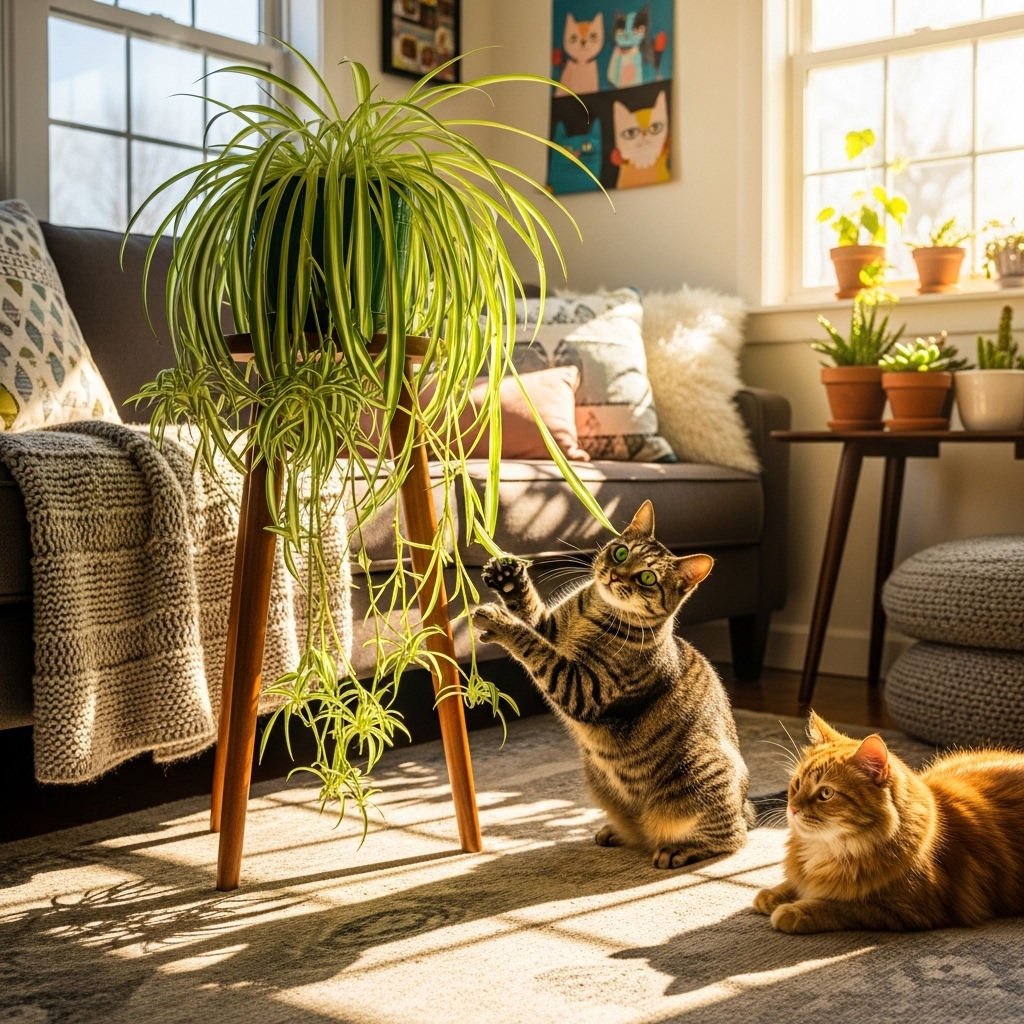
In my experience, spider plants can have a curious effect on cat behavior. I’ve observed that the presence of greenery in the home seems to stimulate my cats’ natural instincts. While spider plants don’t contain any of the compounds that trigger the euphoric response associated with catnip, they can still pique the interest of our feline friends. I’ve seen my cats pawing at the leaves, climbing to get a better look, and even “playing” with the dangling offshoots. It’s all in good fun and adds a layer of entertainment for them. Just keep an eye on their interaction, as too much enthusiasm can lead to those mild gastrointestinal symptoms we discussed earlier!
How to Train Cats to Avoid Houseplants
Training my cats to avoid munching on my houseplants has been a bit of a challenge, but it’s certainly possible. One technique that I found effective is creating a designated area for my spider plants that’s a little less accessible. For instance, placing them on higher shelves or in hanging pots has worked wonders. I also use distraction tactics—like offering cat grass or toys—to redirect their attention. Every time they show interest in the plants, I gently guide them to their play area or to their grass pot. Positive reinforcement, like giving them treats when they choose to ignore the plants, can also help reinforce the behavior I want to encourage. It takes some patience, but I believe consistent training pays off in the long run.
Final Thoughts
As a passionate plant lover and cat parent, I find that spider plants have a special place in my heart. Their non-toxic nature and vibrant presence have made them a staple in my home. I genuinely believe that having plants adds life to a space, and spider plants do this beautifully. They are not just low-maintenance and aesthetically pleasing; they also contribute to a healthier living environment, which is so important to me, especially with furry friends around.
Throughout my experience, I’ve learned that creating a safe environment for my cats while enjoying the beauty of plants is entirely possible. I’ve seen first-hand how little adjustments, like placing plants out of reach or incorporating safe alternatives like cat grass and catnip, can make a significant difference. It is all about finding that balance where both my cats and my plants can thrive together.
Moreover, I love the idea of sharing my space with my pets. Watching them interact with the greenery brings joy to my days. Whether they are playfully batting at the dangling plantlets or lounging nearby, those moments remind me of my love for both gardening and animal companionship. It reaffirms my belief that our homes should be filled with the things we cherish, including the plants that beautify our surroundings and the pets that bring us unconditional love.
So, if you’re considering adding a spider plant to your home, I say go for it! Just stay informed, create a safe space, and enjoy the wonderful benefits they bring. It’s all about creating a warm and inviting environment for everyone, including our beloved pets. Keeping an open line of communication with your vet can also provide reassurance and guidance along the way. Here’s to a flourishing home filled with plants and furry friends!
Frequently Asked Questions
Are spider plants toxic to cats?
No, spider plants are considered non-toxic to cats. If a cat nibbles on a leaf, it should not cause any serious harm.
What symptoms may occur if a cat eats a spider plant?
While spider plants are non-toxic, some cats may experience mild gastrointestinal upset, which can include vomiting, diarrhea, or general lethargy.
What should I do if my cat eats a spider plant?
If your cat munches on a spider plant, remain calm and observe them for any signs of distress. If symptoms like vomiting or lethargy occur, provide fresh water and monitor their condition. If symptoms persist, consult a veterinarian.
What are the air purification properties of spider plants?
Spider plants are known to filter out harmful pollutants like formaldehyde and xylene, contributing to improved indoor air quality.
How do I care for spider plants?
Spider plants are low maintenance and thrive in various light conditions, particularly bright, indirect sunlight. They prefer well-drained soil and should be watered adequately, allowing the soil to dry out between waterings.
What are some common varieties of spider plants?
Common varieties include the Classic Green Spider Plant, Variegated Spider Plant, and Bonnie Spider Plant, each with unique characteristics and charm.
Can spider plants cause allergies in cats?
While spider plants are generally non-toxic, some cats may be sensitive to them, potentially leading to mild allergic reactions such as sneezing, itching, or skin irritations.
Do spider plants affect cat behavior?
Spider plants can stimulate cats’ natural instincts, leading them to explore or play with the plants, although they do not contain compounds that induce euphoric responses like catnip.
What safe plant alternatives can I offer my cat?
Safe alternatives for cats include cat grass, which aids digestion, and catnip, which provides entertainment and encourages playful behavior.
How can I create a safe environment for my pets around houseplants?
To create a safe environment, place plants in areas that are out of reach for your cats and research the toxicity of plants before bringing them into your home.