
Yes, ZZ plants are toxic to cats. If ingested, they can cause symptoms such as vomiting and diarrhea. It’s essential to keep these plants out of reach of our feline friends.
Understanding ZZ Plants
What is a ZZ Plant?
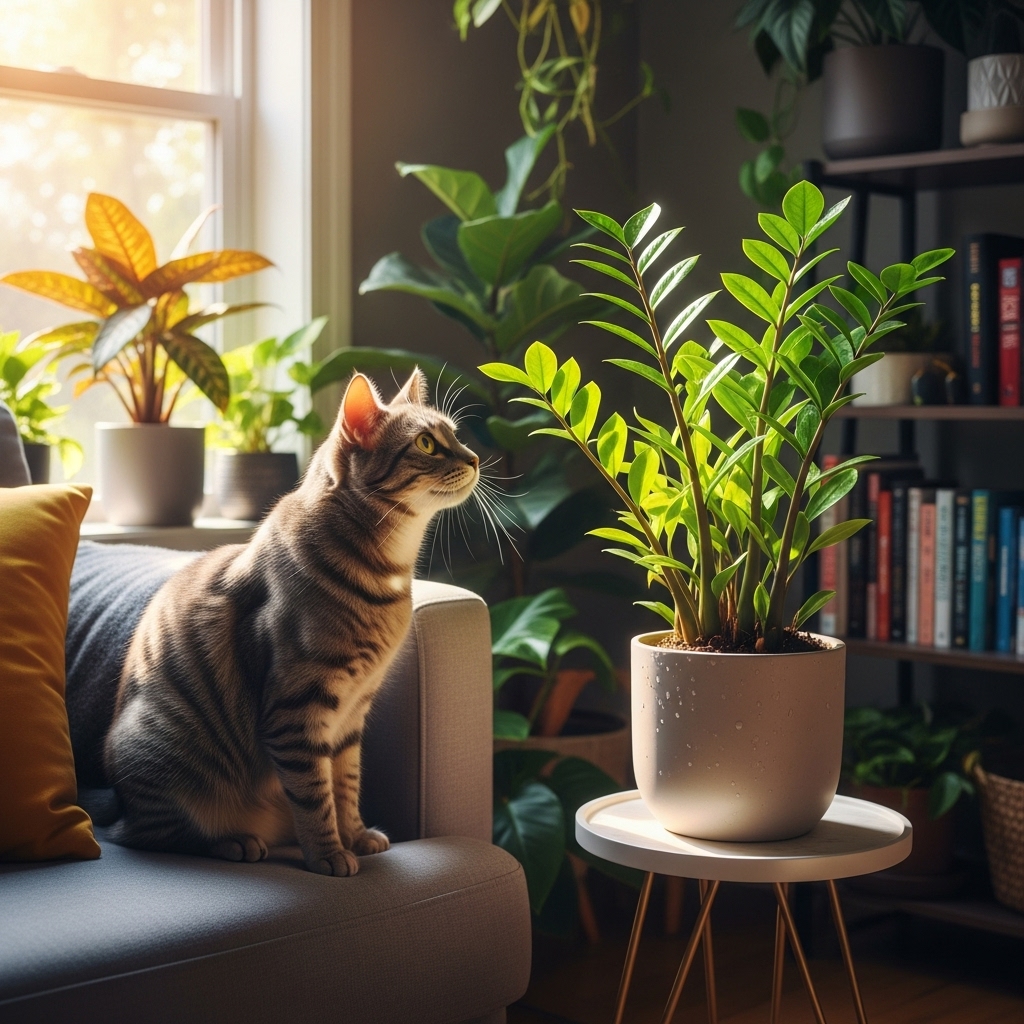
The ZZ plant, scientifically known as Zamioculcas zamiifolia, is a popular houseplant cherished for its resilience and striking glossy leaves. With its unique appearance, it has become a favorite among plant lovers and decorators alike. I remember the first time I saw a ZZ plant; its vibrant green leaves caught my eye, and I instantly wanted one for my living room. These plants can thrive in low light and require minimal watering, making them perfect for those of us who may not have the greenest thumbs. For those interested in plant care, you might find it helpful to check out this guide on What Do Plants Need to Grow? Complete Basics Guide.
Origin and Popularity of ZZ Plants
ZZ plants originate from East Africa, particularly in regions like Zanzibar, hence the name. They grow naturally in rocky, dry environments, which is why they are so hardy and drought-resistant. I’ve learned that this adaptability contributes to their rising popularity in households around the world. They’re not just easy to care for; they also add a touch of elegance to any space. When I brought one home, it transformed the corner of my living room into a mini oasis.
Characteristics of ZZ Plants
ZZ plants are known for their thick, waxy leaves that grow from sturdy stems. They can reach heights of up to three feet, and their slow growth means they won’t outgrow your space quickly. One of my favorite features is how they look polished and vibrant, even in less-than-ideal light conditions. Their ability to tolerate neglect is another plus; I’ve forgotten to water mine for weeks, and it still looks fabulous! However, while they are stunning and easy to care for, it’s crucial to understand their potential toxicity.
Are ZZ Plants Toxic to Cats?
Scientific Classification of ZZ Plants
ZZ plants belong to the family Araceae, which comprises many plants known for their toxicity. In particular, they contain calcium oxalate crystals, which can cause irritation when ingested. When I first learned about plant toxicity, I was surprised to find out that such a lovely-looking plant could pose a risk to pets. Understanding their classification helps us recognize that not all beautiful plants are pet-friendly.
Common Misconceptions About ZZ Plants
Many people think that because ZZ plants are popular and widely sold, they must be safe for pets. I used to believe that too, but the truth is that even common household plants can be toxic. Some folks might assume that if a plant looks healthy and is easy to care for, it can’t be harmful. This misconception can lead to dangerous situations for our furry companions. I’ve seen too many stories online about pets that got into plants they shouldn’t have, and I always make sure to remind my friends about the importance of researching plant safety before bringing them home. For more insights on identifying plants, check out How to Identify Plants Instantly (Easy Tools).
Comparison with Other Toxic Plants
When talking about plant toxicity, it’s valuable to compare ZZ plants with other common houseplants. For instance, plants like pothos and philodendrons also contain calcium oxalate crystals and can cause similar reactions in cats. I once had a friend whose cat chewed on a pothos plant, leading to a trip to the vet. This experience taught me a vital lesson: knowing which plants are safe for pets is crucial. While there are many beautiful plants to choose from, opting for pet-safe varieties can save us a lot of worry. I always encourage fellow pet owners to consider alternatives, especially when bringing new greenery into their homes.
Symptoms of ZZ Plant Poisoning in Cats
Initial Symptoms to Watch For
When I think about the potential dangers of having toxic plants around, my heart races a little. It’s unsettling to imagine my furry friend getting into something harmful. If a cat were to ingest parts of a ZZ plant, the initial symptoms can be quite concerning but vary from one cat to another. Common signs I’ve learned to look out for include drooling, vomiting, and a lack of appetite. I remember reading stories from other pet owners who noticed these symptoms right away and took immediate action. It’s essential to stay vigilant, especially if your cat has a curious nature. If you see your cat acting differently or not being their usual playful self, it’s worth checking for any signs of plant exposure.
Severe Symptoms and Reactions
If the exposure is more significant, the symptoms can escalate quickly. I’ve come across accounts of cats experiencing more severe reactions, such as difficulty swallowing or breathing, which can be alarming. In these cases, I learned that the irritation from the calcium oxalate crystals can cause intense pain in the mouth and throat. Additionally, some cats may show signs of lethargy or weakness, which can be a red flag. Seeing my cat in distress is something I never want to experience, and I encourage everyone to keep an eye on their pets for these more severe symptoms. It’s always better to err on the side of caution.
Long-Term Effects of Ingestion
As I researched more about the effects of ZZ plant ingestion, I found that while many cats recover without any long-term issues, some might experience lingering irritation or discomfort. I spoke with a veterinarian who explained that repeated exposure could lead to chronic issues, particularly if a cat keeps nibbling on the plant. This was eye-opening for me because I thought once the immediate symptoms passed, everything would be fine. I’ve come to realize that long-term health is something we need to consider, and it emphasizes the importance of creating a safe environment for our pets.
What to Do If Your Cat Ingests a ZZ Plant
Immediate Steps to Take
In the event that my cat ever ingests even a small piece of a ZZ plant, I know that staying calm is key. First, I’d want to remove any remaining plant parts to prevent further ingestion. Next, I would gently check my cat’s mouth for any visible signs of irritation or swelling. Although I’d want to take action, I’ve learned that inducing vomiting is not always a good idea without veterinary guidance. Instead, it’s best to monitor them closely for signs of distress while gathering all the information I can about what they might have eaten.
When to Contact a Veterinarian
It’s crucial to know when to seek professional help. If my cat shows any of the severe symptoms we discussed earlier, I would definitely reach out to my vet immediately. I remember hearing from friends who experienced similar situations, and they all agreed that it’s better to be safe than sorry. Even if the symptoms seem mild initially, I’ve learned that it’s wise to consult with a vet for advice. They can provide guidance and may suggest bringing the cat in for an examination, especially if there’s any doubt about the extent of the ingestion.
Possible Treatments and Remedies
If a vet visit is necessary, I’ve discovered that treatment for ZZ plant poisoning typically involves supportive care. This might include administering medications to alleviate symptoms like nausea or pain. I’ve even read about cases where the vet might recommend activated charcoal to help prevent further absorption of toxins. It’s reassuring to know that there are remedies available, but it also highlights the importance of early detection. In my opinion, having a good relationship with my veterinarian makes a world of difference when dealing with potential emergencies.
Safety Tips for Cat Owners with ZZ Plants
Placement of ZZ Plants in Your Home
After learning about the potential toxicity of ZZ plants, I decided it was time to rethink their placement in my home. I always recommend keeping them out of reach, especially in areas where my cat likes to explore. High shelves or hanging planters can be great options. I’ve found that utilizing vertical space not only keeps my plants safe but also adds an interesting design element to my decor. If you have cats that love to climb, like mine, I’d suggest being extra cautious about where you place these plants.
Alternative Pet-Safe Plants to Consider
As I considered the risks of keeping ZZ plants, I wanted to explore alternatives that would be safe for my furry friend. There are plenty of beautiful houseplants that pose no threat to cats, such as spider plants, Boston ferns, and bamboo palms. I’ve started to branch out and fill my home with these pet-friendly options. It feels good knowing I can enjoy greenery without worrying about my cat’s safety. Plus, I find that these plants can bring just as much personality and style to my space. If you’re curious about plants that can help with pest control, check out What Plants Keep Mosquitoes Away? Best Natural Repellents.
Educating Others About Plant Safety
One of the most rewarding things I can do as a pet owner is to share what I’ve learned about plant safety with friends and family. I often find myself chatting about this topic during gatherings or when someone mentions getting new plants. I think creating awareness can make a significant difference in preventing accidents. If we can help others recognize the dangers of certain plants, we contribute to a safer environment for all our furry companions. It’s a simple step that can go a long way in protecting our loved ones.
Frequently Asked Questions (FAQs)
Can ZZ Plants Cause Allergies in Cats?
When I first got my ZZ plant, I wondered if it could cause allergies in my cat. While ZZ plants are primarily known for their toxicity due to calcium oxalate crystals, they can also potentially cause allergic reactions in some animals. I’ve read about cats showing signs of allergies, such as itching, swelling, or redness around the mouth and paws, especially after contact with the plant. Although this isn’t as common as the more severe poisoning symptoms, it makes me realize that every cat is different. If your cat has sensitive skin or a history of allergies, it’s best to keep these plants away and monitor for any unusual reactions. As a pet owner, I think it’s always smart to err on the side of caution and consult with a veterinarian if you suspect your cat might be having an allergic reaction.
How to Recognize Plant Toxicity in Pets?
Recognizing plant toxicity in our pets can often feel overwhelming, especially with so many plants around. From my experience, being aware of common symptoms is essential. Signs of toxicity can include vomiting, diarrhea, excessive drooling, and lethargy. I remember when my friend’s cat got into a poinsettia, and she quickly noticed that her cat was acting off—hiding away and not eating. I’ve learned that if you suspect your pet might have ingested something harmful, it’s crucial to act quickly. Familiarizing yourself with the plants in your home and their toxicity levels is a proactive step every pet owner should take. Resources like the ASPCA’s Poison Control database are great for checking which plants are safe and which ones might pose a risk.
Are There Any Benefits of ZZ Plants for Pet Owners?
Despite their toxicity, I’ve found that there are some benefits to having ZZ plants as a pet owner. For one, they’re incredibly easy to care for, which can be a relief for those of us who might not have the time or energy to keep delicate plants alive. The ZZ plant also improves indoor air quality by filtering toxins and releasing oxygen, which can benefit both us and our pets. I personally love how their glossy leaves add beauty and life to my home. Plus, if you’re diligent about plant placement and keep them out of your pets’ reach, you can enjoy the aesthetics without compromising your cat’s safety. For me, it’s all about finding that balance between enjoying nature indoors and ensuring my furry companion remains safe.
Frequently Asked Questions
Are ZZ plants toxic to cats?
Yes, ZZ plants are toxic to cats. If ingested, they can cause symptoms such as vomiting and diarrhea.
What are the initial symptoms of ZZ plant poisoning in cats?
Common initial symptoms to watch for include drooling, vomiting, and a lack of appetite.
What should I do if my cat ingests a ZZ plant?
If your cat ingests a ZZ plant, first remove any remaining plant parts and check your cat’s mouth for irritation. Monitor them closely for signs of distress and consult a veterinarian for guidance.
What severe symptoms might indicate a more significant reaction to ZZ plant ingestion?
Severe symptoms can include difficulty swallowing or breathing, intense pain in the mouth and throat, lethargy, or weakness.
How can I prevent my cat from accessing ZZ plants?
It is essential to keep ZZ plants out of reach, ideally on high shelves or in hanging planters, especially in areas where your cat likes to explore.
What should I do if my cat shows signs of an allergic reaction to a ZZ plant?
If your cat shows signs of an allergic reaction, such as itching, swelling, or redness around the mouth and paws, it’s best to keep the plant away and consult with a veterinarian.
What are some safe alternatives to ZZ plants for homes with cats?
Pet-safe alternatives to ZZ plants include spider plants, Boston ferns, and bamboo palms, which can add greenery without posing a risk to cats.
What long-term effects might occur if a cat ingests a ZZ plant?
While many cats recover without long-term issues, some may experience lingering irritation or discomfort, especially with repeated exposure to the plant.
When should I contact a veterinarian about my cat’s exposure to a ZZ plant?
Contact a veterinarian immediately if your cat exhibits severe symptoms or if you have any concerns about the extent of their ingestion.
Do ZZ plants have any benefits for pet owners?
ZZ plants are easy to care for and can improve indoor air quality by filtering toxins and releasing oxygen, making them aesthetically pleasing and beneficial for both pets and their owners.