
Botrytis on roses presents as gray mold on flowers and stems, especially during cool, wet conditions. Recognizing early signs and applying targeted control measures can prevent severe damage.
Table of Contents
This article explains how to identify botrytis on roses, including its symptoms and the environmental conditions that favor its growth, as well as effective steps for managing and controlling the disease to protect your rose plants.
Recognizing Botrytis on Roses: Symptoms and Signatures
Early detection of Botrytis cinerea, commonly known as gray mold, is essential for effective management of rose diseases. The fungus exploits wounds, damaged petals, and aging blooms to establish infections, especially under cool, damp conditions. Visual cues and understanding common entry points can help gardeners identify the infection before significant damage occurs. Recognizing these symptoms early allows for prompt treatment, which can save some blooms and prevent the spread to healthy parts of the plant.
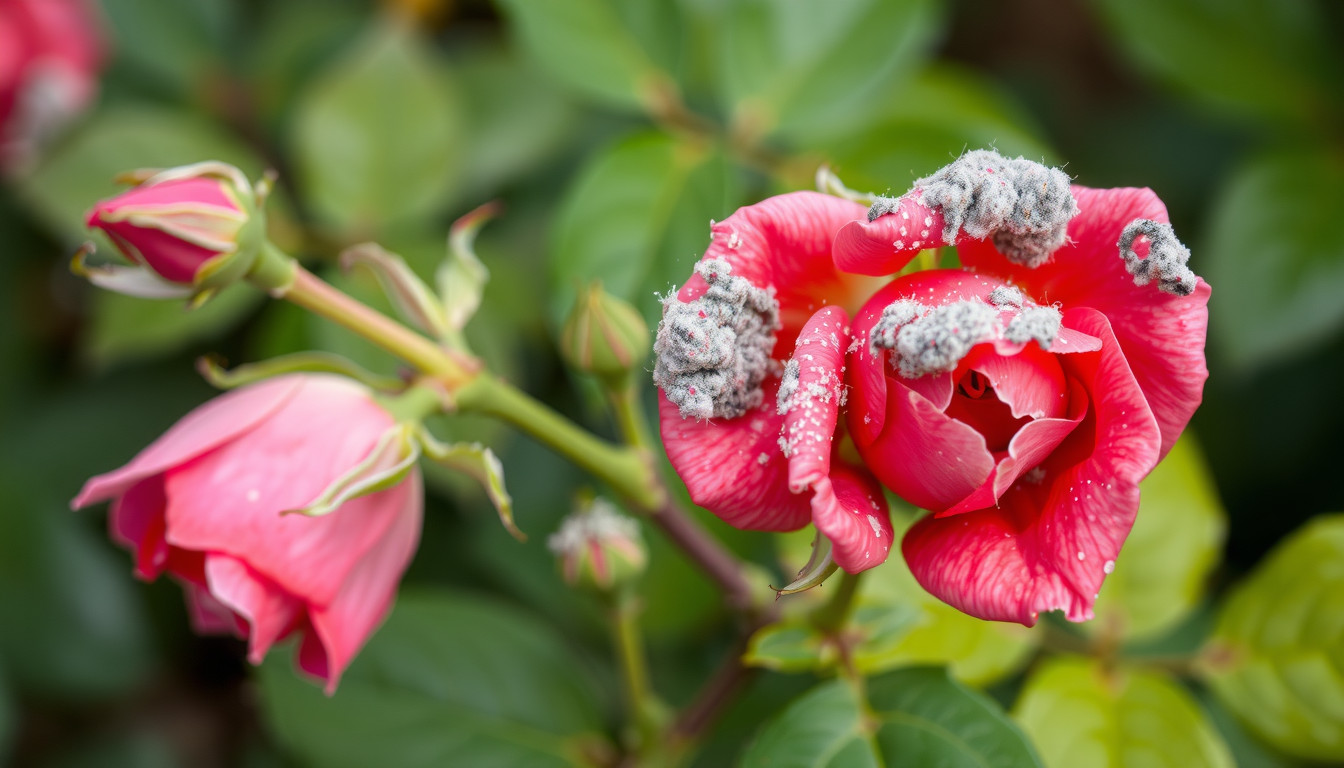
1. Fuzzy gray mold on petals and stems
The most distinctive sign of Botrytis infection is a fuzzy, grayish mold that develops on the petals, especially during or after rainy weather. The mold appears as a dense cottony growth, initially on the surface of flowers, causing them to fade prematurely or fail to open fully. This fungal growth can also extend to stems, where it appears as a velvety or powdery gray coating, often starting at wounded areas or natural openings caused by pruning or insect damage.
Disclosure: As an Amazon Associate I earn from qualifying purchases.
For gardeners interested in controlling fungal growth, selecting the right fungicide can be helpful. Shop suitable garden fungicides for roses on Amazon (affiliate link).
2. Sunken lesions on flower bases
As the disease progresses, infected flower bases and stems develop sunken, grayish-brown or black lesions. These are typically localized but can expand, leading to further decay and weakening of the plant’s structure. The lesions often originate at pruning cuts, damaged tissue, or natural openings, providing entry points for the fungus. The appearance of these lesions signals an advanced stage of infection that may require immediate intervention.
3. Dark, water-soaked spots on canes
Infected canes often display small, dark, water-soaked spots that deepen in color over time. These spots tend to be sunken and may be surrounded by areas of gray mold, especially if flowering or environmental humidity favors fungal growth. Such lesions can extend downward along the stem, causing cane dieback or collapse if left untreated.
Gardeners should be particularly vigilant in inspecting pruning sites and wounds, which serve as prime entry points for Botrytis. Prompt removal of infected tissues, combined with environmental management—reducing humidity and avoiding overhead watering—can significantly minimize the risk of disease development.
Environmental Factors Favoring Botrytis Development
Botrytis cinerea, commonly known as gray mold, thrives under specific environmental conditions that promote its proliferation on roses. Understanding these conditions helps gardeners implement practices to minimize infection. High humidity, moisture, and limited airflow create an optimal environment for fungal growth. Additionally, physical wounds from pruning or handling serve as entry points for the pathogen, making plant health management crucial.

Enhancing air circulation can be a practical step to help keep your roses healthy. Shop suitable garden fans or ventilation tools on Amazon (affiliate link).
1. Specification Table
| Environmental conditions | Impact on Botrytis development |
|---|---|
| Cool, damp, and overcast weather | High humidity and moisture levels promote spore germination and growth, especially when temperatures are between 50-70°F, which is ideal for Botrytis thriving. |
| Poor air circulation | Limited airflow around rose bushes allows humidity to persist on plant surfaces, preventing moisture evaporation and creating a moist environment conducive to fungal spread. |
| Overwatering and overhead watering | Excess moisture on leaves and petals increases the likelihood of spores germinating, especially when combined with damp weather or inadequate spacing. |
| Wounds from pruning or handling | Open wounds serve as infection gateways that facilitate fungal entry, particularly if plants are stressed or environmental conditions are humid. |
Effective management combines cultural practices that reduce moisture and improve airflow. Regular pruning to open plant canopies, watering at the base to avoid wet foliage, and spacing plants appropriately help lower humidity levels around roses. Monitoring weather conditions also guides timely interventions, such as fungicide applications or removing infected debris, which can contain or slow down the spread of Botrytis.
Immediate Strategies for Controlling Botrytis on Roses
Controlling botrytis on roses demands prompt and targeted actions to prevent the spread of this fungal disease. Once signs of gray mold appear—such as fuzzy, grayish-brown fungal growth—gardeners should act swiftly to eliminate sources of infection and reduce favorable conditions for further development. Effective control hinges on breaking the cycle of spore dispersal and minimizing plant wounds, especially during wet or humid weather.
Having the right fungicide on hand ensures prompt action when needed. Shop suitable garden fungicides for roses on Amazon (affiliate link).
1. Removing infected flowers and plant debris
- Promptly cut away and dispose of infected flowers and leaves to prevent spores from dispersing to healthy tissues.
- Remove fallen debris and prune away any dead or damaged canes to eliminate breeding sites for the fungus.
- Use sanitized tools, disinfected after each use, to avoid transferring pathogens between plants.
2. Applying appropriate fungicides
- Use fungicides such as chlorothalonil or copper-based products, which are effective against botrytis, following label instructions for application frequency and coverage.
- Apply fungicides preventively during periods prone to wet or humid conditions, particularly in early morning or late afternoon to reduce evaporation and runoff.
- Rotate fungicides with different active ingredients to prevent pathogen resistance development.
3. Wound management and pruning tips
- Perform pruning during dry conditions to avoid wounding plants while they are wet, which can serve as entry points for the fungus.
- Cut just above healthy buds or nodes and disinfect pruning tools with a bleach solution or alcohol to prevent disease transmission.
- Avoid damaging stems or leaves, particularly during weather that favors botrytis proliferation, to minimize entry points.
These control methods, applied promptly and correctly, serve as a first line of defense against botrytis on roses, helping to preserve their health and aesthetic appeal.
Long-term Prevention Techniques for Rose Health
Reducing the risk of botrytis on roses involves implementing strategic practices focused on cultural care, environmental management, and regular maintenance. Since botrytis, also known as gray mold, thrives under specific conditions such as high moisture and poor air circulation, gardeners must adopt practices that foster dry, well-ventilated environments. Properly managing these factors can significantly diminish the likelihood of infection, preserving the beauty and health of rose blooms over the long term.
1. Proper Spacing and Plant Airflow
Ensuring adequate spacing between rose plants is fundamental to encouraging good airflow, which helps keep foliage dry and reduces humidity around the plants. When roses are planted too closely, moisture tends to linger on leaves and petals, creating ideal conditions for botrytis spores to germinate. Gardeners should follow recommended spacing guidelines based on plant variety to promote circulation, especially in regions with high humidity or frequent rain.
Good pruning tools can assist in maintaining optimal plant health and spacing. Shop suitable garden pruning tools on Amazon (affiliate link).
2. Avoid Overhead Watering
Overhead watering can deposit water directly on flower petals and leaves, prolonging leaf wetness and fostering fungal growth. To mitigate this risk, gardeners are advised to use drip irrigation or water at the base of plants early in the day, allowing foliage to dry quickly. Maintaining dry leaf surfaces is key to preventing botrytis spores from establishing themselves.
3. Regular Sanitation and Pruning Practices
Consistent garden hygiene reduces the presence of spores and removes potential infection sites. Dead or fallen leaves, which often harbor overwintering spores, should be cleared away promptly. Pruning not only shapes the plant but also removes infected or dying material, creating fewer entry points for pathogens. Proper pruning cuts made into healthy tissue minimize wounds that could serve as infection entry routes. Using clean, sharp tools further limits the risk of introducing disease during maintenance.
4. Choosing Resistant Rose Varieties
Selecting rose cultivars known for their resistance to botrytis and other fungal diseases can offer a proactive defense. Disease-resistant varieties generally display fewer symptoms and require less chemical intervention, making them ideal for sustainable gardening. When purchasing roses, consult local nurseries or extension services for recommendations tailored to regional conditions to ensure the best bountiful and resilient plants.
Frequently Asked Questions
1. How can I tell if my rose has botrytis early enough?
Look for initial fuzzy gray mold on petals or dark, water-soaked spots on stems, especially during humid, cool weather, before flowers fade or stems weaken significantly.
2. What environmental conditions speed up botrytis development?
High humidity, damp weather, poor airflow, and overhead watering create ideal conditions for rapid fungal spread and growth.
3. Which fungicides are most effective against gray mold on roses?
Chlorothalonil and copper-based fungicides offer effective control when used according to label instructions, especially preventively during wet conditions.
4. Can pruning wounds lead to botrytis infection?
Yes, pruning wounds are primary entry points for the fungus, particularly if they occur during wet, humid weather or if tools are not properly disinfected.
5. How often should I prune to prevent disease?
Prune regularly enough to improve airflow and remove dead or diseased tissue, ideally during dry weather, but avoid excessive pruning that causes open wounds during wet periods.
6. Are there resistant rose varieties for botrytis?
Some cultivars show greater resistance, but no variety is completely immune; ongoing cultural practices remain essential for disease management.
7. What are natural methods to control gray mold without chemicals?
Improve air circulation, remove infected plant debris promptly, and apply organic treatments like neem oil or steeped garlic spray to reduce fungal growth naturally.