
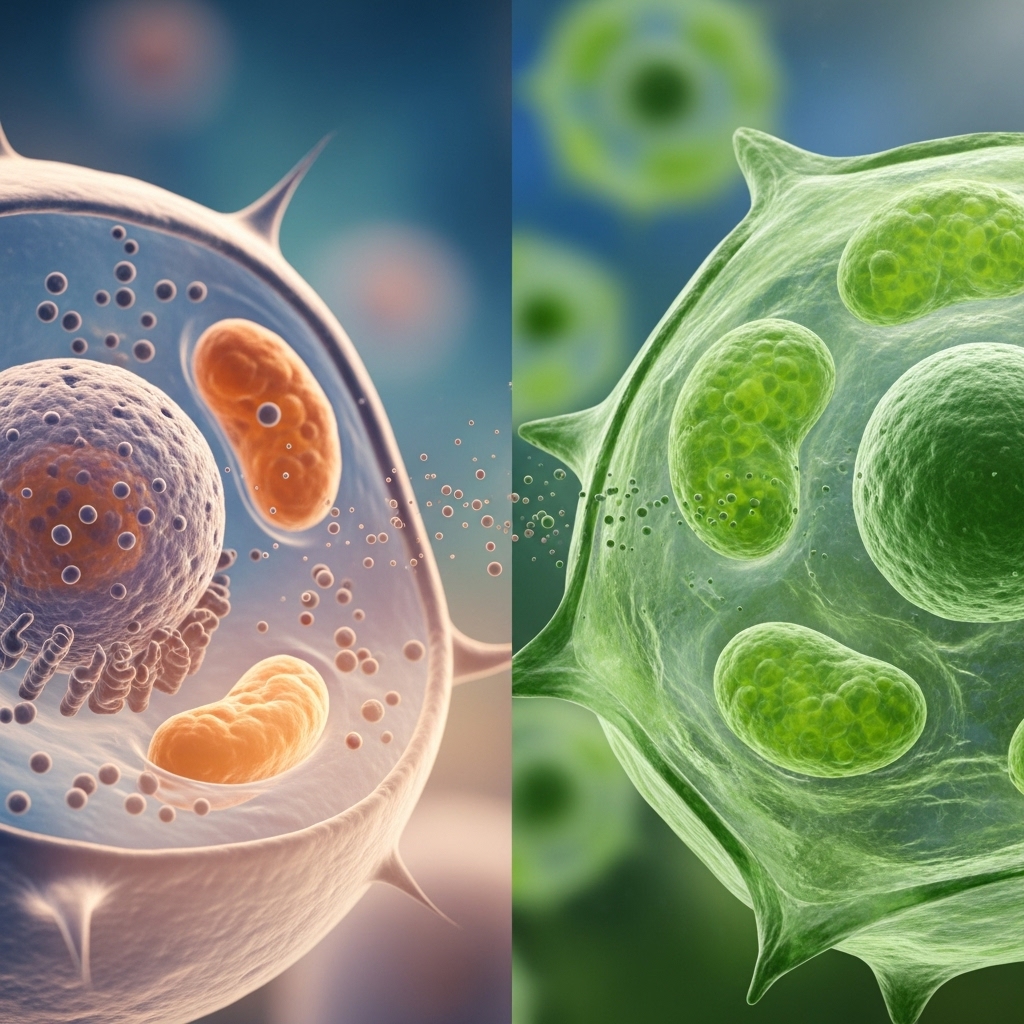
Animal cells and plant cells are both types of eukaryotic cells, but they have distinct differences in structure and function. Understanding these differences is crucial for anyone interested in biology and the life sciences. For a deeper dive, check out the Difference Between Plant and Animal Cells Explained Simply.
Cells are the fundamental units of life, and recognizing the unique characteristics of animal and plant cells can deepen our appreciation for the complexity of living organisms.
Understanding the Basics of Cells
Definition of Cells
Cells are the smallest units of life that can replicate independently. They serve as the building blocks for all living organisms, whether they are as small as bacteria or as large as trees and elephants. I remember the first time I learned about cells in school; it felt like uncovering a hidden world that was buzzing with activity. Each cell is a tiny factory, working tirelessly to sustain life.
Importance of Cells in Living Organisms
Cells perform a vast array of functions that are essential for life. They facilitate processes such as energy production, growth, and reproduction. From my experience, the more I learned about cells, the more I realized how interconnected they are within an organism. For example, the way muscle cells contract to allow movement is deeply fascinating. Each cell type has its own specific roles, contributing to the overall health and functioning of the organism.
Types of Cells: An Overview
Prokaryotic Cells
Prokaryotic cells are the simplest form of cells and lack a nucleus. They are typically unicellular organisms, like bacteria. I find it intriguing how these tiny entities can survive in extreme environments, showcasing the adaptability of life. They replicate quickly and are often studied for their role in ecosystems and human health.
Eukaryotic Cells
Eukaryotic cells, on the other hand, have a defined nucleus and are more complex. This category includes both animal and plant cells. I remember being amazed at how eukaryotic cells can form multicellular organisms, allowing for specialization of cells. Each type of eukaryotic cell has a unique structure that suits its function, which is part of what makes biology so captivating.
Key Differences Between Animal and Plant Cells
Cell Structure
The structural differences between animal and plant cells are quite pronounced. For instance, while animal cells tend to be irregular and more flexible, plant cells have a more rigid structure due to their cell walls. I discovered that this rigidity helps plants maintain their shape and resist external pressures, which is crucial for their survival. When I first observed plant cells under a microscope, the rigid rectangular shapes seemed like a fortress compared to the softer, rounder animal cells.
Cell Membrane vs. Cell Wall
Animal cells are encased in a cell membrane, which is semi-permeable and allows for the movement of materials in and out of the cell. Meanwhile, plant cells have both a cell membrane and a sturdy cell wall composed of cellulose. The presence of the cell wall gives plant cells their structure and helps them withstand various environmental conditions. I remember feeling a sense of wonder when understanding how this dual-layered protection provides plants with strength while still allowing flexibility.
Chloroplasts: Photosynthesis in Plant Cells
One of the most striking differences is the presence of chloroplasts in plant cells. These organelles are crucial for photosynthesis, allowing plants to convert sunlight into energy. I recall being fascinated by the concept that plants are not just passive organisms but active participants in energy production. This process, which provides oxygen and organic compounds, seems to breathe life into our planet. In contrast, animal cells lack chloroplasts and rely on consuming other organisms for energy, which highlights the interdependence of life forms.
Vacuoles: Size and Function
Another notable distinction lies in vacuoles. Plant cells typically have a large central vacuole that serves multiple functions, including storage of nutrients and waste products, and aiding in maintaining turgor pressure. Animal cells, in contrast, have smaller, more numerous vacuoles that primarily focus on storage and transportation of substances. I learned that this significant size difference affects how plants and animals manage their internal environments, further showcasing the unique adaptations of each cell type.
Mitochondria: Energy Production Differences
Mitochondria, known as the powerhouse of the cell, are present in both animal and plant cells, but there are differences in how they operate based on the energy needs of the organism. In animal cells, mitochondria are crucial for cellular respiration, breaking down glucose to produce ATP, the energy currency of the cell. Plant cells also utilize mitochondria, but they have the added benefit of chloroplasts, which allow them to produce energy from sunlight. I remember grappling with this idea; it’s like comparing a solar-powered machine to one that runs solely on batteries. Each has its strengths, shaped by the needs of the organism.
Common Organelles in Both Animal and Plant Cells
Nucleus: Control Center of the Cell
The nucleus is often referred to as the control center of the cell, and it’s easy to see why. This organelle houses the cell’s genetic material, DNA, which contains the instructions for all cellular activities. I remember being amazed at how the nucleus operates like a library, storing vital information that the cell needs to function and grow. In both animal and plant cells, the nucleus is surrounded by a double membrane, known as the nuclear envelope, which helps regulate what enters and exits. It’s fascinating to think that within this small structure lies the blueprint of life itself, guiding the cell’s development and responses to its environment.
Endoplasmic Reticulum: Smooth vs. Rough
Another essential organelle found in both animal and plant cells is the endoplasmic reticulum (ER). I often think of the ER as the cell’s manufacturing and packaging system. There are two types: rough and smooth. The rough ER is studded with ribosomes, which give it a bumpy appearance and are responsible for synthesizing proteins. I love how this process works; it’s like a factory where raw materials are transformed into finished products. On the other hand, the smooth ER lacks ribosomes and is involved in lipid synthesis and detoxification processes. When I learned about the different roles of these two types of ER, I was struck by how efficiently cells can compartmentalize functions to optimize performance.
Golgi Apparatus: Packaging and Transport
The Golgi apparatus is often described as the packaging and shipping center of the cell. This organelle modifies, sorts, and packages proteins and lipids for delivery to their destinations. I find it amazing how the Golgi apparatus works in tandem with the endoplasmic reticulum to ensure that the cell receives exactly what it needs. It reminds me of a post office, taking the items produced in the ER and preparing them for transport. In both animal and plant cells, the Golgi apparatus plays a crucial role in maintaining cellular function and organization, highlighting the teamwork that occurs within cells.
Functional Differences Between Animal and Plant Cells
Energy Production: Cellular Respiration vs. Photosynthesis
While I touched on how mitochondria and chloroplasts differ in their energy production methods, I think it’s important to highlight the broader functional differences between how animal and plant cells obtain energy. Animal cells rely solely on cellular respiration, which breaks down glucose obtained from food to produce ATP. I remember learning about the intricate steps involved in this process, and it amazed me that our bodies are constantly converting food into usable energy. In contrast, plant cells can harness sunlight through photosynthesis, using chloroplasts to convert light energy into chemical energy. This dual capability gives plants an incredible advantage in the ecosystem, allowing them to produce their own energy while supporting other life forms by providing oxygen and nutrients. For more details, refer to What Is the Difference Between Plant and Animal Cells?.
Growth and Reproduction Differences
Growth and reproduction also differ significantly between animal and plant cells. Animal cells typically grow and divide through a process called mitosis, where they split into two identical daughter cells. I found it intriguing to learn how this process allows for growth and repair in animals, but it can also lead to issues like cancer when things go awry. Plant cells, while also undergoing mitosis, have a unique approach to growth that involves cell differentiation and elongation. This allows plants to grow taller and develop roots, stems, and leaves. I often think of how a tree can grow from a tiny seed into a towering giant, all thanks to the specialized ways plant cells can divide and expand. To explore plant reproduction further, check out How Do Plants Reproduce? Simple Explanation.
Cell Division: Mitosis in Animal and Plant Cells
When it comes to cell division, both animal and plant cells use mitosis, but they do so in slightly different ways. In animal cells, during cytokinesis, the cell membrane pinches inwards to form two separate cells. It feels almost like a balloon being squeezed until it divides in half. In contrast, plant cells cannot pinch off in this manner due to their rigid cell walls. Instead, they form a cell plate that eventually develops into a new cell wall between the two daughter cells. I remember watching this process under a microscope and being captivated by how plant cells manage to create a barrier that allows them to maintain their structural integrity while dividing. It’s another reminder of the amazing adaptability of life, showcasing how different structures can lead to unique methods of growth and reproduction.
Visual Representation of Animal and Plant Cells
Diagrams of Animal Cells
I’ve always found that visuals can make complex concepts much easier to understand. Diagrams of animal cells typically showcase their unique organelles and structures, which help illustrate how they function. I remember my first biology class, where we used colorful diagrams to learn about the different parts of a cell. It was like piecing together a puzzle, with each organelle serving a specific purpose. From the nucleus to the mitochondria, seeing these components laid out visually helped me appreciate the intricacies of cellular life.
Animal cell diagrams usually highlight the cell membrane, which surrounds the entire cell, protecting it like a fortress. They also show the nucleus at the center, the endoplasmic reticulum winding around like a highway, and the Golgi apparatus sitting nearby, ready to package and ship proteins. I’ve often thought about how these diagrams are not just educational tools, but also windows into the microscopic world. They invite us to explore the hidden structures that make life possible.
Diagrams of Plant Cells
When it comes to plant cells, I find their diagrams equally fascinating. They often depict the rigid cell wall, which gives plants their structure. I remember feeling a sense of awe when I first saw a diagram that clearly showed how chloroplasts are distributed within the cell, revealing their role in photosynthesis. These diagrams also emphasize the large central vacuole, which is vital for maintaining turgor pressure and storing nutrients. It’s incredible to see how these components work together to create a functioning plant cell.
In my experience, comparing plant cell diagrams with those of animal cells highlighted the stark contrasts between them. While animal cells appear more irregular and flexible, plant cells have a structured, boxy appearance. This visual comparison reinforced my understanding of how their different functions relate to their unique structures. It’s amazing how much we can learn from just a few illustrations!
Comparison Charts of Organelles
Creating comparison charts of organelles in animal and plant cells has been one of my favorite ways to summarize what I’ve learned. These charts typically lay out the organelles side by side, detailing their functions, structures, and where they are found. I remember spending hours making these charts, trying to condense all the information into a format that was easy to read and understand.
For instance, a comparison chart might list mitochondria and chloroplasts, showing that while both are involved in energy production, they operate in different ways. Mitochondria produce energy through cellular respiration, while chloroplasts rely on sunlight for photosynthesis. I found it helpful to see all this information at a glance, which made studying more efficient and engaging. Sharing these charts with classmates often sparked discussions, leading to deeper insights about the roles of these organelles.
Importance of Understanding Cell Differences
Implications in Biology and Medicine
Diving into the differences between animal and plant cells has profound implications in various fields, especially in biology and medicine. I’ve come to realize that understanding these differences can shape our approach to numerous scientific inquiries. For example, learning how plant cells can produce their own food through photosynthesis has prompted research into sustainable energy solutions. This realization made me appreciate how interconnected biology can be with environmental science and technology.
In medicine, recognizing how certain cell types function differently can lead to advancements in treatments and therapies. For instance, knowing the specific characteristics of cancerous cells versus normal cells helps researchers develop targeted therapies. I often reflect on how this understanding can lead to breakthroughs that save lives, which adds a layer of importance to our studies of cellular biology.
Applications in Biotechnology
The differences between animal and plant cells also play a crucial role in biotechnology. I’ve seen firsthand how researchers harness these differences to develop innovative technologies and solutions. For instance, plant cells can be genetically modified to produce pharmaceuticals or enhance nutritional content. I find it fascinating to think about how scientists can insert genes into plant cells to create crops that can withstand pests or extreme weather conditions. This not only helps in food production but also addresses global food security issues.
Moreover, animal cells are often used in research to study diseases and test new drugs. Understanding how these cells operate differently from plant cells can inform the development of treatments. I remember being particularly intrigued by the use of stem cells in regenerative medicine; the potential to heal damaged tissues by leveraging the unique properties of these cells is astounding. It’s exciting to think about how our understanding of cell differences can lead to revolutionary advancements in health and agriculture.
Frequently Asked Questions
What are the main differences between animal cells and plant cells?
Animal cells are more irregular and flexible, while plant cells have a rigid structure due to their cell walls. Additionally, plant cells contain chloroplasts for photosynthesis, whereas animal cells do not.
What is the function of the cell membrane in animal cells?
The cell membrane in animal cells is semi-permeable, allowing for the movement of materials in and out of the cell.
Why do plant cells have a larger central vacuole compared to animal cells?
Plant cells have a large central vacuole that serves multiple functions, including nutrient storage, waste product storage, and maintaining turgor pressure. In contrast, animal cells have smaller, more numerous vacuoles primarily for storage and transportation.
How do mitochondria function differently in animal and plant cells?
Mitochondria in animal cells are crucial for cellular respiration, breaking down glucose to produce ATP. Plant cells also use mitochondria but have chloroplasts that allow them to produce energy from sunlight through photosynthesis.
What is the role of the Golgi apparatus in both animal and plant cells?
The Golgi apparatus modifies, sorts, and packages proteins and lipids for transport to their destinations, functioning as the cell’s packaging and shipping center.
What process do animal cells use for growth and reproduction?
Animal cells grow and divide through a process called mitosis, where they split into two identical daughter cells.
How do plant cells differ in their approach to growth compared to animal cells?
Plant cells undergo mitosis but also involve cell differentiation and elongation, allowing them to grow taller and develop structures like roots, stems, and leaves.
What do chloroplasts do in plant cells?
Chloroplasts are organelles in plant cells that facilitate photosynthesis, allowing plants to convert sunlight into energy, which is vital for their survival and oxygen production.
How does the cell division process differ between animal and plant cells?
During cytokinesis in animal cells, the cell membrane pinches inward to form two separate cells. In contrast, plant cells form a cell plate that develops into a new cell wall between the daughter cells due to their rigid cell walls.
What are the implications of understanding the differences between animal and plant cells in science?
Understanding the differences between animal and plant cells has significant implications in biology and medicine, influencing research in sustainable energy solutions, targeted therapies for diseases, and advancements in biotechnology.