
Plant cells and animal cells differ in several key aspects, including structure, organelles, and functions. Understanding these differences is essential for grasping how living organisms operate and thrive in their environments. For a deeper dive, check out this article on How Are Plant and Animal Cells Different? Easy Guide.
Overview of Plant and Animal Cells
Definition of Plant Cells
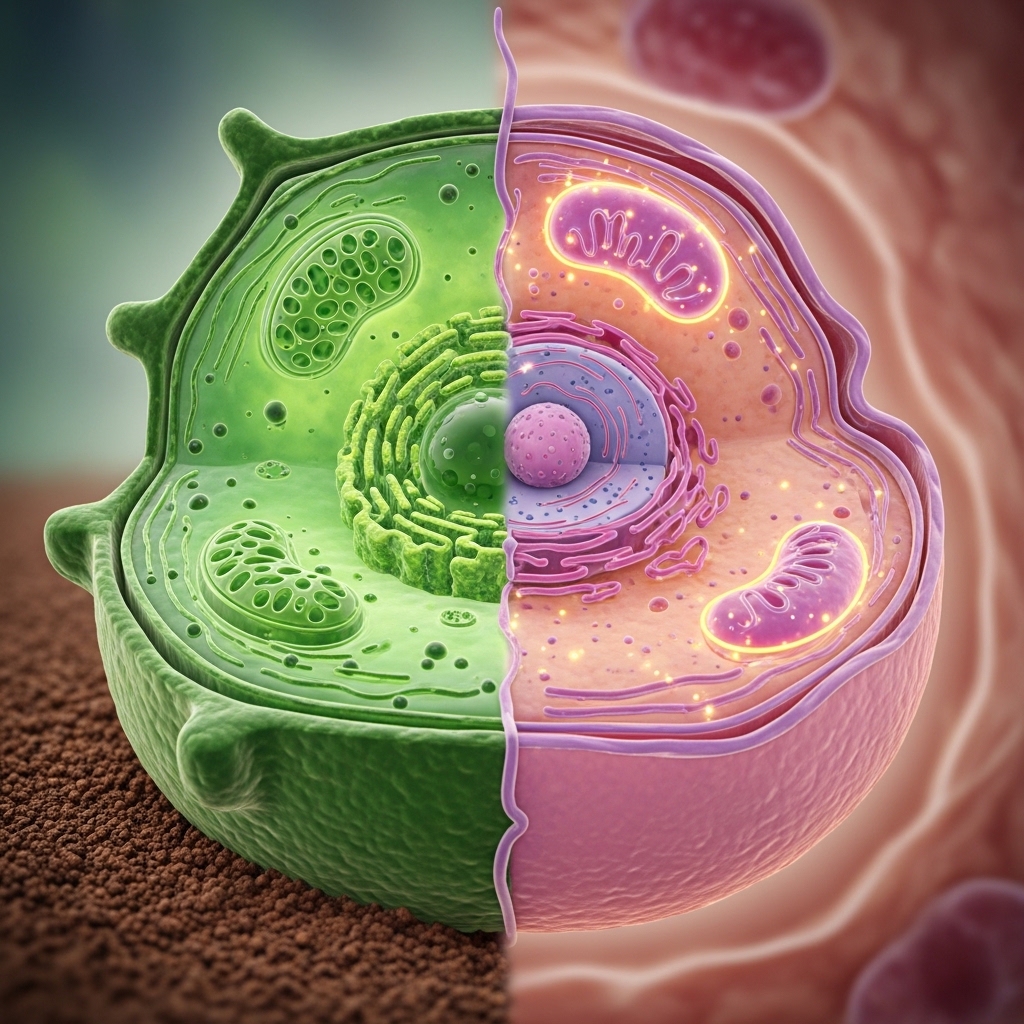
Plant cells are the basic building blocks of plants and are characterized by their rigid cell walls, chloroplasts, and large central vacuoles. I remember my first biology class where we learned about plant cells; the vibrant green chloroplasts fascinated me. They play a crucial role in photosynthesis, helping plants convert sunlight into energy. Plant cells are often rectangular or box-like in shape, which supports their function in providing structure and support to the plant.
Definition of Animal Cells
Animal cells, on the other hand, are the fundamental units of animals and are defined by their flexible cell membranes and lack of cell walls. I’ve often found it interesting how these cells come in various shapes, adapting to their specific functions within the body. Unlike plant cells, animal cells have centrioles, which are essential for cell division. They tend to be round or irregularly shaped, allowing for a diverse range of functions in different tissues and organs.
Importance of Understanding Cell Differences
Understanding the differences between plant and animal cells is vital for several reasons. For one, it helps students and enthusiasts like us appreciate the complexity of life on Earth. I believe this knowledge is also foundational for fields like biology, biotechnology, and medicine. By recognizing how cells differ, we can better understand how organisms grow, adapt, and interact with their environments. It opens doors to advancements in agriculture, health, and environmental science, enhancing our ability to solve real-world problems. You can read more about this in the article How Are Plant and Animal Cells Different? Explained.
Key Differences Between Plant and Animal Cells
Cell Structure
The structure of plant and animal cells reflects their unique roles in the natural world. Plant cells tend to be more rigid due to their cell walls, which are primarily made of cellulose. This structure provides support and helps the plant maintain its shape, especially important for tall plants that need to stand upright. In contrast, animal cells are more flexible, allowing them to change shape and fit into various spaces in the body. This flexibility is important for tissues that need to move, such as muscle tissues.
Cell Wall vs. Cell Membrane
One of the most noticeable distinctions between plant and animal cells is the presence of a cell wall in plant cells. The cell wall acts as an additional protective layer outside the cell membrane, providing strength and structure. I remember being amazed by how this feature helps plants withstand environmental pressures. Meanwhile, animal cells only have a cell membrane, which serves as a protective barrier and allows for more interaction with their environment. This difference is crucial for how each type of cell interacts with its surroundings.
Shape and Size Differences
When I first looked at plant and animal cells under a microscope, I was struck by their different shapes. Plant cells generally have a fixed, rectangular shape, while animal cells come in various shapes that can be round, oval, or even irregular, depending on their function. For example, nerve cells are long and thin to transmit signals, while red blood cells are disc-shaped to aid in oxygen transport. The size of these cells can also vary, with plant cells often being larger due to their larger vacuoles and cell walls.
Organelles: Unique Structures in Plant and Animal Cells
Both plant and animal cells contain organelles that perform specific functions, but some organelles are unique to each type. This uniqueness plays a significant role in how these cells operate. For example, I learned that chloroplasts, found only in plant cells, are essential for photosynthesis. They capture sunlight and convert it into chemical energy, which is fascinating. This process is vital for not just the plant itself but also for the entire ecosystem, as plants produce oxygen and food for other organisms.
Chloroplasts in Plant Cells
Chloroplasts are the unsung heroes of plant cells. They contain chlorophyll, the pigment that gives plants their green color and allows them to absorb sunlight. I think it’s incredible how this organelle not only aids in energy production but also contributes to the beauty of nature. Without chloroplasts, life as we know it would be drastically different, as they are at the heart of the food chain.
Centrioles in Animal Cells
Centrioles are another unique feature of animal cells. These organelles play a critical role in cell division by helping organize the mitotic spindle. I found it interesting that while plant cells can divide without centrioles, animal cells rely on them for proper cell division. This difference underscores the varied strategies organisms have developed for growth and reproduction.
Vacuoles: Size and Function
Vacuoles are storage organelles that serve different functions in plant and animal cells. In plant cells, the central vacuole is large and can occupy up to 90% of the cell’s volume. It stores nutrients, waste products, and helps maintain turgor pressure, which keeps the plant upright. I remember being amazed by how crucial this organelle is for plant health. In contrast, animal cells have smaller vacuoles that are more numerous and serve to store smaller amounts of substances, such as nutrients and waste.
Energy Storage: Starch vs. Glycogen
When it comes to energy storage, plant and animal cells manage it differently. Plants store energy in the form of starch, while animals store energy as glycogen. I found this distinction particularly fascinating because it reflects how each organism adapts to its lifestyle. Plants, being stationary, can afford to store energy in larger amounts, while animals, with their more dynamic lifestyles, store glycogen for quick energy access when needed. Understanding these differences helps us appreciate how evolution shapes the functions of living organisms.
Cell Functions and Processes
Photosynthesis in Plant Cells
Photosynthesis is one of the most remarkable processes I’ve come to appreciate about plant cells. This process allows plants to convert sunlight into chemical energy, and it all starts in the chloroplasts. I remember learning that during photosynthesis, plants take in carbon dioxide from the air and water from the soil, and with the help of sunlight, they produce glucose and oxygen. This glucose serves as food for the plant, giving it energy to grow and thrive. The oxygen produced is released back into the atmosphere, which is vital for the survival of many living organisms, including us humans. It’s fascinating to realize how interconnected life is, and how plant cells are at the heart of this cycle, contributing to our planet’s health and well-being.
Cellular Respiration in Animal Cells
On the flip side, animal cells utilize a process called cellular respiration to generate energy. I found it intriguing that while plants harness energy from the sun, animals rely on breaking down glucose to release energy. This process occurs in the mitochondria, often referred to as the powerhouse of the cell. During cellular respiration, glucose combines with oxygen to produce carbon dioxide, water, and energy in the form of ATP (adenosine triphosphate). I remember being surprised by how efficient this process is, as it allows animals to convert stored energy into a usable form almost instantaneously. Without this ability, we wouldn’t be able to perform everyday activities, from walking to thinking.
Growth and Reproduction Differences
When it comes to growth and reproduction, plant and animal cells have distinct approaches shaped by their structures and functions. In my studies, I found it fascinating that plant cells can continue to grow throughout the plant’s life due to their ability to divide and differentiate into various cell types. This is largely thanks to meristematic tissue, which contains undifferentiated cells that can become any type of plant cell. I recall seeing time-lapse videos of plants growing, which highlighted how dynamic and responsive they are to their environments.
In contrast, animal cells typically grow to a certain size and then stop dividing, unless they’re part of a tissue that requires constant renewal, like skin or blood cells. The way animal cells reproduce, primarily through mitosis, is also interesting. Mitosis ensures that each daughter cell receives an identical set of chromosomes, which is crucial for maintaining genetic consistency. I remember being amazed by the precision of this process, understanding that even the smallest error could lead to significant consequences, such as cancer.
Visual Differences: Microscopic View
How to Identify Plant Cells Under a Microscope
Looking at plant cells under a microscope is always a rewarding experience. One of the easiest ways to identify plant cells is to look for the rigid cell wall and the presence of chloroplasts. I’ve spent hours peering through a microscope at onion skin and leaf samples, marveling at the rectangular shapes of the cells and the vibrant green chloroplasts scattered throughout. The large central vacuole is also a distinguishing feature; you can often see it occupying a significant portion of the cell, creating a clear contrast to the denser cytoplasm surrounding it.
How to Identify Animal Cells Under a Microscope
Identifying animal cells can be just as fascinating, though they appear quite different from plant cells. I remember observing cheek cells and noting their irregular, rounded shapes. Without a rigid cell wall, these cells look more fluid and varied in structure. The absence of chloroplasts is another clear indicator. Additionally, when I looked for organelles like centrioles, I realized how crucial they are in the organization of animal cells during division. The flexibility of animal cells allows them to take on unique shapes, especially in tissues like muscle, where cells can be long and slender. This adaptability is something I’ve found truly inspiring, showing the diverse roles animal cells play in the body.
Comparative Images of Plant and Animal Cells
Visual comparisons between plant and animal cells can really enhance our understanding of their differences. I’ve seen diagrams and images side by side, illustrating the stark contrasts in their structures. Plant cells, with their distinct cell walls and chloroplasts, show a solidity that animal cells lack. Meanwhile, images of animal cells highlight their varied shapes and the presence of centrioles. These visual aids have been incredibly helpful in my learning journey, allowing me to see firsthand how each cell type is uniquely adapted to its environment and function. They not only enrich my knowledge but also deepen my appreciation for the incredible diversity of life on Earth.
Applications of Understanding Cell Differences
Implications in Biotechnology
Understanding the differences between plant and animal cells has profound implications in the field of biotechnology. I’ve seen how this knowledge is applied to create genetically modified organisms (GMOs) that can thrive in challenging environments. For instance, by introducing certain genes from one organism into another, scientists can enhance traits like drought resistance in plants. This not only helps in food production but also addresses food security in regions prone to climate change. I remember reading about how researchers are working on biofuels derived from plant cells, which could potentially reduce our reliance on fossil fuels. This intersection of biology and technology shows just how innovative and impactful this field can be.
Relevance in Medicine and Health Sciences
The differences between plant and animal cells are also significant in the realm of medicine. I’ve learned that understanding cellular structures helps researchers develop targeted therapies for diseases. For instance, knowing that animal cells lack cell walls allows scientists to devise methods to deliver medications directly into these cells without damaging them. This knowledge is essential for developing treatments for various conditions, including cancer. I remember being fascinated by how stem cell research is opening new doors for regenerative medicine by utilizing the unique characteristics of animal cells to repair or replace damaged tissues. The potential to heal injuries and tackle chronic diseases is truly inspiring.
Impact on Agriculture and Horticulture
When it comes to agriculture and horticulture, the distinctions between plant and animal cells play a crucial role in improving crop yields and sustainability. I’ve seen how farmers use their understanding of plant cell structures to develop robust plant varieties that can resist pests and diseases. This can involve breeding techniques that focus on enhancing specific traits like thicker cell walls or more efficient chloroplasts, which ultimately leads to healthier plants. I remember visiting a community garden where volunteers were experimenting with heirloom varieties, showcasing how much variation exists among plants. The knowledge of cell function aids in selecting the best candidates for breeding programs, ensuring that we can produce food in a sustainable manner.
Common Misconceptions About Plant and Animal Cells
Are All Cells the Same?
A common misconception I’ve encountered is the belief that all cells are essentially the same. While all cells share basic functions, plant and animal cells differ significantly in structure and function. I remember when I first learned about cellular biology; it was easy to assume that all cells had identical processes. However, the adaptations in plant cells, like chloroplasts for photosynthesis, and in animal cells, such as centrioles for division, illustrate that each cell type has evolved to meet specific needs. This diversity is a reminder that life is much more intricate and fascinating than it may seem at first glance.
Misunderstandings About Cell Functions
Another misconception is that the functions of plant and animal cells are interchangeable. While both types of cells perform essential life processes, they do so in ways that reflect their unique characteristics. For instance, while both cells carry out respiration, the mechanisms differ significantly due to the presence of chloroplasts in plants. I found it enlightening to learn that plant cells can produce their own food through photosynthesis, while animal cells must consume other organisms for energy. This fundamental difference shapes how we understand nutrition and energy flow within ecosystems.
Clarifying Myths About Plant and Animal Cells
Finally, there are myths about the complexity of plant and animal cells that can lead to oversimplification. Some people think that because plant cells are stationary, they are less complex than animal cells. However, I’ve discovered that plant cells have their own complexities, such as the intricate processes involved in photosynthesis and the ability to respond to environmental stimuli. On the other hand, animal cells exhibit remarkable adaptability, allowing them to form different tissues and perform various functions. It’s essential to appreciate that each cell type has evolved unique solutions to meet the challenges of their environments, showcasing nature’s creativity and resilience.
Frequently Asked Questions
What are the key structural differences between plant and animal cells?
Plant cells have rigid cell walls made of cellulose, which provide support and structure, while animal cells have flexible cell membranes without cell walls, allowing them to change shape and fit into various spaces.
What organelles are unique to plant cells?
Chloroplasts are unique to plant cells and are essential for photosynthesis, allowing plants to convert sunlight into chemical energy. Additionally, plant cells have large central vacuoles that help maintain turgor pressure.
What organelles are specific to animal cells?
Centrioles are specific to animal cells and play a critical role in organizing the mitotic spindle during cell division, which plant cells can achieve without them.
How do plant and animal cells differ in energy storage?
Plants store energy in the form of starch, while animals store energy as glycogen. This reflects their differing lifestyles, with plants being stationary and animals being more dynamic.
What is the process of photosynthesis in plant cells?
Photosynthesis allows plants to convert sunlight into chemical energy, where they take in carbon dioxide and water to produce glucose and oxygen, which is vital for their growth and the ecosystem.
How do animal cells generate energy?
Animal cells utilize cellular respiration to generate energy, breaking down glucose in the mitochondria to produce carbon dioxide, water, and ATP (adenosine triphosphate).
What are the main differences in growth and reproduction between plant and animal cells?
Plant cells can continue to grow throughout the plant’s life due to their ability to divide and differentiate, whereas animal cells typically stop dividing after reaching a certain size, unless they are part of renewing tissues.
How can you identify plant cells under a microscope?
Plant cells can be identified by their rigid cell walls, fixed rectangular shape, presence of chloroplasts, and large central vacuole that occupies a significant portion of the cell.
How can you identify animal cells under a microscope?
Animal cells are identified by their irregular and rounded shapes, lack of a rigid cell wall, absence of chloroplasts, and the presence of organelles like centrioles.
What implications does understanding cell differences have in biotechnology?
Understanding the differences between plant and animal cells allows for advancements in biotechnology, such as creating genetically modified organisms (GMOs) and developing biofuels, which can enhance food production and address food security issues. For more information on this topic, consider reading about Is Cytoplasm in Plant and Animal Cells? Explained.