
Yes, all plant cells contain mitochondria, which play a crucial role in energy production. These organelles are essential for the metabolic processes that sustain plant life, even in cells that primarily rely on chloroplasts for energy capture. Do Plant Cells Have Mitochondria? Explained Simply
Table of Contents
Understanding Plant Cells
What Are Plant Cells?
Plant cells are the basic building blocks of all plants, and they are unique compared to animal cells in several ways. I remember the first time I learned about plant cells in school, discovering how they have distinct structures that allow them to perform specific functions necessary for plant growth and survival. These cells are eukaryotic, meaning they have a true nucleus and membrane-bound organelles. Each plant cell plays a vital role in the overall functioning of the plant, contributing to processes like photosynthesis, growth, and nutrient transport.
Key Components of Plant Cells
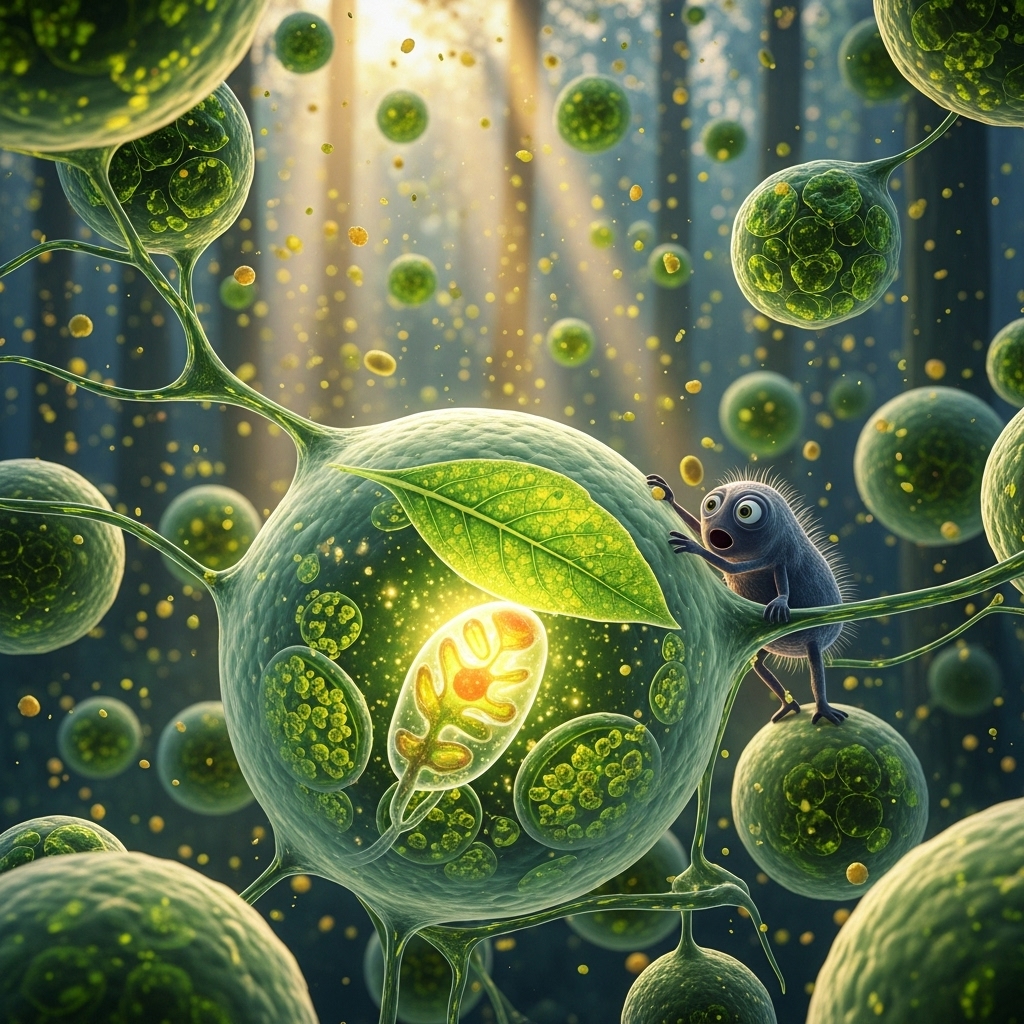
When I delve into the components of plant cells, I find it fascinating how these parts work together harmoniously. The key components include the cell wall, chloroplasts, vacuoles, and mitochondria. The cell wall provides structure and protection, while chloroplasts are responsible for photosynthesis, converting sunlight into energy. Vacuoles serve multiple functions, including storing nutrients and waste products, and maintaining turgor pressure. And of course, mitochondria are there to provide the energy that fuels these processes. This interconnectedness of components highlights the complexity of plant life.
Cell Wall, Chloroplasts, and Vacuoles
The cell wall is what sets plant cells apart from animal cells. It gives plants their rigidity and shape, allowing them to grow tall and strong. I often think of it like a sturdy fortress, protecting the inner workings of the cell. Chloroplasts are another defining feature; they contain chlorophyll, the pigment that captures sunlight. I remember watching how leaves turned into vibrant shades of green, all thanks to chloroplasts doing their job. Vacuoles, on the other hand, remind me of storage tanks. They can take up a significant portion of the cell’s volume and are essential for maintaining the cell’s internal environment. In my experience, every component of a plant cell has a purpose, working together to keep the plant alive and thriving.
Mitochondria: The Powerhouses of Cells
What Are Mitochondria?
Mitochondria are often called the “powerhouses” of the cell, and for good reason. I remember being amazed to learn that these tiny organelles are responsible for producing adenosine triphosphate (ATP), the energy currency of the cell. They are found in almost all eukaryotic cells, including those of plants, animals, and fungi. Mitochondria have a unique structure, featuring two membranes with an inner membrane that folds into cristae, increasing the surface area for energy production. This design helps maximize efficiency, allowing cells to generate the energy they need to carry out essential functions.
Functions of Mitochondria in Cellular Processes
The role of mitochondria goes beyond just energy production. I learned that they are also involved in regulating metabolic processes, controlling the cell’s life cycle, and even playing a part in cell death. When I reflect on the complexity of cellular life, it’s clear that mitochondria are central to many functions essential for maintaining healthy cells. They help oxidize nutrients, enabling the cell to convert food into usable energy. This energy is vital for everything from nutrient absorption to cellular repair. Understanding how mitochondria function has significantly broadened my perspective on plant biology.
Differences Between Mitochondria and Chloroplasts
While both mitochondria and chloroplasts are crucial for plant cells, they serve different purposes. Chloroplasts are responsible for photosynthesis, allowing plants to capture light energy and convert it into chemical energy. Mitochondria, on the other hand, use that chemical energy to produce ATP through cellular respiration. I think of it this way: chloroplasts harness energy from the sun, while mitochondria release that energy when needed. This partnership is essential for the plant’s overall energy management, ensuring that energy is available for growth, reproduction, and survival.
Do All Plant Cells Contain Mitochondria?
General Presence of Mitochondria in Plant Cells
When I first started exploring plant biology, I often wondered if every single plant cell contained mitochondria. The answer is a resounding yes! Almost all plant cells, regardless of their specific type or function, have mitochondria. These little organelles are essential for maintaining cellular energy levels and supporting the various metabolic processes that keep plants alive. I think about it like this: just as we need energy to get through our day, plant cells rely on mitochondria to fuel their activities. This universality underscores the importance of mitochondria in the life of a plant.
Types of Plant Cells That Contain Mitochondria
As I learned more about plant cells, I discovered that different types of plant cells have varied roles, yet they all contain mitochondria. For instance, parenchyma cells, which are involved in storage and photosynthesis, have a significant number of mitochondria since they need ample energy for their functions. Similarly, meristematic cells, found at the tips of roots and shoots, also feature mitochondria to support their active division and growth. I find it fascinating how these organelles are adapted to meet the energy demands of each cell type. Even specialized cells like xylem and phloem contain mitochondria, albeit in different quantities, to support their roles in transporting water, nutrients, and food throughout the plant.
Exceptions: Atypical Plant Cells
However, my curiosity led me to explore whether there are any exceptions to this rule. I found that while most plant cells have mitochondria, some atypical plant cells can exhibit variations. For example, certain cells in algae and some other lower plants may have reduced or even absent mitochondria. These cells can utilize other means to produce energy, often relying on processes like anaerobic respiration or directly absorbing nutrients. I remember feeling a bit surprised to learn that even though these exceptions exist, they are quite rare and typically present in specific conditions or environments. It’s a reminder of the incredible diversity of life and how different organisms adapt to their surroundings.
The Role of Mitochondria in Plant Cell Function
Energy Production in Plant Cells
Energy production in plant cells is where the magic of mitochondria truly shines. I find it interesting to notice how these organelles convert the chemical energy stored in glucose, produced during photosynthesis, into ATP through a process known as cellular respiration. This process involves several stages, including glycolysis, the citric acid cycle, and oxidative phosphorylation. I remember learning about how oxygen plays a crucial role in this process, being the final electron acceptor that helps in generating ATP efficiently. It’s this energy production that fuels all plant activities, from root growth to flowering, and underscores the interdependence of mitochondria and chloroplasts.
Importance of Mitochondria in Respiration
Mitochondria don’t just help with energy production; they are also vital for respiration in plants. I learned that respiration occurs both day and night, unlike photosynthesis, which only takes place in the presence of light. This means that even when a plant isn’t photosynthesizing, it can still produce energy to sustain its life. During my studies, I often reflected on how respiration allows plants to utilize stored carbohydrates, ensuring they can survive during periods of low light or when nutrients are scarce. This adaptive strategy really highlights the resilience of plants and their ability to thrive in various environments.
Impact on Plant Growth and Development
The impact of mitochondria on plant growth and development has been a fascinating area of exploration for me. I realized that the energy produced by mitochondria is not just about survival; it also influences how a plant grows and develops. For example, when a plant is under stress, such as from drought or nutrient deficiency, mitochondria can adjust their energy production to help the plant cope. This flexibility is important for adaptive growth responses, allowing plants to conserve energy when needed or direct it toward crucial functions like flowering or seed production. It’s inspiring to think about how these tiny organelles play such a critical role in the life cycle of a plant, shaping everything from size to reproductive success.
Comparison: Mitochondria in Plant vs. Animal Cells
Structural Differences
I’ve often wondered how mitochondria in plant cells compare to those in animal cells. Interestingly, while they share a similar fundamental structure, there are some notable differences. For instance, the overall size of mitochondria in plant cells can vary more significantly depending on the specific function and energy requirements of the cell type. I remember being surprised to learn that plant mitochondria also sometimes contain unique structures, such as the presence of plastids, which are absent in animal cells. This adaptability in structure allows plant mitochondria to perform efficiently under varying environmental conditions. It really highlights the diverse roles that these organelles play in different organisms.
Functional Differences
Functionally, I find that plant and animal mitochondria have some differences worth noting. While both are responsible for ATP production, the pathways leading to energy generation can differ slightly. For example, I learned that plant cells can utilize products from both photosynthesis and respiration to fuel ATP production. This dual-energy source is something that animal cells do not possess. In animal cells, the energy comes solely from food intake and the mitochondria are designed to metabolize these nutrients. This functional flexibility in plant cells speaks to their ability to thrive in various environments, making them quite resilient. It’s intriguing how plants can switch between energy sources based on what’s available, allowing them to adapt in ways that animals cannot.
Similarities Between Plant and Animal Mitochondria
Despite the differences, there are many similarities between plant and animal mitochondria that I find fascinating. Both types of mitochondria feature a double membrane structure, with an outer membrane that is smooth and an inner membrane that is highly folded into cristae. This design is crucial for maximizing the surface area for the processes that generate ATP. I often think about how both plant and animal cells rely on this efficient energy production to sustain life and perform various functions. Moreover, both types of mitochondria contain their own DNA, which is similar to bacterial DNA, hinting at their evolutionary origins. This shared characteristic is a reminder of how interconnected life on Earth can be, regardless of the differences in form and function.
Scientific Research and Discoveries
Recent Studies on Mitochondria in Plant Cells
As I dive deeper into the world of plant biology, I’m always excited to learn about ongoing research. Recent studies have been shedding light on the intricacies of mitochondria in plant cells. For instance, researchers are exploring how mitochondrial dynamics, such as fusion and fission, affect plant health and response to stress. I found it intriguing to read about experiments showing that manipulating these processes can enhance a plant’s ability to withstand environmental challenges. The more I learn, the more I appreciate how vital these tiny organelles are, not just for energy production but also for overall plant resilience. Little Gem Magnolia Tree Pros and Cons – Everything You Need to Know
Implications of Mitochondrial Research for Agriculture
The implications of mitochondrial research extend beyond basic science and into agriculture, which I find particularly relevant. Understanding how mitochondria function in plants can inform breeding strategies aimed at improving crop yields and resistance to diseases. I remember reading about initiatives that focus on enhancing mitochondrial efficiency to boost energy production in crops, especially in regions facing climate change challenges. It’s fascinating to think that by optimizing mitochondrial function, we could potentially create hardier plants that can thrive in less-than-ideal conditions.
Future Directions in Plant Cell Research
Looking ahead, I see a lot of potential in plant cell research, especially regarding mitochondria. Scientists are increasingly interested in the role of mitochondria in signaling pathways that influence plant development and stress responses. I’ve come across studies suggesting that mitochondrial function could be linked to how plants communicate internally and respond to their environment. This area of research could unlock new strategies for enhancing crop resilience and productivity. It excites me to think about the innovations that could emerge from our growing understanding of these organelles and their critical roles in plant life. Upcycle Everyday Items Into Creative Garden Projects That Look Designer Made
Frequently Asked Questions
Do all plant cells contain mitochondria?
Yes, almost all plant cells contain mitochondria, which are essential for maintaining cellular energy levels and supporting various metabolic processes necessary for plant life.
What role do mitochondria play in plant cells?
Mitochondria are responsible for producing adenosine triphosphate (ATP), the energy currency of the cell, and are involved in regulating metabolic processes, controlling the cell’s life cycle, and playing a part in cell death.
How do mitochondria differ from chloroplasts in plant cells?
Chloroplasts are responsible for photosynthesis, capturing light energy and converting it into chemical energy, while mitochondria utilize that chemical energy to produce ATP through cellular respiration.
What are the key components of plant cells?
The key components of plant cells include the cell wall, chloroplasts, vacuoles, and mitochondria, each playing vital roles in the plant’s growth, photosynthesis, nutrient transport, and energy production.
Do all types of plant cells have mitochondria?
Yes, different types of plant cells, such as parenchyma, meristematic, xylem, and phloem, all contain mitochondria to meet their energy demands, although the quantity may vary.
Are there any exceptions to plant cells containing mitochondria?
While most plant cells have mitochondria, some atypical plant cells, such as certain cells in algae and some lower plants, may have reduced or absent mitochondria and utilize other means for energy production.
How do mitochondria contribute to energy production in plant cells?
Mitochondria convert the chemical energy stored in glucose, produced during photosynthesis, into ATP through cellular respiration, which is crucial for all plant activities.
What is the relationship between mitochondria and plant respiration?
Mitochondria are vital for respiration in plants, allowing them to produce energy even when photosynthesis is not occurring, thus utilizing stored carbohydrates to sustain life during low light or nutrient scarcity.
How do the structures of mitochondria in plant cells compare to those in animal cells?
While both plant and animal mitochondria share a similar fundamental structure, plant mitochondria can vary more in size and may contain unique structures like plastids, which are absent in animal cells.
What implications does mitochondrial research have for agriculture?
Understanding how mitochondria function in plants can inform breeding strategies aimed at improving crop yields and resistance to diseases, potentially creating hardier plants that thrive in challenging conditions.