
Yes, both plant and animal cells have a nucleus. This vital organelle plays a crucial role in storing genetic information and regulating cell activities. Read Interesting article: Is Chloroplast in Plant and Animal Cells? Explained
Understanding the presence and function of the nucleus helps clarify many biological processes in living organisms.
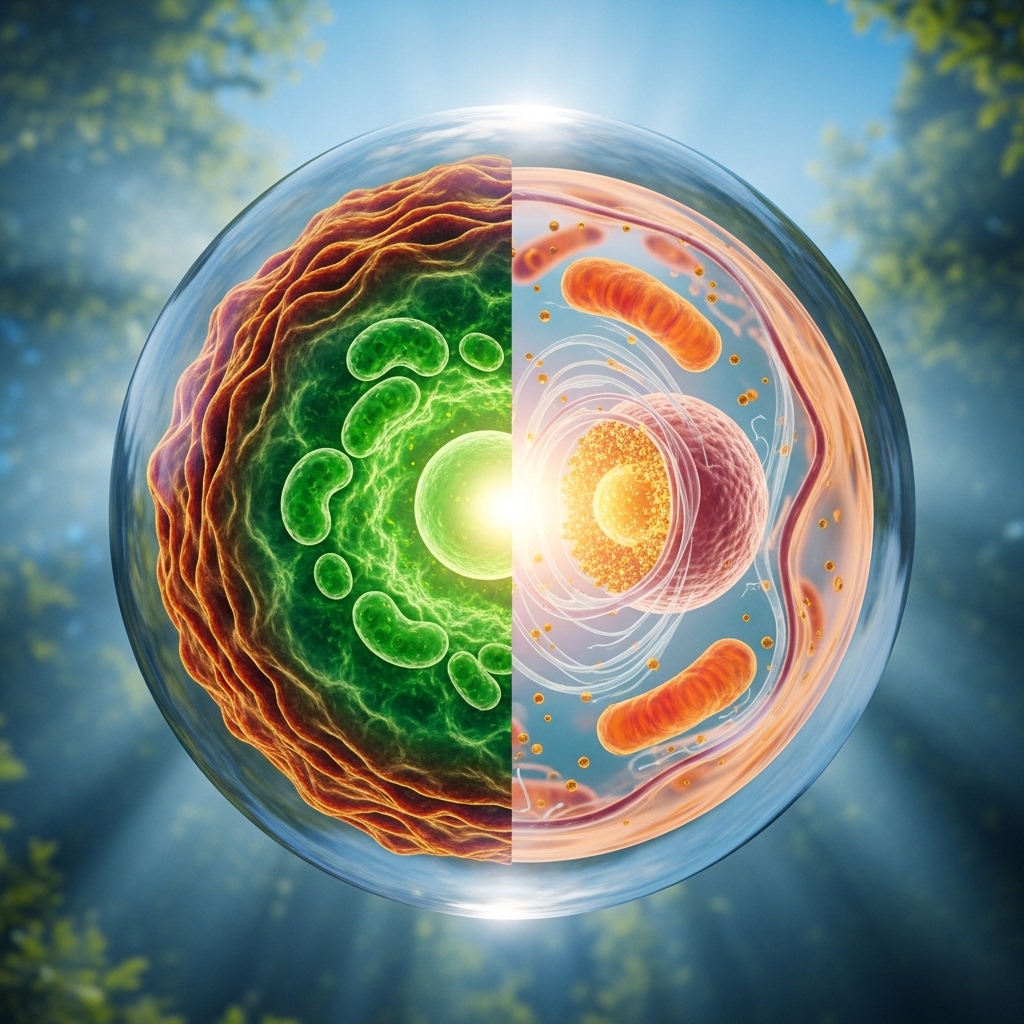
Understanding Cells: The Basics
What Are Cells?
Cells are the fundamental building blocks of all living organisms. I remember learning about them for the first time in school, and it was fascinating to realize that everything from the tiniest bacteria to the largest trees is made up of cells. These tiny structures perform a variety of functions that are essential for life. Each cell can be thought of as a small factory, where raw materials are transformed into the products necessary for survival, growth, and reproduction.
Types of Cells: Prokaryotic vs. Eukaryotic
Cells can be broadly categorized into two types: prokaryotic and eukaryotic. Prokaryotic cells, like those found in bacteria, are simpler and do not have a nucleus. Instead, their genetic material floats freely in the cell. In contrast, eukaryotic cells, which include plant and animal cells, are more complex and contain a nucleus that houses their genetic material. When I first learned about these differences, it helped me appreciate how complex life can be, even at the microscopic level.
Do Plant Cells Have a Nucleus?
Structure of Plant Cells
Plant cells are unique in many ways. They have a rigid cell wall made of cellulose, which gives them structure and support. Inside, you’ll find various organelles, including the nucleus. The nucleus in plant cells is often located near the center, surrounded by a jelly-like substance called cytoplasm. This organization allows the cell to function efficiently. I remember being fascinated to learn how plant cells also contain chloroplasts, which enable them to perform photosynthesis, something animal cells cannot do. Read Interesting article: Difference Between Plant and Animal Cells Explained
Functions of the Nucleus in Plant Cells
The nucleus in plant cells has several crucial functions. First and foremost, it contains the cell’s DNA, which is essential for growth and reproduction. The DNA carries the instructions for making proteins, which are vital for the cell’s functions. Additionally, the nucleus plays a role in regulating gene expression, meaning it controls which genes are turned on or off at any given time. This regulation is crucial for the plant’s response to its environment, whether that’s growing towards sunlight or closing its stomata during drought. I often think about how interconnected these processes are, especially when I see a plant thriving in its environment.
Do Animal Cells Have a Nucleus?
Structure of Animal Cells
Animal cells, like plant cells, are eukaryotic and have a nucleus. However, their structure differs in some significant ways. Animal cells lack a rigid cell wall, which allows for a wider variety of shapes and sizes. When I learned about the differences, I was struck by how much flexibility this gives animal cells in forming tissues and organs. The nucleus in animal cells is also generally located within the cytoplasm, and it’s surrounded by various organelles that perform different functions, much like our organs work together in our bodies.
Functions of the Nucleus in Animal Cells
The nucleus in animal cells serves similar functions as in plant cells. It houses the genetic material, or DNA, that contains the instructions for the entire organism. This DNA is crucial for cell division, growth, and repair. One interesting aspect I discovered is that the nucleus also plays a role in producing ribosomes, which are necessary for protein synthesis. I find it amazing how the nucleus orchestrates so many activities within the cell, ensuring everything runs smoothly.
Comparative Analysis: Plant vs. Animal Cells
Nucleus Presence in Eukaryotic Cells
Both plant and animal cells are classified as eukaryotic, meaning they have a nucleus. This is a defining characteristic that sets them apart from prokaryotic cells. I think it’s fascinating how this single feature can significantly influence how cells function and interact with their environments. The presence of a nucleus allows for more complex processes, like multicellularity and specialization, which are fundamental for the development of larger organisms.
Differences in Nucleus Functionality
While both plant and animal cells have a nucleus, the functionality can vary slightly due to the different needs of the cells. For instance, in plant cells, the nucleus is involved in regulating processes like photosynthesis and plant growth, while in animal cells, it may be more focused on growth and repair mechanisms. I’ve often wondered how these differences play a role in the overall health and adaptability of plants versus animals. It’s a reminder of how evolution has shaped the functions of living organisms to thrive in their respective environments.
Cellular Components Related to the Nucleus
Chromosomes and DNA
The nucleus houses chromosomes, which are tightly coiled structures made of DNA that contain our genes. Each species has a specific number of chromosomes; for example, humans have 46 chromosomes. I’ve always been intrigued by how these structures manage to hold so much information. The DNA not only instructs the cell on how to function but also ensures that genetic information is passed on during cell division. Understanding this has made me appreciate the complexity of life even more.
Nuclear Envelope and Nucleolus
Surrounding the nucleus is the nuclear envelope, a double membrane that protects the genetic material inside. This envelope has tiny pores that allow certain molecules to pass in and out, keeping the nucleus secure yet accessible. Inside the nucleus, there’s also a structure called the nucleolus, which plays a key role in producing ribosomes. I’ve found it fascinating how these components work together, creating a highly regulated environment for managing genetic information and cellular functions.
The Role of the Nucleus in Cell Function
Gene Expression and Regulation
The nucleus is vital for gene expression, which refers to the process of turning genes on and off. This regulation allows cells to respond to internal and external stimuli. For example, when a plant senses sunlight, the nucleus activates specific genes that promote growth towards the light. I remember discussing this concept in class and realizing just how dynamic and responsive cells can be, adapting to their surroundings in real-time.
Cell Division and Replication
When cells divide, the nucleus plays a critical role in ensuring that each new cell receives an accurate copy of the DNA. This process, called mitosis, is essential for growth, repair, and reproduction. I’ve often marveled at how this process is so precise, allowing organisms to grow and heal effectively. The coordination involved in cell division underscores the importance of the nucleus in maintaining life.
Common Misconceptions About the Nucleus
Do All Cells Have a Nucleus?
Not all cells have a nucleus. Prokaryotic cells, like bacteria, lack a nucleus, which can lead to confusion when comparing different types of cells. Many people assume that all cells operate similarly, but the differences between prokaryotic and eukaryotic cells highlight the diverse strategies life employs to thrive. I’ve learned that understanding these distinctions can enhance our appreciation for the complexity of biological systems.
Differences in Nucleus Size and Shape
The size and shape of the nucleus can vary significantly between different cell types. For example, muscle cells might have multiple nuclei, while red blood cells have none at all. I’ve often found it interesting how these variations relate to the specific functions of the cells. Such diversity reflects the adaptability of life, showcasing how different cells have evolved to meet their unique needs.
FAQs About Nucleus in Cells
What is the primary function of the nucleus?
The primary function of the nucleus is to store and protect the cell’s genetic material and regulate gene expression, ensuring the cell operates efficiently.
Can a cell survive without a nucleus?
Some cells, like mature red blood cells in humans, can survive without a nucleus, but most eukaryotic cells depend on it for functioning and reproduction.
How does the nucleus impact cell health?
A healthy nucleus is crucial for cell health, as it regulates the expression of genes necessary for cellular functions, repair, and overall vitality.
What happens to the nucleus during cell division?
During cell division, the nucleus divides to ensure that each new cell receives an identical set of chromosomes, maintaining genetic continuity.
Common Misconceptions About the Nucleus
Do All Cells Have a Nucleus?
It’s a common belief that all cells have a nucleus, but that’s not entirely true. While eukaryotic cells, which include plant and animal cells, do have a nucleus, prokaryotic cells, such as bacteria, lack this organelle. I remember being surprised when I first learned this distinction. It made me realize how diverse life can be, even at the cellular level. Prokaryotic cells have their genetic material floating freely within the cell, and they manage to thrive in various environments without a nucleus. This difference highlights just how evolutionary adaptations have allowed different types of cells to succeed in their own niches.
Differences in Nucleus Size and Shape
The size and shape of the nucleus can vary quite a bit among different cell types, and I’ve always found that fascinating. For instance, muscle cells, which need to work hard, can have multiple nuclei to support their functions. On the flip side, mature red blood cells don’t have a nucleus at all, which allows for more space for hemoglobin, the protein that carries oxygen. When I think about how these variations are directly related to the cells’ specific roles in the body, it deepens my appreciation for how each part of our biology is tailored to meet unique needs. I often find myself wondering about the evolutionary paths that led to such adaptations.
FAQs About Nucleus in Cells
What is the primary function of the nucleus?
The primary function of the nucleus is to store and protect the cell’s genetic material and regulate gene expression, ensuring the cell operates efficiently. It’s like the control center of the cell, managing not just the genes but also deciding when they should be activated or silenced. I often think about how crucial this role is for the proper functioning of the entire organism. Without the nucleus, cells wouldn’t be able to carry out their tasks effectively, which could lead to a breakdown in the organism’s health.
Can a cell survive without a nucleus?
Some cells, like mature red blood cells in humans, can indeed survive without a nucleus. However, most eukaryotic cells depend on it for functioning and reproduction. When I learned that red blood cells lose their nucleus during development to maximize space for oxygen transport, it was a revelation. This adaptation showcases how life can be incredibly resourceful, ensuring that even without a nucleus, those cells can still fulfill their vital role in our bodies. It’s a beautiful example of nature’s ingenuity.
How does the nucleus impact cell health?
A healthy nucleus is crucial for overall cell health because it regulates the expression of genes necessary for cellular functions, repair, and vitality. I’ve realized that when something goes wrong with the nucleus—like in diseases such as cancer—it can lead to serious consequences for the entire cell and, ultimately, the organism. This connection has made me more aware of the importance of maintaining cellular health and how it affects our well-being.
What happens to the nucleus during cell division?
During cell division, the nucleus plays a critical role in ensuring that each new cell receives an accurate copy of the DNA. This process, known as mitosis, is essential for growth, repair, and reproduction. I often marvel at the precision involved in this process; the nucleus divides, and chromosomes are equally distributed to the daughter cells. It’s like a well-choreographed dance, ensuring that genetic continuity is maintained. Understanding this has deepened my appreciation for the intricate workings of life on a cellular level.
Cellular Components Related to the Nucleus
Chromosomes and DNA
The nucleus is often referred to as the control center of the cell, primarily because it holds chromosomes, the structures that contain our DNA. This DNA is like an instruction manual for the entire organism; it tells cells how to grow, develop, and function. I remember being amazed when I first learned about how DNA is packaged into these chromosomes. Each chromosome is made up of tightly coiled DNA, and different species have varying numbers of chromosomes. For instance, humans have 46, while fruit flies have just 8. I’ve always found it mind-blowing how so much information can be packed into such a small area. This genetic blueprint is essential not only for our individual traits but also for how we respond to the environment and develop over time.
What I find particularly interesting is how the process of DNA replication occurs. When a cell is preparing to divide, the DNA unwinds and makes a copy of itself, ensuring that each new cell receives the same genetic information. This meticulous process is crucial for maintaining the integrity of life. I’ve often thought about how this replication process is mirrored in the way we learn and pass on knowledge—just as DNA carries genetic information, we carry our experiences and lessons into future generations.
Nuclear Envelope and Nucleolus
The nuclear envelope is another fascinating component of the nucleus. It consists of two membranes that surround the nucleus and protect the genetic material inside. These membranes have tiny pores that allow various molecules—like RNA and proteins—to move in and out. I’ve always been intrigued by how this selective permeability works. It’s like having a security system that controls what gets in and out, ensuring that only the right molecules can enter to assist with cellular functions while keeping harmful substances at bay.
Inside the nucleus, there’s also a structure known as the nucleolus. Its primary function is producing ribosomes, which are essential for protein synthesis. I remember learning about ribosomes and how they act as the factory where proteins are assembled. It was fascinating to realize that the nucleolus plays such a critical role in this process. Without it, our cells wouldn’t be able to produce the proteins necessary for countless functions, from building tissues to carrying out metabolic processes. Read Interesting article: How Are Plant and Animal Cells Different? Easy Guide
The Role of the Nucleus in Cell Function
Gene Expression and Regulation
Gene expression is a pivotal function of the nucleus. It’s the process through which specific genes are activated to produce proteins that carry out various functions in the cell. This regulation allows cells to respond dynamically to both internal cues and environmental changes. For instance, when a plant senses water scarcity, the nucleus can activate genes that help the plant conserve water. I think it’s incredible how cells can “communicate” and adapt based on their surroundings. This adaptability is a key reason why life is so resilient.
From my experience studying this topic, I’ve come to appreciate how gene expression is not just a random event but a finely tuned orchestra, with the nucleus conducting a symphony of cellular activities. It’s all about timing and coordination. The right genes need to be expressed at the right moment to ensure the cell functions optimally. This makes me reflect on how important it is to maintain balance in our own lives. Just like cells, we need to adapt and respond to our environments to thrive.
Cell Division and Replication
The nucleus plays a crucial role during cell division, specifically in a process called mitosis. This is when a single cell divides to produce two new cells. Before this can happen, the genetic material within the nucleus needs to be replicated so that each new cell receives an identical set of chromosomes. I often marvel at the precision involved in this process. It’s almost as if the nucleus has a checklist to ensure that everything is in order before the cell divides. Any mistake in this replication process can lead to serious consequences, such as genetic disorders or cancer.
During mitosis, the nucleus undergoes several changes. The nuclear envelope breaks down, and the chromosomes align in the center of the cell before being pulled apart into the two forming daughter cells. I remember studying this in biology class and being struck by how coordinated this process is—like a well-choreographed dance. It reminds me of how all the parts of a system need to work together to achieve a common goal. Understanding this has helped me appreciate not just the elegance of cellular processes but also the importance of teamwork and collaboration in our own lives.
Frequently Asked Questions
What is the primary function of the nucleus?
The primary function of the nucleus is to store and protect the cell’s genetic material and regulate gene expression, ensuring the cell operates efficiently.
Can a cell survive without a nucleus?
Some cells, like mature red blood cells in humans, can survive without a nucleus, but most eukaryotic cells depend on it for functioning and reproduction.
How does the nucleus impact cell health?
A healthy nucleus is crucial for overall cell health because it regulates the expression of genes necessary for cellular functions, repair, and vitality.
What happens to the nucleus during cell division?
During cell division, the nucleus plays a critical role in ensuring that each new cell receives an accurate copy of the DNA through a process known as mitosis.
Do all cells have a nucleus?
Not all cells have a nucleus. While eukaryotic cells, which include plant and animal cells, do have a nucleus, prokaryotic cells, such as bacteria, lack this organelle.
How does the size and shape of the nucleus vary among different cell types?
The size and shape of the nucleus can vary significantly between different cell types; for instance, muscle cells may have multiple nuclei, while red blood cells have none at all.
What components make up the nucleus?
The nucleus is composed of several components, including the nuclear envelope, nucleolus, and chromosomes, which house the DNA.
What role does the nucleolus play in the nucleus?
The nucleolus is responsible for producing ribosomes, which are essential for protein synthesis within the cell.
What is gene expression, and why is it important?
Gene expression is the process through which specific genes are activated to produce proteins that perform various functions in the cell, allowing it to respond to internal and external stimuli.
What is the significance of chromosomes within the nucleus?
Chromosomes contain tightly coiled DNA that holds genetic information essential for the organism’s growth, development, and functioning.