
Welcome to our blog article about the symbolism and significance of the iris flower! Iris flowers are no exception to the historical tradition of using flowers to express strong feelings and sentiments. This beautiful flower has a long history and is associated with a wide range of cultures and customs. We’ve got you covered whether you’re interested in the meaning of the iris in literature or art or just want to know the secret meanings of this alluring flower. Now lets explore the beauty and mysteries of the iris flower’s symbolism as we dig into its mysterious realm.
Tere tulemast meie blogi artiklisse iirise lille sümboolika ja tähenduse kohta! Iirise lilled ei ole erandiks ajaloolisest traditsioonist, kus lilli kasutatakse tugevate tunnete ja emotsioonide väljendamiseks. See kaunis lill omab pikka ajalugu ja on seotud laia valiku kultuuride ja kommetega. Me katame kõik, olgu siis huvi iirise tähenduse vastu kirjanduses või kunstis, või soov teada saada selle lummava lille salajasi tähendusi. Nüüd uurime iirise lille sümboolika ilu ja müsteeriume, kui sukeldume selle salapärasesse valdkonda.
Iris flower Meaning : In floriography, the iris flower symbolizes devotion, fearlessness, loyalty, hope, strength, kindness, resilience, inner power and valor. In Greek, the word “iris” means vibrant rainbow and it also represents a part of the eye.
Iirise lille tähendus: Floriograafias sümboliseerib iirise lill pühendumust, kartmatust, truudust, lootust, tugevust, lahkust, vastupidavust, sisemist jõudu ja vaprust. Kreeka keeles tähendab sõna “iris” elavat vikerkaart ja see esindab ka osa silmast.
The iris also represents hope, acting as a reminder that there is always hope, even in the most difficult circumstances. The flower is a representation of strength, resilience, and the capacity to face challenges with poise and tenacity.
Iiris esindab ka lootust, olles meeldetuletuseks, et lootust on alati, isegi kõige raskemates oludes. See lill on tugevuse, vastupidavuse ja võimekuse sümbol seista silmitsi väljakutsetega rahu ja visadusega.
The iris is often associated with kindness, indicating empathy, compassion, and the real care one provides towards others in addition to these wonderful qualities. It also serves as a sign of courage, honor, and the determination to defend what is right.
Iiris on sageli seotud lahkuse, empaatia, kaastunde ja tõelise hoolivusega teiste suhtes, lisaks nendele imelistele omadustele. See teenib ka julguse, au ja otsusekindluse märgina kaitsta seda, mis on õige.
This derivation highlights the flower’s link with a broad range of colors and hues, indicating its dazzling and lively character. It’s interesting to note that the term “iris” originates in Greek mythology, derived from the Greek phrase meaning “vibrant rainbow.” The Greek goddess Iris, who was a messenger to the gods and sometimes shown with wings to emphasize her quick and airy nature, is also the inspiration for the name of the iris.
See tuletis toob esile lille seose laia värvide ja toonide spektriga, näidates selle säravat ja elavat iseloomu. On huvitav märkida, et termin “iris” pärineb Kreeka mütoloogiast, tuletades juurtest, mis tähendab “elavat vikerkaart.” Kreeka jumalanna Iris, kes oli jumalate sõnumitooja ja keda mõnikord kujutatakse tiibadega, et rõhutada tema kiiret ja õhulist olemust, on samuti iirise nime inspiratsiooniks.
Additionally, the name of the iris has something to do with the human eye. The iris of the eye includes pigments that determine its color, much as the petals of a flower exhibit an eye-catching variety of hues. By connecting the iris flower to the window of the soul and the unfathomable depth of human emotion, this comparison enhances the meaning and symbolism attached to it.
Lisaks on iirise nimega seotud ka inimsilma. Silma iiris sisaldab pigmente, mis määravad selle värvi, just nagu lille kroonlehed näitavad silmapaistvat värvide mitmekesisust. Seostades iirise lille hinge aknaga ja inimemotsioonide arusaamatu sügavusega, tugevdab see võrdlus selle tähendust ja sümboolikat.
| Aspect | Description |
|---|---|
| Common Name | Iris Flower |
| Scientific Name | Iris spp. |
| Family | Iridaceae |
| Origin | Native to Europe, North America, and Asia |
| Colors | Various colors including purple, blue, white, yellow, and more |
| Petal Count | Typically has six petals arranged in a symmetric pattern |
| Fragrance | Some varieties have a mild, sweet scent |
| Flower Size | Varies depending on the species and cultivar |
| Bloom Season | Spring and early summer, though some varieties bloom in autumn |
| Growth Habit | Herbaceous perennial |
| Height | Ranges from 6 inches to 4 feet (15 cm to 120 cm) |
| Foliage | Long, sword-like leaves |
| Sun Exposure | Full sun to partial shade |
| Soil | Well-drained, slightly acidic to neutral pH |
| Watering | Regular watering, avoiding waterlogged conditions |
| Hardiness Zone | Varies depending on the species, typically zones 3-9 |
| Landscape Use | Gardens, borders, rockeries, and naturalized areas |
| Symbolism | Devotion, fearlessness, loyalty, hope, strength, kindness, valor |
| Associated | Greek mythology, rainbow, human eye |
What is a Iris flower?
Iris is a genus of flowering plants that has over 310 recognised species and is well-known for its colorful blossoms. In addition to being the scientific name for these plants, “iris” is also a frequently used popular name for them. According to Carl Linnaeus’ classification, irises are a member of the Iridaceae family and the genus Iris.
Iiris on õistaimede perekond, kuhu kuulub üle 310 tunnustatud liigi ja mis on tuntud oma värvikate õite poolest. Lisaks sellele, et see on nende taimede teaduslik nimi, on “iris” ka sageli kasutatav rahvapärane nimetus. Carl Linnaeuse klassifikatsiooni kohaselt kuuluvad iirised Iridaceae perekonda ja perekonda Iris.
For its distinctive structure and look, the Iris flower is well known. Its unusual six-petaled flowers include three outer hanging petals called “falls” and three inside erect petals called “standards.” The standards rise above the lower petals, providing a beautiful contrast. Iris flowers often have petals that mimic the traditional fleur-de-lis design. Shades of purple, blue, and other vivid colors are among the many colors that the blooms come in.
Iirise lill on tuntud oma eristuva struktuuri ja välimuse poolest. Selle ebatavalised kuue kroonlehega õied sisaldavad kolme välist rippuvat kroonlehte, mida nimetatakse “langusteks”, ja kolme seesmist püsti kroonlehte, mida nimetatakse “standardeiks.” Standardid tõusevad madalamate kroonlehtede kohal, luues kauni kontrasti. Iirise õitel on sageli kroonlehed, mis jäljendavad traditsioonilist fleur-de-lis disaini. Lilled võivad olla erinevates värvitoonides, sealhulgas lilla, sinine ja teised erksad värvid.
Iris flowers have a unique structure that is one of its most intriguing features. The flowers normally have three sepals, three petals, and three wide stigma branches that may accept pollen. The flower develops pollen underneath these branches of stigma, which helps with its reproductive cycle.
Iirise õitel on ainulaadne struktuur, mis on üks nende kõige intrigeerivamaid omadusi. Õitel on tavaliselt kolm kaela, kolm kroonlehte ja kolm laia stigma haru, mis võivad pollenit vastu võtta. Lille all areneb pollen nende stigma harude alla, mis aitab selle paljunemisprotsessis.
Irises have a long history and have different cultural connotations. They have the name of the goddess of the rainbow in Greek mythology, Iris. Iris flowers’ vivid colors are a reflection of a rainbow’s many shades. Iris flowers are associated with faith, hope, bravery, valour, and wisdom as a result of their relationship to mythology and the brilliant range of their blossoms.
Iiristel on pikk ajalugu ja erinevad kultuurilised tähendused. Neil on nimi vikerkaare jumalannast Kreeka mütoloogias, Iris. Iirise lille erksad värvid peegeldavad vikerkaare mitmeid toone. Iirise lilled on seotud usu, lootuse, julguse, vapruse ja tarkusega, mis tuleneb nende seosest mütoloogiaga ja nende õite säravast värvide mitmekesisusest.
Gardeners like irises for their beautiful and eye-catching beauty, and they are extensively grown. They are perennials that need little upkeep and growth. Irises grow in a variety of garden environments, including as meadows, marshes, and woodlands. Their robust sword-shaped leaves provide a striking contrast to the colorful blooms in their foliage.
Aednikud armastavad iiriseid nende kauni ja silmapaistva ilu tõttu ning neid kasvatatakse laialdaselt. Need on mitmeaastased taimed, mis vajavad vähe hooldust ja kasvu. Iirised kasvavad erinevates aedade keskkondades, sealhulgas niitude, soo ja metsade vahel. Nende tugevad mõõgakujulised lehed loovad silmatorkava kontrasti värvikate õitega nende lehestikus.
Depending on the species and cultivars, Iris flowers must be planted and cared for differently. Iris plants may be multiplied through division, enabling gardeners to expand their supply. Some Iris species flower in the spring, while others do so in the summer. Although these hardy plants may survive a variety of soil types, they need rich, wet, well-draining soil.
Iirise lilli tuleb sõltuvalt liigist ja sordist istutada ja hooldada erinevalt. Iirise taimi saab paljundada jagamise teel, võimaldades aednikel oma varusid suurendada. Mõned iirise liigid õitsevad kevadel, teised suvel. Kuigi need vastupidavad taimed võivad ellu jääda erinevates mullatüüpides, vajavad nad rikast, niisket ja hästi kuivendatud mulda.
Iris flower Meaning
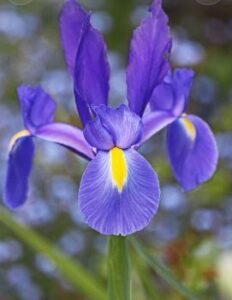
In floriography, the iris flower symbolizes devotion, fearlessness, loyalty, hope, strength, kindness, resilience, inner power and valor. In Greek, the word “iris” means vibrant rainbow and it also represents a part of the eye.
Floriograafias sümboliseerib iirise lill pühendumust, kartmatust, truudust, lootust, tugevust, lahkust, vastupidavust, sisemist jõudu ja vaprust. Kreeka keeles tähendab sõna “iris” elavat vikerkaart ja see esindab ka osa silmast.
The Iris flower evokes a range of feelings and ideas and has profound significance and value. The Iris symbolizes a number of important virtues, such as faith, bravery, valor, hope, and wisdom, in the language of flowers, known as floriography. These symbolic interpretations of the flower are based on historical connections and cultural beliefs.
Iirise lill kutsub esile mitmeid tundeid ja ideid ning omab sügavat tähendust ja väärtust. Iiris sümboliseerib floriograafias mitmeid olulisi voorusi, nagu usk, julgus, vaprus, lootus ja tarkus. Need sümboolsed tõlgendused lille kohta põhinevad ajaloolistel seostel ja kultuurilistel uskumustel.
Depending on the hue of the Iris flower, its meaning might vary. For instance, blue iris can represent trust and optimism. Blue iris is a symbol of monarchy in certain nations of Europe. Yellow irises stand for passion and creativity, while purple irises are associated with knowledge and bravery. Iris flowers’ broad color palette enables a variety of interpretations and emotional connections.
Iirise lille tähendus võib varieeruda sõltuvalt selle värvist. Näiteks sinine iiris võib tähendada usaldust ja optimismi. Sinine iiris on teatud Euroopa riikides monarhia sümbol. Kollased iirised tähistavad kirge ja loovust, samas kui lillad iirised on seotud teadmiste ja julgusega. Iirise lille laialdane värvipalett võimaldab mitmekesiseid tõlgendusi ja emotsionaalseid seoseid.
The significance of the Iris flower transcends cultural and geographical boundaries. It is significant in several cultures throughout the globe. Iris was the goddess of the rainbow and a messenger for Zeus and Hera in Greek mythology. It is thought that she inspired the name of the flower. Iris flowers are also linked to valued relationships, declarations of love, and faith. They are the perfect present to show profound adoration and respect since they reflect wisdom, optimism, and bravery.
Iirise lille tähendus ületab kultuurilisi ja geograafilisi piire. See on oluline mitmetes kultuurides üle kogu maailma. Iris oli vikerkaare jumalanna ja jumalate sõnumitooja Zeusile ja Herale Kreeka mütoloogias. Arvatakse, et just tema inspireeris lille nime. Iirise lilled on seotud hinnaliste suhete, armastuse väljendamise ja usuga. Need on ideaalne kingitus, et näidata sügavat armastust ja austust, kuna nad peegeldavad tarkust, optimismi ja julgust.
Iris flower is associated with compassion, power, and clarity in Japanese culture. The flower’s symbolic connotations mirror the ideals and worldviews of each culture, giving depths of importance to its beauty.
Iirise lill on Jaapani kultuuris seotud kaastunde, jõu ja selgusega. Lille sümboolsed tähendused peegeldavad iga kultuuri ideaalide ja maailmavaadete mitmekesisust, andes sügavust selle ilule.
The Iris flower also has particular connotations related to milestones and significant anniversaries. It is the birth flower for February and symbolizes the traits of people who were born in that month. The Iris is also often selected as the flower to mark the 25th wedding anniversary, representing the unwavering trust and dedication in a long-lasting union.
Iirise lill omab ka erilisi tähendusi, mis on seotud verstapostide ja oluliste aastapäevadega. See on veebruari sünnilill ja sümboliseerib nende inimeste omadusi, kes on sel kuul sündinud. Iiris valitakse sageli ka 25. pulma-aastapäeva lilleks, esindades kindlat usaldust ja pühendumust pikaajalises liidus.
The Iris flower has been used in literature and art as a representation of messages and communication. According to legend, the flower’s three upright petals reflect the attributes of faith, bravery, and knowledge and serve as a visual depiction of them.
Iirise lille on kasutatud kirjanduses ja kunstis sõnumite ja suhtlemise esindajana. Legendi kohaselt peegeldavad lille kolme püsti kroonlehte usu, julguse ja teadmiste omadusi ning teenivad nende visuaalse kujutisena.
Beyond its metaphorical connotation, the Iris flower has deeper importance. It has won admiration for its grace, alluring hues, and distinctive design. Gardeners and flower lovers like its beauty and often grow many Iris kinds, including bearded, Siberian, and Dutch irises.
Lisaks oma metafoorilisele tähendusele omab iirise lill sügavamat tähtsust. See on pälvinud imetlust oma graatsia, lummavate värvide ja eristuva disaini poolest. Aednikud ja lillearmastajad hindavad selle ilu ning kasvatavad sageli mitmeid iirise liike, sealhulgas habemega, Siberi ja Hollandi iiriseid.
Iris flower Symbolism
The iris flower carries significant symbolism, representing various positive qualities. These include:
- Devotion: The iris flower symbolizes unwavering commitment and dedication to someone or something.
- Fearlessness: It embodies courage and the ability to confront challenges with bravery.
- Loyalty: The iris flower represents steadfastness and faithfulness to a person, group
Iris lille tähenduse kohta sageli küsitud küsimused
Kokkuvõte
Kokkuvõttes sisaldab iris lill mitmeid sümboolseid tähendusi, mis on inimesi juba ammu paelunud. Iris on ajaloo vältel olnud võimas sümbol teadmiste, optimistlikkuse ja julguse jaoks, alates iidsetest folklooridest kuni kaasaegsete kujutisteni. Oma muljetavaldava välimuse ja mitmekesise värvipaleti tõttu on see armastatud teema nii kunstnike kui ka aiandushuviliste seas. Kui kohtate looduses või kunstis iris’t, mõelge selle rikkalikele tähendustele ja sõnumitele. Iris lill jätkab meie südame ja mõtete inspireerimist ja rõõmustamist, olgu see siis usku, sõprust või lihtsalt meeldetuletus maailma ilust.
Seotud postitused:
Amarylli lille tähendus ja sümboolika – tea kõike
Paradiisilinnu lille tähendus ja vaimne sümboolika – 8 fakti