
Animal and plant cells differ in several key ways, including their structure, organelles, and functions. Understanding these differences is essential for appreciating the unique roles each type of cell plays in living organisms. To learn more about their similarities, check out this article on How Are Animal and Plant Cells the Same? Explained.
Both animal and plant cells are eukaryotic, meaning they have a nucleus and other membrane-bound organelles. However, the distinct features of each cell type reflect their adaptation to different life processes.
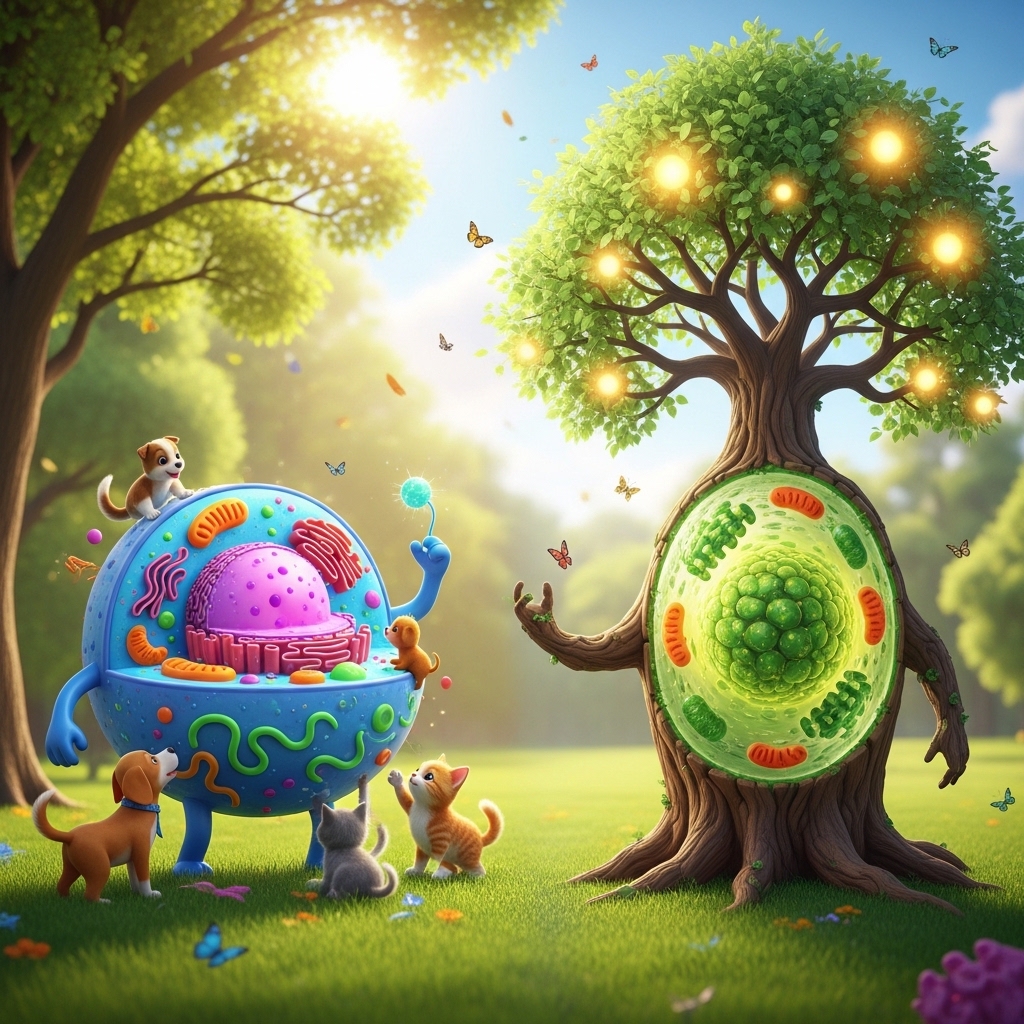
Overview of Cell Types
Definition of Animal Cells
Animal cells are the basic building blocks of animal life. They are characterized by their lack of a rigid cell wall, a flexible cell membrane, and various organelles that help perform functions necessary for survival. These cells are generally round or irregular in shape, allowing for a variety of forms and functions depending on the type of animal tissue they comprise. For example, muscle cells are elongated and packed with fibers that help in contraction, whereas nerve cells have long extensions to transmit signals.
Definition of Plant Cells
Plant cells, on the other hand, are the fundamental units of plant life and are unique in several aspects. These cells have a rigid cell wall made of cellulose, which provides structural support and protection. Additionally, plant cells contain chloroplasts, the organelles responsible for photosynthesis, which enables plants to convert sunlight into energy. The shape of plant cells is typically more regular and rectangular compared to animal cells, reflecting their functions in forming plant tissues and structures.
Structural Differences Between Animal and Plant Cells
Cell Wall Presence in Plant Cells
One of the most significant differences between animal and plant cells is the presence of a cell wall in plant cells. The cell wall is a tough, outer layer that surrounds the cell membrane, providing rigidity and support. It helps maintain the cell’s shape and protects it from mechanical stress. In contrast, animal cells do not have a cell wall; instead, they are surrounded only by a flexible plasma membrane, allowing for greater diversity in shape and function. I’ve often marveled at how this structural difference allows plants to grow tall and withstand wind, something that would be impossible for animals without a skeleton.
Cell Membrane Structure in Animal Cells
The cell membrane in animal cells is primarily composed of a phospholipid bilayer with embedded proteins that facilitate communication and transport. This structure is dynamic and can change shape, allowing animal cells to engulf food and other substances through processes like endocytosis. I remember learning about how this flexibility is crucial for immune cells, as they need to adapt quickly to target and consume pathogens. This adaptability is something plant cells lack due to their rigid cell walls, making them more static in their form.
Shape and Size Variations
In terms of shape and size, animal cells vary widely, depending on their function. For instance, red blood cells are small and disc-shaped, which allows them to efficiently transport oxygen. On the other hand, plant cells often maintain a more uniform rectangular shape, thanks to their rigid cell walls. This consistency helps plants maintain their structure and efficiently organize into tissues. I’ve always found it fascinating how the specific shapes of cells relate directly to their roles in the larger organism. For example, the elongated shape of root cells helps them absorb water and nutrients from the soil.
Organelles Unique to Each Cell Type
Chloroplasts in Plant Cells
Chloroplasts are perhaps the most recognizable organelles unique to plant cells. These green structures contain chlorophyll, the pigment that captures sunlight and drives the process of photosynthesis. This process is essential for converting light energy into chemical energy, which sustains the plant and, ultimately, the entire food chain. I remember the first time I saw a plant’s chloroplasts under a microscope; it was incredible to think that these tiny structures were responsible for producing oxygen and glucose, the basis for most life on Earth. Animal cells, lacking chloroplasts, must obtain energy through the consumption of other organisms.
Centrioles in Animal Cells
Another organelle unique to animal cells is the centriole, which plays a crucial role in cell division. Centrioles help organize the spindle fibers that separate chromosomes during mitosis. I’ve always found it interesting to watch time-lapse videos of cell division, where centrioles seem to orchestrate the process, ensuring that each new cell receives the correct number of chromosomes. Plant cells do not have centrioles; they rely on a different mechanism involving microtubules to achieve the same outcome during cell division.
Vacuoles: Size and Function Differences
Vacuoles also highlight a key difference between plant and animal cells. Plant cells typically have one large central vacuole that stores water, nutrients, and waste products. This vacuole can take up to 90% of the cell’s volume, contributing to turgor pressure, which helps maintain the plant’s structure. In contrast, animal cells contain smaller vacuoles that are more involved in transport and storage, rather than structural support. I’ve seen firsthand how the size of the vacuole can affect a plant’s health; a wilted plant often has a deflated vacuole, leading to droopy leaves. It’s amazing how much a single organelle can influence the overall state of an organism.
Energy Production and Photosynthesis
How Plant Cells Perform Photosynthesis
When I think about the incredible process of photosynthesis, I can’t help but feel a sense of wonder. Plant cells are truly remarkable in how they capture sunlight to create their own food. This process takes place mainly in the chloroplasts, which contain chlorophyll. The chlorophyll absorbs light energy, which is then used to convert carbon dioxide from the air and water from the soil into glucose and oxygen. I remember the first time I learned about this process; it felt like unlocking a secret that explained how plants thrive and support life on our planet. Without photosynthesis, we wouldn’t have the oxygen we breathe or the food we eat. It’s fascinating to realize how interconnected all life forms are through this one process. The oxygen released during photosynthesis is vital not just for plants but for all aerobic organisms, including us. I often look at trees and think about how they are not just providing shade but are also mini oxygen factories, quietly doing their job every day.
Cellular Respiration in Animal Cells
In contrast, animal cells rely on cellular respiration to produce energy. This process occurs in the mitochondria, often referred to as the “powerhouses” of the cell. I’ve always found it intriguing how animal cells take in glucose (which they get from the food we consume) and oxygen, breaking them down to release energy in the form of ATP (adenosine triphosphate). This energy fuels everything we do, from moving our muscles to thinking and even sleeping. It’s almost magical to think that every breath we take and every bite of food we consume contributes to this intricate system of energy production. I remember feeling a rush of appreciation for my body when I learned how efficiently it converts nutrients into energy. It reminded me of how resilient and adaptable we, as living beings, truly are. While plants can make their own energy, we have to rely on the food chain—eating plants or other animals to obtain the necessary nutrients.
Energy Storage Differences: Starch vs. Glycogen
Energy storage in plant and animal cells also showcases their differences. Plant cells store energy primarily in the form of starch, while animal cells store it as glycogen. Starch is a polysaccharide made up of glucose units, and it’s often found in roots and tubers, making it an excellent energy reserve for plants. I’ve always been amazed when I see potatoes or grains; they’re like little energy packs waiting to be consumed. On the other hand, glycogen serves a similar purpose in animal cells but is more readily available for quick energy needs. I’ve felt the rush of energy after eating a meal, and that’s my body accessing that stored glycogen. It’s interesting to think about how different our energy management strategies are—plants stockpile energy for times of low sunlight, while we store it for those moments when we need a quick boost. This difference impacts not just cellular function but also how we interact with our environments.
Reproductive Differences
Mitosis in Animal Cells
Mitosis is a fascinating process I’ve always been captivated by, especially in animal cells. It’s how cells replicate and divide, ensuring that each new cell has an identical set of chromosomes. The stages of mitosis—prophase, metaphase, anaphase, and telophase—are like a well-choreographed dance, where each part plays a crucial role in ensuring everything goes smoothly. I remember watching videos of this process, and it was awe-inspiring to see how centrioles help organize the spindle fibers that pull chromosomes apart. This precise mechanism is essential for growth, healing, and reproduction in multicellular organisms. It’s amazing to think that every time we grow or heal from a cut, our cells are undergoing this intricate process, working tirelessly to maintain our health and well-being.
Cell Division in Plant Cells: Role of the Cell Plate
Plant cells, however, have a unique approach to cell division. Instead of forming a cleavage furrow like in animal cells, plant cells develop a structure known as the cell plate. This process occurs during telophase and involves vesicles that fuse at the center of the cell, gradually forming a new cell wall that separates the two daughter cells. I remember the first time I learned about cell plates; it was fascinating to think about how plants build their cells from the inside out. This means that while animal cells can change shape and move about, plant cells have to work within the confines of their rigid walls. The cell plate not only helps in separating the cells but also contributes to the structural integrity of the plant, allowing it to grow and thrive.
Functional Differences in Organismal Context
Roles of Animal Cells in Multicellular Organisms
In multicellular organisms, animal cells take on a variety of specialized roles that contribute to the organism’s overall function. From muscle cells that enable movement to nerve cells that transmit signals, each type of cell plays a critical part. I’ve often thought about how the diversity in cell types allows for complex functions and interactions within our bodies. For example, red blood cells transport oxygen, while white blood cells work to protect us from disease. It’s like a well-oiled machine, with each cell type performing its specific duty to keep everything running smoothly. I find it remarkable how these cells communicate and work together, almost like a community, ensuring that we can respond to our environment and adapt as needed.
Functions of Plant Cells in Ecosystems
Plant cells, on the other hand, have essential roles in ecosystems. They are the foundation of food chains, providing energy not only for themselves but also for herbivores and, subsequently, carnivores. I love thinking about how plants convert sunlight into energy, supporting life in diverse ecosystems. Beyond producing food, plant cells also play vital roles in carbon fixation and oxygen production, which are crucial for maintaining atmospheric balance. I remember hiking through forests and realizing that these plants are doing so much more than just growing; they are actively contributing to the air we breathe and the climate we experience. The interconnectedness of plant cells with the entire ecosystem underscores their importance in sustaining life on Earth. For more details on these differences, read the article on Difference Between Animal and Plant Cells Explained.
Comparative Summary of Animal and Plant Cells
Key Similarities Between Animal and Plant Cells
Despite their differences, animal and plant cells share several important similarities that highlight their common eukaryotic nature. Both cell types possess a nucleus, which houses the cell’s genetic material (DNA). This similarity is a fundamental aspect of life, as it allows for the regulation of cellular activities and the transmission of genetic information during reproduction. I find it fascinating that regardless of whether we’re talking about a towering oak tree or a tiny red blood cell, both rely on the same basic blueprint for cellular function.
Additionally, both animal and plant cells contain membrane-bound organelles like mitochondria, which are crucial for energy production. This shared feature emphasizes how both types of cells have evolved to harness energy efficiently, albeit through different pathways. The presence of endoplasmic reticulum and Golgi apparatus in both cell types also plays a vital role in protein synthesis and transport. It’s remarkable to think how these cellular structures work in tandem to support life, regardless of the organism’s form.
Furthermore, both animal and plant cells are involved in cellular communication, utilizing signaling molecules to respond to their environment. This is essential for maintaining homeostasis within the organism. I remember being amazed by how interconnected life truly is at the cellular level, with both plants and animals relying on similar mechanisms to interact with their surroundings.
Major Differences Recap
While there are similarities, the differences between animal and plant cells are equally important to understand. One of the most notable distinctions is the presence of chloroplasts in plant cells, which allows them to perform photosynthesis. This unique capability not only enables plants to produce their own food but also plays a critical role in supporting life on Earth by releasing oxygen. In contrast, animal cells must obtain energy from external sources, highlighting a fundamental difference in how these two cell types sustain themselves.
Another significant difference is the structure of their cell walls. The rigid cell wall in plant cells provides support and defines their shape, while animal cells are more flexible and lack this outer layer. I’ve often thought about how this flexibility in animal cells allows for diverse forms and functions, contributing to the complexity of animal life.
The size and function of vacuoles also highlight differences in these cell types. Plant cells typically have a large central vacuole that maintains turgor pressure and stores essential nutrients, while animal cells have smaller vacuoles that are more involved in storage and transport processes. This difference is not just structural; it reflects the unique needs of each organism. I’ve seen firsthand how the size of a plant cell’s vacuole can make such a difference during drought conditions. A well-hydrated plant stands tall, while a wilted one can quickly show how vital that organelle is.
Additionally, the reproductive processes differ significantly. Animal cells undergo mitosis with the aid of centrioles, which organize the separation of chromosomes. In contrast, plant cells utilize the cell plate mechanism during division, creating new cell walls from the inside out. This method emphasizes how plant cells are designed to grow and maintain their integrity, even as they divide.
Finally, the energy storage strategies reveal another layer of distinction. Plant cells store energy as starch, while animal cells store it as glycogen. This difference affects how each type of organism interacts with its environment and utilizes resources. I often think about how our dietary choices as animals depend so much on the energy stored in plants, illustrating a beautiful interconnectedness in nature. For a deeper understanding of this topic, refer to the article on Difference Between Plant and Animal Cells Explained.
Frequently Asked Questions
What is the main difference between animal and plant cells?
The main difference lies in their structure and organelles. Plant cells have a rigid cell wall, chloroplasts for photosynthesis, and a large central vacuole, while animal cells lack a cell wall, do not have chloroplasts, and have smaller vacuoles.
What is the role of chloroplasts in plant cells?
Chloroplasts are organelles in plant cells that contain chlorophyll, which captures sunlight and drives the process of photosynthesis, allowing plants to convert light energy into chemical energy in the form of glucose and oxygen.
How do animal cells produce energy?
Animal cells produce energy through cellular respiration, which occurs in the mitochondria. They take in glucose and oxygen, breaking them down to release energy in the form of ATP (adenosine triphosphate).
What is the function of the cell wall in plant cells?
The cell wall in plant cells provides structural support and protection, maintaining the cell’s shape and helping it withstand mechanical stress. It is made of cellulose.
What organelle is unique to animal cells?
The centriole is unique to animal cells and plays a crucial role in cell division by organizing the spindle fibers that separate chromosomes during mitosis.
What is the difference in vacuoles between animal and plant cells?
Plant cells typically have one large central vacuole that stores water, nutrients, and waste, contributing to turgor pressure, whereas animal cells contain smaller vacuoles that are more involved in transport and storage.
How do plant and animal cells differ in their energy storage methods?
Plant cells store energy primarily in the form of starch, while animal cells store energy as glycogen. This difference reflects their distinct nutritional strategies and environmental interactions.
What is the process of mitosis in animal cells?
Mitosis in animal cells involves a series of stages (prophase, metaphase, anaphase, and telophase) that ensure each new cell receives an identical set of chromosomes, facilitated by centrioles.
How do plant cells divide differently from animal cells?
Plant cells divide by forming a cell plate during telophase, which develops into a new cell wall that separates the daughter cells, while animal cells form a cleavage furrow during division.
What are the roles of animal and plant cells in their respective ecosystems?
Animal cells contribute to various specialized functions, such as movement and protection, while plant cells serve as the foundation of food chains, providing energy for herbivores and contributing to carbon fixation and oxygen production.