
Animal and plant cells share many similarities, including basic structures and common organelles, which allow them to perform essential functions necessary for life. Understanding these similarities helps us appreciate how different life forms maintain their biological processes. For a deeper understanding, check out the Difference Between Animal and Plant Cells Explained.
Understanding Cell Basics
What Are Cells?
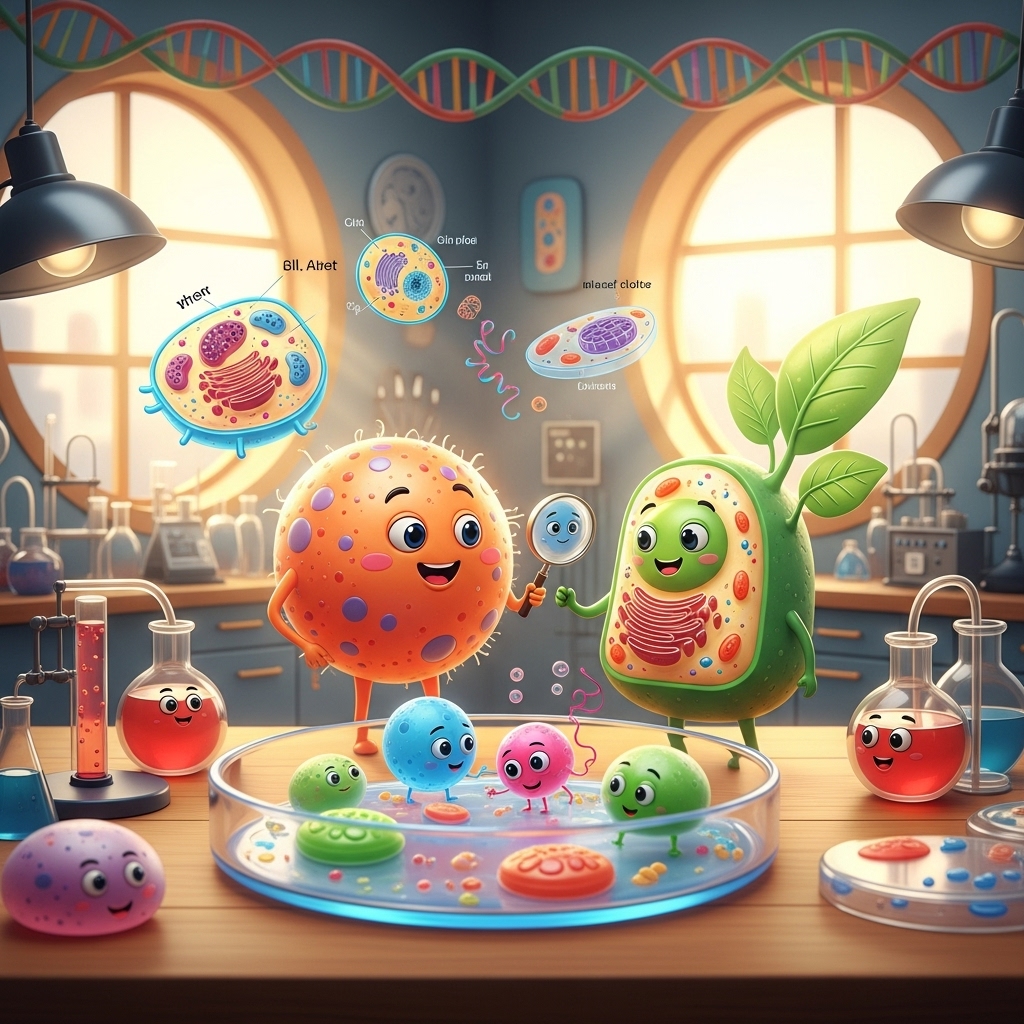
Cells are the fundamental building blocks of all living organisms. They are the smallest units that can carry out life processes. Each cell is like a tiny factory, operating with various parts that contribute to its overall function. We often hear the phrase, “cells are the basic units of life,” and I wholeheartedly agree with that sentiment since everything we see around us, from the tiniest bacterium to the largest tree, is made up of cells.
The Importance of Cells in Living Organisms
Cells are crucial because they perform vital functions that sustain life. For instance, they help in growth, reproduction, and responding to environmental changes. I remember when I first learned about cells in school; it was fascinating to think about how complex yet organized they are. Cells also communicate with each other, forming tissues and organs, which ultimately creates the diverse forms of life we encounter every day. Without cells, life as we know it wouldn’t exist.
Overview of Animal Cells
Structure of Animal Cells
Animal cells are typically round or irregular in shape, lacking a rigid cell wall, which makes them more flexible than plant cells. This flexibility allows them to change shape easily, which is essential for their various functions. I’ve often marveled at how diverse these cells can be; for example, muscle cells are elongated to help with contraction, while nerve cells are long and thin to transmit signals across distances. This structural variety speaks to their specialized roles in the body.
Key Organelles in Animal Cells
Animal cells contain several organelles that perform specific functions. Some of the key organelles include:
- Nucleus: This is often referred to as the cell’s control center, housing DNA and regulating gene expression.
- Mitochondria: Known as the powerhouse of the cell, mitochondria convert nutrients into energy.
- Ribosomes: These little structures are where protein synthesis occurs, essential for cell function and growth. For more details, see our article on Are Ribosomes in Plant and Animal Cells? Explained.
- Endoplasmic Reticulum (ER): The ER comes in two forms, rough and smooth, and is involved in protein and lipid synthesis.
- Golgi Apparatus: This organelle modifies, sorts, and packages proteins for secretion or for use within the cell.
Each of these organelles plays a crucial role in maintaining the life and health of the cell, and I find it fascinating how they all work together in harmony.
Functions of Animal Cells
The functions of animal cells are diverse and tailored to their roles in the body. They are involved in processes such as metabolism, energy production, and waste elimination. For example, muscle cells contract to facilitate movement, while nerve cells transmit signals throughout the body, allowing us to respond to stimuli. During my biology classes, I learned that animal cells also play a role in the immune response, helping to protect the body from pathogens. This multifaceted nature of animal cells is what makes them so remarkable.
Overview of Plant Cells
Structure of Plant Cells
Plant cells have a more rigid structure compared to animal cells. They typically have a rectangular shape, largely due to the presence of a cell wall made of cellulose. I remember being surprised to learn that this wall not only gives plants their shape but also provides protection, making them sturdier than animal cells. Additionally, plant cells have larger vacuoles that store water, nutrients, and waste products, which help maintain turgor pressure and support the plant’s structure.
Key Organelles in Plant Cells
Like animal cells, plant cells also contain many organelles. Here are some that are particularly important:
- Chloroplasts: These are unique to plant cells and are where photosynthesis occurs, allowing plants to convert sunlight into energy.
- Cell Wall: As mentioned earlier, this provides structure and protection to the cell.
- Vacuoles: Plant cells often have one large central vacuole that stores substances and helps maintain cell rigidity.
- Nucleus: Similar to animal cells, it houses genetic material and controls cell activities.
What’s fascinating to me is how each organelle contributes to the overall health and function of the plant. Without chloroplasts, plants would not be able to produce the energy needed for growth, making them incredibly dependent on sunlight.
Functions of Plant Cells
Plant cells primarily function in photosynthesis, energy storage, and providing structural support. The chloroplasts in plant cells allow them to capture sunlight and convert it into chemical energy, which is vital for their growth and development. I find it intriguing how plants serve as the foundation of food chains, providing energy for all other living organisms. Additionally, the large vacuoles in plant cells help store water, which is crucial for maintaining hydration and nutrient transport in plants.
Similarities Between Animal and Plant Cells
Cell Membrane Structure
One of the key similarities between animal and plant cells is their cell membrane. Both types of cells have a semi-permeable membrane that controls what enters and exits the cell. I’ve always appreciated how this membrane acts as a protective barrier while allowing necessary substances to pass through. This shared feature underscores the importance of maintaining balance within the cell, whether it’s an animal or plant cell.
Common Organelles: Nucleus, Ribosomes, and Mitochondria
Both animal and plant cells contain a nucleus, ribosomes, and mitochondria. The nucleus serves as the control center for both types of cells, housing DNA and regulating functions. Ribosomes, essential for protein synthesis, are found in both plant and animal cells, highlighting a shared need for these vital proteins. Mitochondria, known as the powerhouses, are also present in both and play a crucial role in energy production. This commonality is significant, as it shows how both cell types share fundamental metabolic processes.
Genetic Material: DNA and Chromosomes
Both animal and plant cells contain DNA, which carries genetic information necessary for growth, development, and reproduction. I think it’s fascinating how this genetic material is organized into chromosomes, which are essential for cell division and inheritance. This shared characteristic highlights the fundamental similarity in how all living organisms store and transmit their genetic information.
Energy Conversion Processes
Animal and plant cells both engage in energy conversion processes, albeit in different ways. While plant cells convert sunlight into energy via photosynthesis, animal cells perform cellular respiration to break down glucose and produce ATP. I remember feeling amazed when I learned how these processes, though different, are essential for energy metabolism in both types of cells. This connection illustrates the intricate dance of life, where different organisms depend on one another for energy flow.
Key Differences Between Animal and Plant Cells
Cell Wall vs. Cell Membrane
One of the most noticeable differences between animal and plant cells is the presence of a cell wall in plant cells. While both cell types have a cell membrane, the cell wall is unique to plants. I remember learning that the cell wall, made primarily of cellulose, provides structural support and protection. It acts like a fortress, giving plants their shape and making them more resilient to external stresses. On the other hand, animal cells only have a cell membrane, which allows for greater flexibility. This flexibility is crucial, especially for cells that need to move or change shape, like white blood cells as they navigate through our bloodstream.
Chloroplasts and Photosynthesis
Chloroplasts are another significant difference between plant and animal cells. These organelles are responsible for photosynthesis, the process that allows plants to convert sunlight into energy. I find it fascinating that this process not only fuels the plant itself but also produces oxygen, which is vital for all aerobic organisms, including us. Animal cells, however, lack chloroplasts and cannot perform photosynthesis. Instead, we rely on consuming plants and other organisms for our energy needs. This distinction highlights how interdependent life forms are on each other for survival.
Vacuoles: Size and Function
When it comes to vacuoles, there’s a clear difference in size and function between plant and animal cells. Plant cells usually have one large central vacuole that takes up a significant portion of the cell’s volume. This vacuole is essential for storing water, nutrients, and waste products. It also plays a key role in maintaining turgor pressure, which helps keep plants upright and healthy. In contrast, animal cells have smaller and more numerous vacuoles that serve different functions, like storing nutrients or waste. I remember being amazed by how crucial the central vacuole is to plant health; without it, plants would wilt and struggle to survive.
Shape and Structure Variations
The shape and structure of animal and plant cells also differ significantly. Animal cells tend to be round or irregular, which can be attributed to their lack of a rigid cell wall. This irregularity allows them to adapt to various roles within the body, contributing to the complexity of animal tissues. For example, red blood cells are disc-shaped to optimize oxygen transport, while neurons extend long axons to transmit signals. In contrast, plant cells generally have a more uniform rectangular shape due to their cell walls. This structural consistency supports the formation of sturdy tissues, like the wood in trees or the fleshy parts of fruits. I’ve often found it interesting how these differences in shape reflect the distinct functions they serve in their respective organisms.
Implications of Similarities in Cellular Functions
Cellular Respiration in Both Cell Types
Despite their differences, both animal and plant cells perform cellular respiration, albeit with different starting materials. In my studies, I learned that both types of cells take in nutrients and oxygen to produce energy. While plants convert sunlight into chemical energy through photosynthesis, they also have mitochondria that allow them to perform cellular respiration, especially in the dark when photosynthesis cannot occur. This means that both cell types ultimately rely on the same fundamental process to generate ATP, which powers their functions. It’s a perfect example of how life is interconnected, with plants and animals sharing similar energy pathways.
Protein Synthesis Similarities
Protein synthesis is another area where animal and plant cells show remarkable similarities. Both types of cells utilize ribosomes to create proteins based on the instructions encoded in their DNA. I’ve always found it impressive how this process starts with transcription in the nucleus, where the DNA is copied into messenger RNA (mRNA). Then, this mRNA travels to the ribosomes, where it’s translated into proteins. These proteins are essential for countless functions, from building cellular structures to facilitating chemical reactions. The shared mechanism of protein synthesis emphasizes the fundamental unity of life, regardless of whether the organism is a plant or an animal.
Cell Division: Mitosis in Animal and Plant Cells
Cell division is crucial for growth, repair, and reproduction in both animal and plant cells. I remember being struck by the similarities in the process of mitosis. Both cell types undergo a series of phases—including prophase, metaphase, anaphase, and telophase—to ensure that each daughter cell receives the correct number of chromosomes. However, there are slight differences in how the two types of cells complete the final step, cytokinesis. In animal cells, the membrane pinches inwards to form two separate cells, while in plant cells, a cell plate forms to create a new cell wall. This distinction is fascinating, as it shows adaptability in processes essential for life.
Real-World Applications of Understanding Cell Similarities
Biotechnology and Genetic Engineering
Our knowledge of the similarities between animal and plant cells has paved the way for advancements in biotechnology and genetic engineering. For instance, scientists can transfer genes between species to create genetically modified organisms (GMOs). I’ve seen how these innovations can lead to crops that resist pests, require less water, or have enhanced nutritional value. Understanding the fundamental cellular similarities allows researchers to manipulate genes more effectively, which has significant implications for food security and environmental sustainability. For further insights, read about How Are Plant and Animal Cells Different? Simple Guide.
Medical Research and Treatment
In the realm of medical research, understanding cellular functions has been crucial for developing treatments for various diseases. For example, cancer research heavily relies on insights into how both animal and plant cells proliferate. I’ve learned that by studying the mitotic processes in plant cells, scientists can gain insights into tumor growth and develop targeted therapies for patients. This cross-species understanding showcases how interconnected our knowledge of life is, helping us find solutions to pressing health issues.
Environmental Science and Conservation
Finally, our understanding of cellular similarities plays a vital role in environmental science and conservation efforts. By recognizing the interconnectedness of ecosystems, we can appreciate how plant and animal cells contribute to the health of our planet. I find it inspiring that efforts to restore habitats often involve understanding plant cell functions, like photosynthesis, to enhance carbon capture and improve air quality. This knowledge helps guide us in making informed decisions about conservation strategies that benefit both plants and animals.
Frequently Asked Questions
What are cells?
Cells are the fundamental building blocks of all living organisms. They are the smallest units that can carry out life processes, operating like tiny factories with various parts contributing to their overall function.
What are the key organelles found in animal cells?
Key organelles in animal cells include the nucleus, mitochondria, ribosomes, endoplasmic reticulum (ER), and Golgi apparatus. Each of these organelles performs specific functions vital for the cell’s life and health.
How do plant cells differ structurally from animal cells?
Plant cells have a more rigid structure compared to animal cells, typically exhibiting a rectangular shape due to the presence of a cell wall made of cellulose. This cell wall provides structure and protection, making them sturdier than animal cells.
What is the primary function of chloroplasts in plant cells?
Chloroplasts are unique to plant cells and are responsible for photosynthesis, allowing plants to convert sunlight into energy, which is essential for their growth and development.
What are the similarities between animal and plant cells?
Both animal and plant cells have a semi-permeable cell membrane, contain a nucleus, ribosomes, and mitochondria, and possess DNA organized into chromosomes. These similarities highlight fundamental shared metabolic processes.
What are the main differences between animal and plant cells regarding vacuoles?
Plant cells usually have one large central vacuole that stores water, nutrients, and waste products, whereas animal cells have smaller and more numerous vacuoles serving various functions like nutrient or waste storage.
How do animal and plant cells perform energy conversion?
Plant cells convert sunlight into energy through photosynthesis, while animal cells perform cellular respiration to break down glucose and produce ATP, highlighting different methods of energy metabolism in both cell types.
What role do ribosomes play in both animal and plant cells?
Ribosomes are essential for protein synthesis in both animal and plant cells. They create proteins based on the instructions encoded in DNA, which are vital for numerous cellular functions.
What is the significance of understanding cellular similarities in biotechnology?
Understanding the similarities between animal and plant cells has enabled advancements in biotechnology, such as transferring genes between species to create genetically modified organisms (GMOs), which can lead to improved crop resilience and nutritional value.
How does knowledge of cell functions contribute to medical research?
Insights into cellular functions are crucial for developing treatments for various diseases. For example, understanding mitotic processes in plant cells can provide insights into tumor growth in cancer research, aiding the development of targeted therapies.