
Plant and animal cells differ mainly in their structures and functions. While both are eukaryotic cells with complex internal components, plant cells have unique features like a cell wall and chloroplasts, which aren’t found in animal cells. How Are Plant and Animal Cells Different? Simple Guide This distinction plays a crucial role in their individual functions and interactions within ecosystems.
This distinction plays a crucial role in their individual functions and interactions within ecosystems.
Understanding Cell Types

Definition of Plant Cells
Plant cells are the basic building blocks of plants. They have a rigid cell wall made of cellulose, which provides structure and support, allowing plants to grow tall and withstand environmental pressures. Inside, plant cells contain various organelles, including chloroplasts, which are essential for photosynthesis—the process by which plants convert sunlight into energy. I remember the first time I learned about chloroplasts in school; the idea that plants could harness sunlight was fascinating to me.
Definition of Animal Cells
Animal cells, on the other hand, form the basis of all animals, including humans. Unlike plant cells, they lack a cell wall, which makes them more flexible and allows for a variety of shapes and sizes. This flexibility enables animals to move and adapt to their environments. I’ve always been curious about how our cells work together to facilitate movement, growth, and other essential functions that keep us alive and thriving.
Key Differences Between Plant and Animal Cells
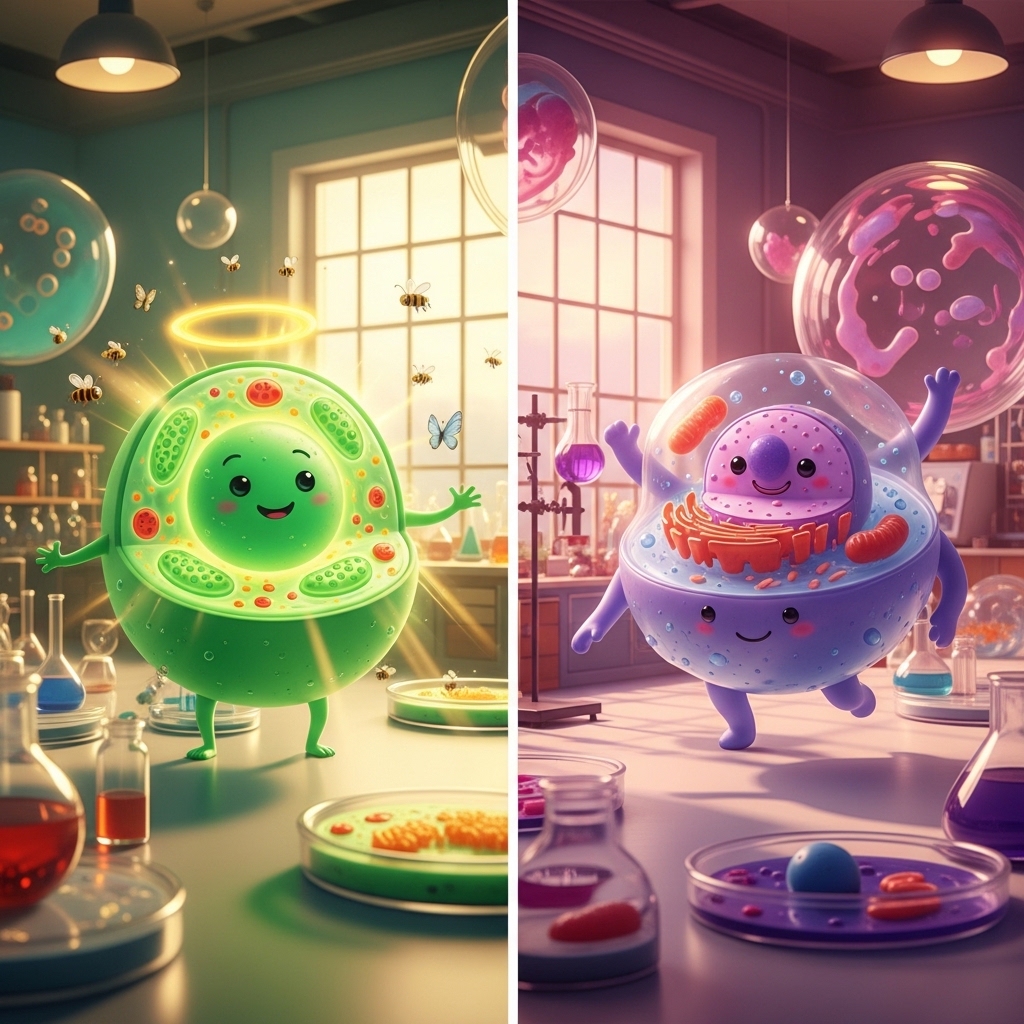
Cell Structure
When it comes to cell structure, one of the most noticeable differences is the presence of certain organelles. Plant cells have large central vacuoles that store nutrients and waste products, while animal cells have smaller vacuoles. This size difference is crucial; I learned that the large vacuole in plant cells helps maintain turgor pressure, which keeps the plant upright and healthy.
Additionally, the shape of these cells can be quite different. Plant cells typically have a fixed, rectangular shape due to their rigid cell walls, while animal cells are often round or irregular. This distinction plays a significant role in how these organisms function. I often think about how the structure of a cell relates to its purpose; for instance, the sturdiness of plant cells supports their role in photosynthesis and growth, while the flexibility of animal cells allows for movement and interaction. Is Cytoplasm in Plant and Animal Cells? Explained
Cell Wall vs. Cell Membrane
Another critical difference lies in the protective layers surrounding the cells. Plant cells are enveloped by a cell wall made of cellulose, which provides strength and rigidity. This wall is essential for preserving the plant’s structure and protecting it from external forces. I found it interesting that while the cell wall is strong, it also allows for the movement of substances in and out of the cell through tiny pores. In contrast, animal cells are encased by a cell membrane, which is more flexible and allows for a greater range of movement and interaction with the environment.
Chloroplasts in Plant Cells
One of my favorite features of plant cells is the presence of chloroplasts, the organelles responsible for photosynthesis. These structures contain chlorophyll, the green pigment that captures sunlight, converting it into chemical energy. This process not only sustains the plant but also produces the oxygen we breathe. I remember being amazed by how interconnected our existence is with plants; without them, life as we know it would not be possible.
Vacuoles: Size and Function
Vacuoles are another distinguishing feature between plant and animal cells. In plant cells, the central vacuole can take up to 90% of the cell’s volume, serving various functions such as storage of substances, waste disposal, and maintaining turgor pressure. This large vacuole is vital for keeping the plant firm. On the flip side, animal cells have smaller vacuoles that are more numerous and involved in storage and transport processes. I’ve often wondered how these differences affect the overall functioning of the organism; for example, the large vacuole in plants contributes significantly to their ability to store water, which is essential for survival in various environments.
Shape and Size Variations
As I mentioned earlier, the shape and size of plant and animal cells can vary quite a bit. Plant cells are generally larger and more uniform in shape, while animal cells exhibit a wider variety of shapes due to their lack of a rigid structure. This diversity in cell shape allows for specialized functions. For instance, nerve cells are long and thin, which helps them transmit signals effectively. I often think about how these specialized shapes reflect the roles cells play in the larger systems of life. Each cell type is like a piece of a puzzle, contributing to the whole organism’s well-being.
Understanding these differences not only enriches my knowledge of biology but also highlights the incredible diversity of life on Earth. Each type of cell is perfectly adapted to its role, showcasing the beauty of nature’s design.
Organelles Unique to Plant and Animal Cells

Photosynthesis and Chlorophyll
One of the most captivating processes that I’ve come to appreciate is photosynthesis, which occurs in plant cells thanks to their chloroplasts. These organelles are more than just the green parts of a leaf; they’re vital for converting sunlight into energy. When I first learned about how chlorophyll captures light energy, I was amazed by the intricate dance of light and dark that happens within a plant. It’s like nature’s own energy factory! Through photosynthesis, plants not only produce glucose for their own energy needs but also release oxygen, which is essential for many living organisms, including us. I feel a profound sense of connection to plants when I think about how their ability to harness sunlight directly impacts the air we breathe and the food we eat.
Centrioles in Animal Cells
On the flip side, animal cells have organelles that plant cells lack, one of which is the centriole. These cylindrical structures play a significant role in cell division by helping to organize the mitotic spindle, which is crucial for the proper distribution of chromosomes to daughter cells. I remember feeling a sense of wonder when I learned how precisely our cells reproduce, ensuring that each new cell has the right amount of genetic material. It made me realize that even at such a tiny level, there’s a remarkable choreography at play. The presence of centrioles highlights the unique strategies animal cells employ to manage growth and reproduction.
Other Distinct Organelles
There are several other organelles that differentiate plant and animal cells and contribute to their unique functions. For instance, lysosomes are more common in animal cells and are often referred to as the cell’s “digestive system.” They contain enzymes that break down waste materials and cellular debris. I find it fascinating how lysosomes help maintain cellular health by recycling components, much like how we recycle materials in our daily lives.
Meanwhile, plant cells contain plastids, which are involved in the synthesis and storage of food. Aside from chloroplasts, there are amyloplasts (which store starch) and chromoplasts (which store pigments). I’ve always been intrigued by the variety of functions these plastids serve and how they contribute to the plant’s overall health and ability to thrive in different environments.
These unique organelles reflect the diverse strategies that plant and animal cells use to adapt to their roles in nature. Each organelle is like a tool in a toolbox, helping the cell perform its specific tasks effectively.
Functions and Roles in Ecosystems
SBAG_IMG_69ac32b118c65
Plant Cells and Their Role in Photosynthesis
Plant cells are crucial players in the ecosystem, primarily because of their role in photosynthesis. This process doesn’t just sustain the plant itself; it’s the foundation of life for many organisms. I often think about how plants are like the earth’s lungs, producing oxygen while absorbing carbon dioxide. During a hike in the woods, I remember pausing to appreciate the trees around me, recognizing that they were not just beautiful but also vital for our survival. The energy captured through photosynthesis supports the entire food chain, from herbivores to carnivores, and underscores the interconnectedness of life.
Animal Cells and Their Role in Metabolism
Animal cells, on the other hand, contribute to metabolism, which is essential for energy production and overall homeostasis. This process involves breaking down food into energy, which fuels everything from our daily activities to our growth. I’ve often been fascinated by how the cells in my body work tirelessly to convert the food I eat into energy. It’s a reminder of how interconnected our bodily functions are and how the nutrients we consume directly affect our health and well-being.
Interdependence in Ecosystems
The relationship between plant and animal cells illustrates a beautiful cycle of interdependence in ecosystems. I’ve seen firsthand how changes in one part of an ecosystem can ripple through others. For example, when plant populations decline due to environmental changes, it impacts herbivores that rely on them for food, which in turn affects carnivores that prey on those herbivores. Understanding these dynamics has deepened my appreciation for biodiversity and the delicate balance that sustains life on Earth. It serves as a reminder that every cell, whether plant or animal, plays a crucial role in maintaining the health of our planet.
Microscopy and Observation Techniques
Light Microscopy for Cell Observation
To truly appreciate the differences between plant and animal cells, microscopy is an invaluable tool. Light microscopy, for instance, allows us to observe these cells in their natural state. I remember the first time I looked through a microscope and saw a plant cell with its rigid cell wall and vibrant chloroplasts. It was like peering into another world! This technique uses visible light to illuminate the specimen, making it possible to see details that are invisible to the naked eye. It’s amazing how this simple tool can open up a whole new understanding of life at the cellular level.
Electron Microscopy Advantages
For a closer look at cellular structures, electron microscopy is a game-changer. This advanced technique uses beams of electrons instead of light, providing much higher resolution images. I found it incredible to learn that electron microscopes can reveal intricate details about organelles that even the best light microscopes can miss. It’s like discovering a hidden layer of complexity within the cells that we often take for granted. This technology has deepened our understanding of cellular functions and has been instrumental in biological research.
Staining Techniques for Distinguishing Cells
Staining techniques also play a crucial role in cell observation. By applying specific dyes, we can highlight different structures within the cells, making it easier to distinguish between plant and animal cells. I remember experimenting with stains in a lab and seeing how they transformed the appearance of cells, revealing features I hadn’t noticed before. It’s like adding color to a black-and-white photograph, bringing the intricate details to life. This technique not only aids in educational settings but also enhances research, allowing scientists to identify and study specific cell types and their functions.
Common Misconceptions About Plant and Animal Cells
Are All Plant Cells Photosynthetic?
I’ve often encountered the idea that all plant cells are capable of photosynthesis, which isn’t entirely accurate. While chloroplasts are the organelles responsible for this remarkable process, not every plant cell contains them. For instance, in roots, where there is little to no light, the cells don’t have chloroplasts and therefore cannot perform photosynthesis. I remember my biology teacher explaining this concept, and it really opened my eyes to the complexity of plant life. It’s fascinating to think that even within a single plant, different cells have specialized functions. This specialization allows the plant to thrive in various environments, ensuring it can absorb nutrients and water from the soil, even without the ability to harness sunlight directly.
Do Animal Cells Have Cell Walls?
Another common misconception I’ve noticed is the belief that animal cells might have cell walls. In reality, they do not. Instead, animal cells are surrounded by a flexible cell membrane that allows for a range of movement and interaction. This flexibility is crucial because it enables animal cells to change shape and transport materials more easily. I’ve often wondered how this difference impacts the way animals interact with their environment compared to plants. The absence of a rigid wall allows animal cells to form tissues and organs that can perform complex functions, such as contracting muscles for movement or transmitting nerve signals. It’s a perfect example of how structure dictates function in biology.
Applications in Biotechnology and Medicine
Plant Cells in Genetic Engineering
Plant cells have become a cornerstone in the field of genetic engineering, and I find this area of study incredibly exciting. Scientists can manipulate plant cells to introduce desirable traits, such as resistance to pests or improved nutritional content. For example, I’ve read about genetically modified organisms (GMOs) that have been developed to withstand harsh environmental conditions, helping to ensure food security. It’s amazing to think that through the understanding of plant cell biology, we can enhance agricultural productivity and adapt crops to changing climates. I remember being inspired by stories of how these innovations can help feed millions of people, which really highlights the importance of plant cells in our lives.
Animal Cells in Cell Culture and Research
On the other hand, animal cells play a vital role in medical research and biotechnology as well. Cell culture techniques allow scientists to grow animal cells in controlled environments, which has been revolutionary for drug development and testing. I’ve always been fascinated by the idea that we can study how diseases affect cells and test new treatments without needing to experiment on living organisms. This approach has led to significant advancements in medicine, including the development of vaccines and therapies for various diseases. I feel a sense of awe when I think about the ethical considerations and the innovative techniques that have emerged from the study of animal cells, making it possible to advance human health while minimizing harm.
Summary of Differences and Importance
Recap of Key Differences
Reflecting on everything we’ve discussed, it’s clear that plant and animal cells have distinct structures and functions that are perfectly suited to their roles in the larger ecosystem. Whether it’s the rigid cell walls of plants that provide support or the flexible membranes of animal cells that allow for movement, each component plays an essential part in life. I often think about how these differences highlight the beauty and complexity of life on Earth. Understanding these distinctions helps us appreciate how organisms interact and rely on one another in various habitats.
Importance of Understanding Cell Types
Understanding the differences between plant and animal cells isn’t just an academic exercise; it has real-world implications. From advancements in biotechnology to our understanding of ecosystems, this knowledge can lead to solutions for some of the most pressing challenges we face today, such as food security and health crises. I believe that by continuing to explore the intricacies of cell biology, we can unlock new potentials for innovation and sustainability. It inspires me to think that every little detail about cells contributes to our overall understanding of life, and I’m excited to see where future research will lead us.
Frequently Asked Questions
What are the main structural differences between plant and animal cells?
Plant cells have a rigid cell wall made of cellulose and contain chloroplasts, while animal cells lack a cell wall and are more flexible in shape. This structural difference is critical for their respective functions and interactions in ecosystems.
What role do chloroplasts play in plant cells?
Chloroplasts are organelles in plant cells responsible for photosynthesis, allowing plants to convert sunlight into chemical energy. This process produces glucose and oxygen, which are essential for life on Earth.
How do vacuoles differ between plant and animal cells?
Plant cells typically have a large central vacuole that can occupy up to 90% of the cell’s volume, serving functions such as storage and maintaining turgor pressure. In contrast, animal cells have smaller, more numerous vacuoles involved in storage and transport processes.
What is the significance of the cell wall in plant cells?
The cell wall in plant cells provides strength and rigidity, preserving the plant’s structure and protecting it from external forces. It also allows for the movement of substances in and out of the cell through tiny pores.
What are centrioles, and why are they important in animal cells?
Centrioles are cylindrical structures in animal cells that play a crucial role in cell division by organizing the mitotic spindle, ensuring proper distribution of chromosomes to daughter cells.
Are all plant cells capable of photosynthesis?
No, not all plant cells can perform photosynthesis. For example, root cells do not contain chloroplasts because they are located in areas with little to no light, which makes photosynthesis impossible.
What is the function of lysosomes in animal cells?
Lysosomes are organelles in animal cells that contain enzymes to break down waste materials and cellular debris, functioning as the cell’s “digestive system” and helping maintain cellular health.
How do plant and animal cells contribute to their respective ecosystems?
Plant cells play a vital role in photosynthesis, producing oxygen and forming the foundation of the food chain. Animal cells contribute to metabolism, which is essential for energy production and maintaining homeostasis.
What are some applications of plant cells in biotechnology?
Plant cells are used in genetic engineering to introduce desirable traits, such as pest resistance and improved nutritional content, which can enhance agricultural productivity and food security.
How do microscopy techniques help in studying plant and animal cells?
Microscopy techniques, such as light and electron microscopy, allow scientists to observe the structures and details of plant and animal cells. Staining techniques further enhance visibility, helping to distinguish between different cell types and their functions.