
Plant and animal cells differ significantly in structure and function, reflecting their unique roles in nature. While both are essential for life, their differences help them adapt to their respective environments.
Understanding Cells: An Overview
What Are Cells?
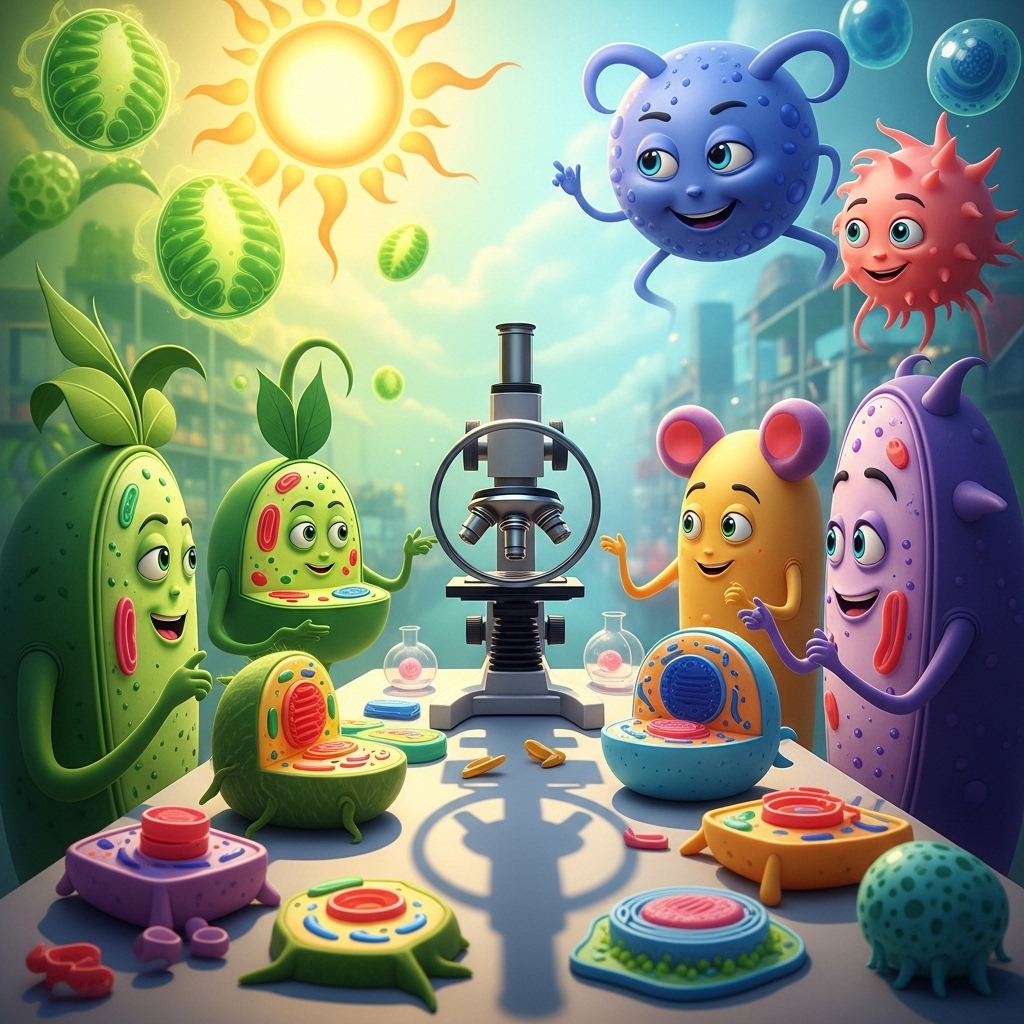
Cells are the fundamental building blocks of all living organisms. Whether it’s a tiny bacterium or a giant redwood tree, every living thing is made up of cells. I remember my first biology class when I learned that cells are not just tiny compartments; they are complex structures that perform a multitude of functions necessary for life. They can be broadly classified into two main categories: prokaryotic and eukaryotic. Eukaryotic cells, which include both plant and animal cells, are characterized by having a nucleus and other specialized organelles that carry out various tasks within the cell. Are Ribosomes in Plant and Animal Cells? Explained provides more insight into the organelles that play a crucial role in cellular functions.
The Importance of Cells in Living Organisms
Understanding cells is crucial because they play a vital role in everything from growth and repair to energy production and reproduction. In my experience, learning about cells opened my eyes to how interconnected life is. Each cell type has a specific function that contributes to the overall health of the organism. For instance, muscle cells help us move, while nerve cells transmit signals throughout the body. Without cells, there would be no life as we know it.
Key Differences Between Plant and Animal Cells
Structural Differences
When I first dived into the world of cells, the structural differences between plant and animal cells fascinated me. While they share many common features, several key distinctions set them apart.
Cell Wall in Plant Cells
One of the most noticeable differences is that plant cells have a rigid cell wall made of cellulose. This wall provides structural support and protection, allowing plants to stand tall and resist various environmental stresses. I remember feeling amazed when I learned that this wall enables plants to maintain their shape, even when they are filled with water. In contrast, animal cells lack a cell wall; they have only a flexible cell membrane. This difference allows animal cells to be more varied in shape, which is essential for their diverse functions.
Shape and Size Variations
The shape and size of plant and animal cells also differ significantly. Plant cells are often more rectangular or box-like due to their rigid cell walls, whereas animal cells tend to be more irregular and round. I’ve seen under a microscope how this difference affects the overall structure of tissues. For example, when looking at a slice of onion, the neat, orderly rows of plant cells contrast sharply with the more chaotic arrangement of animal cells in a muscle tissue sample. The size of these cells can vary too; plant cells are generally larger than animal cells, which I found surprising at first.
Organelles Unique to Each Cell Type
Another area where plant and animal cells differ is in their organelles, the specialized structures within the cells that perform distinct functions. It’s incredible how these tiny components can make such a big difference in how each type of cell operates. Is Mitochondria in Plant and Animal Cells? Explained discusses the unique organelles that contribute to their respective functions.
Chloroplasts in Plant Cells
Chloroplasts are one of the most striking organelles found only in plant cells. They are the sites of photosynthesis, the process that allows plants to convert sunlight into energy. I remember being fascinated by how chloroplasts contain chlorophyll, the green pigment that captures light. This process not only helps plants grow but also produces oxygen, which is essential for most life forms, including us! Without chloroplasts, plants wouldn’t exist as we know them, and neither would many other organisms.
Centrioles in Animal Cells
On the flip side, animal cells possess centrioles, which are involved in cell division. These structures help organize the microtubules that separate chromosomes during mitosis. I learned that while plant cells have their own methods for cell division, the presence of centrioles in animal cells is crucial for their unique approach. It’s interesting to observe how these differences reflect the distinct roles each type of cell plays in the lifecycle of an organism.
Vacuoles: Size and Function
Vacuoles are another notable difference between plant and animal cells. These membrane-bound sacs serve various functions, including storage and waste disposal.
Large Central Vacuole in Plant Cells
Plant cells typically contain a large central vacuole that occupies much of the cell’s interior. This vacuole stores water, nutrients, and waste products, helping to maintain turgor pressure, which keeps the plant upright. I often marvel at how this large vacuole can expand or contract depending on the water availability. When a plant is well-watered, the vacuole swells, making the plant look healthy and vibrant. Conversely, when water is scarce, the vacuole shrinks, causing the plant to wilt. It’s a remarkable example of how cells adapt to their environment.
Smaller Vacuoles in Animal Cells
In contrast, animal cells have smaller vacuoles that are more numerous. These vacuoles typically store nutrients and other substances, but they don’t play as significant a role in maintaining shape as they do in plant cells. I’ve found that this difference highlights how each type of cell has evolved to meet its specific needs. While animal cells are more flexible and varied in function, plant cells rely on their large vacuole to support their structure and survival.
Functional Differences Between Plant and Animal Cells
Photosynthesis: A Unique Process in Plant Cells
One of the most fascinating aspects of plant cells is their ability to perform photosynthesis. This process, which I consider one of nature’s marvels, allows plants to convert sunlight into energy. I remember watching a documentary about how plants absorb sunlight through their chlorophyll-rich chloroplasts, transforming carbon dioxide and water into glucose and oxygen. It struck me as a perfect example of how life thrives in a delicate balance. Without photosynthesis, life on Earth would look drastically different. The fact that plants can produce their own food using only sunlight, water, and carbon dioxide is something I find truly awe-inspiring. It’s like they have their own little power plants inside them!
Respiration in Animal Cells
On the other side of the coin, animal cells rely on respiration to generate energy. This process involves breaking down glucose from the food we eat with the help of oxygen to produce energy, carbon dioxide, and water. I learned that while both plant and animal cells undergo cellular respiration, plants only do so at night when photosynthesis isn’t taking place. It’s interesting to note that animal cells can’t produce their own food and must consume other organisms or organic materials. I’ve often thought about how this difference drives our food chain and the relationships between species. For us, energy is something we actively seek out, while plants harness the sun’s energy effortlessly.
Growth Patterns: Meristematic vs. Determinate Growth
Another aspect I found intriguing is how plants and animals grow. Plants exhibit a growth pattern known as meristematic growth. This means that they can continue to grow throughout their lives thanks to specialized regions called meristems. I remember being amazed by the idea that a tree can keep growing taller and wider year after year, all from these specific areas that produce new cells. In contrast, animal cells grow in a more determinate fashion. Once we reach a certain size, our growth generally stops, although our cells can still divide for repair and maintenance. It’s fascinating to think about how this difference in growth patterns allows plants to adapt to their environment, making them resilient in various conditions.
Cell Division in Plant and Animal Cells
Mitosis and Meiosis: Similarities and Differences
When it comes to cell division, both plant and animal cells undergo mitosis and meiosis, but I found the processes to have certain distinctions. Mitosis is the method by which a cell divides to produce two identical daughter cells, and it’s crucial for growth and repair in both cell types. However, the way they achieve this can differ. For example, I learned that animal cells form a cleavage furrow during mitosis, which pinches the cell into two. It’s a beautiful yet complex dance of cellular machinery. Plant cells, meanwhile, have a different approach; they can’t pinch in the same way due to their rigid cell walls.
Cell Plate Formation in Plant Cells
In plant cells, the formation of a cell plate is a unique feature I found particularly interesting. Instead of pinching apart, plant cells lay down a cell plate during cytokinesis, which eventually develops into a new cell wall separating the two daughter cells. I remember watching images of this process under a microscope and being captivated by how orderly it appeared. This method not only ensures that each new cell has its own wall but also highlights how plants maintain their structural integrity during division.
Cytokinesis in Animal Cells
In contrast, during cytokinesis in animal cells, the cleavage furrow deepens until the cell membrane pinches off, resulting in two separate cells. I’ve always thought this was such a neat mechanism! It’s like watching a balloon slowly deflate until it finally splits in half. This different approach to cell division underscores the adaptability of both cell types in their respective environments. While both methods are effective, they reflect the unique challenges that plants and animals face in their growth and development.
Real-World Applications and Implications
Biotechnology and Genetic Engineering
One area where the differences between plant and animal cells have profound real-world implications is biotechnology. I remember first hearing about genetic engineering in a science class and being captivated by how scientists manipulate these cells to create new products or improve existing ones. For instance, plant cells can be genetically modified to enhance their resistance to pests or environmental conditions. I think it’s remarkable how we can use technology to alter the genetic makeup of plants to produce more sustainable crops. This is especially important in addressing global challenges like food security and climate change. I’ve seen how genetically modified organisms (GMOs) can help farmers yield more produce and reduce the need for harmful pesticides. However, it’s also crucial for us to think about the ethical implications of these advancements.
Medical Research and Cell Therapy
In the realm of medicine, understanding the differences between plant and animal cells can lead to groundbreaking developments in treatments and therapies. I find the concept of cell therapy fascinating, especially how it harnesses the power of our own cells to heal and regenerate. For example, scientists can use stem cells—undifferentiated cells that can develop into different cell types—to treat conditions like spinal cord injuries or degenerative diseases. I remember reading about how these therapies can potentially replace damaged tissues and restore function, which feels like something out of a science fiction movie! The fact that we can harness our biological systems to heal ourselves shows just how crucial our understanding of cells is.
Understanding Diseases Related to Cell Function
A deeper understanding of plant and animal cells can also lead to better insights into various diseases. I’ve learned that many diseases arise from cell dysfunction, whether it’s cancer in animal cells or certain plant diseases that can devastate crops. For instance, in cancer research, scientists study how normal cells transform into malignant ones. I find it alarming yet intriguing how something as small as a single cell can lead to such significant health issues. Understanding the cellular mechanisms behind these transformations helps researchers develop targeted therapies that can stop the disease at its source. Similarly, in agriculture, knowing how plant cells respond to pathogens can lead to better treatments and prevention strategies, ultimately ensuring food safety and security.
Common Misconceptions about Plant and Animal Cells
Are All Cells the Same?
One common misconception I’ve encountered is the idea that all cells are essentially the same. I used to think that since both plant and animal cells are eukaryotic, their differences must be minimal. However, as I explored more about cells, it became clear that the distinctions are significant and play important roles in their functions. Each cell type has adapted uniquely to its environment, and these adaptations are vital for survival. For example, the presence of a cell wall in plants versus the varied shapes of animal cells highlights their different roles in life. I’ve come to appreciate how diverse cellular structures contribute to the rich tapestry of life on Earth.
Can Plant Cells Perform Respiration?
Another misconception is that plant cells don’t perform respiration because they can photosynthesize. I used to think that since plants produce their own food through photosynthesis, they might not need respiration at all. However, I learned that this isn’t true! Plant cells do respire, but they primarily carry out photosynthesis during the day and switch to respiration at night when there is no sunlight. This dual functionality amazed me, as it shows the complexity of plant life and their ability to adapt to varying environmental conditions. It’s a beautiful example of how life balances the need for energy in different ways.
Do Animal Cells Have Cell Walls?
Lastly, there’s a common myth that animal cells might also have cell walls, similar to plant cells. I recall being puzzled by this during my studies. While plant cells have that rigid wall for support, animal cells are more flexible and do not possess a cell wall. Instead, they rely on a cell membrane, which allows them to change shape and move more freely. This flexibility is essential for many functions, such as blood cells traveling through our veins or immune cells chasing down pathogens. It’s fascinating to see how the absence of a cell wall enables animals to adapt to their surroundings in ways that plant cells cannot!
Frequently Asked Questions
What are the main categories of cells?
Cells can be broadly classified into two main categories: prokaryotic and eukaryotic. Eukaryotic cells include both plant and animal cells, which are characterized by having a nucleus and specialized organelles.
What structural differences exist between plant and animal cells?
Plant cells have a rigid cell wall made of cellulose, providing structural support, while animal cells only have a flexible cell membrane. Additionally, plant cells are often more rectangular, whereas animal cells tend to be irregular and round.
What unique organelles are found in plant cells?
Chloroplasts are unique to plant cells and are responsible for photosynthesis, allowing plants to convert sunlight into energy. They contain chlorophyll, the green pigment that captures light for this process.
What role do centrioles play in animal cells?
Centrioles in animal cells are involved in cell division, helping to organize the microtubules that separate chromosomes during mitosis. Are Lysosomes in Plant and Animal Cells? Explained provides further information on other important organelles.
How do vacuoles differ between plant and animal cells?
Plant cells typically contain a large central vacuole that stores water, nutrients, and waste products, maintaining turgor pressure. In contrast, animal cells have smaller, more numerous vacuoles that store nutrients but do not significantly influence cell shape.
What is the process of photosynthesis in plant cells?
Photosynthesis is the process by which plants convert sunlight into energy, using chloroplasts to transform carbon dioxide and water into glucose and oxygen. This process is essential for the growth of plants and the production of oxygen for other life forms.
How do animal cells generate energy?
Animal cells rely on respiration to generate energy by breaking down glucose from food with the help of oxygen, producing energy, carbon dioxide, and water. Unlike plant cells, animal cells cannot produce their own food.
What is meristematic growth in plants?
Meristematic growth refers to the ability of plants to continue growing throughout their lives from specialized regions called meristems, allowing them to produce new cells over time.
How do plant and animal cells differ in their methods of cell division?
During mitosis, animal cells form a cleavage furrow that pinches the cell into two, while plant cells form a cell plate that develops into a new cell wall to separate the daughter cells.
What are some common misconceptions about plant and animal cells?
One common misconception is that all cells are essentially the same. Another is that plant cells do not perform respiration because they can photosynthesize, when in fact, they switch to respiration at night. Lastly, some believe animal cells have cell walls, but they do not; they only have a flexible cell membrane.