
Plant cells and animal cells differ significantly in structure and function, primarily due to their distinct roles in nature. While both are eukaryotic cells, plant cells have unique features like a cell wall and chloroplasts that enable them to perform photosynthesis, which animal cells cannot do. How Are Plant and Animal Cells Different? Simple Guide provides a detailed comparison of these differences.
Overview of Cell Types
Definition of Plant Cells
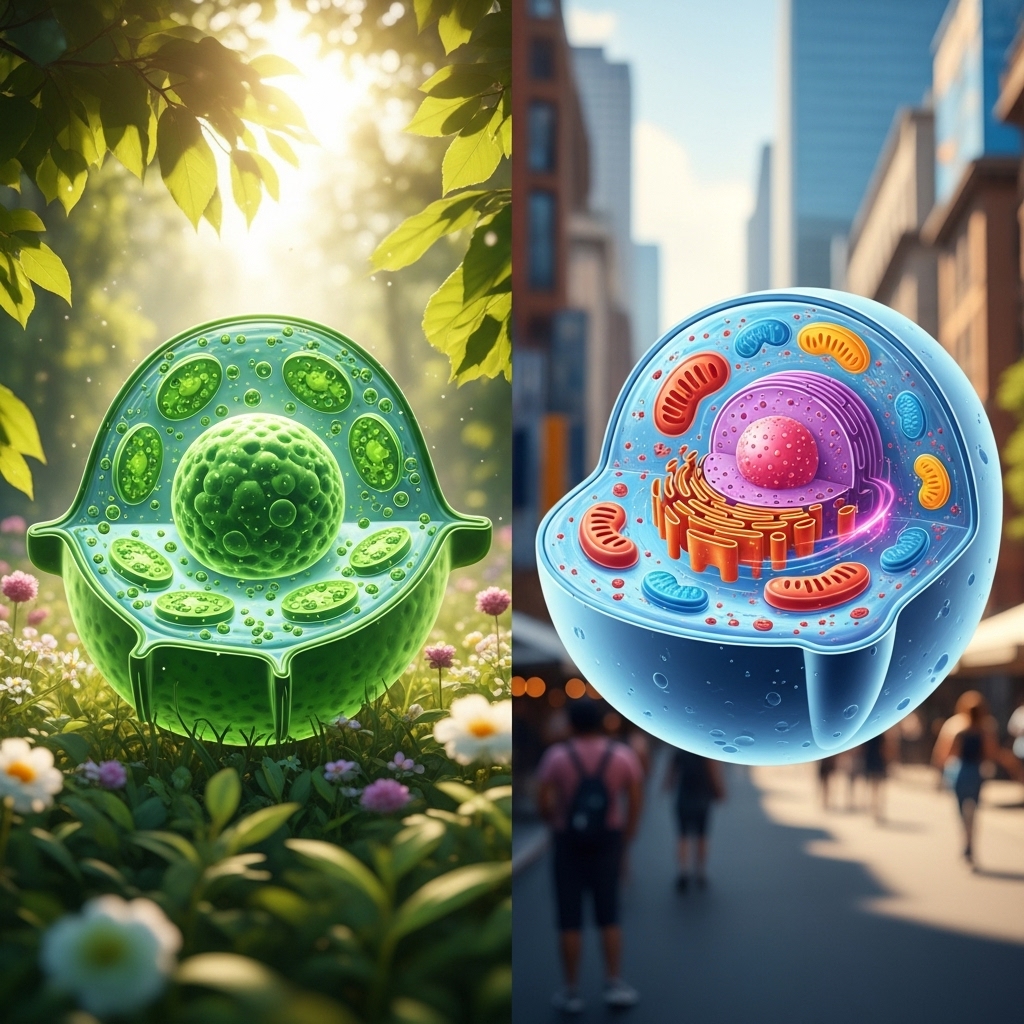
Plant cells are the building blocks of all plants and are characterized by their rigid structure. They contain specialized components that allow plants to perform essential functions, such as photosynthesis and support. I remember the first time I observed a plant cell under a microscope; it was fascinating to see the defined cell wall and the green chloroplasts inside. This unique structure is what enables them to convert sunlight into energy, which is something I find incredibly impressive.
Definition of Animal Cells
Animal cells, on the other hand, are more flexible and varied in shape. They lack a cell wall and instead have a flexible cell membrane. This allows them to adopt different forms and perform various functions. I’ve always been intrigued by how animal cells can come together to form tissues and organs, coordinating to create complex organisms. They are designed for mobility and interaction with their environment, which I find quite remarkable.
Structural Differences Between Plant and Animal Cells
Cell Wall vs. Cell Membrane
One of the most striking differences between plant and animal cells is the presence of a cell wall in plant cells. The cell wall is a rigid layer made of cellulose that provides structural support and protection. I’ve often thought about how this cell wall allows plants to stand tall and resist external pressures like wind and rain. In contrast, animal cells have a flexible cell membrane that surrounds the cell, allowing for a more dynamic internal environment. This flexibility is crucial for processes like endocytosis, where cells engulf substances from their surroundings.
Chloroplasts in Plant Cells
Chloroplasts are another defining feature of plant cells. These organelles are responsible for photosynthesis, enabling plants to convert sunlight into chemical energy. I remember learning about chlorophyll, the green pigment in chloroplasts that captures sunlight. It’s fascinating to think about how plants produce oxygen as a byproduct of photosynthesis, which is vital for life on Earth. Animal cells lack chloroplasts, as they do not perform photosynthesis and instead rely on consuming organic material for energy.
Vacuoles: Size and Function
Vacuoles are large storage organelles found predominantly in plant cells. They can occupy up to 90% of a plant cell’s volume and serve multiple functions, including storing nutrients, waste products, and helping maintain turgor pressure, which keeps the plant upright. I find it incredible how a plant can store so much within a single cell. Animal cells, however, have smaller vacuoles that primarily assist in storage and transport but do not play a significant role in maintaining cell structure.
Shape Differences: Rectangular vs. Irregular
The shape of plant and animal cells also differs significantly. Plant cells typically have a rectangular or box-like shape due to their rigid cell walls, which give them a uniform structure. I’ve often noticed that under a microscope, plant cells line up neatly, creating a beautiful grid-like pattern. In contrast, animal cells have an irregular shape that allows them to move and interact more freely with other cells. This flexibility is part of what allows animals to develop various tissues and organs tailored to specific functions.
Functional Differences Between Plant and Animal Cells
Photosynthesis in Plant Cells
Photosynthesis is perhaps the most crucial function that distinguishes plant cells from animal cells. Through this process, plants capture sunlight and convert it into energy, producing oxygen and glucose as byproducts. I’ve always been amazed at how a simple process like this sustains not just plants but all forms of life on Earth. In contrast, animal cells cannot perform photosynthesis and must obtain energy by consuming other organisms, either plants or animals.
Energy Storage: Starch vs. Glycogen
When it comes to energy storage, plant and animal cells also differ. Plants store energy in the form of starch, a carbohydrate that can be broken down into glucose when needed. I remember baking with my mom and using flour, which is essentially a processed form of starch derived from plants. On the flip side, animal cells store energy as glycogen, which is a more readily available form of energy that can be quickly mobilized during activity. I often think about how our bodies use glycogen during exercise, providing us with quick energy bursts.
Reproduction: Mitosis vs. Meiosis
In terms of reproduction, both plant and animal cells undergo mitosis, but they also have unique processes for producing gametes. Animal cells primarily use meiosis for sexual reproduction, leading to the formation of sperm and eggs. This process is fascinating to me because it introduces genetic diversity, which is essential for evolution. Plants, however, can reproduce both sexually and asexually, often through processes like vegetative reproduction, where parts of the plant can grow into new individuals. This versatility makes plants quite resilient in their environments.
Common Cell Organelles in Both Types
Nucleus: Control Center of the Cell
Despite their differences, plant and animal cells share several common organelles, the most notable being the nucleus. The nucleus acts as the control center of the cell, housing our DNA and coordinating activities like growth and reproduction. I find it interesting how both types of cells rely on the nucleus to regulate their functions, even though what they do with that information varies widely.
Mitochondria: Powerhouses of the Cell
Mitochondria are another common organelle, often referred to as the powerhouses of the cell. They convert nutrients into energy through cellular respiration, which is crucial for both plant and animal cells. I’ve learned that while plants can produce their own energy through photosynthesis, they still rely on mitochondria to convert that energy into a usable form. This dual capability is a fascinating aspect of plant biology.
Ribosomes: Protein Synthesis
Ribosomes are responsible for protein synthesis in both plant and animal cells. These tiny structures assemble amino acids into proteins, which are vital for countless cellular functions. I remember my biology teacher explaining how ribosomes can be found floating freely in the cytoplasm or attached to the endoplasmic reticulum, and I was amazed at the complexity of the processes that occur at such a small scale. Understanding the role of ribosomes in both types of cells is essential for grasping cellular biology.
Comparison of Cell Size and Complexity
Average Size of Plant Cells vs. Animal Cells
When I first learned about cell sizes, I was surprised to find out that plant cells are generally larger than animal cells. On average, plant cells can range from about 10 to 100 micrometers in diameter, while animal cells are typically around 10 to 30 micrometers. This difference in size can be attributed to the presence of the large central vacuole in plant cells, which occupies a significant volume and contributes to their overall larger size. It’s fascinating how this structural feature plays a role not just in storage but also in maintaining the plant’s rigidity and shape. I can still picture the diagrams from my textbooks showcasing these size comparisons, and it really helped me appreciate how structural differences influence function.
Complexity in Cell Types
The complexity of plant and animal cells also varies in some intriguing ways. While both types of cells have intricate internal structures, I’ve noticed that animal cells often exhibit more diversity in shape and size, allowing them to fulfill a wide range of specific functions within the body. For example, muscle cells are elongated and packed with proteins for contraction, while nerve cells have long extensions to transmit signals efficiently. This specialization fascinates me because it highlights how animal life has evolved to be adaptable and responsive to different environments.
On the other hand, plant cells, while slightly less variable in shape, are highly specialized in their own right, particularly in terms of the organelles they contain. For instance, in addition to chloroplasts and large vacuoles, different types of plant cells have specific adaptations depending on their role. Parenchyma cells, for example, are involved in storage and photosynthesis, while xylem and phloem cells are designed for transporting water and nutrients. I think it’s amazing how these specialized cells work together to keep the plant healthy and thriving.
Implications of Differences in Biology and Ecology
Role in Ecosystems
The differences between plant and animal cells go beyond just structure; they have profound implications for ecosystems. Plants, with their ability to perform photosynthesis, serve as the foundation of food chains. They convert sunlight into energy, making them primary producers. I often reflect on the interconnectedness of life when I think about how plants provide food and oxygen for animals and humans. Without plants, life as we know it would simply not exist.
Animal cells, on the other hand, contribute to ecosystems by consuming plants and other animals, thus helping to transfer energy through the food web. This predator-prey relationship creates a balance in nature that fascinates me. I remember observing how even the smallest organisms, like insects, play vital roles in pollination and nutrient cycling. It’s like a delicate dance of survival and growth that showcases the beauty of biodiversity.
Impact on Human Health and Nutrition
The differences between plant and animal cells also have significant implications for our health and nutrition. Plants provide essential nutrients, fibers, and antioxidants that are key to a balanced diet. For instance, I’ve learned that fruits and vegetables are rich in vitamins and minerals that help our bodies function optimally. The starches stored in plants serve as a primary source of energy for us, reminding me of my childhood when I used to munch on fresh fruits and vegetables from the garden. They were not only delicious but also packed with nutrients.
On the flip side, animal cells provide proteins and fats that are crucial for our health. I’ve often thought about how our bodies require different types of nutrients to maintain energy levels and support bodily functions. The combination of plant-based and animal-based foods in our diets can lead to a well-rounded intake of essential nutrients, which is something I strive for in my own eating habits.
Understanding these cellular differences helps us appreciate the importance of both plant and animal life in our diets and ecosystems. It encourages me to be more mindful about what I eat and how it affects not just my health but also the world around me.
Frequently Asked Questions (FAQs)
Can animal cells perform photosynthesis?
No, animal cells cannot perform photosynthesis. They lack chloroplasts, which are essential for capturing sunlight and converting it into energy. Instead, animal cells obtain energy by consuming organic material, such as plants or other animals.
Why do plant cells have a cell wall?
Plant cells have a cell wall to provide structural support and protection. The rigid cell wall, made primarily of cellulose, helps plants maintain their shape and resist external pressures, allowing them to stand tall and thrive in various conditions.
How do plant and animal cells respond to their environment differently?
Plant and animal cells respond to their environment based on their structural differences. For example, plant cells can adjust their turgor pressure through water intake, helping them maintain rigidity. Animal cells, being more flexible, can move and adapt quickly to changes, allowing them to interact more dynamically with their surroundings.
What is the primary function of chloroplasts in plant cells?
Chloroplasts are responsible for photosynthesis, enabling plants to convert sunlight into chemical energy. This process produces oxygen and glucose as byproducts, which are vital for life on Earth.
How do plant and animal cells store energy?
Plants store energy in the form of starch, while animal cells store energy as glycogen. Starch can be broken down into glucose when needed, while glycogen is a more readily available form of energy that can be quickly mobilized during activity.
What is the role of the nucleus in both plant and animal cells?
The nucleus acts as the control center of the cell, housing DNA and coordinating activities like growth and reproduction. Both plant and animal cells rely on the nucleus to regulate their functions.
What is the significance of vacuoles in plant cells?
Vacuoles are large storage organelles found predominantly in plant cells, occupying up to 90% of a plant cell’s volume. They serve multiple functions, including storing nutrients and waste products and helping maintain turgor pressure, which keeps the plant upright.
How do the shapes of plant and animal cells differ?
Plant cells typically have a rectangular or box-like shape due to their rigid cell walls, while animal cells have an irregular shape that allows them to move and interact more freely with other cells.
What is the primary role of mitochondria in both types of cells?
Mitochondria are often referred to as the powerhouses of the cell. They convert nutrients into energy through cellular respiration, which is crucial for both plant and animal cells, even though plants can produce their own energy through photosynthesis.
How do the differences in cell structure impact ecosystems?
The differences between plant and animal cells have profound implications for ecosystems. Plants, as primary producers, perform photosynthesis to convert sunlight into energy, serving as the foundation of food chains, while animal cells help transfer energy through the food web by consuming plants and other animals.