
Plant cells are distinct from animal cells mainly due to their unique structures, including a rigid cell wall, chloroplasts for photosynthesis, and large central vacuoles. These differences are essential for the functions they perform in their respective organisms. For a deeper understanding, you can look into Animal Cells vs Plant Cells: Key Differences.
Table of Contents
Understanding the Basics of Plant and Animal Cells
Definition of Plant Cells
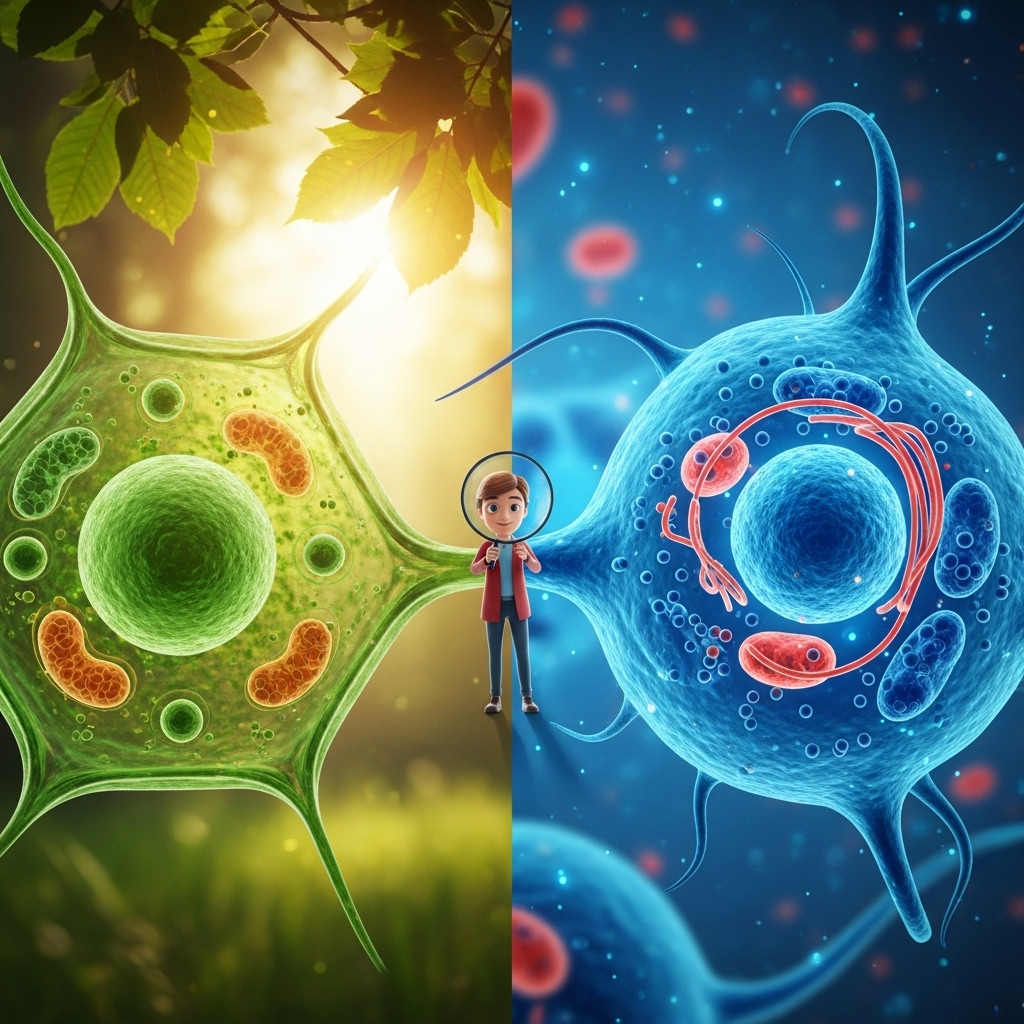
Plant cells are the basic building blocks of plants, characterized by unique structures that enable them to perform functions necessary for plant survival and growth. What fascinates me is how these cells can convert sunlight into energy through the process of photosynthesis. Each plant cell is surrounded by a rigid cell wall, which provides structural support and protection. Within this wall, you’ll find a variety of organelles that help the plant sustain its life processes. I remember my first biology class when I learned that plant cells are typically larger than their animal counterparts, ranging from 10 to 100 micrometers. This size allows them to store more nutrients and water, which is particularly vital for their survival.
Definition of Animal Cells
Animal cells, on the other hand, are the fundamental units of animals, including humans. They lack cell walls, which gives them a flexible shape, allowing them to form various tissues and organs. I’ve always found it interesting that animal cells rely on a different set of organelles and processes to thrive. For instance, instead of chloroplasts, they have mitochondria, which are essential for energy production through the breakdown of food. Animal cells typically range from 10 to 30 micrometers in size, and this smaller size allows for a more complex organization into various systems that perform specialized functions. I think this flexibility is one of the key reasons why animals can adapt to diverse environments.
Key Structural Differences Between Plant and Animal Cells
Cell Wall
One of the most noticeable differences between plant and animal cells is the presence of a cell wall in plant cells. This cell wall is primarily made of cellulose, which gives the plant its rigidity and strength. I’ve often marveled at how this structure not only supports the plant but also helps it maintain its shape, especially when it’s standing tall against the wind. In my experience, this rigidity is essential for growth; without it, plants wouldn’t be able to reach for the sunlight or hold themselves upright. In contrast, animal cells have only a cell membrane, which is more flexible and allows for a variety of shapes and movements. This flexibility allows animal cells to form tissues that can contract, like muscle tissue, which is something I find fascinating. For more information, check out Do Plant Cells Have a Cell Wall? Explained Simply.
Chloroplasts
Another significant difference is the presence of chloroplasts in plant cells. These organelles are where photosynthesis happens, allowing plants to convert sunlight into energy. I can recall the first time I learned about photosynthesis—it was like discovering a superpower that plants possess! Chloroplasts contain chlorophyll, the green pigment that captures sunlight, and they play a vital role in producing glucose, which serves as energy for the plant. Animal cells lack chloroplasts, as they do not perform photosynthesis; instead, they obtain energy by consuming food. This difference highlights how plants and animals have evolved to thrive in their environments, reflecting their roles in ecosystems.
Vacuoles
Vacuoles are another distinctive feature of plant cells. These large, membrane-bound sacs store water, nutrients, and waste products. I remember noticing that the vacuole could take up a significant portion of the plant cell, sometimes pushing the organelles against the cell wall. This large vacuole helps maintain turgor pressure, which keeps the plant upright and healthy. In contrast, animal cells have smaller vacuoles, which usually serve different purposes, such as storing ions or nutrients. This difference in size and function illustrates how plants have adapted to their environment by storing water efficiently, especially in times of drought.
Shape and Size
When it comes to shape and size, plant and animal cells exhibit notable differences. Plant cells are generally rectangular or cube-shaped, which allows them to pack closely together and form sturdy structures like stems and leaves. I find it interesting how this specific shape contributes to the plant’s overall strength and efficiency in capturing sunlight. In contrast, animal cells can be round, irregular, or elongated, depending on their specific function. For instance, muscle cells are long and thin, enabling them to contract effectively. This variety in shapes allows animal cells to form diverse tissues and perform specialized roles within the body, showcasing the complexity of animal life.
Functional Differences Between Plant and Animal Cells
Photosynthesis in Plant Cells
Photosynthesis is perhaps the most significant function that sets plant cells apart from animal cells. In my opinion, learning about photosynthesis was like unlocking a secret to how life on Earth is sustained. Through this process, plants take in carbon dioxide and water, using sunlight to produce glucose and oxygen. This not only provides energy for the plant itself but also contributes to the oxygen that we breathe. I often think about how interconnected life is; without plants, many animals, including us, would struggle to survive due to the lack of oxygen and food sources. Animal cells, on the other hand, rely on consuming organic matter to acquire energy, making us dependent on plants and other organisms.
Energy Storage: Starch vs. Glycogen
When it comes to energy storage, plant and animal cells have different strategies. Plant cells store energy in the form of starch, which is a polysaccharide made up of glucose units. I remember being amazed to learn that this stored energy can be broken down when the plant needs it, like during the night or in times of drought. It’s a smart way for plants to manage their resources. Conversely, animal cells store energy as glycogen, which is similar to starch but more branched. I’ve learned that glycogen is mainly stored in the liver and muscles, ready to be converted back into glucose when energy is needed quickly. This difference in storage reflects the varying lifestyles and energy needs of plants and animals.
Cell Division: Mitosis vs. Cytokinesis
Cell division is another area where plant and animal cells differ significantly. During mitosis, both types of cells replicate their DNA, but the way they divide is quite different. In animal cells, the process of cytokinesis involves the pinching of the cell membrane to form two separate cells. I think this is fascinating because it shows how adaptable animal cells can be. In plant cells, however, a cell plate forms to create a new cell wall between the two daughter cells. This unique approach is necessary because of the rigid cell wall that plant cells possess. It’s interesting to see how these differences in division reflect the overall structural differences between the two cell types.
Cell Membrane Composition and Functionality
Differences in Cell Membrane Structure
The cell membrane is crucial for both plant and animal cells, but there are some notable differences in its structure. The plant cell membrane sits just inside the rigid cell wall and is composed of a phospholipid bilayer, just like in animal cells. However, plant membranes may also contain additional components like cellulose and lignin that contribute to their overall structure. I find this particularly interesting because it shows how plant cells balance rigidity with the flexibility required for transport processes. On the other hand, animal cell membranes are more fluid, allowing for easy movement and communication between cells. This fluidity is key for processes like muscle contraction and neural signaling, which are essential for animal life.
Permeability and Transport Mechanisms
When it comes to permeability and transport mechanisms, plant and animal cells have different strategies due to their structural variations. I’ve noticed that plant cells often use special channels called plasmodesmata, which are tiny openings that connect neighboring cells. This allows for efficient communication and transport of nutrients and signals. Animal cells, however, rely more on diverse transport proteins and vesicles to move substances across their membranes, allowing for a more dynamic interaction with their environment. This difference in transport mechanisms highlights how both types of cells are specialized for their respective functions and lifestyles.
Organelles Unique to Plant and Animal Cells
Organelles Found Only in Plant Cells
One of the most intriguing aspects of plant cells is the presence of organelles that are entirely unique to them. For instance, I find it fascinating that plant cells have plastids, which include chloroplasts, but also other types like chromoplasts and leucoplasts. Chromoplasts are responsible for the vibrant colors found in fruits and flowers, while leucoplasts play a crucial role in storing substances like starch, oils, and proteins. This diversity in plastids helps plants not only in energy production but also in storage and pigment synthesis, which can attract pollinators and aid in reproduction. I remember seeing a rainbow of colors in a garden and realizing that those colors are not just beautiful but vital for the plant’s lifecycle and survival.
Organelles Found Only in Animal Cells
On the flip side, animal cells boast organelles that are absent in plant cells. One example is lysosomes, which I think of as the cell’s waste disposal system. They contain enzymes that break down waste materials and cellular debris, helping the cell maintain a clean and healthy environment. I learned that this function is especially important for multicellular organisms, where cells might experience a buildup of waste products due to their complex interactions. Furthermore, animal cells have centrioles, which are crucial during cell division. They help organize microtubules and ensure that chromosomes are accurately separated into daughter cells. It’s amazing how these structures play such pivotal roles in maintaining not just the individual cell, but the overall health of an organism.
Comparative Analysis of Plant and Animal Cell Functions
Metabolic Processes
Understanding the metabolic processes in plant and animal cells reveals so much about how these organisms survive and thrive. I’ve always been captivated by how plants are autotrophs, able to produce their own food through photosynthesis. This ability allows them to convert light energy into chemical energy, creating glucose as their primary fuel source. In contrast, animal cells are heterotrophs, meaning we obtain energy by consuming organic materials. This fundamental difference in how we process energy highlights our interconnectedness; we rely on plants and other organisms for survival. I often think about the food chain and how it starts with the energy captured by plants. It’s like a grand cycle where each organism plays its part.
Growth and Development
When it comes to growth and development, plant and animal cells take different approaches that I find particularly interesting. Plant cells have the remarkable ability to grow continuously throughout their life. This is largely due to their meristematic tissues, which are regions of undifferentiated cells that can develop into various types of plant tissues. I remember being amazed by how a simple seed can grow into a towering tree over time, all thanks to these special growth cells. Meanwhile, animal cells have a more defined growth pattern and often stop dividing after reaching maturity. This controlled growth is crucial for developing complex tissues and organs. The distinction between how plants and animals grow not only reflects our evolutionary paths but also affects how we view life itself.
Common Misconceptions About Plant and Animal Cells
Do Plant Cells Have Mitochondria?
A common misconception I’ve encountered is whether plant cells have mitochondria. Some might assume that since they can produce their own food through photosynthesis, they wouldn’t need these organelles. However, I learned that plant cells do indeed have mitochondria, and they play a critical role in cellular respiration. While chloroplasts capture sunlight to create glucose, mitochondria are responsible for using that glucose to produce energy in the form of ATP, which is vital for cellular functions. This dual system of energy production is fascinating because it showcases how plants are incredibly efficient in managing their energy resources. For more insights, you can read Do Plant Cells Have a Nucleus? Answer Explained.
Can Animal Cells Perform Photosynthesis?
Another misconception is the idea that animal cells can perform photosynthesis. I think this misunderstanding arises from the fact that we often see plants and animals living side by side in ecosystems. However, animal cells lack the necessary organelles, like chloroplasts, needed for photosynthesis. Instead, we obtain energy by consuming other organisms. This difference emphasizes the distinct roles plants and animals play in our ecosystems; plants are primary producers, while animals are generally consumers. Understanding this relationship gives me a deeper appreciation for the balance of nature and the importance of each organism within it.
Implications of Differences in Biotechnology and Research
Applications in Genetic Engineering
The differences between plant and animal cells have significant implications in biotechnology and genetic engineering. For example, I’ve learned that scientists are able to manipulate plant cells to create genetically modified organisms (GMOs) that can withstand pests, diseases, or environmental stressors. This technology has the potential to revolutionize agriculture by increasing crop yields and reducing the need for pesticides. In my opinion, this is a fascinating area of research, as it combines our understanding of cell biology with practical applications that could alleviate food shortages and contribute to sustainability.
Impact on Medicine and Agriculture
In medicine, the differences between these cell types also open doors for innovative treatments. For instance, understanding how animal cells function has led to advancements in regenerative medicine and stem cell research. Meanwhile, studying plant cells can lead to the development of new pharmaceuticals derived from plant compounds. I find it particularly striking how interconnected our understanding of these cells can impact various fields, from agriculture to healthcare. By appreciating the unique adaptations of plant and animal cells, we can harness their potential to address some of the world’s most pressing challenges.
Frequently Asked Questions
What are the main structural differences between plant and animal cells?
Plant cells have a rigid cell wall, chloroplasts for photosynthesis, and large central vacuoles, while animal cells lack a cell wall and have more flexible shapes. Animal cells also have mitochondria instead of chloroplasts.
What role do chloroplasts play in plant cells?
Chloroplasts are organelles in plant cells where photosynthesis occurs, allowing plants to convert sunlight into energy. They contain chlorophyll, which captures sunlight and helps produce glucose for the plant.
How do plant and animal cells store energy differently?
Plant cells store energy as starch, a polysaccharide made of glucose units, while animal cells store energy as glycogen, which is more branched and mainly found in the liver and muscles.
What is the function of vacuoles in plant cells?
Vacuoles are large membrane-bound sacs in plant cells that store water, nutrients, and waste products. They help maintain turgor pressure, keeping the plant upright and healthy.
How do plant and animal cells differ in their approach to cell division?
During cell division, animal cells undergo cytokinesis by pinching the cell membrane to form two separate cells, whereas plant cells form a cell plate to create a new cell wall between daughter cells.
Do plant cells have mitochondria?
Yes, plant cells do have mitochondria, which are essential for cellular respiration. They use glucose produced by chloroplasts to generate energy in the form of ATP.
Can animal cells perform photosynthesis?
No, animal cells cannot perform photosynthesis as they lack chloroplasts, the necessary organelles for this process. Instead, they obtain energy by consuming organic matter.
What are some unique organelles found in plant cells?
Plant cells contain unique organelles such as plastids, which include chloroplasts, chromoplasts, and leucoplasts. These organelles help in energy production, storage, and pigment synthesis.
How do plant and animal cells adapt to their environments?
Plant cells adapt through structures like a rigid cell wall and large vacuoles that store water efficiently, while animal cells have flexible shapes that allow them to form various tissues and adapt to diverse environments.
What implications do the differences between plant and animal cells have in biotechnology?
The differences allow for applications like genetic engineering in plants to create GMOs that resist pests, as well as advancements in regenerative medicine and pharmaceutical development from plant compounds.