
The ideal depth for planting potatoes is about 4 to 6 inches deep, as this allows for optimal growth and yield. I’ve learned through my gardening experience that proper depth is crucial for healthy root development and tuber production. Read Interesting article: When to Plant Potatoes for Maximum Yield
Understanding Potato Growth Requirements
Before we dive into how deep to plant potatoes, it’s essential to understand what potatoes need to thrive. Potatoes are unique and fascinating plants that require specific conditions to grow well. From the right variety to the perfect soil conditions and climate, every factor plays a significant role in their growth and yield.
Potato Varieties and Their Needs
I remember the first time I tried growing potatoes; I was overwhelmed by the choices in the seed catalog. There are countless varieties, each with its specific growing requirements. Some of the most popular types include Russet, Red, and Yukon Gold potatoes. Each variety has its unique flavor, texture, and growing habits.
For instance, Russet potatoes thrive in cooler climates and require a bit more space between the plants. On the other hand, Red potatoes are a bit more forgiving and can handle a variety of soil types. It’s crucial to choose a variety suited to your local conditions. I recommend researching the types available at your local nursery or farm supply store to ensure you make an informed choice.
Soil Composition and Quality
Soil is another critical factor in potato growth. I’ve discovered that potatoes prefer well-draining, loose soil that is rich in organic matter. Heavy clay or compacted soils can hinder growth and lead to diseases. When I started, I mixed my garden soil with compost and well-rotted manure to create a nutrient-rich environment.
Testing your soil’s pH is also essential. Potatoes thrive in slightly acidic soil, ideally between 5.8 and 6.5. If your soil is too alkaline, you might consider adding sulfur or pine needles to lower the pH. I learned the hard way that investing in a good soil test can save you time and effort in the long run.
Climate and Temperature Preferences
Climate plays a significant role in potato growth. Potatoes prefer cooler temperatures, ideally between 60°F and 70°F. I remember my first planting attempt in the early summer heat, which didn’t go as planned. Potatoes can struggle in hot weather, leading to poor yields and even disease. Planting too early in spring can also risk frost damage, so timing is crucial. Read Interesting article: When Do I Plant Tomatoes? Best Timing for Success
In colder regions, it’s best to wait until the ground warms up a bit, typically around late April or early May. I’ve found that keeping an eye on the weather forecast can help me plan my planting. Understanding your local climate and choosing the right planting time can significantly enhance your chances of a successful potato harvest.
Optimal Planting Depth for Potatoes
Now that we’ve established the basics of potato growth requirements, let’s focus on the depth of planting. This is where many novice gardeners can trip up, but don’t worry—I’ve been there too!
General Guidelines for Planting Depth
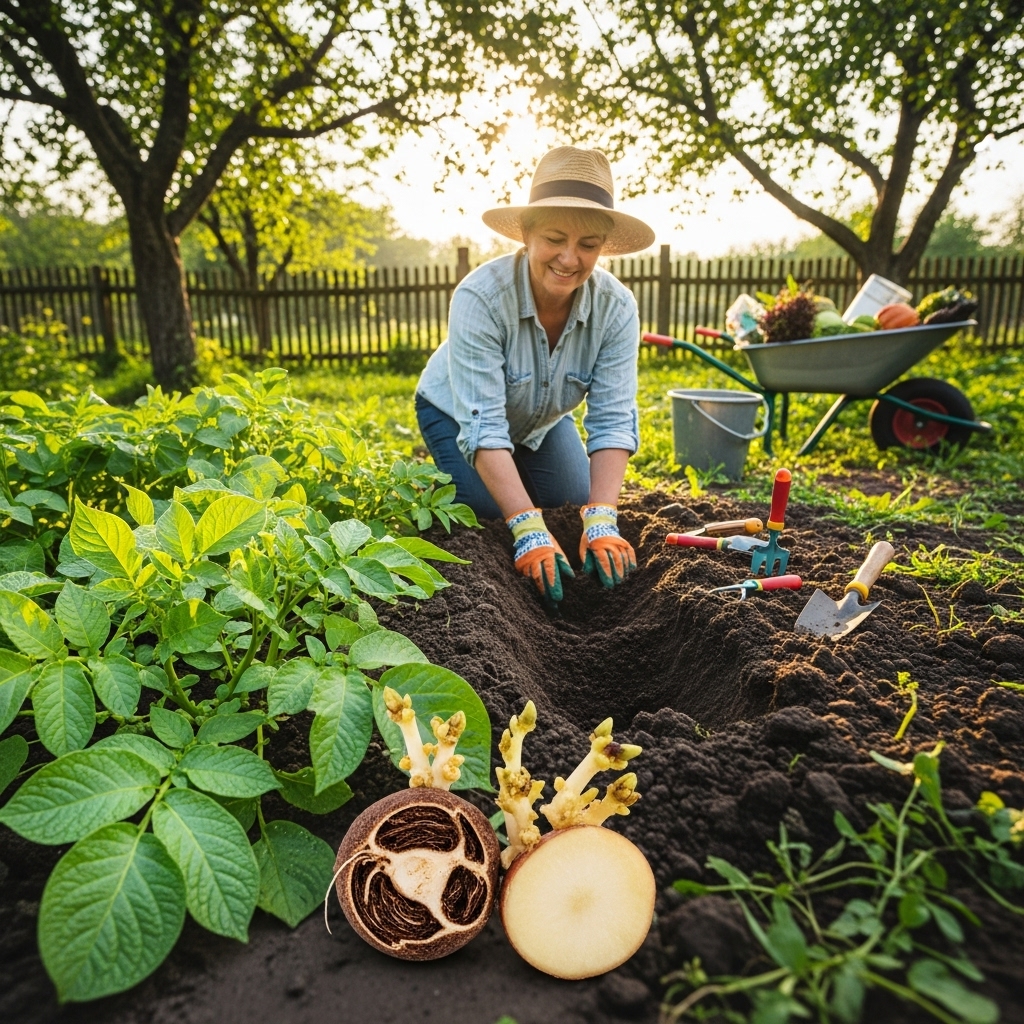
As a general rule, planting potatoes about 4 to 6 inches deep works best for most varieties. This depth allows the tubers to develop properly without being too close to the surface, where they might be exposed to light and become green and toxic. I remember the first time I planted them too shallow and ended up with some odd-looking potatoes. Learning from that experience, I now always dig a trench at least 6 inches deep for my seed potatoes.
Another tip I found helpful is to plant with the “eyes” facing up. Each eye is a potential sprout, and positioning them correctly can lead to a healthier plant. Once I got my planting depth and orientation right, I noticed a significant improvement in my potato yield.
Factors Affecting Planting Depth
While 4 to 6 inches is a good guideline, several factors can influence the ideal planting depth for your specific situation. Soil type and moisture levels are two major elements to consider. For example, in sandy soils that drain quickly, I’ve found that planting slightly deeper can help retain moisture. Conversely, in heavier clay soils, I recommend sticking closer to the 4-inch mark to avoid waterlogging.
Another factor is the variety of potato you’re growing. Some varieties, like fingerling potatoes, can do well at shallower depths, while larger varieties may benefit from being planted deeper. I’ve had success experimenting with different depths based on the variety, leading to better harvesting results.
How Depth Influences Growth and Yield
The depth at which you plant your potatoes can impact not only their growth but also their yield. When planted too shallow, potatoes may not develop robust tubers, and the risk of sun exposure increases, causing greening. Planting too deep can lead to difficulty in reaching the surface, stunting growth. This balance is something I learned over time—finding that sweet spot is essential.
Moreover, the depth can influence the amount of moisture the plants receive. Deeper planting can help ensure that potatoes are well-watered, especially during dry spells. I remember one season when I went a little deeper than usual, and it turned out to be a hot summer. My potatoes thrived when others in shallower soil struggled. This reinforced my belief that understanding your local conditions can guide you to make the right decisions.
In summary, the depth for planting potatoes is crucial for their overall growth and yield. By understanding the factors that affect planting depth and how depth influences growth, you can set yourself up for a bountiful potato harvest. I can’t wait to share more about the preparation and techniques that will help you further on your potato-growing journey! Read Interesting article: When to Plant Tomatoes for the Best Harvest
Preparing to Plant Potatoes
Choosing the Right Seed Potatoes
Finding the right seed potatoes has been a game-changer for me in my gardening journey. It’s not just about picking any potato; I’ve learned that quality matters a lot. I usually head to my local garden center or farmer’s market, where I can find certified seed potatoes. These are specifically grown to be disease-free and vigorous, which is crucial for a successful crop. I’ve made the mistake of using supermarket potatoes in the past, only to watch them sprout with all sorts of issues. Trust me, investing in good seed potatoes pays off in the long run.
When selecting seed potatoes, I look for ones that are firm and have a healthy number of “eyes.” The eyes are where the sprouts will emerge, so more eyes can lead to more plants. I remember when I picked out my first batch; I focused on the size, thinking bigger was better. While larger potatoes can yield more, I’ve found that smaller ones often produce a more robust plant. It’s all about finding the right balance for what you’re growing.
Soil Preparation Techniques
Getting the soil ready for planting is one of those steps that I used to overlook. But I’ve come to understand how vital it is for the health of my potato plants. I start by clearing the area of any weeds or debris. I’ve seen how weeds can compete with my potatoes for nutrients and water, so keeping the area tidy is essential.
Next, I focus on enriching the soil. I mix in compost, which I believe transforms the soil into a nutrient-rich haven for my potatoes. Occasionally, I also add some organic fertilizer to give my plants a good start. I remember one year when I didn’t enrich the soil enough; the results were disappointing. The potatoes didn’t have the flavor or size I was hoping for, which taught me that proper soil preparation is key.
Once I’ve mixed in my compost and fertilizer, I make sure to till the soil well. This loosens it up and ensures good drainage—something I’ve found potatoes really thrive on. I usually aim for a loose, crumbly texture. It’s like preparing a cozy bed for my potatoes!
Timing Your Planting
Timing is everything in the world of gardening, and I’ve learned that the same goes for planting potatoes. I usually aim to plant them as soon as the soil temperature reaches at least 45°F. This typically falls around late March to early April in my area, but I always keep an eye on the weather. I remember once getting eager and planting too early, only to have a late frost wipe out my efforts. That was a tough lesson!
Potatoes love cool weather but can be sensitive to frost. I’ve found that waiting for the right conditions not only helps in avoiding frost damage but also gives the plants a better chance to establish themselves. I’ve also noticed that planting too late can lead to smaller yields, so I try to find that sweet spot.
In my experience, I like to mark the date on my calendar when I plan to plant. I also pay attention to the moon phases; some gardeners swear by planting during a waxing moon for better growth. I’m not sure if it’s just superstition, but it’s one of those practices that makes the whole process feel more connected to nature.
Techniques for Planting Potatoes
Trench vs. Hill Planting Methods
When it comes to planting potatoes, I’ve experimented with both trench and hill methods. Each has its pros and cons, and I’ve found that the best method can depend on my gardening goals and soil conditions. The trench method involves digging a long trench, placing the seed potatoes in it, and covering them with soil. This is what I usually do because it allows me to plant several potatoes at once, which can be a time-saver.
On the other hand, hill planting involves forming mounds of soil and placing the seed potatoes on top of these mounds. I tried this once, and while it felt a bit more labor-intensive, I noticed the potatoes had better drainage. Hills can help facilitate air circulation around the plants, which is especially beneficial in wetter conditions.
Whichever method I choose, I always make sure to cover the seed potatoes with about 4 to 6 inches of soil. I’ve learned that this is critical for light-sensitive tubers, ensuring they’re protected as they start to grow.
Spacing Between Seed Potatoes
Another important aspect of planting that I’ve learned is proper spacing. I typically space my seed potatoes about 12 inches apart in the trench or hill method. This distance gives each plant enough room to grow without competing for nutrients. When I first started, I didn’t realize how crucial this was. I overcrowded the plants one season, and it resulted in smaller potatoes and a lot of frustration!
Having learned from that experience, I now make a point to measure the spacing as I plant. It’s a simple step that can significantly affect the yield. I’ve also discovered that the variety of potato sometimes dictates the spacing. For example, larger varieties may need a bit more space compared to smaller fingerling types.
Watering and Fertilization Post-Planting
After planting, I always pay special attention to watering. Potatoes need consistent moisture, especially in the early stages of growth. I remember a year when I planted during a particularly dry spell and didn’t keep up with watering. My yield suffered as a result. Now, I make it a point to keep the soil evenly moist, especially until the plants are established.
As they grow, I also provide additional fertilization. I typically use an organic fertilizer about four weeks after planting. This seems to give them a boost at just the right time. I’ve learned that too much nitrogen can lead to lush foliage but fewer tubers, so I try to balance my approach. I aim for a steady supply of nutrients without overdoing it.
With these techniques in mind, I feel more prepared for my potato planting adventures. I can’t wait to share more on common mistakes to avoid next! After all, every gardener has some lessons to share, and I’ve definitely picked up a few along the way.
Frequently Asked Questions
What is the ideal depth for planting potatoes?
The ideal depth for planting potatoes is about 4 to 6 inches deep, which allows for optimal growth and yield.
Why is the planting depth important for potatoes?
Proper planting depth is crucial for healthy root development and tuber production, influencing the overall growth and yield of the potatoes.
What factors should I consider when choosing a potato variety?
Consider local climate conditions, soil types, and the specific growing requirements of each potato variety, such as Russet, Red, and Yukon Gold potatoes.
What type of soil is best for growing potatoes?
Potatoes prefer well-draining, loose soil rich in organic matter. Heavy clay or compacted soils can hinder growth and lead to diseases.
What pH level is ideal for potato growth?
Potatoes thrive in slightly acidic soil, ideally with a pH between 5.8 and 6.5. If the soil is too alkaline, adding sulfur or pine needles can help lower the pH.
What temperature range is ideal for planting potatoes?
Potatoes prefer cooler temperatures, ideally between 60°F and 70°F, and should be planted when the soil temperature reaches at least 45°F.
How does planting depth affect potato growth and yield?
Planting too shallow can expose tubers to light, causing greening, while planting too deep can stunt growth. Finding the right depth is essential for robust tubers and moisture retention.
What are the recommended spacing guidelines for planting potatoes?
It is recommended to space seed potatoes about 12 inches apart to allow enough room for each plant to grow without competing for nutrients.
How should I prepare the soil before planting potatoes?
To prepare the soil, clear the area of weeds, enrich it with compost and organic fertilizer, and till it to achieve a loose, crumbly texture for good drainage.
What watering practices should be followed after planting potatoes?
Consistent moisture is crucial, especially in the early stages of growth. It’s important to keep the soil evenly moist until the plants are established and to provide additional fertilization about four weeks after planting.