
Kiwi plants grow best in warm climates with well-draining soil, ample sunlight, and support structures for their vigorous vines. I’ve found that understanding their specific requirements makes growing these delicious fruits much easier and more rewarding. Read Interesting article: Shrubs & Trees With Purple Berries – Add Regal Color Now!
Table of Contents
Overview of Kiwi Plants
What is a Kiwi Plant?
Kiwi plants are vigorous, climbing vines belonging to the genus Actinidia. The most commonly cultivated species, Actinidia deliciosa, produces the familiar green-fleshed kiwifruit. These plants are not only known for their unique flavor but also for their attractive heart-shaped leaves and beautiful white or pink flowers. Personally, I find watching the vines grow and flourish as exciting as waiting for the fruits to ripen!
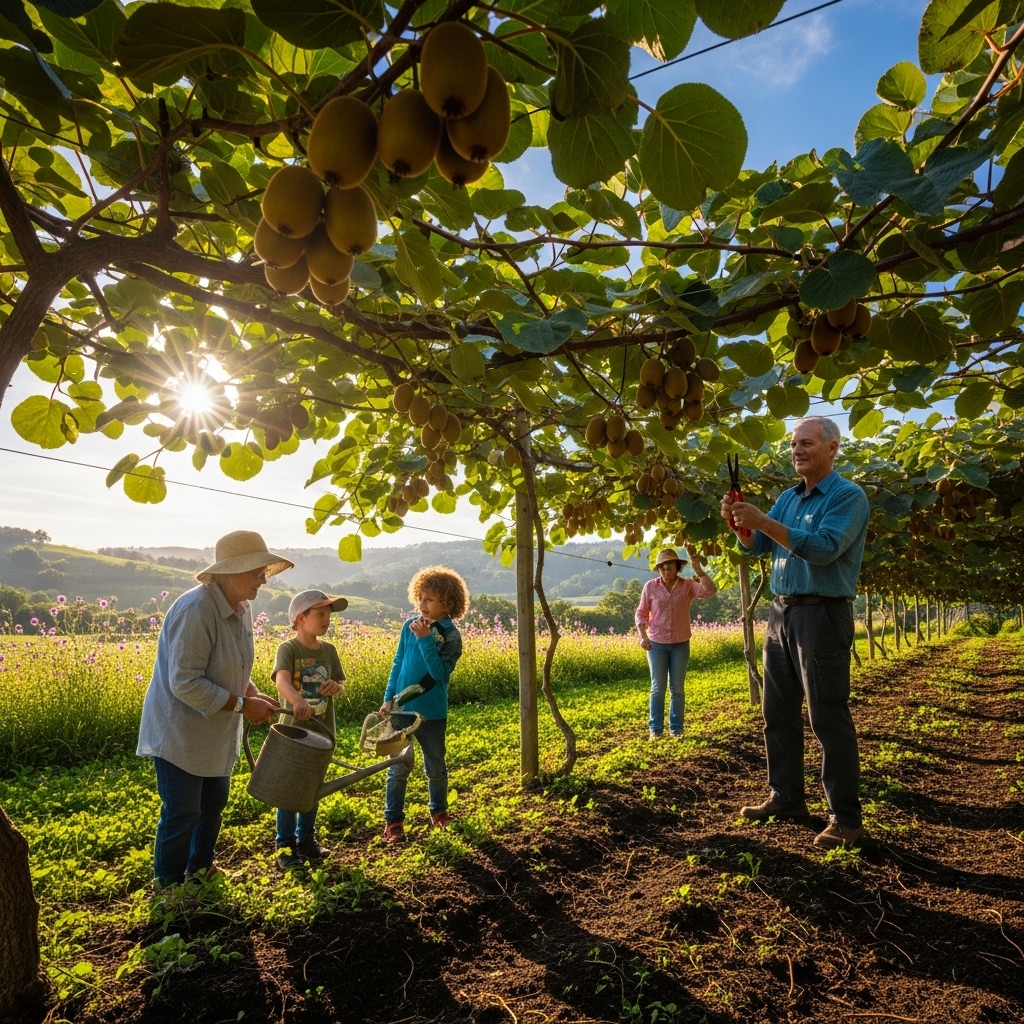
Types of Kiwi Plants
There are several types of kiwi plants that you might consider growing, each with its own unique characteristics. The most popular varieties include:
- Green Kiwi (Actinidia deliciosa): This is the classic kiwi that most people are familiar with, featuring fuzzy skin and a sweet-tart flavor.
- Golden Kiwi (Actinidia chinensis): Known for its smooth, hairless skin and sweeter taste, golden kiwis have become a favorite for many fruit lovers.
- Hardy Kiwi (Actinidia arguta): Unlike the other two, hardy kiwis are small, grape-sized fruits that can be eaten whole, skin and all. They are also more resistant to cold temperatures, making them suitable for cooler climates.
From my experience, selecting the right type of kiwi for your growing conditions can make a significant difference in your success. Each variety has its unique taste and growing needs that are worth considering.
History and Origin of Kiwi Plants
Kiwi plants have a rich history that dates back to their origins in China. They were first cultivated in the early 20th century and were known as “Chinese gooseberries.” It wasn’t until the 1960s, when the fruit was brought to New Zealand, that the name “kiwi” was adopted, inspired by the nation’s flightless bird. I remember reading about how New Zealand played a pivotal role in popularizing the fruit, and it’s fascinating to think about how it has become a beloved fruit worldwide since then. Read Interesting article: The Pros and Cons of Strawberry Trees in Your Garden
Growing Conditions for Kiwi Plants
Climate Requirements
Kiwi plants thrive in temperate climates with warm summers and cool winters. They need a frost-free growing season of about 200 days to produce fruit reliably. I’ve noticed that areas with a Mediterranean climate, where summers are dry and winters are wet, tend to be ideal for kiwi cultivation. If you live in a region with harsh winters, consider growing hardy kiwi varieties that can withstand colder temperatures.
Soil Requirements
When it comes to soil, kiwi plants prefer well-draining, fertile soil rich in organic matter. I’ve learned that a slightly acidic to neutral pH (around 5.5 to 7.0) works best. Poorly draining soil can lead to root rot, which can be detrimental to the plant’s health. Adding compost or well-rotted manure can really bolster your soil, providing the nutrients these vigorous plants crave.
Sunlight and Water Needs
Placement is key for kiwi plants. They adore full sun and need at least 6 hours of direct sunlight each day. I’ve found that the more sunlight they receive, the better they grow and the tastier the fruit becomes. However, it’s also important to ensure they receive adequate water, especially during dry spells. While kiwis prefer consistently moist soil, they do not like soggy roots. A deep watering schedule, allowing the top inch of soil to dry out between watering, usually works well for me.
Space and Support Structures
Kiwi plants are climbers by nature, so they need plenty of space and sturdy support structures like trellises or arbors. I remember the first time I planted kiwi vines; I underestimated how much growth they would produce in a single season. Providing them with a strong support system not only helps them climb but also keeps the fruits off the ground, which can reduce pest problems. Consider spacing your vines about 10-15 feet apart to give them room to spread out.
In my experience, understanding the growth habits and specific needs of kiwi plants is crucial for a successful harvest. With the right growing conditions, these plants can thrive and reward you with delicious fruits for years to come.
Planting Kiwi Plants
When to Plant Kiwi
Timing is everything when it comes to planting kiwi plants. I’ve found that the best time to plant kiwi is in the spring after the last frost. This allows the plant to establish its roots before the heat of summer kicks in. If you’re in a warmer climate, you might even consider planting in early spring. For me, watching the first buds appear after a long winter is a sign of hope and renewal. Just be sure to check the local frost dates to avoid any surprises!
How to Prepare Soil for Kiwi Plants
Preparing the soil for kiwi plants is one of the most important steps in the planting process. I always start by testing the soil pH to ensure it’s in that ideal range of 5.5 to 7.0. If it’s too acidic, I add some lime; if it’s too alkaline, sulfur can help balance it out. Next, I mix in plenty of organic matter, like compost or well-rotted manure, to improve drainage and nutrient content. I remember the first time I prepared my garden bed; the transformation was incredible! The soil was dark, rich, and ready for planting.
Choosing the Right Variety for Your Region
When selecting a kiwi variety, it’s essential to consider your climate and growing conditions. I learned this the hard way when I planted a green kiwi in a cooler area, and it struggled to thrive. For warmer regions, the green kiwi (Actinidia deliciosa) does well, while golden kiwi (Actinidia chinensis) is also a great option for those seeking a sweeter fruit. If you live in a cooler climate, hardy kiwi (Actinidia arguta) is your best bet, as it can withstand lower temperatures. I’ve found that choosing the right variety can make all the difference in my garden’s success!
Step-by-Step Planting Instructions
Planting kiwi is an exciting process, and I’ve developed a simple step-by-step method that works well for me:
- Choose Your Location: Pick a sunny spot with well-draining soil and plenty of space for your vines to roam.
- Prepare the Soil: As mentioned earlier, test and amend your soil as needed. Make sure to mix in organic matter to enhance fertility.
- Dig the Holes: Dig holes that are about twice the width and depth of the root ball of your kiwi plant. This gives the roots plenty of room to grow.
- Plant the Kiwi: Place the kiwi plant in the hole, ensuring that the crown (where the roots meet the stem) is level with or slightly above the soil surface. Fill the hole with soil and gently pat it down.
- Water Thoroughly: After planting, I always water the plant deeply to help settle the soil around the roots. This is crucial for establishing good root contact!
- Mulch: Applying a layer of mulch around the base can help conserve moisture, suppress weeds, and regulate soil temperature.
- Install Support: Since kiwi plants are climbers, I set up the trellis or arbor at planting time to ensure they have something to grab onto as they grow.
Following these steps has made my planting experience much smoother, and I feel a sense of accomplishment as I watch my kiwi plants start to grow!
Care and Maintenance of Kiwi Plants
Watering Schedule
Watering is a crucial part of maintaining healthy kiwi plants. I’ve learned that they prefer consistent moisture but dislike soggy soil. When I first started growing kiwis, I tended to overwater, thinking they needed more. Instead, I found that a deep watering once a week works best, allowing the top inch of soil to dry out between waterings. During particularly hot spells, I increase the frequency, but I always check the soil first. It’s like getting to know a friend; the more you pay attention, the better you understand their needs.
Fertilization Techniques
Feeding kiwi plants can be a bit tricky, but I’ve discovered that balanced fertilization helps them flourish. I typically use a slow-release fertilizer in early spring when the vines are waking up. This gives them the nutrients they need to kick off the growing season. I also supplement with additional compost throughout the year to keep the soil rich. I remember the first time I skipped fertilizing; the difference in growth was noticeable! Now, I make it a point to give my plants the nourishment they crave.
Pest and Disease Management
Like any gardener, I’ve faced my fair share of pests and diseases affecting my kiwi plants. The most common pests I’ve encountered are aphids and spider mites. I’ve found that introducing beneficial insects like ladybugs can help manage these issues naturally. For diseases, keeping an eye on leaf spots or wilting can alert me to potential problems. I learned the importance of good air circulation by spacing my plants properly and avoiding overhead watering to reduce fungal diseases. Prevention has become my mantra!
Pruning and Training Kiwi Vines
Pruning is essential for kiwi plants, as it helps encourage healthy growth and fruit production. I usually prune in late winter or early spring before new growth starts. I remove any dead or weak vines and train the main stems to my support structure. I’ve learned that a well-pruned plant not only looks better but also produces better fruit. I remember my first year of neglecting to prune; the vines became a tangled mess, and the fruit was sparse. Now, I enjoy the process of shaping my plants as they grow!
Harvesting Kiwi Fruits
When to Harvest Kiwi
Harvesting kiwi fruits is one of the most thrilling parts of the entire growing experience. I’ve learned that timing is crucial to ensure you get the sweetest, most flavorful kiwis. Generally, kiwis are ready to be harvested in late fall when they have reached full size and the skin takes on a slightly more golden hue. I remember the first time I picked kiwis; I was so excited to taste the fruits of my labor! To know they’re ripe, I gently squeeze the fruit. If it yields slightly to pressure, it’s a good sign that it’s time to pick. However, if you’re not sure, it’s often better to leave them on the vine for a bit longer than to pick them too early.
How to Harvest Kiwi
When it comes to harvesting, I’ve found it’s best to do so on a dry day to prevent any moisture from causing spoilage. I use a sharp pair of pruning shears to cut the kiwis from the vine, leaving a small stem attached. This helps prevent bruising and damage to the fruit. I remember once I was so eager that I just pulled one off, and it ended up bruised and not as nice as the others. So, now I make sure to take my time and be gentle. After harvesting, I handle the fruits with care and place them in a basket lined with soft cloth to avoid any bruises. It’s all about treating your hard work with the respect it deserves!
Storing and Ripening Kiwi Fruits
After harvesting, I like to store my kiwis in a cool, dry place. If they aren’t quite ripe yet, I let them sit at room temperature for a few days until they soften slightly. I’ve discovered that placing them in a paper bag with an apple or banana can speed up the ripening process due to the ethylene gas these fruits emit. Just remember to check them regularly, as they can go from firm to overly ripe pretty quickly! Once ripe, I move them to the refrigerator, where they can last for about a week. I find that having a stash of homegrown kiwis in the fridge is a delightful treat, perfect for snacking or adding to smoothies.
Common Problems and Solutions
Pests That Affect Kiwi Plants
Like any gardener, I’ve faced various pests that seem to have a personal vendetta against my kiwi plants. The most common pests I’ve encountered include aphids, spider mites, and fruit flies. Aphids are particularly troublesome; they love to suck the sap from young leaves. I usually spot them by noticing distorted leaves. To manage these pests, I often spray a mixture of water and mild dish soap on the affected areas. This usually does the trick without harming beneficial insects. I’ve also found that introducing ladybugs to my garden can provide a natural defense against aphids.
Diseases Affecting Kiwi Plants
When it comes to diseases, I’ve learned that prevention is key. Fungal diseases like powdery mildew and root rot can be detrimental to kiwi plants. I remember the first time I saw powdery mildew on my leaves; I was devastated. Now, I make sure to provide good airflow by spacing my plants adequately and avoiding overhead watering. If I do notice signs of mildew, I apply a fungicide or a homemade solution of baking soda and water. This helps keep the leaves healthy and thriving.
Environmental Stress Factors
Environmental stress can also take a toll on kiwi plants. Factors like extreme heat, drought, or unexpected frost can all lead to issues. I’ve had my share of challenges during particularly hot summers. To counteract this, I always ensure my plants are well-watered during dry spells and mulch around the base to retain moisture. On the flip side, if frost threatens my plants in early spring or late fall, I cover them with cloth or burlap to provide some protection. It’s a constant balancing act, but observing and adjusting to the environment has helped me maintain healthier plants.
Kiwi Plant Varieties and Their Characteristics
Green Kiwi (Actinidia deliciosa)
Green kiwi, also known as the classic kiwi, has a fuzzy brown skin and vibrant green flesh. It’s the variety most people think of when they imagine kiwis. I really enjoy its sweet-tart flavor profile, which makes it perfect for various dishes, from salads to desserts. Green kiwis typically require warmer climates and a good amount of sunlight to thrive. I’ve found that when I give them the right conditions, they produce an abundance of delicious fruits that are nothing short of a treat!
Golden Kiwi (Actinidia chinensis)
Golden kiwi is another delightful variety I’ve come to appreciate. With its smooth, hairless skin and a sweeter flavor, it has quickly become a favorite in my garden. It’s also slightly smaller than the green kiwi and has a lovely golden hue when ripe. I’ve noticed that golden kiwis are a bit more sensitive to cold, so I make sure they’re planted in a protected spot. They have a shorter growing season, but with the right care, they can be incredibly rewarding.
Hardy Kiwi (Actinidia arguta)
If you’re interested in growing kiwis in cooler climates, you can’t go wrong with hardy kiwi. These little gems are grape-sized and can be eaten whole, skin and all. I remember the first time I tried one; the flavor was unexpected and delightful! Hardy kiwi plants can withstand colder temperatures and are quite resilient. They do have a slightly different taste than their larger counterparts, but they’re just as enjoyable in my opinion. I’ve found that growing this variety has allowed me to enjoy fresh kiwis even in my cooler region! Read Interesting article: New Zealand Christmas Tree Pruning for Festive Appeal
Frequently Asked Questions
What is a Kiwi Plant?
Kiwi plants are vigorous, climbing vines belonging to the genus Actinidia. The most commonly cultivated species, Actinidia deliciosa, produces the familiar green-fleshed kiwifruit, known for their unique flavor, attractive heart-shaped leaves, and beautiful flowers.
What are the different types of Kiwi Plants?
The most popular varieties of kiwi plants include Green Kiwi (Actinidia deliciosa), Golden Kiwi (Actinidia chinensis), and Hardy Kiwi (Actinidia arguta). Each variety has unique characteristics, such as flavor, skin texture, and climate adaptability.
What are the climate requirements for growing Kiwi plants?
Kiwi plants thrive in temperate climates with warm summers and cool winters. They require a frost-free growing season of about 200 days to produce fruit reliably.
How should I prepare the soil for planting Kiwi plants?
To prepare the soil, test the pH to ensure it’s between 5.5 to 7.0, amend as necessary, and mix in plenty of organic matter like compost or well-rotted manure to improve drainage and nutrient content.
When is the best time to plant Kiwi?
The best time to plant kiwi is in the spring after the last frost, allowing the plant to establish its roots before the heat of summer.
How often should I water Kiwi plants?
Kiwi plants prefer consistent moisture but dislike soggy soil. A deep watering once a week is generally effective, allowing the top inch of soil to dry out between waterings.
What pests commonly affect Kiwi plants?
Common pests affecting kiwi plants include aphids, spider mites, and fruit flies. Managing these pests can involve natural methods, such as introducing beneficial insects like ladybugs.
When should Kiwi fruits be harvested?
Kiwi fruits are typically ready to be harvested in late fall when they reach full size and the skin takes on a slightly more golden hue. They should yield slightly to pressure when squeezed.
How should I store and ripen harvested Kiwi fruits?
After harvesting, store kiwis in a cool, dry place. If they aren’t ripe yet, let them sit at room temperature, or place them in a paper bag with an apple or banana to speed up the ripening process.
What is the difference between Green Kiwi and Hardy Kiwi?
Green Kiwi (Actinidia deliciosa) has fuzzy brown skin and a sweet-tart flavor, while Hardy Kiwi (Actinidia arguta) produces grape-sized fruits that can be eaten whole and are more resistant to cold temperatures.