
The best spacing for planting peach trees is typically 15 to 20 feet apart, depending on the variety and growth habit. Proper spacing is crucial for maximizing sunlight exposure, air circulation, and overall tree health. Read Interesting article: How to Plant a Peach Tree for Healthy Growth
Understanding Peach Tree Growth
Types of Peach Trees
When considering how far apart to plant peaches, the first step is understanding the different types of peach trees available. I remember my initial confusion when I came across various peach varieties, each with unique characteristics. Generally, peach trees fall into two categories: clingstone and freestone. Clingstone peaches have flesh that clings to the pit, while freestone peaches allow easy separation from the pit. Apart from this distinction, there are also variations in size and growth habits that can affect spacing.
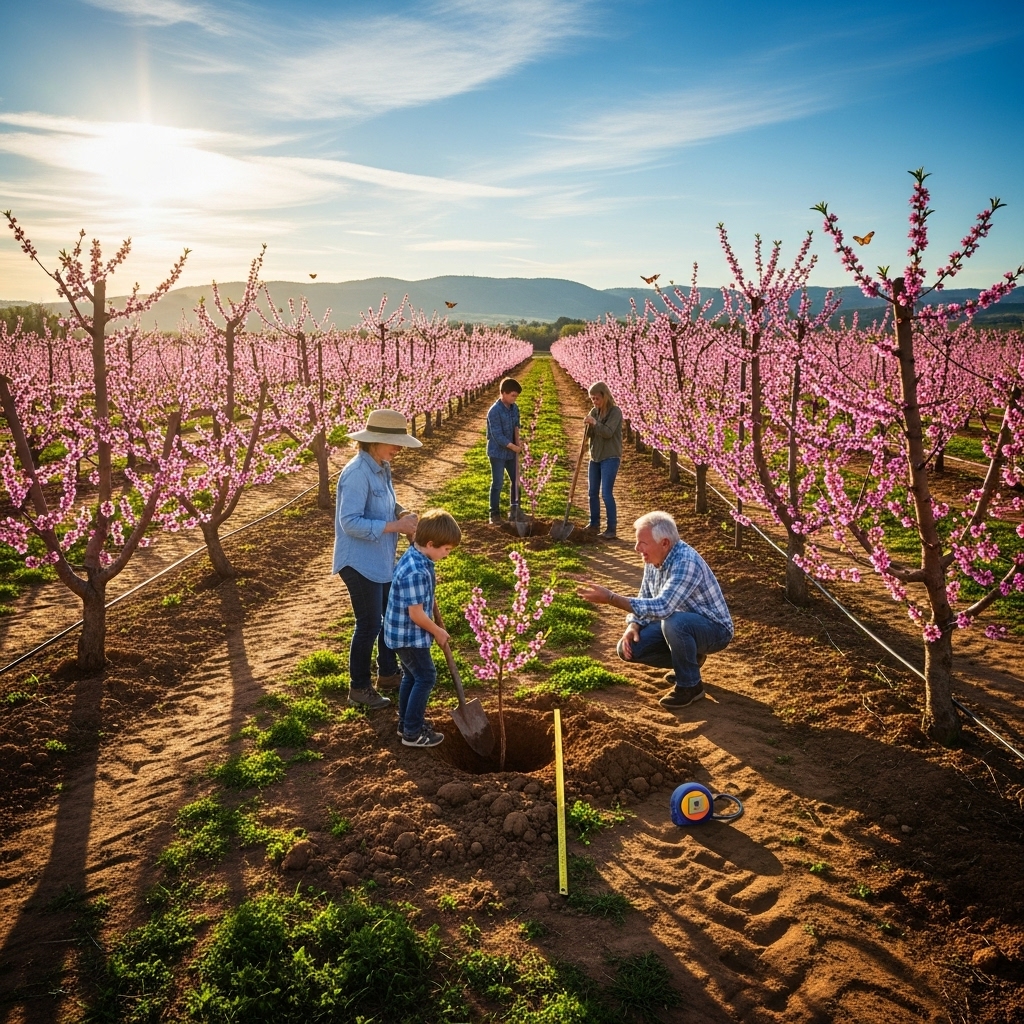
In addition to these types, I found out that peach trees can also be categorized as standard, semi-dwarf, and dwarf. Standard peach trees can grow 18 to 25 feet tall and wide, while semi-dwarf varieties reach about 10 to 15 feet. Dwarf peach trees, on the other hand, typically stay under 6 to 8 feet. The type of tree you choose will greatly influence the spacing needed when planting. If you’re opting for a standard variety, you’ll need to give it more room compared to a dwarf tree.
Growth Habit and Size
Understanding the growth habit of your chosen peach tree variety is essential for planning the right spacing. I’ve learned that peach trees have a vigorous growth pattern, which means they will spread out as they mature. This growth can affect not only how far apart you should plant them but also how they will interact with each other over time. For instance, if you plant them too closely, they may compete for sunlight and nutrients, leading to stunted growth and reduced fruit production.
Additionally, the size of the tree at maturity is a crucial factor. For example, when I planted my standard peach trees, I initially spaced them about 10 feet apart, thinking that would be sufficient. However, as they grew, I quickly realized that they were crowding each other. Now, I’ve learned that spacing them at least 15 feet apart allows each tree to thrive without competing too much with its neighbor. If you’re planting dwarf varieties, spacing them 8 to 10 feet apart is usually adequate, giving them enough room to spread while making the most of the garden space.
Optimal Spacing for Peach Trees
Standard Spacing Guidelines
When it comes to standard spacing guidelines for peach trees, a rule of thumb is to plant them 15 to 20 feet apart. This distance allows adequate space for the trees to grow without hindering each other. I remember feeling overwhelmed by the numbers at first, but once I visualized how large the trees would become, the spacing made more sense. I recommend marking out the area with stakes and string to visualize where each tree will go before actually planting.
This standard spacing not only maximizes sunlight exposure but also helps with air circulation, which is vital for preventing diseases. I’ve had my share of struggles with peach tree health, and I’ve found that poor air circulation can lead to issues like peach leaf curl. Ensuring that there’s enough space between trees allows for better airflow, reducing the risk of fungal infections. Read Interesting article: How to Use Neem Oil on Plants (Safe & Effective)
Spacing for Different Peach Varieties
As I’ve mentioned earlier, different varieties of peach trees require different spacing. For standard peach trees, aiming for 15 to 20 feet apart is ideal. Semi-dwarf varieties can be spaced closer together, about 12 to 15 feet apart, while dwarf peach trees can be planted as close as 6 to 8 feet apart. It’s fascinating how the variety can dictate not just the spacing but also the overall management of the orchard. In my case, I found that mixing different varieties in my garden added diversity and made spacing decisions a bit more complex but also more rewarding.
Factors Influencing Spacing Decisions
Several factors can influence how far apart you should plant your peach trees. I found that the climate in my area played a significant role. If you live in a more humid environment, allowing extra space can help reduce the risk of diseases, as trees will dry out faster. Additionally, soil quality, drainage, and sunlight availability should all be considered when making your spacing decisions.
I also learned that the purpose of your peach planting can affect spacing. If you’re growing peaches for commercial purposes, maximizing the number of trees in a given area might be a priority, but that can lead to increased maintenance needs. In contrast, if you’re planting for home use or enjoyment, spacing them farther apart for better growth makes more sense. I personally enjoy watching my trees flourish, so I lean towards giving them the room they need to thrive.
Understanding these factors has helped me make better decisions regarding my peach tree planting. It’s all about finding the right balance for your specific conditions, which can take some trial and error, but the results are worth it!
Planting Techniques for Peach Trees
Preparing the Planting Site
Before planting my peach trees, I learned that preparing the site is just as important as deciding on spacing. The soil quality and location can make or break your trees’ success. I remember when I first started, I was so eager to plant that I overlooked this crucial step. I quickly discovered my mistake when my trees struggled to thrive.
Start by selecting a site that gets full sunlight for at least six hours a day. I found that peach trees love the sun, and more light means better growth and fruit production. If you can, choose a location with well-draining soil to prevent waterlogging, which can lead to root rot. Adding organic matter like compost can enrich the soil and improve drainage. I made it a point to dig in some compost before planting, which really helped my trees establish a healthy root system.
Also, it’s a good idea to clear the area of weeds and debris. I spent a day pulling out weeds and rocks, and while it felt like a chore, it was worth the effort. A clean planting area allows your peach trees to focus their energy on growing rather than competing with unwanted plants.
How to Measure Spacing Accurately
Once I had my site prepared, I focused on measuring the spacing accurately. I remember my initial attempt at planting, where I eyeballed the distances. Let me tell you, that did not go well! Trees that looked spaced out ended up crowding each other later on. So, I learned to take my time with measurements.
To measure spacing accurately, I recommend using a tape measure. Start by marking the first tree’s location with a stake. Then measure the desired distance (15 to 20 feet for standard peaches) from that stake to where the next tree will go. I found it helpful to have someone assist with holding the tape measure while I placed the stakes. This way, everything stayed organized, and I avoided any miscalculations.
Once I had all the spots marked out, I stood back and visualized how the trees would grow to ensure they wouldn’t be overcrowded. This visual check helped me feel more confident about the placements before digging any holes.
Using a Grid System for Planting
One of the best techniques I discovered for planting peach trees was using a grid system. This method can simplify the process and ensure even spacing. I remember when I first tried this, it transformed my planting experience. Instead of just marking individual spots, I laid out a grid throughout the planting area.
To create a grid, I used stakes and string to form a rectangular or square pattern based on my spacing. For instance, if I planned to plant my standard peach trees 15 feet apart, I set stakes every 15 feet along the perimeter and then connected them with string to form rows. This visual guide was incredibly helpful for maintaining consistency across the planting area.
Once I had the grid set up, planting became so much easier. I simply dug holes at each intersection, ensuring that every tree had the proper spacing. The grid not only made planting straightforward but also gave me a clear layout for future maintenance and pruning. I’d recommend this method to anyone looking to plant multiple peach trees; it really streamlined the process.
Common Mistakes in Peach Tree Spacing
Planting Too Close Together
One of the most common mistakes I made—and I see others make, too—is planting peach trees too close together. Initially, I thought I could squeeze in a few extra trees to maximize my harvest. But what I learned the hard way was that overcrowding leads to competition for resources. I noticed that my trees started to lag in growth and produced fewer fruits than I expected.
As they grew, I realized their branches were rubbing against each other, which not only hindered their ability to soak up sunlight but also affected air circulation. I recall feeling frustrated as I watched my trees struggle. That’s when I decided to research proper spacing again and commit to giving them the room they needed to flourish. Trust me, it’s better to have fewer trees that thrive than to cram them together for the sake of quantity.
Leaving Too Much Space
On the flip side, I also learned that leaving too much space can be a mistake. In my excitement to give my trees plenty of room, there were times when I spaced them too far apart. This resulted in areas of my garden being underutilized, which I realized could have accommodated more trees. I eventually recognized that while peach trees need room to grow, they also benefit from being closer together within their ideal spacing range.
Finding that balance was crucial for me. I found that by observing my trees closely, I could better assess their needs. Every garden is unique, and it’s essential to adjust spacing based on how each tree grows. This experience taught me the importance of flexibility and observation in gardening.
Impact of Spacing on Peach Tree Health
Air Circulation and Sunlight Exposure
One of the most crucial aspects of peach tree health is air circulation and sunlight exposure, and spacing plays a significant role in both. I learned this the hard way when I noticed that some of my trees were developing fungal diseases. It turned out that the trees planted too close together were blocking airflow, creating a humid environment that was perfect for issues like peach leaf curl. I remember checking the leaves and finding spots that were a clear indicator of disease. It was frustrating to think that I could have prevented this with better spacing.
Through my experience, I’ve come to appreciate how proper spacing allows for better air circulation. When trees have room to breathe, they are less likely to face disease pressure. Sunlight is equally important; it promotes healthy growth and fruit production. I’ve seen trees that were too crowded struggle to produce fruit, while those with adequate spacing flourished with vibrant blossoms and juicy peaches. I recommend regularly assessing the canopy of your trees to ensure that they are not overgrowing and shading each other out. This attention to detail can really pay off in your harvest.
Root Competition and Nutrient Access
Another critical factor that I’ve noticed in relation to spacing is root competition and nutrient access. Peach trees have extensive root systems, and when they are planted too closely, they compete for water and nutrients. I remember when I first planted my trees—their roots tangled together, and I could tell that some trees were not thriving as well as others. This became particularly evident during dry spells when some trees would wilt faster than others. It hit me that the competition for resources was impacting their growth.
I have since learned that giving each tree ample space allows roots to spread out and access the nutrients they need. It’s fascinating how a little bit of distance can lead to healthier trees that are more resilient to drought and other stressors. If you observe your trees struggling, it’s worth checking the spacing and considering whether they have enough room to grow their roots properly. Balancing root systems is essential for the overall health of your peach trees, and my experience has shown me that this can make a world of difference.
Pruning and Maintenance Considerations
Adjusting Spacing Over Time
As my peach trees grow, I’ve learned that adjusting spacing over time is sometimes necessary. Initially, I was so focused on planting them correctly that I didn’t think about how they would develop in the long run. I’ve found that trees can spread out more than I anticipated, so I’ve had to reevaluate their spacing every few years. This is especially important for standard varieties that can grow quite large.
I remember a moment when I had to make the tough decision to remove a couple of trees that had been planted too close together. It was hard to part with them, but it became clear that they were stunting each other’s growth. Afterward, the ones that remained thrived, and the increase in sunlight and airflow made a noticeable difference. Keeping a close eye on their growth and being prepared to make adjustments has become part of my gardening routine. I recommend marking your calendar for annual checks on spacing, so you’re not caught off guard when your trees start to mature.
Pruning Techniques for Effective Growth
Pruning is another essential aspect of maintaining the health of peach trees, and it ties in closely with spacing. When I first started pruning, I felt overwhelmed by all the different techniques and guidelines. However, I quickly discovered that proper pruning not only helps shape the tree but also improves airflow and sunlight penetration. In fact, I’ve seen that well-pruned trees produce better fruit and are less susceptible to diseases.
When it comes to peach trees, I’ve found that thinning out branches both inside the canopy and on the outer edges can make a significant difference. This process can also help manage how close the trees are to one another by ensuring that they aren’t competing for the same light source. I usually focus on removing any dead or crossing branches and those that crowd the center of the tree. This practice has helped me maintain a healthy balance between growth and spacing, allowing my trees to reach their full potential.
In my experience, staying consistent with pruning and understanding how it ties into spacing has been key to enjoying fruitful harvests year after year. It’s all about finding that sweet spot where each tree can thrive without overshadowing its neighbors. Read Interesting article: How to Plant a Peach Pit and Grow a Tree
Frequently Asked Questions
What is the recommended spacing for planting peach trees?
The best spacing for planting peach trees is typically 15 to 20 feet apart, depending on the variety and growth habit.
What are the two main types of peach trees?
The two main types of peach trees are clingstone and freestone. Clingstone peaches have flesh that clings to the pit, while freestone peaches allow easy separation from the pit.
How do the sizes of peach trees influence planting spacing?
The size of the peach tree at maturity greatly influences the spacing needed. Standard peach trees require more space (15 to 20 feet) compared to semi-dwarf (12 to 15 feet) and dwarf varieties (6 to 8 feet).
What factors should be considered when determining the spacing for peach trees?
Factors influencing spacing decisions include climate, soil quality, drainage, sunlight availability, and the purpose of planting (commercial vs. home use).
What planting technique can help ensure proper spacing?
Using a grid system can simplify the planting process and ensure even spacing. This involves marking a rectangular or square pattern with stakes and string based on the desired spacing.
What are the consequences of planting peach trees too close together?
Planting peach trees too close together can lead to competition for resources, stunted growth, and reduced fruit production due to inadequate sunlight and air circulation.
What happens if peach trees are spaced too far apart?
Spacing peach trees too far apart can lead to underutilized areas in the garden, preventing the optimal number of trees from being planted.
How does spacing affect air circulation and sunlight exposure for peach trees?
Proper spacing allows for better air circulation and sunlight exposure, which are crucial for preventing diseases and promoting healthy growth and fruit production.
How can root competition affect the health of peach trees?
Root competition can lead to trees struggling for water and nutrients when planted too closely together, impacting their growth and resilience, especially during dry spells.
What is the importance of pruning in relation to tree spacing?
Pruning helps maintain tree health by improving airflow and sunlight penetration, which is essential for preventing disease and ensuring that trees do not compete for the same light source.