
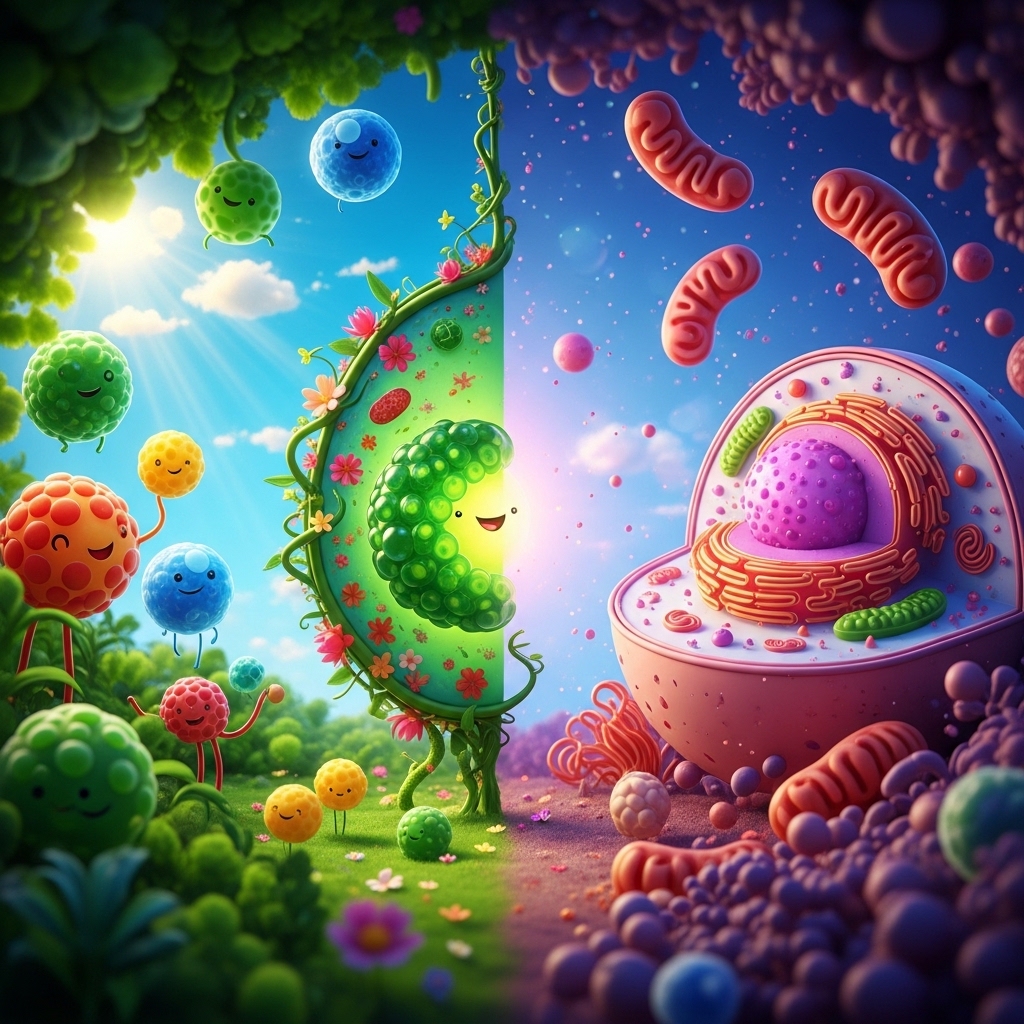
A plant cell differs from an animal cell primarily in its structural components, such as the presence of a rigid cell wall, chloroplasts for photosynthesis, and large central vacuoles. Understanding these differences helps us appreciate the unique roles each cell type plays in nature. For a deeper understanding, check out Plant Cell vs Animal Cell: Full Difference Explained.
Overview of Plant and Animal Cells
Definition of Plant Cells
Plant cells are the fundamental building blocks of plants, featuring unique structures that support their rigid form and functions. They have a distinct cell wall made of cellulose that provides strength and protection. Inside, plant cells contain chloroplasts, the organelles responsible for photosynthesis, allowing plants to convert sunlight into energy. I remember the first time I learned about chloroplasts in school; it was fascinating to think of plants as tiny solar panels, capturing energy from the sun!
Definition of Animal Cells
Animal cells, on the other hand, are the basic units of animals and are generally more flexible and varied in shape than plant cells. They lack a cell wall and instead have a flexible cell membrane that allows for a greater range of movement. This flexibility enables animal cells to adopt various shapes and sizes, depending on their function in the body. When I think about animal cells, I often picture the diverse types of cells, from muscle cells that contract to nerve cells that transmit signals; each plays a crucial role in the organism’s life.
Importance of Understanding Cell Differences
Knowing the differences between plant and animal cells is not just an academic exercise; it has real-world significance. These distinctions affect how plants and animals grow, interact with their environments, and respond to changes. I’ve often found myself reflecting on how these differences impact everything from agriculture to medicine. By understanding these cells, we can better appreciate the complexity of life and the interconnectedness of all living organisms. For more insights, see Plant Cell vs Animal Cell: Main Differences Explained.
Structural Differences Between Plant and Animal Cells
Cell Wall vs. Cell Membrane
The most obvious structural difference between plant and animal cells is that plant cells have a rigid cell wall, while animal cells only have a flexible cell membrane. The cell wall is made mainly of cellulose, giving plants the strength to stand upright and resist external pressures. I remember visiting a botanical garden and being amazed at how tall and strong the trees stood, all thanks to their sturdy cell walls. In contrast, animal cells rely on their flexible membranes to change shape, allowing for movement and interaction with other cells.
Chloroplasts and Photosynthesis
Chloroplasts are another significant feature of plant cells that animal cells lack. These green organelles contain chlorophyll, which captures sunlight to produce energy through photosynthesis. This process not only fuels the plant but also generates oxygen, which is essential for most life on Earth. I recall my science teacher explaining how plants and animals are interdependent, and realizing that without chloroplasts, we wouldn’t have the oxygen we breathe today! Animal cells, meanwhile, obtain energy through cellular respiration, relying on nutrients from food rather than sunlight.
Vacuoles: Size and Function
Vacuoles are storage organelles found in both plant and animal cells, but they vary significantly in size and function. Plant cells typically contain a large central vacuole that stores water, nutrients, and waste products, and helps maintain turgor pressure, which keeps the plant firm. I once had a houseplant that drooped when it was thirsty, and I learned that it was because the central vacuole had lost water. Animal cells have smaller vacuoles that serve more varied roles, such as transporting materials within the cell. The difference in vacuole size and function highlights how plants and animals manage resources differently.
Shape Differences: Rigid vs. Flexible
Regarding shape, plant cells are usually rectangular and rigid thanks to their cell wall, while animal cells tend to be more irregular and flexible. This flexibility allows animal cells to form tissues and organs with diverse functions. For instance, I remember seeing how blood cells are shaped to move easily through vessels, while muscle cells are long and slender for contraction. The rigidity of plant cells contributes to their structural integrity, allowing them to grow tall and develop various forms, from leaves to flowers.
Functional Differences Between Plant and Animal Cells
Energy Production: Photosynthesis vs. Cellular Respiration
One of the most significant functional differences between plant and animal cells lies in how they produce energy. Plants are autotrophs, meaning they can create their own food through photosynthesis. This process allows them to harness sunlight, converting it into chemical energy stored in glucose. I often think about walking through a park on a sunny day, surrounded by trees and plants, and realizing that they are constantly producing energy in a way that sustains not just themselves but us as well. In contrast, animal cells are heterotrophs; they cannot produce their own food and must consume organic matter to obtain energy through cellular respiration. This fundamental difference shapes how both types of cells interact with their environments.
Storage: Starch in Plants vs. Glycogen in Animals
Another interesting difference is how plants and animals store energy. Plants store energy in the form of starch, a polysaccharide that can be broken down into glucose when needed. I remember learning about how potatoes and other starchy foods are energy reserves for plants and how humans rely on these foods for energy. On the other hand, animals store energy as glycogen, a more readily mobilized form of glucose that can be quickly converted when energy is required. This difference in storage methods highlights the varied strategies that plants and animals use to survive and thrive in their respective environments. For more details, see Plant Cell vs Animal Cell: Key Differences Explained.
Growth Patterns: Primary vs. Secondary Growth
Plants exhibit two types of growth: primary and secondary. Primary growth occurs at the tips of roots and shoots, allowing them to grow taller and deeper. This kind of growth is crucial for plants as they reach for sunlight and explore the soil for water and nutrients. I remember planting seeds and being fascinated by how quickly they sprouted and grew towards the sun. Conversely, animal cells do not experience primary growth; instead, they grow and divide through a process called mitosis, allowing for the development of tissues and organs. This difference in growth patterns reflects the distinct life strategies of both kingdoms.
Organelles Unique to Each Cell Type
Plant Cell Organelles
Plant cells have some fascinating organelles that set them apart from animal cells. Understanding these unique structures gives us insight into how plants function and thrive in their environments. I find it intriguing to see how these organelles contribute to the overall life of a plant.
Chloroplasts
Chloroplasts are perhaps the most well-known plant cell organelles. These little green powerhouses are essential for photosynthesis, as they contain chlorophyll, which captures sunlight. I still vividly recall my first science project, where I painted a model of a plant cell, and it was a thrill to represent the chloroplasts. Without them, plants wouldn’t be able to produce the energy they need, and we wouldn’t have the oxygen we rely on. In addition to energy production, chloroplasts also play a role in synthesizing fatty acids and amino acids, vital for plant growth and development.
Cell Wall
The cell wall is another key feature of plant cells. It’s composed mainly of cellulose, which provides the structural support needed for plants to grow tall and strong. I remember learning how the flexibility of an animal cell membrane allows for movement, but the rigidity of the plant cell wall helps maintain its shape. This feature is particularly visible in tall plants like sunflowers, which stand upright even in windy conditions, thanks to their sturdy cell walls. The cell wall also acts as a protective barrier against pathogens and helps regulate water loss, making it essential for a plant’s survival.
Large Central Vacuole
The large central vacuole is another defining characteristic of plant cells. This organelle serves several key functions, such as storing water, nutrients, and waste products. It plays an integral role in maintaining turgor pressure within the cell, which is crucial for keeping plants upright and healthy. I had an eye-opening experience with a wilting plant in my home; I learned that if the central vacuole loses water, the plant droops. When I watered it, the vacuole filled up again, making the plant firm and lively. It’s a simple yet powerful reminder of how internal structures work together to support life.
Animal Cell Organelles
While plant cells have their unique organelles, animal cells also possess specific structures that are vital for their function. Exploring these organelles helps us understand how animal cells operate and adapt to their environments.
Lysosomes
Lysosomes are often referred to as the “clean-up crew” of animal cells. These small, enzyme-filled organelles break down waste materials and cellular debris, ensuring that the cell remains clean and functional. I remember reading about how lysosomes are essential for recycling materials within the cell, including damaged organelles. This process is so crucial for maintaining homeostasis; without lysosomes, cells would accumulate waste, leading to dysfunction. It’s amazing to think about how these tiny organelles contribute to the overall health of the entire organism!
Centrioles
Centrioles are cylindrical structures found in animal cells that play a significant role in cell division. They help organize the microtubules that separate chromosomes during mitosis. I find it fascinating how these tiny structures are crucial for ensuring that when a cell divides, each new cell receives the correct number of chromosomes. It’s a testament to the intricate design of life and how even the smallest components can have a significant impact on growth and development.
Small Vacuoles
Animal cells contain smaller vacuoles compared to their plant counterparts. These vacuoles serve various roles, including storing nutrients and waste products. Although they don’t maintain turgor pressure like plant vacuoles, they still play an essential part in cellular function. I learned that in some specialized animal cells, these small vacuoles can even assist in transporting materials within the cell. It’s interesting to see how both plant and animal cells have adapted their structures to serve their specific needs.
Comparative Summary of Plant and Animal Cells
Key Differences at a Glance
When I take a step back and compare plant and animal cells, a few key differences stand out. For one, plant cells have a rigid cell wall, chloroplasts for photosynthesis, and a large central vacuole, while animal cells have a flexible membrane, lysosomes, and centrioles. Each of these features reflects the unique needs and life strategies of plants and animals. I often find it helpful to visualize these differences, as it makes understanding cell biology much easier.
Visual Comparison: Diagrams of Both Cell Types
I remember the first time I saw diagrams comparing plant and animal cells side by side. The visual representation really helped me grasp the differences quickly. If you look at a labeled diagram, you can see the distinct structures of both cell types, like the rigid cell wall and chloroplasts in plant cells versus the flexible membrane and lysosomes in animal cells. These images can be a powerful learning tool, allowing us to appreciate the complexity and diversity of life at the cellular level. I encourage anyone interested in biology to seek out these diagrams, as they can be quite enlightening!
Applications of Understanding Cell Differences
Implications in Biology and Medicine
Understanding the differences between plant and animal cells has profound implications in the fields of biology and medicine. For instance, studying plant cells can lead to advances in agriculture, such as developing crops that can withstand harsh environments or pests. I’ve always been fascinated by how genetic engineering can enhance certain traits in plants, like drought resistance. This technology has the potential to address food security issues globally, which I think is incredibly important as the world’s population continues to grow. Additionally, knowing how animal cells function helps in medical research and treatment. For example, when scientists understand how cells react to diseases, they can develop targeted therapies that are more effective. I’ve often read about breakthroughs in cancer treatment that stem from understanding the cellular differences between healthy and diseased tissues, and it’s inspiring to see how this knowledge translates into saving lives.
Relevance in Biotechnology and Genetic Engineering
The relevance of plant and animal cell differences extends into biotechnology and genetic engineering, where scientists manipulate cells to create innovative solutions. For me, the idea of bioengineering crops that produce higher yields or have enhanced nutritional content is thrilling. This isn’t just about producing more food; it’s about improving the quality of the food we consume. I remember reading about genetically modified organisms (GMOs) that are designed to be pest-resistant, reducing the need for chemical pesticides, which is better for the environment. On the animal cell side, understanding how cells respond to genetic modifications can lead to breakthroughs in creating animal models for human diseases. I find it fascinating to think that by studying these differences, we can develop treatments for various health issues, from genetic disorders to infectious diseases. It’s a perfect example of how science can bridge the gap between understanding and application.
Environmental Impact: Plant Cells in Ecosystems
Plant cells play a crucial role in ecosystems, and understanding their functions can help us appreciate their impact on the environment. I’ve always been captivated by how plants interact with their surroundings, like how they produce oxygen through photosynthesis, which is essential for most living organisms. This process not only supports life but also helps regulate the Earth’s atmosphere. I think about how deforestation and habitat loss can disrupt these vital processes, leading to environmental challenges such as climate change. Learning about plant cells has opened my eyes to the importance of preserving plant life, as they are not just a backdrop to our world but active participants in maintaining ecological balance. The more we understand plant cells, the better we can advocate for conservation efforts, ensuring that we protect the forests, wetlands, and other habitats that are crucial for sustaining biodiversity.
Common Misconceptions About Plant and Animal Cells
Are All Cells the Same?
A common misconception I’ve encountered is the belief that all cells are the same. This misconception can lead to misunderstandings about how different organisms function. In reality, plant and animal cells have distinct structures and functions tailored to their specific needs. For instance, while both cell types share some common organelles, like the nucleus and mitochondria, their unique organelles—like chloroplasts in plants and lysosomes in animals—play critical roles that reflect their different lifestyles. I remember having discussions in class where some of my friends thought that just because all cells are microscopic and perform basic functions, they must be identical. It was enlightening to explore how the variations between them are essential for life’s diversity.
Misunderstanding of Cell Functions
Another misconception revolves around the functions of these cells. Many people think that plant cells are solely for growth and that animal cells are only for mobility and energy. However, both cell types have multifaceted roles. For example, plant cells not only grow but also play a significant role in nutrient storage and water regulation through their vacuoles. On the other hand, animal cells are not just about movement; they also have complex functions related to signaling and communication within the body. I often find it surprising how many functions are packed into these tiny structures. When I started diving deeper into cell biology, I realized how interconnected these functions are and how they work in harmony to keep organisms alive and thriving.
Frequently Asked Questions
What are the main structural differences between plant and animal cells?
Plant cells have a rigid cell wall, chloroplasts for photosynthesis, and large central vacuoles, while animal cells have a flexible cell membrane, lysosomes, and centrioles.
What role do chloroplasts play in plant cells?
Chloroplasts are organelles responsible for photosynthesis, capturing sunlight to produce energy and generating oxygen, which is essential for most life on Earth.
How do plant and animal cells differ in their energy production methods?
Plants are autotrophs that produce their own food through photosynthesis, whereas animal cells are heterotrophs that obtain energy by consuming organic matter through cellular respiration.
What is the function of the large central vacuole in plant cells?
The large central vacuole in plant cells stores water, nutrients, and waste products, helping to maintain turgor pressure that keeps the plant firm and upright.
What types of growth do plants exhibit compared to animals?
Plants exhibit primary and secondary growth, primarily at the tips of roots and shoots, while animal cells grow and divide through mitosis, developing tissues and organs without primary growth.
How do plants and animals store energy differently?
Plants store energy in the form of starch, while animals store energy as glycogen, which can be quickly converted into glucose when needed.
What are lysosomes and what function do they serve in animal cells?
Lysosomes are organelles in animal cells that break down waste materials and cellular debris, helping to keep the cell clean and functional.
What misconceptions exist about plant and animal cells?
A common misconception is that all cells are the same; however, plant and animal cells have distinct structures and functions tailored to their specific needs.
Why is it important to understand the differences between plant and animal cells?
Understanding these differences has real-world implications in fields like agriculture and medicine, helping to develop crops that withstand harsh environments and targeted therapies for diseases.
How do plant cells contribute to ecosystems?
Plant cells play a crucial role in ecosystems by producing oxygen through photosynthesis, which is essential for most living organisms and helps regulate the Earth’s atmosphere.