
Potato plants typically take about 70 to 120 days to grow from planting to harvest, depending on the variety and growing conditions. My experience with growing potatoes has shown me just how fascinating this process can be.
Understanding Potato Growth Stages
Growing potatoes is a rewarding endeavor, and understanding the stages of their growth can enhance the experience. I remember the first time I decided to grow my own potatoes; the anticipation of seeing those little green shoots emerge from the soil was exhilarating. Let’s break down the key stages in potato growth to give you a clearer picture of what to expect.
Seed Selection and Preparation
The journey starts with selecting the right seed potatoes. I learned that using certified seed potatoes is crucial because they are disease-free and have been specially prepared for planting. It’s not just about picking any old potato from the grocery store; those spuds often carry diseases that can ruin your crop. When I chose my seed potatoes, I made sure they were firm and had “eyes” – those little buds that will sprout into new plants. Cutting larger seed potatoes into pieces (each with at least one eye) can also help you maximize your yield, but I always let them sit for a day or two to dry out before planting. This helps prevent rot when they are finally in the ground. For more detailed guidance, check out the article on How Deep to Plant Potatoes for Best Growth.
Planting Techniques and Depth
Once my seed potatoes were ready, it was time to plant them! I found that planting them about 4-6 inches deep in well-drained soil worked best. The spacing is also important; I aimed for around 12 inches apart in rows that were about 2-3 feet apart. This spacing allows the plants to grow without competing for nutrients and sunlight. Making sure the soil temperature is right—ideally around 45°F to 55°F—was another detail I paid attention to. I learned the hard way that planting too early in cold soil can lead to poor germination.
Initial Germination Phase
After planting, the initial germination phase begins, which typically takes about 2-4 weeks. I remember checking my garden daily, peeking through the soil for any signs of life. It was exciting to see those first green shoots emerge! During this phase, the seed potatoes begin to sprout roots and leaves. I tried to keep the soil consistently moist but not waterlogged, as this can hinder growth. The excitement of seeing those little green plants pushing through the soil was a huge motivation to keep caring for them.
Vegetative Growth Stage
Following germination, the plants enter the vegetative growth stage, which lasts anywhere from 4 to 8 weeks. This is where I really noticed the plants booming. The leaves spread out, and the plants became bushy. It’s a great time to ensure that the potatoes are getting enough sunlight, as they thrive in full sun. I also learned that this is when I should start thinking about hilling my potatoes, which involves mounding soil around the base of the plants. This practice helps protect the developing tubers from sunlight and promotes better yield. Each time I hilled, I felt like I was nurturing something special.
Flowering and Tuber Formation
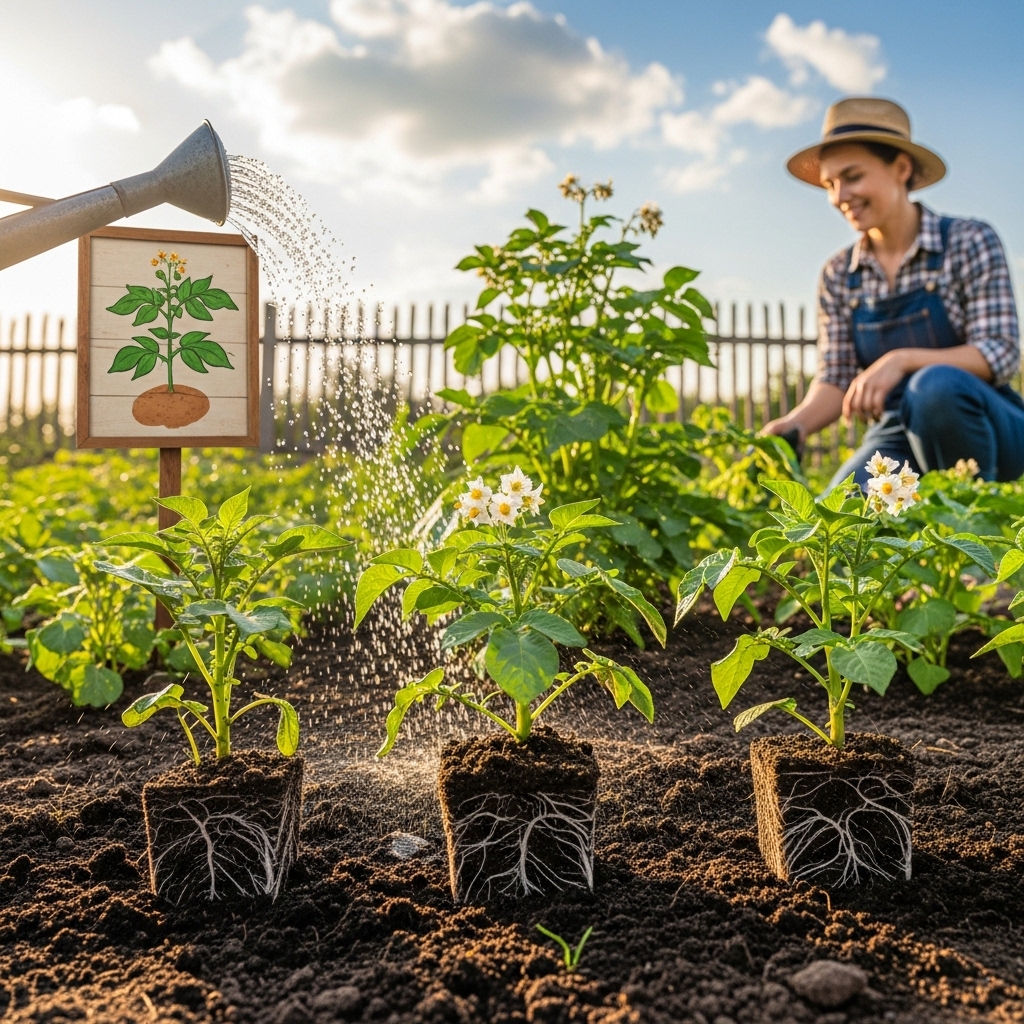
The next stage is flowering and tuber formation, which usually occurs around 8-12 weeks after planting. I found this phase particularly fascinating because it’s when the plants start developing those lovely flowers. While not all potato plants flower, the ones that do can produce beautiful blooms in shades of white, purple, or pink. More importantly, this is when the tubers begin to form underground. It’s critical to keep monitoring the soil moisture during this time; too little water can stress the plants, while too much can lead to rot. I often felt a surge of excitement knowing that my hard work was paying off as I imagined those tubers growing beneath the surface.
Harvesting Timeline
Finally, we reach the harvesting timeline! Depending on the variety, I could begin harvesting baby potatoes about 70 days after planting, but for mature potatoes, I typically waited around 90 to 120 days. The signs that it’s time to harvest are quite clear. When the leaves start to yellow and die back, it’s a good indicator that the potatoes are ready. I remember the joy of digging up my first batch of potatoes; it felt like a treasure hunt. I was always amazed at how much I had grown from just a few small seed potatoes.
Each of these stages contributes to the overall timeline of potato growth, and understanding them has made my gardening experience much more fulfilling. As I continued to learn about growing potatoes, I found that patience and care at each phase really make a difference in the quality of the harvest. Each step of the journey, from planting to harvest, is a learning experience that I cherish.
Factors Influencing Growth Duration
As I continued my potato-growing journey, I quickly learned that the time it takes for potatoes to grow isn’t just a simple countdown from planting to harvest. Several factors can influence the growth duration, and understanding these elements has helped me improve my gardening skills tremendously. Let’s explore some of these factors together.
Climate and Temperature Requirements
Climate plays a significant role in how quickly potatoes grow. I remember the first year I planted my potatoes; I was overly eager and didn’t pay close attention to the weather. Potatoes grow best in a cool climate, ideally between 60°F and 70°F. In my experience, a warm summer can speed up growth, but if temperatures soar above 80°F, the plants can become stressed, leading to a longer growth duration. Planting in early spring as the soil begins to warm up has worked well for me. I’ve also learned to keep an eye on nighttime temperatures; if they dip too low, it can slow down growth as well. I began planning my planting times more carefully after that first year.
Soil Type and Quality
The quality of the soil can’t be overlooked either. I found that well-drained, loamy soil is ideal for growing potatoes. When I started, I didn’t think much about soil testing, but after my initial attempt yielded smaller potatoes, I realized the importance of it. Testing the soil pH helped me determine the nutrient availability. Potatoes prefer slightly acidic soil, ideally around 5.8 to 6.5 pH. I’ve enriched my soil with organic matter like compost, which not only improved drainage but also provided the nutrients the plants needed. This change made a noticeable difference in the growth rate and overall health of my plants.
Watering and Irrigation Practices
Watering practices also significantly influence how quickly potatoes grow. I learned that potatoes require consistent moisture, especially during the early stages of growth and tuber formation. I used to water too heavily, thinking more water meant better growth, but this often led to waterlogged soil and rot. Now, I focus on deep watering to encourage the roots to grow downward, which helps them access moisture better. I often use a soaker hose to deliver water directly to the roots without wetting the foliage too much. This method has worked wonders for me, helping to promote healthy growth and a more robust harvest.
Fertilization and Nutrient Management
Speaking of nutrients, proper fertilization is key in influencing growth duration. I experimented with various fertilizers, but I learned that too much nitrogen can lead to lush foliage at the expense of tuber development. I now use a balanced fertilizer, paying attention to the nutrient ratios. For example, I use a fertilizer that has a higher potassium ratio during the flowering and tuber formation stages to encourage better yields. It’s amazing how the right nutrient management can impact not just the growth rate but also the quality of the potatoes at harvest.
Pest and Disease Management
Finally, I can’t stress enough how important it is to keep an eye on pests and diseases. My first year of potato growing was a lesson in vigilance; I lost a good portion of my crop to aphids and blight. I learned the hard way that regular monitoring and early intervention are essential. I started incorporating companion planting and natural pest repellents, which helped me reduce pest problems without harmful chemicals. Healthy plants are more resilient and can grow more quickly, so I now make pest and disease management a priority in my gardening routine.
By understanding these factors, I’ve been able to influence the growth rate of my potatoes significantly. Each season has been a learning experience, and I feel more equipped to nurture my plants effectively. The knowledge I’ve gained has transformed my potato-growing endeavors into a much more successful and enjoyable journey.
Types of Potatoes and Their Growth Times
Types of Potatoes and Their Growth Times
As I delved deeper into my potato-growing adventure, I discovered that the variety of potatoes I choose significantly impacts not only the flavor and texture but also the growth time. Each type of potato has its own unique characteristics and maturation period. I found it fascinating to experiment with different varieties, and I want to share what I’ve learned about early, mid-season, and late varieties of potatoes to help you plan your garden better.
Early Varieties
Early varieties are a great option if you’re looking for a quicker harvest. Typically, these potatoes take around 70 to 90 days to mature. One of my favorites has been ‘New Red’ potatoes. They boast a lovely red skin and a creamy texture, perfect for boiling or roasting. I remember planting them during the first warm days of spring, and by mid-summer, I was already digging up small, tender potatoes. The thrill of tasting my first early harvest made the wait worthwhile!
Another popular early variety is ‘Yukon Gold.’ I’ve heard from friends who grow them that they are not only delicious but also versatile in the kitchen. These yellow-fleshed potatoes have a rich, buttery flavor that makes them a favorite for mashed potatoes. I found it helpful to stagger my planting of early varieties to extend my harvest window, ensuring I had new potatoes available as soon as possible.
Mid-Season Varieties
Mid-season varieties usually take about 90 to 110 days to mature. These potatoes are a great compromise between early and late varieties, providing a balance of yield and quality. I tried growing ‘Kennebec’ potatoes, which are well-known for their smooth skin and excellent storage capabilities. Mid-season potatoes are especially rewarding because they often produce larger yields, which is something I appreciated as I started to share my harvest with family and friends.
Another mid-season option I enjoyed is ‘Red Pontiac.’ They have a beautiful red skin and white flesh, and they work wonderfully for frying or baking. I found that giving these potatoes a little extra care during the flowering stage really paid off, as they produced a robust harvest. I learned that monitoring their growth closely during this phase can make all the difference in the quality of the potatoes at harvest time.
Late Varieties
Late varieties are perfect for those who are patient and willing to wait for around 110 to 120 days for a more substantial harvest. These potatoes often store well over the winter, which is a significant plus for anyone looking to preserve their bounty. My experience with ‘Russet Burbank’ potatoes has been fantastic; they’re the classic baking potato and my go-to for making fluffy baked potatoes or crispy fries. The wait for them to mature was certainly worth it once I experienced that first bite!
Another late variety worth mentioning is ‘Purple Majesty.’ Their unique purple skin and flesh not only add color to your meals but also pack a nutritional punch. I found that these potatoes have a slightly nutty flavor, making them a delightful addition to any dish. Growing late varieties taught me the importance of patience and the joy of harvesting when the time is just right, even if it meant waiting a bit longer.
Understanding the growth times and characteristics of these different potato varieties has really enriched my gardening experience. I’ve learned to plan my garden layout more effectively and stagger my planting times to enjoy a continuous supply of fresh potatoes throughout the growing season. Each variety brings its unique flavor and texture, and I genuinely believe that trying different types can elevate any meal.
How to Determine When Potatoes Are Ready to Harvest
Signs of Maturity
Once I’ve chosen my potato varieties and nurtured them through the growth stages, I get excited when it’s almost time to harvest. However, knowing when exactly to dig up those treasures can be tricky. Over the years, I’ve picked up a few signs to look out for that indicate maturity. The first major sign I watch for is when the leaves start to yellow and die back. This typically occurs towards the end of the growing season, and I’ve learned that it’s a clear signal that my potatoes are ready for harvest.
Another indication is the flower’s appearance. If my plants have flowered, it often means that tubers are forming beneath the soil. I’ve also noticed that as the plants mature, the stems become less vibrant and begin to droop. It’s like they are signaling that their job is done, and now it’s my turn to reap the rewards!
Testing for Doneness
To ensure my potatoes are truly ready for harvest, I sometimes do a little test. About a week before I plan to dig up my potatoes, I gently dig around a plant and pull one potato out of the soil. If it’s about the size I want and has a firm skin, I know it’s time to start harvesting. This simple test has saved me from pulling up premature potatoes in the past, which can be small and not as flavorful.
By paying attention to these signs and testing for doneness, I’ve been able to harvest at just the right moment for maximum flavor and texture. Each season brings its own set of lessons, and I love sharing my knowledge with fellow gardeners to help them enjoy the fruits of their labor as much as I do!
Frequently Asked Questions
How long does it typically take for potato plants to grow from planting to harvest?
Potato plants typically take about 70 to 120 days to grow from planting to harvest, depending on the variety and growing conditions.
What is the importance of selecting certified seed potatoes?
Using certified seed potatoes is crucial because they are disease-free and have been specially prepared for planting, unlike store-bought potatoes which often carry diseases that can ruin your crop.
What is the recommended planting depth and spacing for seed potatoes?
Seed potatoes should be planted about 4-6 inches deep and spaced around 12 inches apart in rows that are about 2-3 feet apart.
What are the key factors influencing the growth duration of potatoes?
Key factors influencing growth duration include climate and temperature, soil type and quality, watering and irrigation practices, fertilization and nutrient management, and pest and disease management.
What soil conditions are ideal for growing potatoes?
Well-drained, loamy soil is ideal for growing potatoes. Potatoes prefer slightly acidic soil with a pH around 5.8 to 6.5.
How can watering practices affect potato growth?
Consistent moisture is essential for potato growth, especially during early stages and tuber formation. Overwatering can lead to waterlogged soil and rot, while deep watering encourages roots to grow downward.
What are the characteristics of early, mid-season, and late potato varieties?
Early varieties take about 70 to 90 days to mature, mid-season varieties take about 90 to 110 days, and late varieties take around 110 to 120 days for a more substantial harvest.
How can I determine when my potatoes are ready to harvest?
Signs of maturity include yellowing and dying back of the leaves, flowering of the plants, and drooping stems. Testing for doneness by gently digging around a plant and checking one potato for size and firmness can also help.
What is the benefit of hilling potatoes during the vegetative growth stage?
Hilling potatoes involves mounding soil around the base of the plants, which helps protect the developing tubers from sunlight and promotes better yield.
Why is pest and disease management important in potato cultivation?
Regular monitoring and early intervention in pest and disease management are essential to prevent crop loss, as healthy plants are more resilient and can grow more quickly.
Read Interesting article: When to Plant Dahlia Bulbs for Big Blooms
Read Interesting article: How Do Plants Reproduce? Simple Explanation