
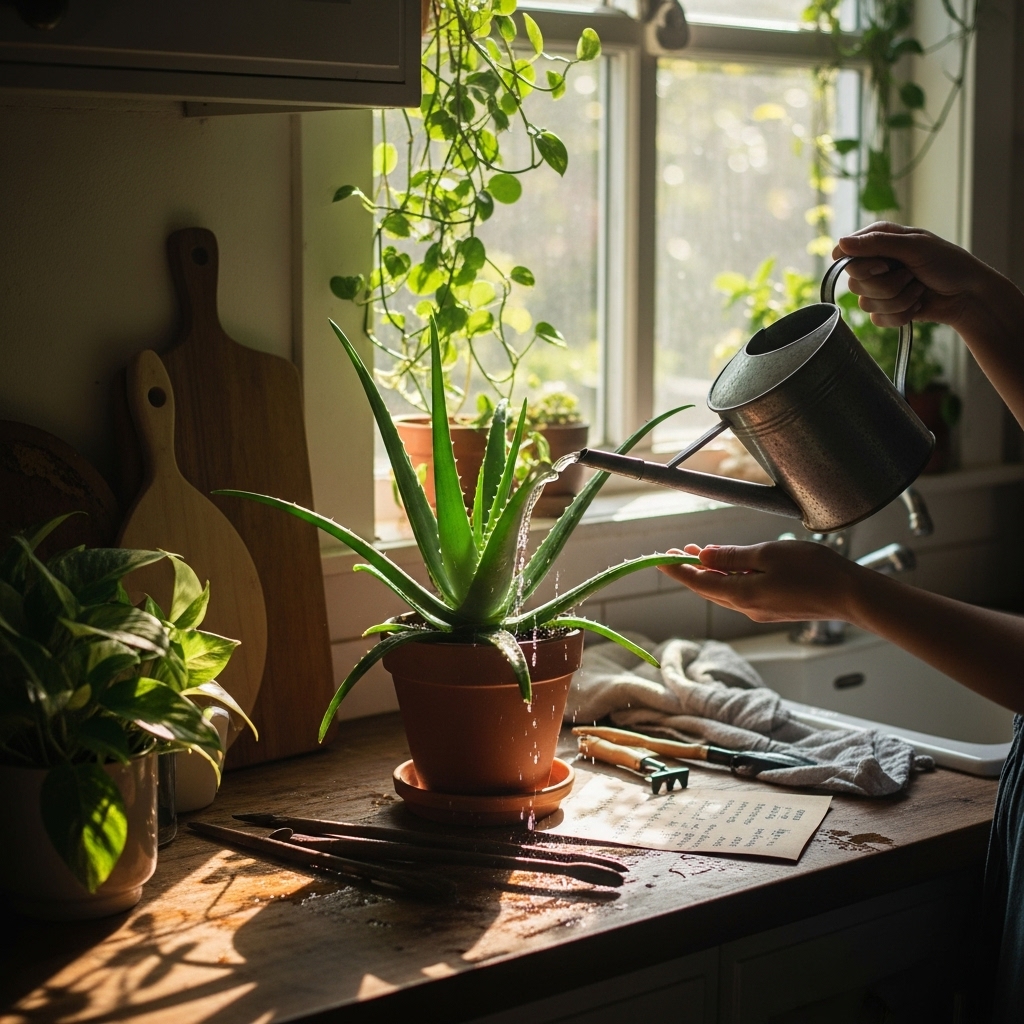
To prevent root rot in an aloe plant, water it every 2-3 weeks, allowing the soil to dry completely between waterings. I’ve learned that finding this balance is key to keeping my aloe healthy and thriving. For a more detailed schedule, check out How Often to Water Aloe Vera Plant (Avoid Root Rot).
Table of Contents
Understanding Aloe Vera: The Basics
What is Aloe Vera?
Aloe Vera is a succulent plant known for its thick, fleshy leaves and medicinal properties. I remember the first time I came across an aloe plant; it was in my grandmother’s garden. She often used the gel inside the leaves to soothe sunburns and minor skin irritations. Aloe Vera is native to the Arabian Peninsula, but it has become a popular houseplant around the world due to its low maintenance and air-purifying qualities.
Common Varieties of Aloe Plants
While Aloe Vera is the most recognized variety, there are several other types of aloe plants that I’ve discovered over the years. Some noteworthy ones include:
- Aloe aristata: Known for its striking white-tipped leaves, it’s a compact variety perfect for smaller spaces.
- Aloe ferox: This plant is larger and has thick, spiny leaves, often used for its medicinal benefits.
- Aloe saponaria: Its unique, spotted leaves make it visually appealing, and it’s quite hardy.
Each variety has its own charm, but they all share similar care needs, particularly when it comes to watering.
Benefits of Growing Aloe Vera
Growing aloe vera offers numerous benefits that go beyond its striking appearance. For starters, I find that having aloe plants around helps purify the air in my home. They absorb harmful toxins and release oxygen, contributing to a healthier indoor environment. Additionally, the gel from aloe leaves is packed with vitamins and minerals, making it a natural remedy for burns, cuts, and even digestive issues. In my experience, having a few aloe plants around has made them my go-to for quick home remedies, which is both convenient and rewarding.
Watering Needs of Aloe Plants
How Aloe Plants Absorb Water
Aloe plants have a unique way of absorbing water. They store moisture in their leaves, allowing them to survive in arid conditions. When I first started caring for aloe, I was surprised to learn that these plants prefer infrequent watering. They absorb water through their roots, but the leaves are where they retain it. This makes it crucial to understand their watering habits to avoid root rot, which can be detrimental to their health.
Factors Influencing Watering Frequency
Determining how often to water your aloe plant isn’t a one-size-fits-all approach; several factors come into play. I’ve found that paying attention to these variables significantly improves my plants’ health.
Climate and Temperature
The climate you live in plays a significant role in how often you should water your aloe. In warmer, drier conditions, I’ve noticed that my plants tend to dry out faster, requiring more frequent watering. Conversely, during cooler months or in humid climates, you might find that the soil retains moisture longer, allowing you to water less frequently.
Soil Type and Drainage
The type of soil in which your aloe is potted is another crucial factor. I’ve learned that using well-draining soil specifically designed for succulents helps prevent waterlogging. If your soil retains too much moisture, even a small amount of watering can lead to root rot. Always ensure your pot has drainage holes—this is essential for letting excess water escape.
Pot Size and Material
The size and material of the pot can also affect how often you need to water. I prefer using terracotta pots for my aloe plants because they’re porous and allow moisture to evaporate, helping to regulate watering needs. If you use a larger pot, the soil might take longer to dry out, meaning you’ll need to adjust your watering schedule accordingly.
Signs of Overwatering vs. Underwatering
Recognizing the signs of overwatering and underwatering can be a lifesaver for your aloe plant. I’ve had my fair share of mistakes, and knowing how to read my plants has been invaluable.
Identifying Overwatered Aloe Plants
Overwatered aloe plants often exhibit yellowing leaves, which can feel mushy or soft to the touch. I remember panicking when I first noticed this, thinking it was a typical sign of disease. However, it was simply a case of overwatering. Another telltale sign is if the leaves start to droop or become translucent. If you catch these signs early, you can help save your plant by adjusting your watering schedule.
Identifying Underwatered Aloe Plants
On the other hand, underwatered aloe plants will show their distress in different ways. The leaves may become wrinkled or shriveled, indicating that they’re lacking moisture. I recall a time when I ignored my aloe for too long; the leaves were curling inwards, which was a clear sign that it needed water. Once I corrected my mistake and watered it properly, the plant bounced back to life.
Optimal Watering Schedule
General Guidelines for Watering Aloe Vera
Creating an optimal watering schedule for my aloe vera has been a game changer. I’ve found that establishing a routine helps me keep my plants thriving. Generally, I water my aloe plants every two to three weeks, but I always check the soil first. If the top two inches feel dry, that’s my signal to water. This method has worked wonders for me, ensuring that I strike the right balance—keeping the plant hydrated without risking root rot. For more tips, see How to Look After an Aloe Vera Plant (Easy Care Guide).
How Often to Water Based on Season
Seasons play a significant role in how often I water my aloe vera. I’ve realized that their watering needs shift depending on the time of year, and adjusting my routine accordingly has led to healthier plants.
Spring and Summer Care
During spring and summer, when temperatures rise and sunlight is abundant, I tend to water more frequently, about every two weeks. I’ve noticed that my aloe plants seem to be more active during this time, which means they’re using more water. Keeping an eye on them during these warmer months has helped me ensure they’re getting enough moisture without overdoing it.
Fall and Winter Care
As the weather cools down in the fall and winter, I cut back on watering to once every three weeks or even longer. The lower temperatures and reduced light mean my aloe plants aren’t growing as quickly, and they require less water. I’ve learned to be cautious during this time; it’s easy to forget that, even though the plant may look healthy, it still needs less water in that cooler environment.
Watering Techniques to Avoid Root Rot
Applying the right watering techniques is crucial in preventing issues like root rot. I’ve tried various methods, and I’ve found a couple that work best for my aloe plants.
Best Practices for Watering
One of the best practices I follow is to water deeply but infrequently. I make sure to soak the soil thoroughly when I do water, allowing it to drain completely afterward. I often do this until I see water trickling out of the drainage holes at the bottom of the pot. This ensures that the roots are getting the moisture they need while also preventing standing water, which can lead to rot.
Using the Soak and Dry Method
The soak and dry method has become my go-to strategy. I thoroughly soak the soil and then allow it to dry out completely before watering again. I remember when I first started using this method; it felt a bit risky to let the soil dry out so much. But over time, I’ve seen my aloe plants thrive under this strategy. It’s all about finding that sweet spot, and I’ve learned to trust my instincts and the plant’s cues. If I’m in doubt, I always err on the side of under-watering rather than overwatering.
Preventing Root Rot in Aloe Plants
Understanding Root Rot and Its Causes
Root rot is one of the biggest threats to aloe plants, and I’ve experienced it firsthand. It usually occurs when the roots sit in waterlogged soil for too long. I’ve learned that several factors can contribute to this problem, including overwatering, poor drainage, and using the wrong type of potting mix. Understanding these causes has helped me take preventative measures to protect my plants.
Signs of Root Rot in Aloe Vera
Recognizing the signs of root rot early can save your aloe plant from serious damage. I remember the first time I noticed my plant was struggling; the leaves were turning yellow and becoming mushy. Upon closer inspection, I discovered that the roots had begun to rot. Other signs to watch for include a foul smell coming from the soil and a general decline in the plant’s health.
How to Save an Aloe Plant from Root Rot
If you suspect your aloe plant has root rot, don’t panic! I’ve had success in saving my plants through a few simple steps.
Re-potting Techniques
The first thing I do is carefully remove the plant from its pot. I gently shake off the old soil and inspect the roots. If I find any that are brown or mushy, I trim them away with sterilized scissors. This can be a bit nerve-wracking, but I remind myself that it’s necessary for the plant’s survival. After pruning, I repot the aloe in fresh, well-draining soil to give it a fighting chance.
Treatment Options for Affected Roots
After re-potting, I often treat the remaining healthy roots with a fungicide to prevent any further issues. I’ve learned that allowing the plant to dry out completely before watering again is essential for recovery. Patience is key here; I wait several weeks before I even think about watering again. Watching my aloe bounce back after this care has been incredibly rewarding!
Additional Care Tips for Healthy Aloe Plants
Soil Recommendations
Choosing the right soil for my aloe plants has made a significant difference in their health. I realized that aloe vera thrives in well-draining soil that doesn’t retain too much moisture. Over the years, I’ve experimented with various soil mixes and found that a blend specifically designed for cacti and succulents works wonders. This type of soil typically includes sand, perlite, or pumice, which helps improve drainage. When I repotted my aloe into this mix, I noticed a marked improvement in its growth and resilience. If you’re looking for a ready-made option, many garden centers offer succulent potting mixes that are great for aloe plants.
Fertilizing Aloe Vera
Fertilizing my aloe vera has been another learning experience. I used to think that more nutrients meant better growth, but I soon learned that less is more when it comes to aloe. I typically fertilize my plants only during the spring and summer months when they’re actively growing. A diluted, balanced liquid fertilizer works best for me; I usually mix it to half strength and apply it once a month. This gentle approach allows the plant to benefit from the nutrients without overwhelming it. I’ve found that my aloe responds well to this regimen, and it keeps the foliage vibrant and healthy.
Light Requirements for Optimal Growth
Lighting has been one of the most crucial factors in my aloe plant care journey. I’ve discovered that these plants prefer bright, indirect sunlight. Too much direct sunlight can scorch their leaves, which I experienced firsthand when I placed my aloe too close to a south-facing window. Instead, I found a nice spot where it gets plenty of light without the harsh rays beating down on it. I’ve noticed that my aloe thrives in this kind of environment, putting out new growth and maintaining its lovely green color. If you’re unsure about your lighting situation, it’s a good idea to observe how your plant reacts and adjust accordingly.
Common Pests and Diseases
Dealing with pests can be a challenge, but I’ve learned to keep an eye out for any signs of trouble. Aloe plants can attract mealybugs and aphids, which can sap the plant’s energy and lead to greater issues if left unchecked. I remember once discovering mealybugs hiding in the crevices of my aloe leaves. I treated the infestation by wiping the leaves with a cotton swab dipped in rubbing alcohol, which worked like a charm! Regularly inspecting my plants for pests has become part of my routine, and it’s helped me catch any problems early.
Another thing I’ve learned is to be cautious about diseases. Fungal infections can be a problem, especially if the plant is overwatered or not in well-draining soil. If I notice any unusual spots or discoloration on the leaves, I make sure to act quickly. Sometimes, removing the affected leaves and adjusting my watering schedule can help the plant bounce back. It’s all about staying vigilant and being proactive in keeping my aloe plants healthy.
FAQs about Watering Aloe Plants
Can I use tap water for my aloe plant?
Yes, you can use tap water for your aloe plant, but I recommend letting it sit for a day or two before using it. This allows any chlorine or other chemicals to dissipate, which benefits the plant. I’ve found that my aloe does just fine with tap water, as long as I’m mindful of its overall watering routine.
What should I do if my aloe plant is drooping?
If I notice my aloe plant drooping, I first check the soil moisture. Often, a drooping aloe indicates that it needs water, especially if the leaves feel soft or wrinkled. I’ll give it a drink and monitor its recovery. If the soil is wet and the plant is still drooping, it could be a sign of overwatering or root rot, in which case I’d follow the steps I’ve learned for addressing those issues.
How can I tell if my aloe plant is healthy?
A healthy aloe plant should have firm, plump leaves that are a vibrant green color. I always look for any signs of yellowing, drooping, or mushiness, which indicate potential problems. Regular growth and the appearance of new leaves are also great signs that my aloe is happy. Taking the time to observe my plants closely has helped me catch any issues early, ensuring they stay in top shape.
Frequently Asked Questions
How often should I water my aloe plant?
You should water your aloe plant every 2-3 weeks, allowing the soil to dry completely between waterings.
What are the common signs of overwatering in aloe plants?
Signs of overwatering include yellowing leaves that feel mushy or soft, drooping leaves, or leaves becoming translucent.
What should I look for to identify an underwatered aloe plant?
An underwatered aloe plant will show signs such as wrinkled or shriveled leaves, which indicates that it is lacking moisture.
What type of soil is best for aloe plants?
Aloe plants thrive in well-draining soil specifically designed for succulents, which often includes sand, perlite, or pumice to improve drainage.
How can I prevent root rot in my aloe plant?
To prevent root rot, ensure you do not overwater your aloe plant, use well-draining soil, and make sure your pot has drainage holes to allow excess water to escape.
What should I do if my aloe plant shows signs of root rot?
If your aloe plant shows signs of root rot, carefully remove it from its pot, trim away any brown or mushy roots, and repot it in fresh, well-draining soil.
How often should I fertilize my aloe vera?
You should fertilize your aloe vera only during the spring and summer months when it is actively growing, typically applying a diluted, balanced liquid fertilizer once a month.
What lighting conditions are ideal for aloe plants?
Aloe plants prefer bright, indirect sunlight. Too much direct sunlight can scorch their leaves, so finding a suitable spot with plenty of light without harsh rays is important.
Can I use tap water for my aloe plant?
Yes, you can use tap water for your aloe plant, but it’s recommended to let it sit for a day or two to allow any chlorine or chemicals to dissipate.
How can I tell if my aloe plant is healthy?
A healthy aloe plant should have firm, plump leaves that are a vibrant green color, with no signs of yellowing, drooping, or mushiness, and regular growth with new leaves appearing.