
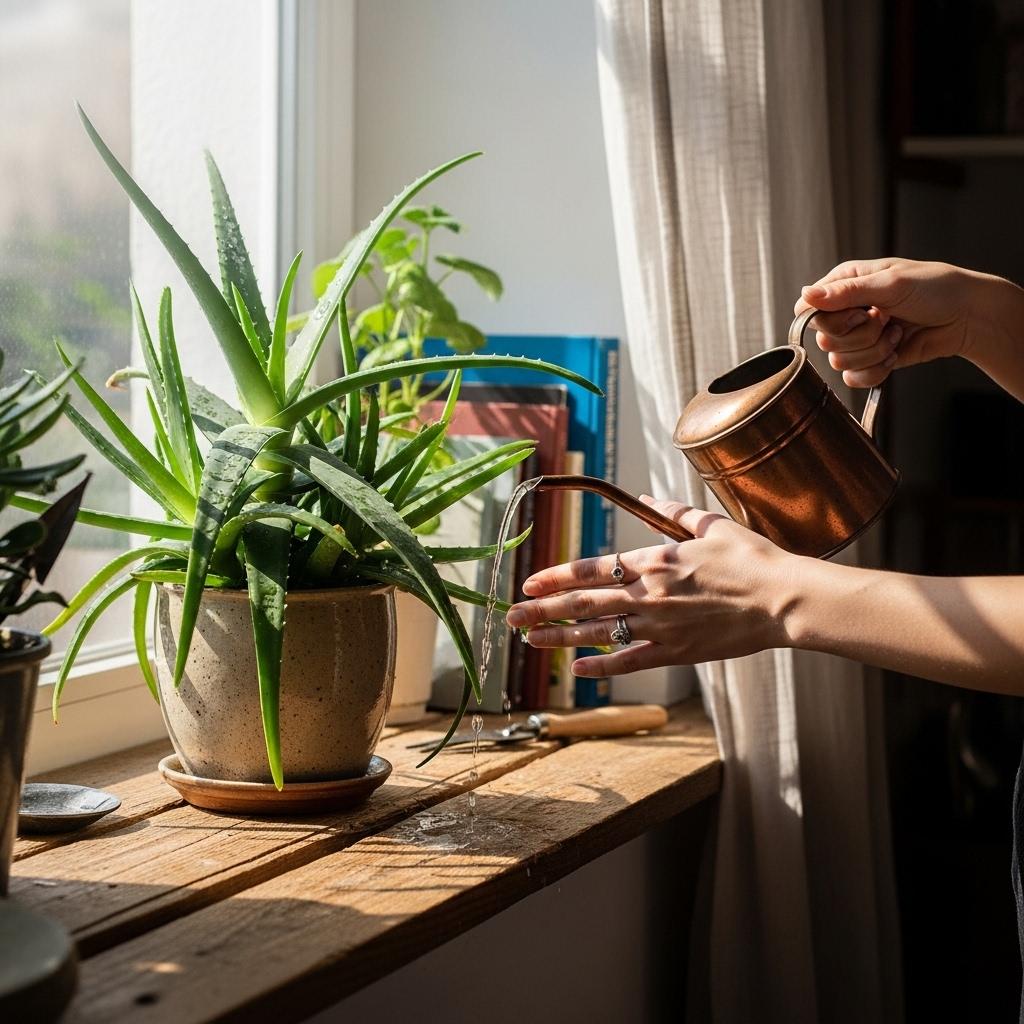
The best way to water an aloe vera plant is to allow the soil to dry out completely between waterings, typically every 2-3 weeks. This helps prevent root rot, which can be a common issue for indoor gardeners. Read Interesting article: How to Take Care of the Aloe Vera Plant (Easy Steps)
Table of Contents
Understanding Aloe Vera Plant Care
What is Aloe Vera?
Aloe vera is a succulent plant that has been cherished for centuries for its medicinal and aesthetic qualities. I first encountered aloe vera when I was looking for a low-maintenance houseplant. With its fleshy, green leaves that can grow quite tall, it struck me as both beautiful and practical. It’s native to the Arabian Peninsula but is now grown in many parts of the world, thriving in warm, dry climates. Aloe vera is often recognized for its gel-like sap, which is commonly used in skincare products and home remedies. The plant’s ability to store water in its leaves makes it an excellent choice for those of us who might forget to water regularly.
Benefits of Growing Aloe Vera
There are numerous benefits to growing aloe vera. For starters, it’s known for its healing properties. I remember when I got a sunburn during a beach trip; my friend recommended applying aloe vera gel directly to my skin, and the soothing effect was immediate. Aside from its topical benefits, having aloe vera in your home can improve air quality. The plant helps remove toxins from the air, adding a breath of fresh air to my living space. Plus, it requires very little upkeep, making it the perfect plant for busy individuals or those new to gardening. Beyond its health benefits, aloe vera is a striking plant that adds a touch of greenery and vitality to any room. Read Interesting article: Are Aloe Plants Poisonous to Cats? Important Safety Info
Watering Needs of Aloe Vera
How Often Should You Water Aloe Vera?
When it comes to watering aloe vera, the general guideline I follow is to water every 2-3 weeks, allowing the soil to dry out completely between waterings. This is crucial because aloe vera is a succulent, meaning it stores water in its leaves. I learned the hard way that overwatering is one of the quickest ways to harm this resilient plant. The frequency might change depending on your environment; for example, during the hotter months, I find I need to water more often, while in the cooler months, I might stretch it to every 4-6 weeks. Always remember, it’s better to underwater than to overwater.
Signs Your Aloe Vera Needs Water
Recognizing the signs that your aloe vera needs water is essential. I’ve noticed that the leaves will begin to look a bit wrinkled or shriveled, which is a clear indication that they are thirsty. If I gently touch them and they feel softer than usual, it’s time for a drink. Another telltale sign is the color of the leaves; they might start to look dull or lose their vibrant green hue. In my experience, observing these signs closely can help me maintain a healthy aloe vera plant.
Signs of Overwatering
On the flip side, overwatering can lead to root rot, which is something I always try to avoid. When my aloe vera gets too much water, the leaves can become mushy and start to turn yellow or brown. I once had a lovely aloe plant that I cared for too much, and it began to droop sadly. If you notice black or brown spots on the leaves, that could be a serious sign that things are not going well. Additionally, if the soil remains soggy for too long, you might notice an unpleasant smell, indicating that the roots are rotting. It became clear to me that I needed to adjust my watering routine after that experience.
Seasonal Watering Adjustments
Understanding the seasons can also help us fine-tune our watering schedule. During the growing season, which is typically spring and summer, I tend to water more frequently, about every 2-3 weeks. This is when the plant is actively growing and needs more moisture. As the temperatures drop in fall and winter, I reduce my watering to around once a month. I’ve found that this seasonal adjustment keeps my aloe vera thriving throughout the year. When the days are shorter and the air is cooler, the plant naturally slows down its growth and requires less water.
Factors Affecting Watering Frequency
Soil Type and Drainage
One of the most important factors that impact how often I water my aloe vera is the type of soil it’s planted in. I’ve experimented with different potting mixes, and I’ve found that using a well-draining soil is key. A blend designed for succulents or cacti works wonders because it allows excess water to escape easily, preventing sogginess. I once tried using regular potting soil, and my aloe vera didn’t thrive at all. The soil retained too much moisture, and I noticed that the roots were struggling. If your soil doesn’t drain well, consider mixing in some perlite or sand to improve drainage. This way, I can feel more confident that my plant is getting the right amount of moisture without the risk of root rot.
Pot Size and Material
The size and material of the pot also play a significant role in watering frequency. When I first started caring for my aloe vera, I chose a pot that was a bit too large. I quickly learned that larger pots hold more soil, which means they retain moisture for longer periods. A smaller pot can dry out faster, which is what I prefer for my aloe. I also recommend using terracotta pots because they are porous and allow moisture to evaporate more quickly than plastic pots. This has made a noticeable difference in my watering routine. If you notice your pot feels heavy after watering, it might be time to reassess its size or material.
Temperature and Humidity
The environment where I keep my aloe vera greatly affects its watering needs. I’ve noticed that when it’s hot and dry outside, I need to water my plant more frequently. On the other hand, during the cooler, more humid months, I can stretch my watering schedule. I like to keep my aloe vera in a warm spot, but not in direct, scorching sunlight for too long—especially during summer. I’ve found that moderate temperatures with good air circulation are perfect for my plant’s health. If I live in a particularly humid area, it’s also essential to be cautious with my watering routine because the plant can take longer to dry out between waterings.
Light Conditions
Light is another major factor that influences how often I water my aloe vera. I remember when my plant was in a corner with limited sunlight; it seemed to grow slowly, and I was unsure how much to water it. When I moved it to a brighter spot with indirect sunlight, I noticed a significant change in its growth and health. Aloe vera thrives in bright, indirect light, and when it receives ample light, it uses up water more efficiently. If you notice your plant stretching towards the light, it might be a sign that it needs a brighter spot, which can also affect its watering needs. I’ve learned that adjusting light conditions can lead to a happier, healthier plant.
How to Water Aloe Vera Properly
Watering Techniques
When it comes to watering my aloe vera, I’ve developed a technique that works well for me. I like to water it deeply but infrequently. This means I pour water until I see it start to drain from the bottom of the pot. I’ve found that this ensures the roots are getting enough moisture without drowning them. It’s important to allow the water to run out of the drainage holes to prevent standing water, which can lead to root rot. I also make sure to check the soil moisture with my finger before watering—if the top inch feels dry, it’s time to give it a drink.
Best Time of Day to Water
I prefer to water my aloe vera in the morning or early evening. This timing is beneficial because it allows the plant to absorb moisture before the heat of the day sets in. I’ve noticed that watering during the hottest part of the day can lead to quick evaporation, leaving the plant thirsty. Additionally, watering in the cooler parts of the day helps prevent scorching the leaves, which can happen if water droplets sit on the leaves under direct sunlight. I’ve learned that a little planning goes a long way in ensuring my aloe remains healthy.
How Much Water to Use
Determining how much water to use is all about balance. I generally start with about a cup of water for my aloe vera, but I adjust based on the pot size and the plant’s needs. I’ve learned that it’s better to start with less and add more if needed. Watching how quickly the soil absorbs the water can give me a clue. If it drains quickly, I might add a bit more. The aim is to ensure that the soil is moist but not soggy. Through trial and error, I’ve found this approach to be effective in keeping my aloe vera healthy and thriving. Read Interesting article: How to Care for an Aloe Plant (Complete Guide)
Avoiding Root Rot
What is Root Rot?
Root rot is a plant disease that occurs when roots are overly saturated with water, leading to decay. I’ve learned that this can be particularly devastating for succulents like aloe vera, which are not accustomed to constant moisture. When I first started gardening, I didn’t fully understand the implications of overwatering, and unfortunately, I lost a couple of my plants to root rot. It’s one of those issues that can sneak up on you, especially if you’re not paying attention to the watering regime and soil conditions.
Causes of Root Rot in Aloe Vera
There are several causes that can lead to root rot in aloe vera. For one, overwatering is the most common culprit. I remember when I was overly generous with my watering can, thinking that more water would make my plant flourish. Instead, it led to soggy soil and a struggling plant. Poor drainage is another factor; if the pot doesn’t have adequate drainage holes or if the soil retains too much moisture, it creates the perfect environment for root rot to develop. Additionally, cold temperatures can exacerbate the issue, especially if combined with wet soil. I’ve noticed that during the colder months, I need to be especially vigilant about my watering routine.
Identifying Root Rot Symptoms
Recognizing the symptoms of root rot early can save your aloe vera plant. I’ve found that one of the first signs is a change in the leaves. If they start to turn yellow or brown and feel mushy to the touch, it’s a red flag. The soil may also stay wet for an extended period, which should raise some concern. I learned to dig a little deeper into the potting mix, checking the roots if I suspect root rot. Healthy roots should be firm and white, while rotting ones will feel soft and may have a dark color. If you ever find a foul smell coming from the soil, that’s a definite indicator of trouble. I had a moment of panic when I discovered that smell; it pushed me to take action quickly.
Treatment Options for Root Rot
If you find yourself dealing with root rot, don’t despair. I’ve faced this challenge, and with some effort, my aloe vera was able to bounce back. First, I carefully removed the plant from its pot to assess the roots. I trimmed away any mushy or dark roots with clean scissors, ensuring I didn’t spread the rot further. Next, I let the remaining healthy roots dry out for a bit before repotting. When I repotted, I made sure to use fresh, well-draining soil and a pot with adequate drainage holes. In some cases, I’ve even added perlite or sand to enhance drainage. After repotting, I resisted the urge to water immediately, allowing the roots to adjust and recover in their new environment.
Best Practices for Aloe Vera Care
Choosing the Right Potting Mix
Choosing the right potting mix has been a game changer for me when it comes to caring for my aloe vera. I’ve experimented with various mixtures, but I always come back to a blend specifically designed for succulents. This type of mix is usually lighter and drains well, preventing excess moisture build-up. I remember the first time I used a cactus mix; it made such a difference in how my aloe vera thrived. If you can’t find a pre-made mix, you can easily create your own by combining regular potting soil with perlite or sand in a 2:1 ratio. This way, I know my plant is getting just the right amount of drainage it needs to flourish.
Fertilizing Aloe Vera
Fertilizing aloe vera isn’t a complicated process, but I’ve found that it can really boost the plant’s growth. I usually fertilize my aloe during the growing season, which is spring and summer. I prefer using a diluted, balanced liquid fertilizer every 4-6 weeks. In my experience, it’s crucial to avoid over-fertilizing, as this can lead to more harm than good. When I first started, I was too eager and applied too much, which resulted in some burnt edges on the leaves. Now, I stick to a light feeding schedule and only fertilize when I see new growth.
Repotting Aloe Vera Plants
Repotting is another essential aspect of aloe vera care that I’ve learned to embrace. As the plant grows, it can outgrow its pot, and I’ve noticed that this can lead to stunted growth. I typically repot my aloe every 2-3 years or when I see roots coming out of the drainage holes. The best time to repot is during the spring when the plant is actively growing. When I repot, I gently remove the plant from its old pot and loosen the root ball before placing it in a larger pot with fresh potting mix. This gives my aloe a chance to spread its roots and continue thriving. I’ve found that repotting not only helps with growth but also refreshes the soil, ensuring that my plant has the nutrients it needs.
Frequently Asked Questions
How often should I water my aloe vera plant?
The best practice is to water your aloe vera every 2-3 weeks, allowing the soil to dry out completely between waterings.
What signs indicate that my aloe vera needs water?
Signs that your aloe vera needs water include wrinkled or shriveled leaves, soft texture when touched, and a dull color compared to its usual vibrant green.
What are the signs of overwatering an aloe vera plant?
Overwatering signs include mushy leaves that turn yellow or brown, black or brown spots on the leaves, and a foul smell from soggy soil.
How can seasonal changes affect the watering schedule for aloe vera?
During the growing season (spring and summer), it’s advisable to water every 2-3 weeks. In cooler months (fall and winter), reduce watering to about once a month.
What type of soil is best for planting aloe vera?
A well-draining soil designed for succulents or cacti is ideal. You can also mix regular potting soil with perlite or sand to improve drainage.
Does the size and material of the pot affect watering frequency?
Yes, larger pots retain moisture longer, while smaller pots dry out faster. Terracotta pots are recommended as they allow moisture to evaporate more quickly than plastic pots.
What watering techniques should I use for my aloe vera?
Water deeply but infrequently, ensuring water drains from the bottom of the pot. Check the soil moisture before watering; if the top inch is dry, it’s time to water.
When is the best time of day to water an aloe vera plant?
Watering in the morning or early evening is best, as it allows the plant to absorb moisture before the heat of the day and helps prevent scorching the leaves.
What is root rot, and how does it affect aloe vera?
Root rot is a disease caused by overly saturated roots leading to decay, which can be particularly harmful to succulents like aloe vera. It’s usually caused by overwatering and poor drainage.
How can I treat root rot in my aloe vera plant?
To treat root rot, remove the plant from its pot, trim away any mushy or dark roots, let the healthy roots dry, and repot in fresh, well-draining soil without watering immediately.