
To keep a basil plant alive longer, provide it with well-draining soil, plenty of sunlight, and regular watering without overdoing it. I’ve learned that with just a little attention, basil can thrive and reward us with its aromatic leaves for many months.
Table of Contents
Overview of Basil Plants
Basil is one of the most popular herbs around the world, cherished for its delicious flavor and versatility in cooking. I’ve always loved having fresh basil on hand; it not only elevates my dishes but also makes my kitchen feel vibrant and lively. Understanding the different types, uses, and health benefits of basil can enhance our gardening experience and culinary adventures. Additionally, if you’re a pet owner, you might want to know what plants are safe for cats to ensure a safe environment for your furry friends.
Types of Basil
There are several types of basil, and each variety has its unique flavor and aroma. The most common include:
- Sweet Basil: This is the most popular type, often used in Italian dishes, especially pesto and pasta sauces. I find it has a sweet, peppery flavor that brightens up any dish.
- Genovese Basil: Similar to sweet basil but with a more robust flavor, Genovese basil is perfect for making authentic Italian sauces. I’ve used it in salads, and it truly brings a punch of freshness.
- Lemon Basil: With a distinct lemon aroma, this variety is fantastic for adding a citrus twist to salads and seafood dishes. I love using it in summer recipes.
- Thai Basil: This variety has a spicy, anise-like flavor. It’s essential in many Southeast Asian dishes, and I often use it in curries and stir-fries for a delicious kick.
- Holy Basil: Also known as Tulsi, this type has a strong aroma and is often used in herbal teas. I’ve found it to be calming and soothing when made into a tea.
Common Uses of Basil
Basil is incredibly versatile. In my kitchen, I use it in a variety of ways:
- Culinary Uses: From enhancing the flavors of pasta dishes to being a key ingredient in homemade pestos, basil is invaluable. I’ve even made basil-infused oils to drizzle over salads.
- Herbal Remedies: Basil has been used in traditional medicine for its potential anti-inflammatory and antioxidant properties. I’ve tried brewing basil tea when I’m feeling under the weather, and it has a comforting effect.
- Aromatherapy: Some people use basil essential oil for its uplifting properties. I sometimes diffuse basil oil in my home for a fresh, uplifting scent.
Health Benefits of Basil
Basil isn’t just tasty; it’s also packed with health benefits that I find quite impressive. Here are a few notable ones:
- Rich in Nutrients: Basil is a good source of vitamins A, K, and C, along with essential minerals like magnesium and calcium. I try to incorporate it into my meals to boost nutritional content.
- Anti-inflammatory Properties: The compounds in basil, such as eugenol, can help reduce inflammation. I’ve found that adding fresh basil to my meals often makes me feel better overall.
- Antioxidant Benefits: Basil is rich in antioxidants, which help combat oxidative stress in the body. I love knowing that every bite is not just delicious but also good for me.
- Supports Digestive Health: Basil is thought to aid digestion and can help alleviate symptoms of bloating. I’ve noticed that my meals feel lighter when I add fresh basil.
Essential Growing Conditions for Basil
To ensure our basil plants thrive, we need to create the right environment for them. I’ve learned that paying attention to their specific needs greatly impacts their health and flavor.
Optimal Soil Type
Basil prefers well-draining soil that retains some moisture without becoming soggy. I usually mix potting soil with perlite or sand to improve drainage. This mix allows the roots to breathe and prevents root rot, which I’ve encountered before. When planting basil, I also make sure to use a pot with drainage holes to facilitate water flow. If you’re interested in improving your gardening techniques, you might want to explore how to plant raspberries for bigger harvests as well.
Sunlight Requirements
Sunlight is crucial for a thriving basil plant. Ideally, basil needs 6 to 8 hours of direct sunlight each day. I’ve noticed that my plants flourish in a sunny spot on my kitchen windowsill. If the light is insufficient, the leaves can become leggy and less flavorful. Using grow lights can also be a great option if natural sunlight is scarce.
Temperature Preferences
Basil loves warm weather and thrives best in temperatures between 70°F and 90°F (21°C to 32°C). I learned that exposing basil to cooler temperatures, especially below 50°F (10°C), can stunt its growth. If you’re growing basil outdoors, I recommend planting it after the last frost to avoid any chilly surprises.
Humidity Levels
Basil enjoys humidity, often thriving in environments with humidity levels of around 40-60%. I’ve found that misting my basil leaves occasionally or placing a small humidifier nearby can help maintain the right moisture levels, especially during dry winter months.
Watering Your Basil Plant
Watering is one of the most critical aspects of caring for basil. I’ve learned that finding the right balance can be tricky, but it’s essential for keeping the plant healthy and thriving.
How Much Water Does Basil Need?
As a rule of thumb, basil likes its soil to be evenly moist but not soggy. I usually check the top inch of soil; if it feels dry, it’s time to water. Typically, I find that watering basil every 2 to 3 days works well, especially during the hotter months. However, this can vary depending on your climate and where the plant is located. I once forgot about watering during a heatwave, and my basil plant started wilting. It was a good wake-up call!
Signs of Overwatering vs. Underwatering
Recognizing the signs of overwatering or underwatering can save our plants from distress. When I’ve overwatered my basil, I’ve noticed yellowing leaves and a mushy stem. The roots can rot, and that’s a real tragedy because I love my basil! On the other hand, if I underwater, the leaves might curl up or become crispy, and the overall plant looks droopy. It’s a delicate balance, but once I learned to pay attention to the leaves, it became much easier.
Best Watering Practices
One practice that has worked wonders for me is watering deeply but infrequently. Instead of a light sprinkle every day, I prefer to give my basil a good soak every couple of days. This approach encourages the roots to grow deeper, which helps the plant withstand heat better. I also try to water in the morning, allowing the leaves to dry out through the day, which helps prevent fungal diseases. Oh, and I always make sure to use room-temperature water; I believe it helps the plant feel more comfortable.
Fertilizing Basil for Healthier Growth
Fertilizing can seem daunting, but I’ve found that a little goes a long way. Basil loves nutrients, and feeding it properly can make a huge difference in its growth and flavor.
Types of Fertilizers to Use
When it comes to fertilizing basil, I usually opt for organic options, like compost or a balanced liquid fertilizer. I’ve had great success using fish emulsion or seaweed extract; they provide essential nutrients without overwhelming the plant. I try to avoid synthetic fertilizers, as I prefer keeping my gardening eco-friendly. If I’m using a granular fertilizer, I make sure it’s slow-release, which gives a steady supply of nutrients over time.
How Often to Fertilize
In my experience, fertilizing basil every 4 to 6 weeks during the growing season keeps it happy. I usually start fertilizing when the plants are about 6 inches tall. It’s amazing how quickly they respond to a little feeding! I’ll often adjust the frequency based on how the plants look; if they seem to be growing slowly, I might add a little extra fertilizer.
Signs of Nutrient Deficiency
I’ve seen a few signs of nutrient deficiency in my basil, and knowing them has helped me act quickly. Yellowing leaves can indicate a lack of nitrogen, while purple-tinted leaves can suggest phosphorus deficiency. If I notice slow growth or small leaves, I might consider that the plant isn’t getting enough nutrients. Paying attention to these signs has been key in keeping my basil lush and vibrant.
Pruning and Harvesting Basil
Pruning and harvesting are some of the most rewarding parts of growing basil. I always look forward to snipping off a few leaves for my dinner or to make a fresh pesto!
When to Prune Your Basil
I’ve learned that regular pruning encourages bushier growth and prevents the plant from becoming leggy. I usually prune my basil when it reaches about 6 to 8 inches tall. As a rule of thumb, I try to pinch off the tips of the stems, which promotes new growth. Plus, I’ve noticed that the more I prune, the more delicious leaves I get to enjoy!
How to Prune for Optimal Growth
When I prune, I make sure to use clean, sharp scissors or pruners to avoid damaging the plant. I often trim just above a leaf node, which is where new growth will sprout. This method has worked wonders for me; I feel like I’m giving the plant a little haircut, and it rewards me with more leaves! I also like to remove any flowers that develop; while they can be beautiful, they can make the leaves taste bitter, and I want to keep my basil tasting fresh.
Best Practices for Harvesting Basil
Harvesting basil is one of my favorite activities. I usually wait until the plant is well-established, and I try to harvest in the morning when the oils are most concentrated. I simply pluck the leaves I need, and I always leave at least a third of the plant intact to ensure it continues to grow. I’ve found that if I’m gentle during the harvesting process, the plant responds by producing even more leaves!
Pest and Disease Management
Pest and disease management is vital for keeping our basil plants healthy and thriving. I’ve learned that being proactive can save us a lot of trouble down the road. When I started gardening, I didn’t realize how important it was to keep an eye out for pests and diseases. Over time, I’ve become more vigilant, and it has made a huge difference in my plants’ health.
Common Pests Affecting Basil
There are a few pests that seem to have a knack for targeting basil plants. I’ve encountered these pesky critters more than once:
- Aphids: These tiny green or black insects suck the sap from the leaves, leading to yellowing and curling. I’ve found that if I catch them early, a strong blast of water can knock them off.
- Whiteflies: These little white pests tend to congregate on the undersides of leaves. They can cause stunted growth and yellowing leaves. I’ve often used sticky traps to catch them before they become a larger problem.
- Spider Mites: These are tiny, spider-like creatures that thrive in dry conditions. I’ve noticed fine webbing on my basil when they invade. Keeping humidity levels up has helped me prevent these little guys.
- Leafhoppers: These pests can cause damage by feeding on the sap of the basil leaves, leading to a mottled appearance. I try to regularly inspect my plants, especially the undersides of the leaves, to catch them early.
Identifying Basil Diseases
Diseases can also be a significant concern for our basil plants. I’ve had my share of experiences with a few common diseases:
- Downy Mildew: This disease appears as fuzzy, white patches on the leaves and can spread quickly. I’ve learned that providing good air circulation and avoiding overhead watering can help keep this at bay.
- Basil Fusarium Wilt: This soil-borne fungus causes yellowing leaves and can eventually kill the plant. I once lost a basil plant to this disease, and now I’m careful to rotate my crops and use disease-resistant varieties when I can.
- Powdery Mildew: This fungal disease looks like a white powdery coating on leaves. It thrives in humid conditions. I’ve found that pruning for good airflow and applying a mixture of water and baking soda can help control it.
Organic Pest Control Methods
When it comes to handling pests and diseases, I prefer organic methods because they are safer for the environment and my family. Here are a few techniques that have worked for me:
- Neem Oil: This natural pesticide is derived from the neem tree and is effective against a variety of pests. I dilute it with water and spray it on affected areas. It’s been a game changer for me!
- Insecticidal Soap: This is another effective option for managing pests. I mix it with water and spray it on the leaves, targeting the pests directly. I love how it’s gentle on the plants yet tough on bugs.
- Companion Planting: I’ve discovered that planting basil alongside other herbs and flowers can help deter pests. For example, marigolds are known to repel aphids and other harmful insects.
- Handpicking: I sometimes find it effective to simply handpick pests off the plants. It’s a bit time-consuming, but it helps me feel more connected to my garden.
Repotting and Transplanting Basil
Repotting and transplanting basil is another crucial aspect of ensuring our plants continue to thrive. There have been times when I neglected this, and my basil plants suffered as a result. Understanding when and how to repot or transplant has made a significant difference in my gardening experience.
When to Repot Your Basil
I usually know it’s time to repot my basil when I see roots coming out of the drainage holes or if the growth seems stunted. I’ve found that repotting every year or so, especially when growing basil in containers, helps keep the plant healthy. I aim to do this in the spring, right before the growing season, to give my basil the best chance at thriving.
How to Transplant Basil Safely
Transplanting basil can feel a bit daunting, but I’ve developed a method that works well for me. Here’s what I do:
- First, I carefully water the basil plant a day before transplanting. This helps the roots come out more easily.
- Next, I gently remove the plant from its current pot, being cautious not to damage the roots.
- Then, I prepare the new pot with fresh, well-draining soil and create a hole in the center for the roots.
- I place the basil in the hole and fill in with soil, gently pressing down to eliminate air pockets.
- Finally, I water it thoroughly to help it settle in its new home.
Indoor vs. Outdoor Basil Care
Whether I’m growing basil indoors or outdoors, I’ve learned that each environment has its own set of care requirements. I’ve experimented with both, and here’s what I discovered:
Growing Basil Indoors
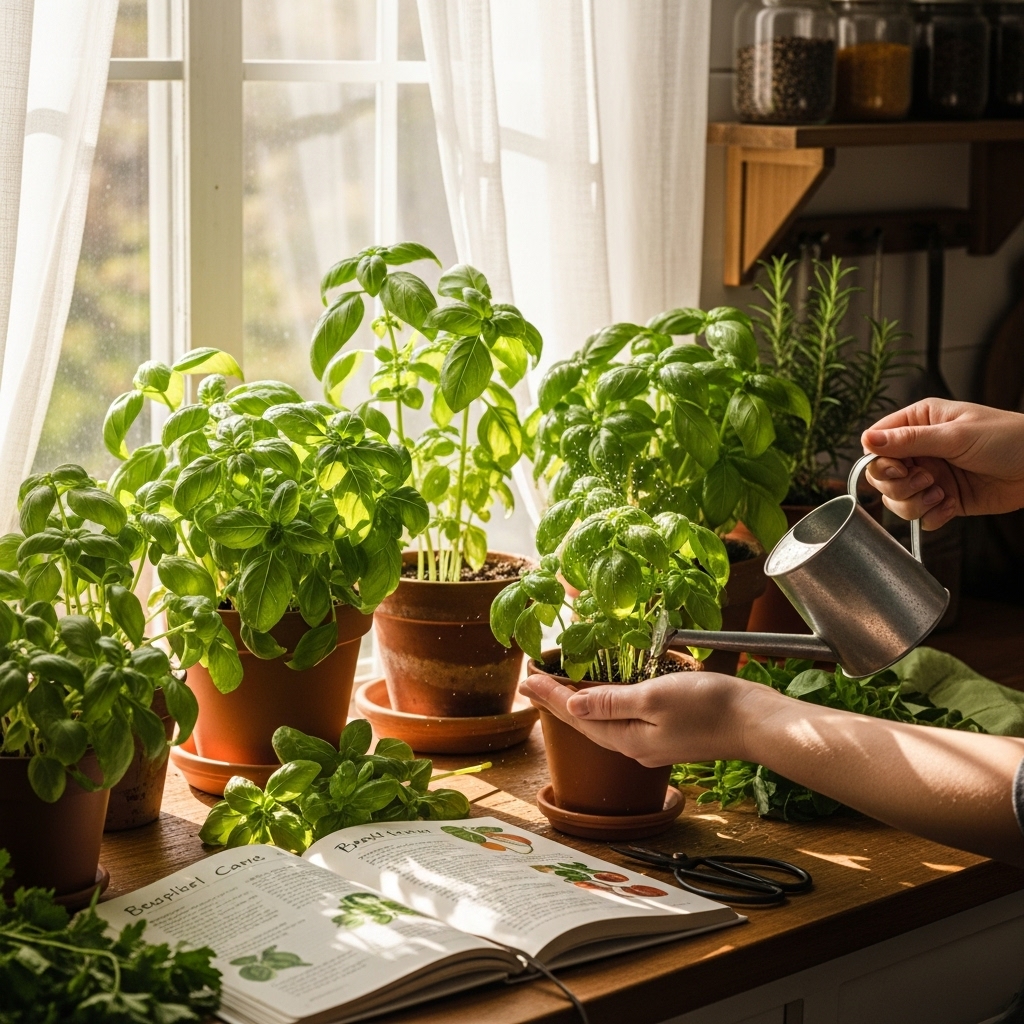
Indoor basil can thrive with the right conditions. I’ve found that placing it near a sunny window is crucial, as it needs plenty of light. I also make sure to rotate the pot every week so that all sides get equal sunlight. It’s essential to keep an eye on humidity levels indoors since it can be drier inside, especially during the winter months. I often mist my indoor basil to keep it happy.
Outdoor Basil Planting Tips
When growing basil outdoors, I’ve learned that choosing the right location is key. Basil loves warm weather and should be planted in a spot that receives full sun. I usually prepare the soil by mixing in organic compost to enrich it. Mulching around the plants can also help retain moisture and suppress weeds.
Seasonal Care for Outdoor Basil
Seasonal care is critical for outdoor basil, especially as temperatures fluctuate. I watch the weather closely and cover my plants if there’s a chance of frost in the early spring or late fall. I also prune back my basil before the first frost to maximize the harvest. I’ve had great success harvesting until late into the season this way!
Frequently Asked Questions
What are the essential growing conditions for basil plants?
Basil plants thrive in well-draining soil, require 6 to 8 hours of direct sunlight daily, prefer temperatures between 70°F and 90°F (21°C to 32°C), and enjoy humidity levels of around 40-60%.
How often should I water my basil plant?
Basil likes its soil to be evenly moist but not soggy. Generally, watering every 2 to 3 days works well, especially during the hotter months, but it’s important to check the top inch of soil to determine if watering is necessary.
What are the signs of overwatering or underwatering basil?
Signs of overwatering include yellowing leaves and a mushy stem, while underwatering can cause leaves to curl up or become crispy, and the plant may appear droopy.
When should I prune my basil plant?
Regular pruning is recommended when the basil plant reaches about 6 to 8 inches tall. This encourages bushier growth and prevents the plant from becoming leggy.
What types of fertilizers are best for basil?
Organic options like compost, fish emulsion, or seaweed extract are effective for fertilizing basil. It’s best to use slow-release granular fertilizers if opting for that method.
How often should I fertilize basil?
Fertilizing every 4 to 6 weeks during the growing season is usually sufficient. It’s best to start fertilizing when the plants are about 6 inches tall.
What common pests affect basil plants?
Aphids, whiteflies, spider mites, and leafhoppers are common pests that can target basil plants. Regularly inspecting the plants can help catch these pests early.
What diseases can basil plants encounter?
Basil plants can suffer from downy mildew, basil fusarium wilt, and powdery mildew. Good air circulation and avoiding overhead watering can help prevent these diseases.
When should I repot my basil plant?
Repotting is necessary when roots are coming out of the drainage holes or if the plant’s growth seems stunted. It’s best to do this every year or so, particularly in the spring before the growing season.
How can I grow basil indoors effectively?
To grow basil indoors, place it near a sunny window for adequate light, rotate the pot weekly for even sunlight exposure, and monitor humidity levels, misting the plant as needed.