
The jade plant, also known as Crassula ovata, is a resilient succulent that thrives with minimal care, making it an excellent choice for both novice and experienced plant enthusiasts. I’ve found that with the right attention to light, water, and soil, these beautiful plants can flourish in our homes for many years. Read Interesting article: How to Care for a Jade Plant (Simple Guide)
Overview of Jade Plants
What is a Jade Plant?
The jade plant, or Crassula ovata, is a popular succulent native to South Africa. It has thick, fleshy leaves that can be deep green or sometimes tinged with red. I remember the first time I saw one; its unique, almost tree-like structure caught my eye. Jade plants are often associated with good luck and prosperity, which is why many people keep them in their homes or offices. They can grow quite large, reaching heights of up to three feet or more, and with the right care, they can live for decades.
Common Varieties of Jade Plants
There are several varieties of jade plants, each with its own distinct characteristics. The most common ones I’ve encountered include:
- Crassula ovata var. falkenbergensis: Often referred to as the “Rainbow” jade plant, this variety has vibrant leaves with red edges.
- Crassula ovata ‘Hummel’s Sunset’: This one is particularly beautiful, showcasing a mix of yellow and orange hues on its leaves.
- Crassula arborescens: Known as the “Silver Dollar” plant, it has rounded leaves and a slightly more upright growth habit.
Each variety has its own charm, and I’ve enjoyed experimenting with different types in my collection. They all share the same basic care needs, so if you can care for one, you can easily manage the others!
Benefits of Keeping Jade Plants
Having jade plants in your home comes with several benefits. For starters, they are known for their air-purifying qualities, helping to remove toxins from the air and improving indoor air quality. I’ve noticed that having greenery around not only makes a space feel more inviting but can also boost my mood. Additionally, jade plants are quite low maintenance, making them perfect for busy lifestyles. They don’t need frequent watering or complex care routines, which means I can simply enjoy their beauty without feeling overwhelmed.
Moreover, jade plants can symbolize good luck and prosperity in many cultures. I’ve gifted a few to friends and family, believing that their presence can bring positive energy into a home. They also serve as a great conversation starter; I love telling people about the lore and significance behind them. With their long lifespan, a jade plant can even be passed down through generations, making them a living heirloom. Read Interesting article: Jade Plant Care: Why Do Jade Plants Drop Leaves?
Ideal Growing Conditions
Light Requirements
Jade plants thrive in bright, indirect sunlight, which mimics their natural habitat. I’ve found that placing my jade plant near a south-facing window works wonders, giving it plenty of light without the harsh direct sun that can scorch its leaves. A few hours of direct sunlight in the morning or late afternoon is ideal, but I’ve also noticed that they can adapt to lower light conditions, though growth may slow down. If you notice your plant stretching or leaning towards the light, it’s a sign it needs more exposure.
Temperature Preferences
Temperature plays a significant role in the health of jade plants. They prefer temperatures between 65°F to 75°F (18°C – 24°C) during the day and cooler temperatures at night. I’ve learned the hard way that jade plants are not fond of the cold; anything below 50°F (10°C) can lead to stress and potential damage. If I know a cold snap is coming, I make sure to move my jade plants indoors or away from drafty windows. They also appreciate warm environments, so placing them in areas with consistent warmth can lead to healthier growth.
Humidity Levels
Jade plants are accustomed to dry conditions, so they don’t require high humidity levels. I’ve found that my jade plant does just fine in the average indoor humidity we have, but if you live in a particularly humid area, ensure there’s good airflow around it. Too much moisture can lead to root rot, which is something I’ve tried to avoid by not overwatering and by ensuring my pots have proper drainage.
Soil and Potting Needs
Best Soil Types for Jade Plants
Choosing the right soil for your jade plant is crucial for its health. A well-draining soil mix is essential to prevent root rot. I like to use a cactus or succulent potting mix, or I sometimes mix regular potting soil with sand or perlite to enhance drainage. I’ve found that using a gritty mix helps my jade plant thrive, allowing excess moisture to escape while still providing enough nutrients.
Choosing the Right Pot
When it comes to pots, I prefer using containers with drainage holes. This is a must for jade plants, as they don’t like sitting in water. I’ve experienced the frustration of root rot firsthand, and using pots that allow for drainage has made a world of difference. Terracotta pots are a popular choice as they absorb moisture, helping to keep the soil dry. I’ve even seen some beautiful ceramic pots that add a nice decorative touch to my home while still being functional.
Potting Tips
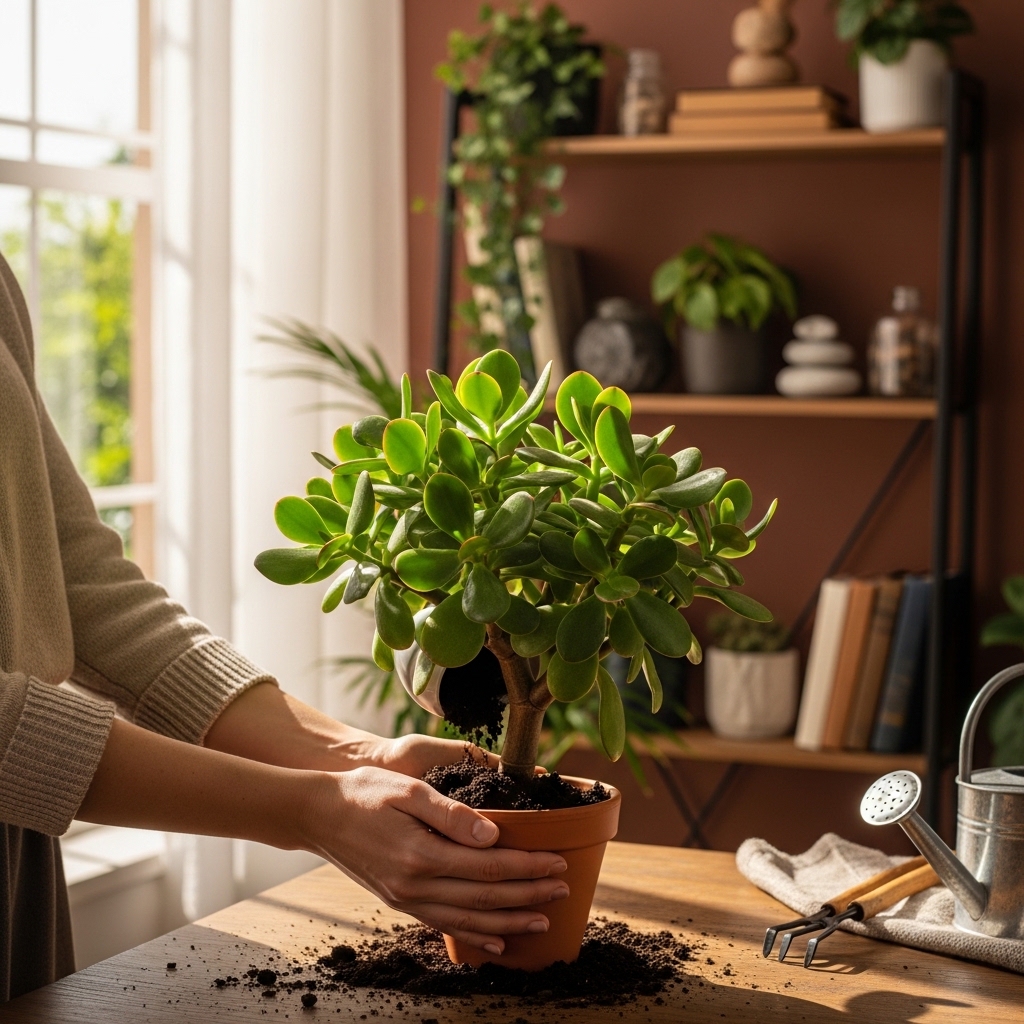
When potting or repotting my jade plant, I make sure to handle it gently, especially when dealing with the roots. It’s best to repot during the spring, as the plant is entering its active growth phase. I lightly loosen the roots and remove any that look brown or mushy. After placing it in the new pot, I fill in around the roots with soil, ensuring it’s not packed too tightly. I’ve learned that allowing the plant to settle in for a few days before watering helps prevent shock, giving it time to adjust to its new home.
Taking care of jade plants can be incredibly rewarding. With the right conditions, they can thrive and become a cherished part of your indoor garden. As we continue through this guide, I’ll share more tips on watering, fertilization, pruning, and more to help you keep your jade plant healthy and happy.
Watering Guidelines
How Often to Water a Jade Plant
Watering can make or break your jade plant, and I’ve learned through trial and error how crucial it is to get it right. Generally, I water my jade plant every two to three weeks, allowing the soil to dry out completely between waterings. This approach mimics their native environment, where they experience dry spells. I’ve noticed that in the summer when the temperatures are higher, the plant tends to drink more water, so I might bump it up to once a week. In winter, when growth slows down, I might stretch it to three to four weeks. I always check the soil moisture before watering; if it’s still damp an inch down, I wait a few days before checking again.
Signs of Overwatering and Underwatering
Overwatering is a common mistake many of us make, and I’ve definitely been there! Signs of overwatering include yellowing leaves, mushy stems, and a general look of decline. If I see these signs, I check the roots and may need to repot the plant to prevent root rot. On the flip side, if my jade plant starts dropping leaves or has shriveled leaves, it’s usually a sign of underwatering. I remember when I first got my jade plant, I was too cautious with water, and it ended up looking sad and thirsty. I’ve learned to find that sweet spot, and now I can usually tell just by looking at the leaves.
Best Watering Practices
When it’s time to water, I make sure to do so thoroughly. I pour water until it drains out of the bottom of the pot—this ensures the entire root system is getting the moisture it needs. I’ve also found that using room temperature water works best, as it’s more gentle on the plant. One trick I like is to use a moisture meter; it gives me peace of mind, especially when I’m not sure if it’s time to water yet. However, I’ve also become more in tune with my plant over time and can often gauge when it needs a drink just by looking at it.
Fertilization Tips
When to Fertilize Jade Plants
Fertilization is another crucial aspect of jade plant care, and I’ve learned it’s best to feed them during their active growth period, which typically runs from spring to early fall. I usually fertilize my jade plant every month during this time. It’s a simple step that can make a noticeable difference. In winter, I cut back on fertilizing since the plant is in a dormant phase, and it doesn’t need the extra nutrients. I remember the first time I fertilized my plant—seeing it flourish with new growth made me realize how effective this step can be.
Types of Fertilizers to Use
When it comes to fertilizers, I prefer using a diluted balanced fertilizer, typically with a ratio of 10-10-10 or 20-20-20. I’ve found that liquid fertilizers work best for jade plants, allowing for easy absorption. Sometimes, I also use a fertilizer specifically designed for succulents, which can help meet their unique needs. I always make sure to dilute it to half strength, as I’ve learned that jade plants don’t require heavy feeding. Too much fertilizer can lead to leaf burn, which is something I’ve tried to avoid.
How to Apply Fertilizer
Applying fertilizer is straightforward, but I have my method. I water the plant a day before I plan to fertilize; this helps reduce the risk of root burn. Then, I mix the fertilizer with water following the instructions on the package. I pour it around the base of the plant, avoiding the leaves. It’s fascinating to see how quickly my jade plant responds to fertilization, often showing new growth within weeks. I always keep an eye on how my jade plant reacts after fertilizing; if it starts to change color or droop, I adjust my approach next time.
Pruning and Maintenance
Why Prune a Jade Plant?
Pruning is an essential part of jade plant care that I’ve come to appreciate. It helps maintain the plant’s shape and encourages new growth. Over time, my jade plant can become leggy or grow in an uneven manner. Pruning allows me to remove any dead or damaged leaves and branches, which not only makes the plant look better but also helps it stay healthy. I’ve found that a little pruning can go a long way in promoting a fuller, bushier plant.
How to Prune Effectively
When it comes to pruning, I always use clean, sharp scissors or pruning shears to make clean cuts. I usually prune in the spring, right as the plant is waking up from dormancy. I focus on removing any dead leaves, as well as any branches that are crossing or overcrowding. I’ve learned to cut above a leaf node—this encourages new growth to sprout from that spot. After pruning, I leave the plant for a few days before watering to help it recover from the shock.
Common Maintenance Practices
In addition to watering and pruning, I like to keep an eye on my jade plant’s overall health. I check for dust on the leaves and gently wipe them with a damp cloth to help them breathe better. I also rotate my jade plant periodically to ensure even growth on all sides. This simple maintenance keeps my plant looking vibrant and thriving. I feel like a proud parent whenever I see my jade plant flourishing, and it’s rewarding to know that my care makes a difference.
Pest and Disease Management
Common Pests Affecting Jade Plants
Despite their resilience, jade plants can occasionally fall victim to pests. I’ve encountered a few common nuisances in my time as a jade plant caretaker. The most prevalent pests I’ve noticed are aphids, mealybugs, and spider mites. Aphids are tiny green or black insects that can congregate on the leaves, sucking the sap and potentially causing stunted growth. Mealybugs are another menace; they look like little cottony tufts and can be found hiding in the leaf joints. Spider mites are tricky to spot due to their small size, but if you notice fine webbing on your plant, that’s a telltale sign. I remember my first encounter with spider mites—after a bit of research, I realized I needed to act fast to save my plant.
Signs of Disease and How to Identify Them
In addition to pests, jade plants are susceptible to certain diseases, often caused by improper care. One of the most common issues is root rot, which I’ve unfortunately dealt with. If you notice yellowing leaves, mushy stems, or a foul smell coming from the soil, these are clear indicators of root rot. Another issue is leaf drop, which can be caused by various factors, including overwatering, underwatering, or sudden temperature changes. I’ve learned to pay close attention to my plant’s overall appearance and health; if something seems off, it’s time to investigate further.
Preventive Measures and Treatments
Prevention is key when it comes to keeping jade plants healthy. I’ve found that regular inspection can help catch pest problems early. If I spot any pests, I usually start with a gentle rinse under lukewarm water to dislodge them. For mealybugs and aphids, I sometimes use a cotton swab dipped in rubbing alcohol to wipe them away directly. If the infestation is severe, I opt for an insecticidal soap or neem oil, which is effective and safe for plants. It’s important to follow the instructions carefully to avoid harming the plant.
To combat diseases, ensuring proper watering practices is crucial. I’ve learned that allowing the soil to dry out between waterings helps prevent root rot. Also, maintaining good airflow around my jade plants helps reduce the risk of fungal infections. If I ever notice root rot, I act quickly: I remove the plant from its pot, trim away any rotten roots, and replant it in fresh, dry soil. Keeping a clean growing environment also helps, so I wipe down the leaves occasionally to keep dust at bay, which can harbor pests and diseases.
Repotting Your Jade Plant
When to Repot
Repotting is an essential part of jade plant care that I’ve come to appreciate as my plants grow. Typically, I find that repotting is best done every two to three years or when the plant outgrows its current pot. I usually look for signs such as roots growing out of the drainage holes or the plant becoming top-heavy. I remember the excitement of my jade plant flourishing so much that it needed a new home! Spring is the ideal time for repotting since the plant is waking up from its dormancy and is more likely to recover quickly.
Step-by-Step Repotting Process
The repotting process is straightforward, but I take care to follow a few steps to ensure my jade plant makes a smooth transition. First, I prepare a new pot that is slightly larger than the old one, with plenty of drainage holes. Next, I gently remove the jade plant from its current pot, being careful not to damage the roots. If I encounter any stubborn roots, I use a clean pair of scissors to trim them back. After that, I place the plant in the new pot, filling in with fresh potting mix around the roots. I always make sure not to pack the soil too tightly, allowing for good aeration.
After repotting, I give my jade plant a few days without watering to help it adjust to its new environment. This helps minimize stress and allows any damaged roots to heal. Keeping it in a bright spot but away from direct sunlight for a short time helps, too. I’ve found that this gentle approach really helps my jade plants thrive post-repotting.
Propagation Techniques
Leaf Propagation
One of the most rewarding aspects of jade plant care for me is propagation. I love the idea of taking a single leaf and turning it into a whole new plant! Leaf propagation is quite simple. I start by selecting a healthy leaf from my jade plant; I ensure it’s free from pests and disease. After gently twisting it off, I let the leaf sit in a dry, shaded area for a day or two, allowing the cut end to callous over. This step is vital because it helps prevent rot.
Stem Cuttings
Stem cuttings are another effective way to propagate jade plants. I usually take a healthy stem that has a few leaves attached. Similar to leaf propagation, I let the cut end dry out for a day, then place it in a well-draining soil mix. I’ve found that keeping the soil slightly moist but not soggy encourages growth. In a few weeks, I start to see new growth, and it’s such a thrill to know I’ve created a new plant!
Best Practices for Successful Propagation
My experience with propagation has taught me a few best practices. I always use clean tools to prevent any infections. For both leaf and stem cuttings, a warm, bright location is ideal, but I make sure they’re out of direct sunlight to avoid scorching. It’s essential to be patient as well; propagation can take time. I keep a close eye on my cuttings, and when I see new leaves emerge, it feels like a little victory. With these techniques, I’ve managed to expand my collection and share jade plants with friends, which brings me even more joy.
Frequently Asked Questions
What is a jade plant?
The jade plant, or Crassula ovata, is a popular succulent native to South Africa, characterized by its thick, fleshy leaves that can be deep green or tinged with red. They are often associated with good luck and prosperity and can grow up to three feet tall, living for decades with proper care.
What are the common varieties of jade plants?
Common varieties of jade plants include Crassula ovata var. falkenbergensis, known as the “Rainbow” jade plant; Crassula ovata ‘Hummel’s Sunset’, which has yellow and orange hues; and Crassula arborescens, also known as the “Silver Dollar” plant, featuring rounded leaves.
What light conditions are ideal for jade plants?
Jade plants thrive in bright, indirect sunlight. Placing them near a south-facing window is beneficial, and they can adapt to lower light conditions, although this may slow growth. A few hours of direct sunlight in the morning or late afternoon is also ideal.
How often should a jade plant be watered?
Jade plants should generally be watered every two to three weeks, allowing the soil to dry out completely between waterings. In summer, they may require more frequent watering, while in winter, watering can be stretched to three to four weeks.
What signs indicate overwatering or underwatering in jade plants?
Signs of overwatering include yellowing leaves, mushy stems, and overall decline, while underwatering is indicated by dropping or shriveled leaves. It’s essential to monitor these signs to adjust watering practices accordingly.
What type of soil is best for jade plants?
A well-draining soil mix is crucial for jade plants to prevent root rot. A cactus or succulent potting mix is ideal, or regular potting soil mixed with sand or perlite can be used to enhance drainage.
When is the best time to fertilize jade plants?
Jade plants are best fertilized during their active growth period, typically from spring to early fall, usually once a month. Fertilization should be reduced in winter when the plant is dormant.
How should jade plants be pruned?
Pruning should be done in spring to maintain the plant’s shape and encourage new growth. It involves removing dead or damaged leaves and branches, using clean, sharp scissors or pruning shears for effective cuts.
What common pests affect jade plants?
Common pests that can affect jade plants include aphids, mealybugs, and spider mites. Regular inspection and preventive measures, such as rinsing the plant or using insecticidal soap, can help manage these pests.
How can jade plants be propagated?
Jade plants can be propagated through leaf propagation or stem cuttings. For leaf propagation, a healthy leaf is allowed to callous over before being placed in soil. Stem cuttings involve taking a healthy stem, letting the cut end dry, and then planting it in well-draining soil.