
Caring for a spider plant is easy and rewarding, making it a perfect choice for beginners. With the right light, water, and occasional fertilization, your spider plant can thrive and even produce lovely offsets or “pups.” Read Interesting article: When to Plant Roses for the Best Blooms
Table of Contents
Overview of Spider Plants
What is a Spider Plant?
I remember the first time I laid eyes on a spider plant; its long, arching leaves and delicate white flowers captivated me immediately. A spider plant, scientifically known as Chlorophytum comosum, is a popular houseplant known for its attractive foliage and air-purifying qualities. Its unique structure features green or variegated leaves that resemble spider legs, which is how it gets its charming name. Spider plants are hardy, adaptable, and can thrive in various indoor environments.
Origin and Natural Habitat
Spider plants hail from South Africa, where they grow in warm, temperate climates. In their natural habitat, they often thrive in sandy soils and enjoy partial shade from taller plants. I find it fascinating to think about their journey from the wild to our living rooms. Understanding their origins helps us replicate their ideal conditions at home.
Common Varieties of Spider Plants
When I started exploring spider plants, I was surprised by the variety available. The most common variety is the classic green spider plant, but I quickly learned about some popular alternatives. For instance, the variegated spider plant has creamy white edges along its leaves, giving it a striking appearance. Another favorite of mine is the ‘Bonnie’ variety, which features curly leaves that add a whimsical touch to any space. It’s fun to mix and match these varieties to create a unique indoor garden!
Ideal Growing Conditions
Light Requirements
One of the vital aspects of spider plant care is understanding its light requirements. My spider plants have thrived best in bright, indirect sunlight. They can tolerate low light, but I’ve noticed that their growth can slow down significantly under such conditions. Ideally, placing them near a window with filtered light works wonders. I once had a spider plant that was too close to a south-facing window, and it got scorched! So, finding that perfect balance is crucial.
Temperature and Humidity Preferences
Spider plants prefer temperatures between 65°F to 75°F (18°C to 24°C). I remember one winter when my home was a bit drafty, and my spider plant seemed to sulk, with leaves drooping slightly. Keeping them away from drafts or sudden temperature changes will help them flourish. As for humidity, they enjoy moderate levels, and while they can adapt to drier air, I often mist my plants occasionally to keep them happy and hydrated, especially during the winter months when indoor heating can dry out the air.
Soil Type and Potting
The right soil makes a significant difference in the health of your spider plant. I’ve tried a few different mixes, and I find that a well-draining potting mix is best. A mix designed for houseplants generally works well. I usually add some perlite or sand to improve drainage, as spider plants don’t like soggy roots. When repotting, I recommend opting for a pot that’s 1-2 inches larger than the current one, allowing room for growth. It’s so satisfying to see my spider plants thrive in their new homes!
Watering and Fertilization
How Often to Water a Spider Plant
Watering can be tricky, especially when you’re just starting out. I’ve learned that spider plants prefer to dry out a bit between waterings. A good rule of thumb is to check the top inch of soil; if it feels dry, it’s time to water. I usually water mine about once a week, but this can vary depending on the season and humidity levels. During the hotter months, they may need a bit more, while in winter, less is often more. Read Interesting article: How to Plant Watermelon for Big Sweet Fruit
Signs of Overwatering and Underwatering
Understanding the signs of distress can save your spider plant from problems. Overwatering is a common mistake, and I’ve done it more times than I’d like to admit! Signs include yellowing leaves or mushy roots. On the other hand, if your plant is drooping or the leaves are turning brown and crispy, it might be thirsty. I always keep an eye on my plants and adjust my watering schedule based on their appearance.
Best Fertilizers for Spider Plants
Fertilizing spider plants is essential for their growth, but it doesn’t have to be complicated. I prefer a balanced, water-soluble fertilizer, diluted to half strength. During the growing season, I fertilize my spider plants every 4-6 weeks, which seems to give them a nice boost. I’ve noticed that they respond well to this routine, especially when they’re producing those adorable pups!
Fertilization Schedule
Creating a fertilization schedule helps to keep your spider plants healthy. I start fertilizing in early spring as the growth begins and continue until the fall. In winter, I usually skip fertilization, allowing the plant to rest. I find that sticking to this schedule keeps my plants vibrant and thriving without overwhelming them with nutrients.
Propagation Techniques
Using Offsets (Pups)
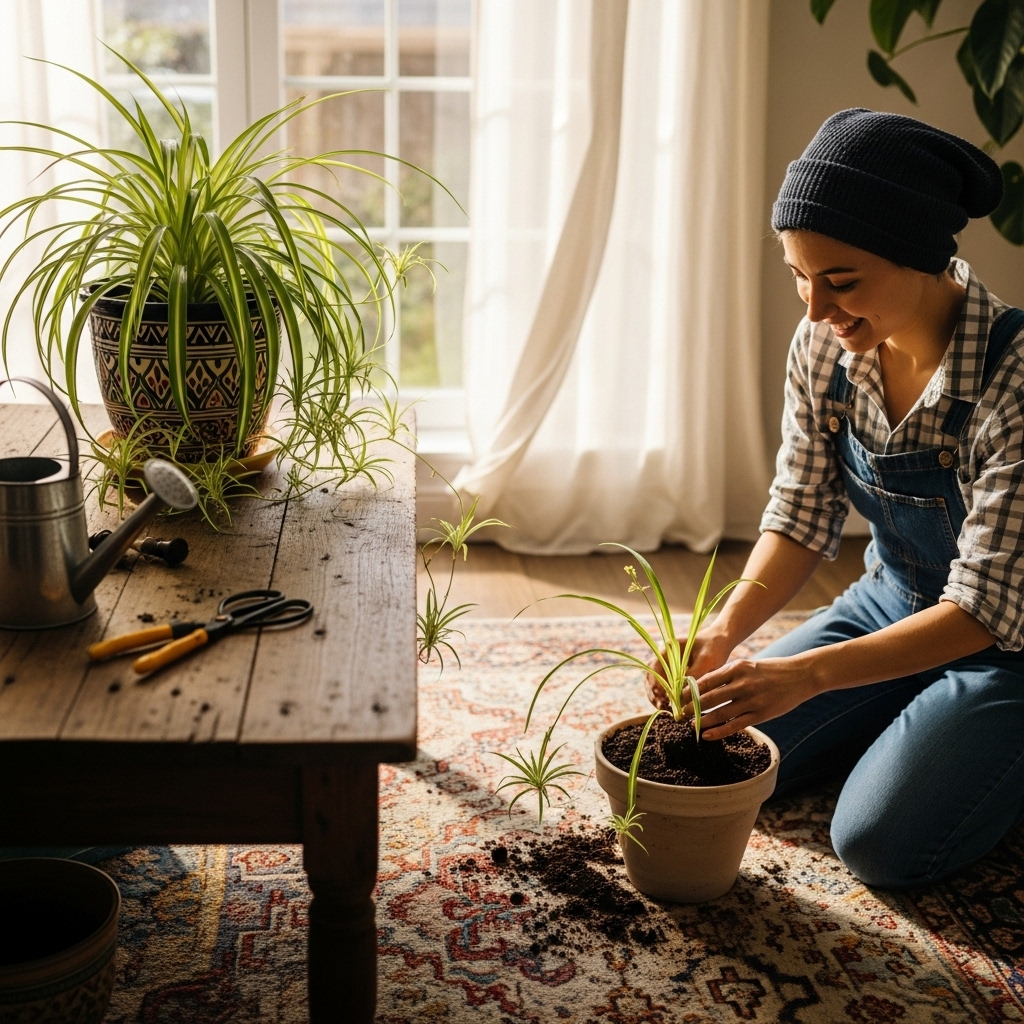
One of the most exciting aspects of caring for spider plants is propagation. When I first noticed those little offsets, or “pups,” sprouting from the main plant, I felt like a proud parent! These pups are essentially baby spider plants and can be easily separated to grow into new plants. To do this, I wait until the pups are a few inches long and have developed some roots of their own. Using clean scissors, I carefully cut the pup from the main plant, making sure to include some roots. Then, I pot them in their own container, and it’s such a thrill to watch them grow into healthy plants in their own right.
Water Propagation vs. Soil Propagation
When it comes to propagation, I’ve experimented with both water and soil methods. Water propagation is simple and allows me to see the roots develop. I place the pup in a jar of water, making sure the roots are submerged while the leaves stay above water. I change the water every few days to keep it fresh. After a couple of weeks, I can move the pup to soil once I see healthy roots. On the other hand, soil propagation is more straightforward for those who prefer immediate planting. I simply plant the pup directly into a pot with well-draining soil. Both methods have their merits, and I usually choose based on how quickly I want new plants!
Best Time to Propagate
Timing is key when it comes to propagation. I’ve found that spring and early summer are the best times for this process. During these months, my spider plants are in their active growth phase, making it easier for the pups to establish themselves. After I notice new growth and pups appearing, I get excited and start planning out my propagation efforts. It’s like a little garden party waiting to happen! By propagating during this season, I’ve had a higher success rate, and it feels great to see my collection grow. Read Interesting article: When to Plant Dahlias for the Best Blooms
Pest Management
Common Pests Affecting Spider Plants
Despite their hardiness, spider plants can still attract pests. I remember when I first discovered tiny spider mites on one of my plants; it was quite alarming! Other common pests include aphids and mealybugs. They’re sneaky little creatures that can sap the vitality from our beloved plants. Keeping an eye on my spider plants and checking for any irregularities has become a regular part of my plant care routine.
Identifying Signs of Infestation
Knowing what to look for is essential in pest management. I pay close attention to the leaves; if I see webbing or tiny dots that look like specks of dirt, it’s time to investigate. Yellowing leaves or a sudden decline in plant health can also be signs of a pest problem. If I notice sticky residue on the leaves, that’s a sure indicator of aphids. The sooner I catch these signs, the easier it is to address the issue before it gets out of hand.
Natural Remedies and Treatments
When I encounter pests, I prefer to use natural remedies first. For most infestations, I create a simple solution of water and mild soap, spraying it on the affected areas. This method works wonders for dealing with aphids and mealybugs. I also find that neem oil is an effective treatment for spider mites. I mix it with water according to the instructions and spray it on the leaves. In many cases, these natural solutions have been effective, and I love knowing I’m not introducing harsh chemicals into my home.
Common Problems and Solutions
Brown Tips and Leaf Drop
One of the most common issues I’ve faced with my spider plants is brown leaf tips. At first, I was baffled, wondering if I was overwatering or underwatering. I learned that this can often be attributed to low humidity levels or inconsistent watering. I started paying closer attention to my watering habits, making sure I wasn’t letting the soil dry out too much between waterings. Additionally, I began misting the leaves more frequently, especially during dry winter months, and noticed a significant improvement in their overall health.
Discoloration of Leaves
Discoloration can be a sign of various issues, and I’ve had my share of experiences with this. Yellowing leaves can indicate overwatering, while browning can signal a lack of water or too much direct sunlight. When I see these changes, I assess the plant’s conditions and make necessary adjustments. If it’s overwatering, I let the soil dry out more. If the leaves are yellowing from too much sun, I shift the plant to a location with indirect light. Adjusting these factors has helped me keep my spider plants looking vibrant.
Stunted Growth Issues
Stunted growth was another concern I faced when I started my plant journey. I found that my spider plants were not producing new leaves or pups as expected. After some investigation, I realized that they might be root-bound in their pot. I decided to repot them into larger containers, giving them more space to grow. Additionally, I checked the soil quality and ensured it was nutrient-rich, as poor soil can also hinder growth. Once I made these changes, I was thrilled to see new growth emerge, and it reminded me of the importance of providing our plants with a nurturing environment.
Seasonal Care Tips
Spring Care Routine
Spring is such an exciting time for spider plants! As the days grow longer and warmer, I feel my plants waking up from their winter slumber. This is when I typically start my spring care routine. I check to see if they need repotting, especially if I notice their roots peeking through the drainage holes. If they’re root-bound, I gently remove them from their pot, trim any overly long roots, and transfer them to a slightly larger pot with fresh potting mix. This fresh soil provides the nutrients they need to kick-start their growth.
During spring, I also increase my watering frequency a bit. I monitor the soil moisture more closely, as the warmer temperatures can cause the soil to dry out faster. Fertilizing resumes in early spring too. I usually begin with a balanced fertilizer, diluted to half strength, every few weeks. It’s amazing how quickly I see new growth and those adorable pups starting to form when I follow this routine!
Summer Growth Management
Summer is when my spider plants really go into overdrive. With longer daylight hours, I find they thrive, producing lush foliage and plenty of pups. However, I take care to ensure they aren’t getting too much direct sunlight. I often rotate my plants to ensure even exposure and prevent any scorching.
Watering becomes a bit more frequent during this season. With the heat, I usually check the soil every few days. If it feels dry to the touch, I go ahead and give them a drink. I also pay closer attention to humidity levels. If I notice my indoor air getting too dry from air conditioning, I might mist the leaves a couple of times a week or place a small humidifier nearby. This extra care helps my spider plants stay vibrant and happy during those hot summer months!
Fall Preparation for Winter
As fall rolls around, I start transitioning my care routine for winter. I begin by reducing watering slightly since the plants will require less moisture as they enter dormancy. I also check the temperature to make sure they’re still in a comfortable range. If the nights get cooler, I move them away from drafty windows or heater vents that might shock them.
During this time, I reduce fertilization. I usually stop feeding them by late fall, allowing them to rest. It’s a good time for me to evaluate their overall health and look for any signs of pests or distress before the colder months set in. I feel it’s essential to give them a bit of a break, letting them focus their energy on surviving winter rather than growing.
Winter Care and Maintenance
Winter can be a challenge for spider plants, but I’ve found that with the right care, they can thrive even in the cold months. I keep an eye on the temperature, ensuring it stays above 65°F (18°C). My plants tend to be less active during this time, so I cut back on watering significantly, usually only watering every couple of weeks or when the soil feels dry several inches down.
I also take this time to give them a thorough inspection for any pests or issues that might have gone unnoticed. The lower humidity in winter can be tough on spider plants, so I make a point to mist them occasionally. I’ve found this simple act goes a long way in preventing browning leaf tips and keeping them healthy.
One of my favorite winter rituals is to bring my spider plants closer to a light source, like a bright window, to ensure they still get the indirect sunlight they need. I can often see them perk up a bit with the increased light, which is always gratifying.
Decorating with Spider Plants
Best Locations in Your Home
Finding the perfect spot for my spider plants is like a little treasure hunt. I’ve learned that they thrive best in bright, indirect light, so I usually place them near east or west-facing windows. I love to hang them in macramé hangers for a bohemian touch, letting their long leaves cascade down. This creates a lovely visual effect and allows them to soak up the light without risking sunburn.
For areas with less light, I’ve successfully placed them on shelves or tables where they receive filtered light. I often rotate them, so they get an equal amount of light on all sides. It’s fascinating how they adapt to different locations, and I enjoy experimenting with their placement around my home.
Using Spider Plants in Indoor Design
Incorporating spider plants into my home decor has been a fun journey. Their vibrant green leaves add a pop of color and life to any room. I often pair them with other plants to create a lush indoor jungle feel. They look stunning alongside ferns or peace lilies, creating a beautiful contrast of textures.
Sometimes, I use spider plants as natural dividers in larger spaces. For example, placing a tall plant on each side of a doorway or window can create a charming entryway. The way the leaves arch and drape down gives it an inviting touch. I also love mixing different varieties together to create an interesting display with varying leaf patterns and colors.
Combining Spider Plants with Other Houseplants
I enjoy combining spider plants with a variety of other houseplants to create dynamic arrangements. They pair wonderfully with pothos, as both plants have a trailing habit, creating a beautiful cascading effect. I’ve also noticed that snake plants and spider plants complement each other well, as they thrive in similar conditions.
When I create these combinations, I make sure to consider each plant’s light and watering needs to ensure they all thrive together. It’s rewarding to see how they interact and how the overall aesthetic of my space transforms. I believe having a variety of plants not only enhances the beauty of my home but also creates a more vibrant and inviting atmosphere.
Frequently Asked Questions
What is a spider plant?
A spider plant, scientifically known as Chlorophytum comosum, is a popular houseplant recognized for its attractive foliage and air-purifying qualities. Its unique structure features green or variegated leaves that resemble spider legs.
What are the ideal light requirements for spider plants?
Spider plants thrive best in bright, indirect sunlight. They can tolerate low light, but their growth may slow down significantly under such conditions. It’s best to place them near a window with filtered light.
What temperature and humidity do spider plants prefer?
Spider plants prefer temperatures between 65°F to 75°F (18°C to 24°C) and enjoy moderate humidity levels. They can adapt to drier air, but occasional misting is beneficial, especially in winter when indoor heating can dry the air.
How often should I water my spider plant?
Spider plants prefer to dry out a bit between waterings. A good rule of thumb is to check the top inch of soil; if it feels dry, it’s time to water. Typically, they are watered about once a week, but this can vary by season and humidity levels.
What signs indicate overwatering or underwatering in spider plants?
Signs of overwatering include yellowing leaves or mushy roots, while drooping or brown, crispy leaves might indicate underwatering. Regularly monitoring the plant’s appearance can help adjust the watering schedule accordingly.
What is the best way to fertilize spider plants?
A balanced, water-soluble fertilizer, diluted to half strength, is recommended for spider plants. Fertilizing every 4-6 weeks during the growing season helps boost their growth, while fertilization should be skipped in winter.
How can I propagate spider plants?
Spider plants can be propagated using offsets, or “pups,” that develop from the main plant. These pups can be separated and potted once they are a few inches long and have roots. Both water and soil propagation methods are effective.
What common pests affect spider plants?
Common pests that affect spider plants include spider mites, aphids, and mealybugs. Regular inspection of the plants can help in early detection of these pests.
What are some common problems with spider plants and their solutions?
Common issues include brown leaf tips, which can be a sign of low humidity or inconsistent watering; discoloration of leaves, which can indicate overwatering or too much sunlight; and stunted growth, often due to being root-bound. Adjusting care practices can help resolve these issues.
How should I care for spider plants during different seasons?
In spring, increase watering and resume fertilization. In summer, check for humidity and adjust watering frequency as needed. In fall, reduce watering and fertilization as plants enter dormancy. In winter, maintain temperatures above 65°F and reduce watering while occasionally misting to prevent dryness.