
Caring for succulent plants is primarily about understanding their needs to prevent rot, which can often lead to their demise. I’ve learned that proper watering, selecting the right soil, and ensuring good drainage are key to keeping these resilient beauties thriving. For those interested in indoor gardening, Succulent Plant Care Indoors: Expert Tips for Thriving Indoor Succulents is a great resource.
Understanding Succulent Plants
What Are Succulents?
Succulents are fascinating plants known for their thick, fleshy parts that store water. This unique adaptation helps them survive in arid climates where water is scarce. When I first got into gardening, I was drawn to succulents because of their striking shapes and vibrant colors. They come in many varieties, each with its own character. I quickly found out that their low-maintenance nature made them perfect companions for my busy lifestyle.
Common Types of Succulents
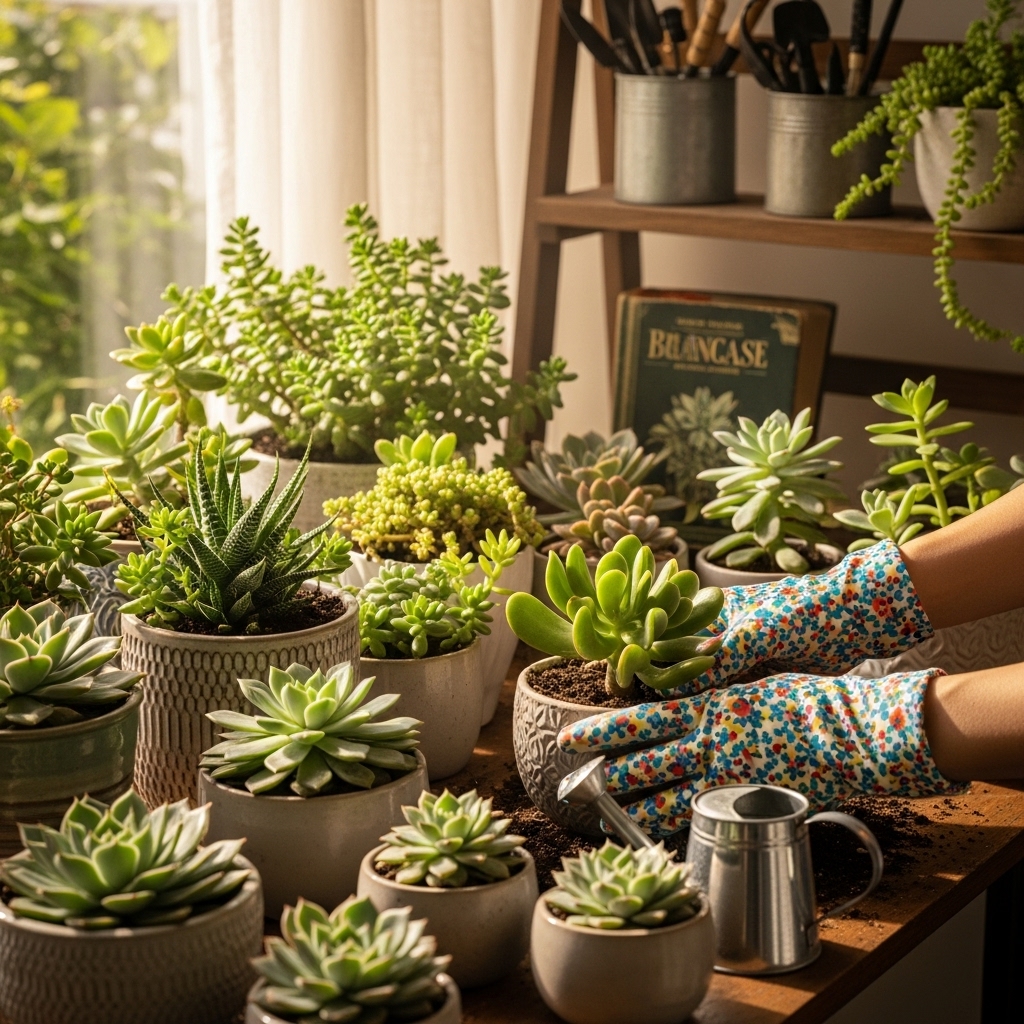
There are numerous types of succulents, each offering something special. Some of my favorites include:
- Echeveria: These rosette-shaped plants are stunning and come in various colors. I love how they look like little flowers.
- Aloe Vera: Not only is it easy to care for, but it also has medicinal properties. I always keep one in my kitchen for minor burns. If you’re looking for tips, check out How to Care for an Aloe Plant (Easy Guide).
- Hens and Chicks (Sempervivum): This hardy succulent produces adorable little offsets that are fun to propagate.
- Jade Plant (Crassula ovata): Often associated with good luck, this plant has thick, glossy leaves, making it a popular choice. For more details on caring for this plant, visit How to Care for a Jade Plant (Simple Guide).
- Sedum: With a variety of shapes and sizes, sedums are incredibly hardy and can add a lovely touch to any garden.
Each type has its own charm and care requirements, which makes exploring them an exciting adventure.
Benefits of Growing Succulents
Growing succulents has enriched my life in many ways. Here are some benefits I’ve experienced:
- Low Maintenance: Succulents don’t need constant attention. With my busy schedule, I appreciate plants that can thrive on neglect.
- Beautiful Aesthetics: They add a pop of color and texture to any space, whether indoors or outdoors. I often use them to spruce up my home decor.
- Air Purification: Many succulents, like Aloe Vera, can help purify the air, making my living environment healthier.
- Versatility: They can be used in various settings – from garden beds to small pots on a windowsill. I’ve found creative ways to display them around my home.
- Propagation Opportunities: I love that propagating succulents is relatively easy, allowing me to share them with friends and family.
These benefits not only enhance my living space but also bring me joy and satisfaction as a gardener.
Essential Care Tips for Succulents
Watering Techniques
Watering has been one of the biggest learning curves for me when it comes to succulents. I had to let go of the old habit of watering every day. Instead, I discovered that succulents prefer infrequent, deep watering. I typically wait until the soil is completely dry before giving them a good soak. This may take a week or two, depending on the climate, season, and size of the plant.
One technique I find helpful is the “soak and dry” method. I soak the soil until water drains from the bottom of the pot and then allow it to dry out completely before the next watering. I’ve noticed that this method keeps my plants healthy and prevents rot.
Soil Requirements
Choosing the right soil is crucial for healthy succulents. I learned quickly that standard potting soil retains too much moisture for these drought-loving plants. Instead, I now use a well-draining cactus mix or create my own by mixing regular potting soil with sand or perlite. This combination allows for better airflow and drainage, which is essential for preventing rot.
When repotting, I always ensure that I use fresh soil, as nutrients can get depleted over time. I also make sure the pot has a good drainage hole to allow excess water to escape.
Light Conditions
Light is another critical factor in succulent care. Most succulents thrive in bright, indirect sunlight. I’ve found that a south-facing window is the perfect spot for my plants. However, I’ve learned to be cautious of too much direct sunlight, especially in the hottest months, as it can scorch the leaves.
If I notice my succulents stretching toward the light, it’s a sign they need more sun. Conversely, if their colors fade or they become leggy, I know I need to adjust their light exposure. Watching their reactions has helped me fine-tune their positioning over time.
Temperature and Humidity Preferences
Succulents are generally quite forgiving when it comes to temperature. They prefer daytime temperatures between 70°F and 85°F (21°C to 29°C) and can tolerate cooler conditions at night. I’ve found that keeping them indoors during colder months helps protect them from frost damage.
Humidity is another concern. Succulents prefer dry air, so I avoid placing them in humid environments like bathrooms. Instead, I keep them in my living room or on a balcony where air circulation is good. This setup has worked wonders for their health!
Fertilizing Succulents
While succulents don’t need much fertilizer, I’ve noticed that a light feeding during the growing season (spring and summer) helps boost their growth. I typically use a diluted liquid cactus fertilizer every 4-6 weeks. It’s important not to over-fertilize, as too many nutrients can lead to weak, leggy growth.
In the fall and winter, I stop fertilizing altogether, as succulents enter a dormant phase and don’t require additional nutrients. This balance has worked well for me and keeps my plants flourishing.
Preventing Rot in Succulents
Signs of Overwatering
Overwatering has been a struggle I faced early on, and I learned the hard way how detrimental it can be for succulents. The first sign I noticed was the leaves becoming mushy or translucent. They looked almost like they were melting away. I felt a sinking feeling each time I saw one of my favorite plants starting to droop. Another red flag is brown spots on the leaves, which could indicate that the roots are rotting beneath the surface. If you ever find your plant wilting despite wet soil, it’s a strong hint that you need to reassess your watering habits.
Choosing the Right Potting Container
The potting container plays a pivotal role in preventing rot. When I started out, I didn’t think much about the type of pot I was using. Now, I make sure to choose pots with drainage holes. This small feature has made a huge difference in the health of my succulents. I prefer terracotta pots because they’re porous and allow moisture to evaporate quickly, which helps keep the soil from staying too wet. I remember switching from plastic pots to terracotta and immediately noticing a change in the vitality of my plants!
Drainage Solutions
Along with the right pot, I’ve experimented with various drainage solutions to improve my succulents’ health. Adding materials like gravel or coarse sand at the bottom of the pot can promote better drainage. I also mix perlite into my soil, which enhances drainage and aeration. I’ve found that these solutions not only help prevent rot but also create a healthier environment for my plants to thrive. Sometimes, I even add a layer of decorative stones on top of the soil to help with moisture retention while still allowing drainage.
Watering Schedule Tips
Establishing a consistent watering schedule has been key to my success with succulents. I usually check the soil moisture by sticking my finger an inch or so into the soil. If it feels dry, I know it’s time to water. I have also learned to adjust my schedule with the seasons. In the summer, the heat can speed up evaporation, so I might water once a week. However, during the colder months, I can stretch that to every two to three weeks. Keeping a journal to track my watering habits has helped me remember what works best for each plant.
How to Handle Rotting Succulents
If I ever find a succulent starting to rot, I’ve learned that quick action is crucial. First, I remove the plant from its pot to inspect the roots. If I see any mushy, brown roots, I cut them away with sterilized scissors. I usually let the healthy part of the plant sit out for a day or two to callous over before replanting it in fresh soil. It always feels like a mini rescue mission! With some patience and care, I’ve successfully saved a few plants and brought them back to health. Remembering to keep the newly repotted plant in a warm, shaded area initially helps ease it back into its routine.
Common Pests and Diseases
Identifying Pest Problems
As I dove deeper into caring for my succulents, I discovered that pests can be a sneaky problem. I remember finding tiny webs on one of my plants, which turned out to be spider mites. They can be hard to spot at first, but if you look closely, you might see small, discolored spots on the leaves. Another common pest is mealybugs, which appear as fluffy white spots on the stems and leaves. I’ve learned to inspect my plants regularly, especially after bringing new ones home, just to catch any unwelcome visitors early.
Preventive Measures Against Pests
Preventing pests is just as important as treating them. I’ve started using neem oil as a natural preventative spray. It’s effective and safe for my plants. I usually apply it every few weeks during the growing season. Additionally, keeping my plants clean by gently wiping down the leaves with a damp cloth helps remove dust and potential pests. I’ve also learned to avoid overcrowding my plants, as good airflow is essential to keep pests at bay.
Treating Common Diseases
Diseases can be just as damaging as pests, and I’ve encountered a few along the way. Fungal infections often arise from overwatering, leading to leaf spots. If a plant shows signs of disease, I cut away the affected leaves and let the plant dry out a bit longer than usual. I’ve had success using a fungicide spray if the issue persists. Keeping a close eye on my plants and acting quickly has saved many of them from serious damage.
Propagation Techniques for Succulents
Leaf Propagation
One of the most rewarding aspects of succulent care has been learning to propagate them. I started with leaf propagation, which is surprisingly simple and a great way to expand my collection. The process begins by gently twisting a healthy leaf from the parent plant. I make sure to select a leaf that’s plump and firm, as it has a better chance of rooting.
After removing the leaf, I let it sit for a day or two to callous over. This step is crucial because it helps prevent rot when I place it in soil. Once the leaf has dried out a bit, I lay it flat on top of a well-draining soil mix and lightly mist it with water. I’ve found that placing the pot in bright, indirect light gives it the best chance to grow roots. In a few weeks, I usually notice little roots forming, and sometimes even tiny new plants sprouting from the base of the leaf. It feels like magic every time!
Stem Cuttings
Another method I’ve successfully used is stem cuttings. This technique is perfect for succulents with thick stems, like my beloved Jade plants. I take a sharp, sterilized knife and cut a healthy stem, usually a few inches long. After cutting, I let the stem sit out for a day or two to callous, just like with leaf propagation.
Once it’s ready, I plant the cutting in a small pot filled with a well-draining cactus mix. I bury it an inch or so deep and give it a light misting of water. I’ve realized that keeping the cutting in a warm spot with plenty of indirect sunlight helps it root faster. Within a few weeks, I can see new growth, which is always a reason to celebrate in my gardening journey!
Offsets and Division
Some succulents, like Hens and Chicks, produce offsets, which are mini versions of the parent plant. I find this method of propagation particularly fun because it feels like I’m nurturing a little family of plants. When I see offsets forming, I gently separate them from the parent plant, ensuring that they have some roots attached. Afterward, I replant them in their own pots with fresh soil.
Dividing larger succulent plants is another way I’ve propagated my favorites. For instance, with larger varieties, I carefully dig up the whole plant and separate it into several sections, making sure each section has roots. This not only helps me create new plants but also keeps the original plant healthy and thriving. It’s amazing how one healthy succulent can multiply and fill my space with life!
Seasonal Care for Succulents
Spring Care Routine
Spring is a time of renewal, and I’ve learned it’s the perfect moment to give my succulents some extra love. As temperatures start to rise, I begin by checking the soil of each plant. If it’s time for repotting, I do so during this season to give them room to grow. I also increase the frequency of watering slightly, as they wake up from their dormant state and begin to grow.
During spring, I typically fertilize my succulents for the first time since winter. I use a diluted cactus fertilizer to help them get the nutrients they need to thrive in the upcoming growing season. I love watching them perk up and flourish with this seasonal care!
Summer Care Adjustments
Summer brings heat, and I’ve had to adjust my care routine accordingly. I’ve noticed that I need to increase the watering frequency during this time, especially for those in direct sunlight. However, I still make sure to check the soil moisture before watering, as I don’t want to fall back into the overwatering trap. I often find myself measuring the soil’s dryness with my finger, even if it feels a bit awkward sometimes!
Additionally, I take extra precautions against pests during the warmer months. I keep a close eye on my plants and apply neem oil as a preventative measure to keep the bugs at bay. It’s a busy time, but seeing my succulents thrive in the bright summer sun is incredibly rewarding.
Preparing for Fall and Winter
As the days start to get shorter and temperatures drop, I’ve learned the importance of preparing my succulents for the colder months. I usually move my plants indoors, particularly those that can’t tolerate frost. Finding the right spot near a window that provides ample light is essential during this time. I’ve seen how the right lighting can help keep my plants healthy even when they’re not in their active growing phase.
In fall, I reduce my watering significantly, often only needing to water every few weeks. This is when I remind myself to be extra cautious, as succulents are more susceptible to rot in cooler, moist conditions. I also stop fertilizing to allow them to rest until spring. It’s a quieter time in my gardening journey, but I still check in on my plants regularly and appreciate their unique beauty.
Frequently Asked Questions
What are succulents?
Succulents are plants known for their thick, fleshy parts that store water, helping them survive in arid climates. They come in various shapes and colors, making them appealing to gardeners.
What are some common types of succulents?
Common types of succulents include Echeveria, Aloe Vera, Hens and Chicks (Sempervivum), Jade Plant (Crassula ovata), and Sedum. Each type has unique characteristics and care requirements.
What are the benefits of growing succulents?
Succulents are low maintenance, add aesthetic value to spaces, purify the air, are versatile in their placement, and offer opportunities for propagation, making them enjoyable for gardeners.
How should I water my succulents?
Succulents prefer infrequent, deep watering. Use the “soak and dry” method, soaking the soil until water drains from the pot and allowing it to dry completely before the next watering.
What type of soil is best for succulents?
Succulents thrive in well-draining soil. A cactus mix or a combination of regular potting soil with sand or perlite is recommended to prevent moisture retention that can lead to rot.
What light conditions do succulents need?
Most succulents prefer bright, indirect sunlight. A south-facing window is ideal, but care should be taken to avoid too much direct sunlight, which can scorch the leaves.
How can I prevent rot in succulents?
To prevent rot, ensure proper watering practices, use pots with drainage holes, and consider adding materials like gravel for better drainage. Regularly check for signs of overwatering, such as mushy leaves.
What should I do if my succulent starts to rot?
If a succulent is rotting, remove it from its pot, cut away any mushy roots, and let the healthy part callous over before replanting it in fresh soil. Keep it in a warm, shaded area initially.
How can I propagate succulents?
Succulents can be propagated through leaf propagation, stem cuttings, or separating offsets. Each method involves allowing the new plant parts to callous before planting in well-draining soil.
What seasonal care do succulents need?
In spring, increase watering and fertilize to support growth. In summer, adjust watering frequency and monitor for pests. In fall and winter, reduce watering and stop fertilizing while keeping plants warm and well-lit.