
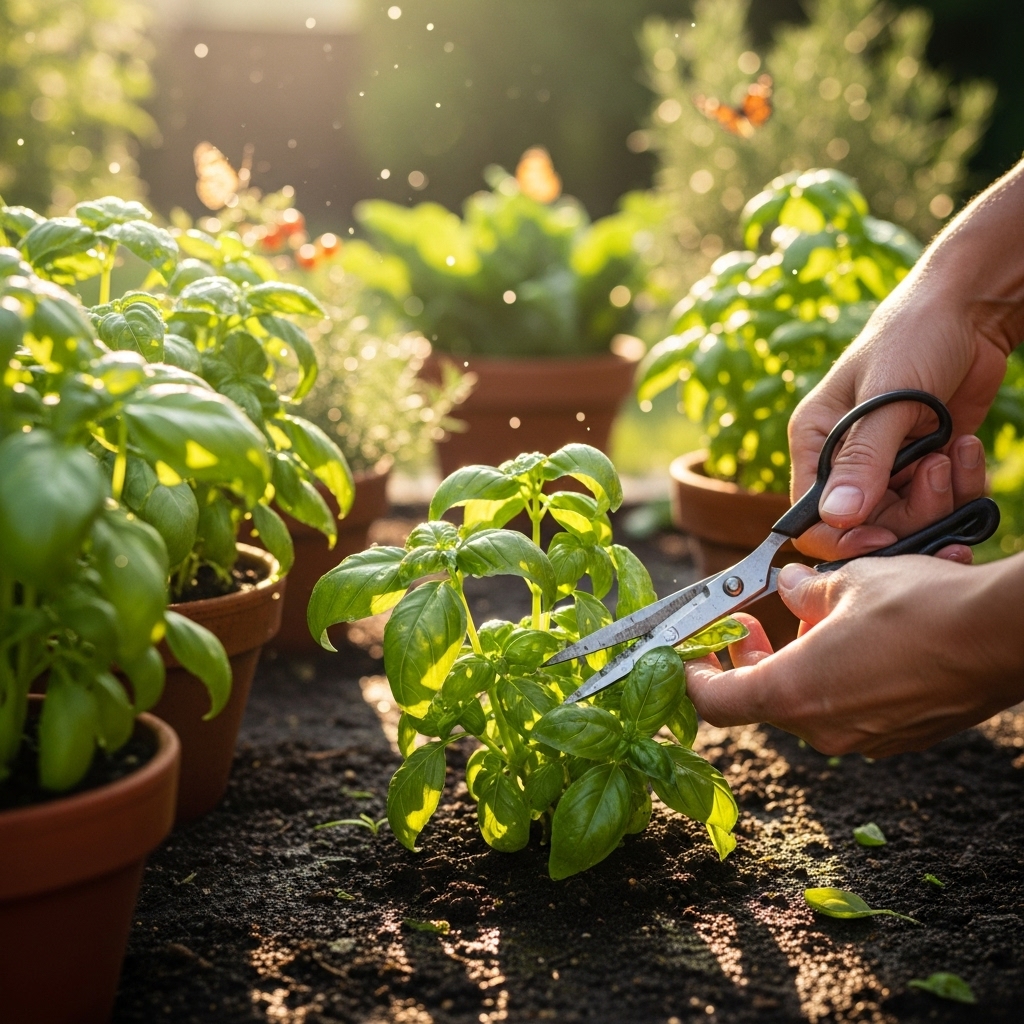
To cut back a basil plant for more growth, you should prune it regularly by removing about one-third of the plant at a time, focusing on the top leaves and stems. This encourages bushier growth and enhances the plant’s flavor and health.
Understanding Basil Plant Growth
What is Basil?
Basil is an aromatic herb that belongs to the mint family, Lamiaceae. I remember the first time I encountered basil—its fragrant leaves and vibrant green color instantly caught my attention. This herb is not just a culinary delight but also a staple in many gardens around the world. Basil is used in a variety of dishes, from classic Italian pasta sauces to fresh salads, and it adds a unique flavor that is hard to replicate. Not only that, but basil is also celebrated for its health benefits, including anti-inflammatory and antioxidant properties. Read Interesting article: Backyard Vegetable Gardening: Essential Tips for Productive Projects
Common Basil Varieties
When it comes to basil, there are several varieties to choose from, each with its unique flavor and aroma. Some of the most popular types include:
- Sweet Basil: This is the most common variety found in grocery stores, known for its sweet flavor that complements a variety of dishes.
- Genovese Basil: A favorite in Italian cuisine, Genovese basil is known for its robust flavor and is often used in pesto.
- Thai Basil: With a hint of spice and anise flavor, Thai basil is a key ingredient in many Asian dishes.
- Lemon Basil: This variety carries a lemony scent and taste, making it perfect for salads and fish dishes.
- Purple Basil: Known for its striking color, purple basil has a slightly spicier flavor and is great for garnishing dishes.
Each variety has its own growth habits, and understanding them can help you make the best decisions for pruning and care.
Growth Stages of Basil Plants
Basil plants go through several growth stages, each requiring different care and attention. I’ve personally observed how my basil has transformed throughout these stages:
- Seedling Stage: When you first plant basil seeds, they’ll sprout tiny green leaves. At this stage, it’s essential to provide adequate light and warmth, as young basil is quite delicate.
- Vegetative Stage: As the plant grows, it develops more leaves and stems. This is where regular pruning can start to make a significant difference. I’ve found that trimming the tops encourages the plant to become bushier.
- Flowering Stage: Eventually, basil plants will start to flower. While the flowers are beautiful, they can signal the end of the plant’s productive life. I’ve learned that it’s best to prune flowers as soon as I see them to maintain the plant’s flavor and vigor.
Knowing these stages helps me decide when and how much to prune my basil. It’s all about timing and understanding the plant’s needs.
Benefits of Pruning Basil
Encouraging New Growth
One of the main reasons I love pruning my basil is that it encourages new growth. When I trim the plant, it responds by producing more leaves and stems, which means more flavor-packed goodness for my meals. This process is known as “bushier growth,” where the plant sends out new shoots from the leaf axils, resulting in a fuller looking plant. I’ve seen firsthand how a well-pruned basil plant can thrive and yield more delicious leaves.
Improving Flavor and Aroma
Another benefit of pruning is that it can enhance the flavor and aroma of the leaves. When I cut back the plant, it redirects its energy toward producing more essential oils, which intensifies the basil’s fragrant qualities. I find that freshly pruned basil tastes so much better than leaves left to grow wild. It’s almost like a secret ingredient that elevates my dishes to the next level!
Preventing Disease and Pests
Pruning also plays a critical role in keeping my basil healthy and free from diseases and pests. I’ve learned that removing dead or yellowing leaves not only improves the plant’s appearance but also prevents mold and pests from taking hold. A well-maintained basil plant is less likely to attract unwanted bugs, and it feels good knowing that I’m doing my part to keep it flourishing.
When to Cut Back a Basil Plant
Signs Your Basil Needs Pruning
Recognizing when to prune your basil can feel like an art form. I’ve picked up a few signs over the years that help me know when my basil plant is ready for a trim. First, I look for any leggy growth. If the stems are reaching out in search of sunlight, it’s usually a sign that they need a good cut back. Another indicator is the presence of yellowing or dead leaves. I’ve noticed that when a few leaves start to look less than vibrant, it’s time to take action. These leaves can sap the plant’s energy, so removing them allows the healthy parts to thrive. Lastly, if my basil is starting to flower, I’ve learned that it’s best to prune before the flowers develop fully to keep the flavor intact. For me, being observant and responding to these signs has made all the difference in maintaining a healthy plant.
Best Seasons for Pruning
Understanding the right season to prune is crucial for promoting healthy growth. I’ve found that the best time to cut back basil is in the spring and summer months when the plant is actively growing. During these seasons, basil is full of energy and ready to produce new shoots. I typically prune my basil every few weeks during this time, which keeps the plant manageable and thriving. However, as fall approaches and the temperatures begin to drop, I scale back on trimming. I’ve learned that too much pruning in cooler weather can stress the plant, so I let it be and enjoy the last of its growth before winter arrives.
Timing for Harvesting Leaves
Harvesting basil leaves is another part of the pruning process that I’ve come to enjoy. I’ve found that the best time to harvest is in the morning after the dew has dried but before the heat of the day sets in. This is when the essential oils are at their peak, and the leaves are bursting with flavor. When I’m ready to harvest, I make sure to take only the top leaves, which encourages the plant to continue growing. I’ve learned that if I take a few leaves regularly, it keeps the plant happy and leads to a more robust harvest overall. It’s like a win-win situation for both me and my basil!
How to Cut Back a Basil Plant
Tools You Will Need
Having the right tools makes all the difference when it comes to pruning basil. Over time, I’ve discovered that a sharp pair of garden scissors or pruning shears is essential. This helps me make clean cuts and prevent any damage to the plant. It’s important to use clean tools as well— I usually wipe them down with rubbing alcohol before I start to avoid transferring any germs. I also like to have a small container on hand for collecting the cuttings. This makes cleanup easier and keeps my workspace tidy. I’ve found that being organized in this way helps me focus on the joy of pruning rather than the mess!
Step-by-Step Pruning Guide
Pruning basil doesn’t have to be complicated. Here’s a simple step-by-step guide I like to follow:
- Assess the Plant: Start by examining your basil plant for any signs of flowers, yellow leaves, or leggy growth.
- Choose Your Cut: Decide where you want to cut. I usually go for about one-third of the plant, focusing on the top leaves and stems.
- Make the Cut: Using your sharp scissors or shears, make a clean cut just above a leaf node. This encourages new growth from that point.
- Remove Dead Leaves: Don’t forget to trim away any yellowing or dead leaves as you go. This helps keep the plant healthy.
- Collect Your Cuttings: Place the cuttings in your container. I like to use these leaves in my meals right away!
Techniques for Effective Pruning
As I’ve practiced pruning, I’ve adopted a few techniques that have really helped my basil thrive. One technique I recommend is pruning in stages. Instead of taking all the leaves at once, I’ve found that removing them gradually can help the plant adjust better. I also focus on pruning during the plant’s growth spurt—this is when it responds most favorably to trimming. I’ve learned that it’s all about being gentle but decisive, allowing the plant to flourish without overwhelming it. With patience and practice, I feel more confident every time I prune, knowing I’m helping my basil reach its full potential.
Aftercare for Pruned Basil Plants
Watering and Nutrient Needs
After I’ve pruned my basil, I pay close attention to its watering and nutrient needs. Right after pruning, the plant can be a bit stressed, so I make sure to give it some extra TLC. I usually water my basil slightly more than usual after a trim, ensuring the soil stays moist but not soggy. This helps the plant recover and encourages new growth. I’ve learned that keeping the soil consistently damp but not waterlogged is key to avoiding root rot.
In terms of nutrients, I like to apply a balanced fertilizer about a week after pruning. It’s amazing how just a bit of nutrients can help my basil bounce back. I usually opt for an organic option, like fish emulsion or a liquid seaweed solution. This gives my basil the energy it needs to grow back fuller and stronger. It’s like giving my plant a little boost to get back on its feet! Read Interesting article: Cut Flower Gardens That Provide Endless Bouquets Without Costing a Fortune
Sunlight Requirements
Sunlight plays a vital role in the recovery process after pruning. I’ve found that basil thrives on bright, indirect sunlight, especially after a trim. I make sure to place my basil where it can soak up at least 6 to 8 hours of light each day. If I notice that my basil is stretching towards the light again, it’s usually a sign that it needs a bit more sun. I love watching my basil respond to the light; it almost feels like it’s saying, “Thank you for taking care of me!”
If I’m growing basil indoors, I sometimes rotate the pot every few days. This ensures that all sides of the plant get equal light, helping it grow evenly. I’ve realized that a little attention to its light needs can make a big difference in how lush and vibrant my basil becomes after pruning.
Monitoring Growth Post-Pruning
After I prune, I like to keep an eye on how my basil is responding. It’s fascinating to witness the growth process up close. I often check for new leaves and shoots emerging from the cut areas. This is one of the most rewarding parts of gardening for me. I find joy in watching my hard work pay off as the basil starts to fill in again.
Every few days, I inspect the plant for any signs of distress, like wilting or discoloration. If I notice anything unusual, I take immediate action. Sometimes, I might need to adjust my watering schedule or check for pests. I’ve learned that being proactive can prevent small issues from becoming bigger problems. If I see new growth, I celebrate the small victories and feel encouraged to keep caring for my basil.
Additionally, I’ve noticed that keeping a gardening journal has helped me track my basil’s growth over time. I jot down observations about its health, when I pruned, and how it responded. Looking back at my notes has been a great way to learn what works best for my plants and refine my care techniques.
Common Mistakes to Avoid
Over-Pruning vs. Under-Pruning
One of the most common mistakes I’ve made in the past is over-pruning. It’s tempting to get carried away and prune too much at once, especially when I’m eager to see growth. I learned that taking off too many leaves can shock the plant and stunt its growth. On the flip side, I’ve also under-pruned at times, which can lead to leggy, sparse plants. Striking the right balance is crucial. I now aim for about a third of the plant during each pruning session, which has worked wonders for me.
Ignoring Seasonal Changes
Another mistake I used to make was not considering the seasons. Pruning in late fall or winter was a lesson learned the hard way. Basil is a warm-weather herb, and it doesn’t thrive in cooler temperatures. I’ve realized that it’s important to adjust my pruning schedule according to the season. Following the natural growth cycle of the plant has helped me keep my basil healthy and vibrant.
Neglecting Plant Health Indicators
I can’t emphasize enough how crucial it is to pay attention to the health indicators of my basil. Ignoring signs like yellowing leaves or wilting can lead to a decline in plant health. I’ve found that being attentive to these details allows me to respond quickly and make necessary adjustments. For instance, if I notice some leaves are turning yellow, I check the soil moisture and adjust my watering accordingly. This attentiveness has improved my overall gardening experience and helped my basil flourish.
Frequently Asked Questions
How often should I prune my basil plant?
You should prune your basil plant every few weeks, especially during the spring and summer months when it is actively growing.
What is the best time of year to prune basil?
The best time to prune basil is in the spring and summer when the plant is full of energy and actively growing.
What tools do I need for pruning basil?
You will need a sharp pair of garden scissors or pruning shears, and it’s also helpful to have a small container for collecting the cuttings.
What signs indicate that my basil plant needs pruning?
Signs that your basil plant needs pruning include leggy growth, yellowing or dead leaves, and the presence of flowers.
How much of the basil plant should I prune at a time?
You should remove about one-third of the basil plant at a time, focusing on the top leaves and stems.
Why is pruning beneficial for basil?
Pruning encourages new growth, improves the flavor and aroma of the leaves, and helps prevent diseases and pests.
What should I do after pruning my basil plant?
After pruning, ensure to water the plant slightly more than usual and apply a balanced fertilizer about a week later to help it recover and encourage new growth.
How can I tell if my basil is getting enough sunlight?
If your basil is stretching towards the light, it usually indicates that it needs more sunlight. Ideally, it should receive 6 to 8 hours of bright, indirect sunlight each day.
What are common mistakes to avoid when pruning basil?
Common mistakes include over-pruning or under-pruning the plant, ignoring seasonal changes, and neglecting health indicators like yellowing leaves.
How can I monitor the growth of my basil after pruning?
Keep an eye on new leaves and shoots emerging from the cut areas, and inspect the plant regularly for signs of distress such as wilting or discoloration.