
The fastest way to get rid of gnats in your plants is to dry out the soil, use sticky traps, and treat the soil with beneficial nematodes or insecticidal soap. I’ve faced this pesky problem myself and these methods really helped me reclaim my plants.
Table of Contents
Understanding Gnats: What Are They?
Gnats are small, flying insects that often invade our indoor plants, making them a nuisance for plant lovers like me. They can not only be annoying but can also harm our precious greenery. There are a few different types of gnats, but the most common ones affecting indoor plants are fungus gnats and fruit flies. I remember my first encounter with them; it felt like a battle against tiny, relentless creatures, and I quickly had to learn about them to protect my plants.
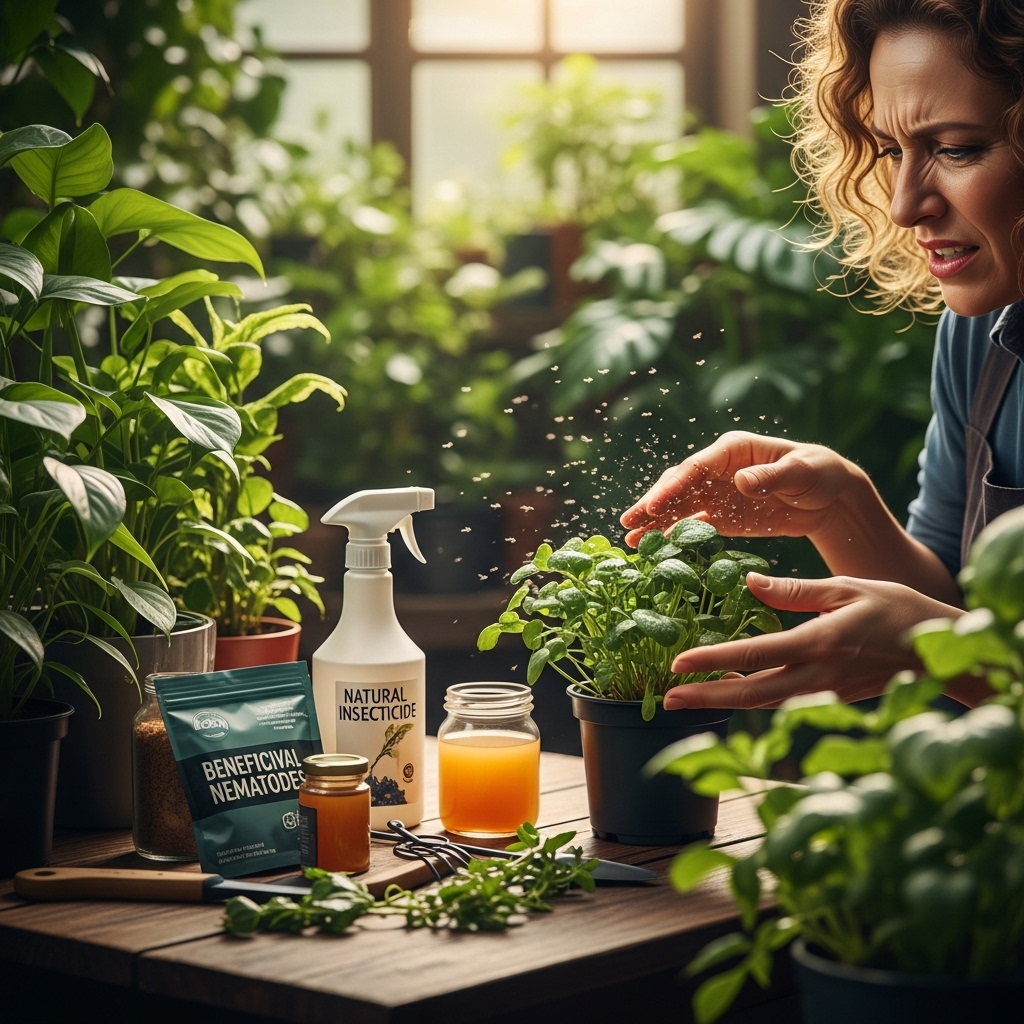
Types of Gnats Affecting Indoor Plants
Fungus gnats are perhaps the most notorious offenders when it comes to houseplants. They thrive in damp environments and tend to lay their eggs in the top layer of moist soil. Their larvae feed on the organic matter in the soil and can damage plant roots, leading to stunted growth. On the other hand, fruit flies are often attracted to overly ripe fruits or organic matter. While they don’t directly harm plants, their presence can indicate underlying issues in care or hygiene around your plants. I often found myself mistaking one for the other until I did a bit of digging into their differences.
Life Cycle of Gnats
The life cycle of gnats consists of four stages: egg, larva, pupa, and adult. Typically, a female gnat can lay hundreds of eggs in the soil, which hatch into larvae within a few days. These larvae, which resemble tiny worms, feed on the soil and organic material. After about two weeks, they transition to the pupal stage and then emerge as adult gnats ready to fly. This quick turnover means that if you spot just a few gnats, there could be many more lurking in your soil. I learned this the hard way when I ignored a small infestation, only to return to a much larger problem weeks later.
Signs of a Gnat Infestation
Recognizing a gnat problem early can save you a lot of trouble down the line. The signs can be subtle at first, but I’ve found that paying close attention to my plants helps me catch infestations before they get out of control.
Identifying the Pests in Your Plants
One of the first indications of a gnat infestation is spotting the adults flying around your plants. They are small, usually about 1/8 of an inch long, and can be mistaken for fruit flies. If you notice them hovering around the soil or near the leaves, it’s a clear sign that something is amiss. I remember spotting little black specks buzzing around my plants and immediately knew I had to investigate further.
Common Symptoms of Gnat Damage
Besides seeing the gnats themselves, you might notice some visible signs of damage on your plants. Wilting leaves, yellowing, or stunted growth can indicate that gnat larvae are damaging the roots. If you gently pull the plant out of its pot, you may even see larvae in the soil. I was shocked the first time I saw them wriggling around, and it motivated me to take immediate action.
Causes of Gnat Infestations
Understanding what attracts gnats to your plants can help prevent future infestations. I’ve found that there are a few common causes, and addressing these can make a significant difference.
Overwatering and Soil Moisture
One of the main triggers for gnat infestations is overwatering. I used to think that giving my plants plenty of water would keep them happy, but this actually creates a perfect breeding ground for gnats. They love moist soil, and if I let the top layer stay wet for too long, it becomes a haven for them. Draining excess water and allowing the soil to dry out between waterings has been a game-changer for my plants.
Organic Matter and Decaying Plant Material
Another cause of gnat problems is the presence of organic matter, such as decaying leaves or roots in the soil. This material attracts gnats and provides a food source for their larvae. After I started cleaning up fallen leaves and ensuring my plants were free from dead foliage, I noticed a significant reduction in gnat activity.
Potted Plant Conditions and Environment
The conditions in which your plants are kept also play a big role in gnat infestations. High humidity, poor air circulation, and crowded pots can create an environment conducive to gnats. I’ve learned that keeping my plants spaced apart and ensuring good airflow can help deter these pests. It’s amazing how such simple changes can lead to healthier plants and fewer infestations.
Fast Fixes to Eliminate Gnats
When I first faced a gnat invasion, I felt overwhelmed. It seemed like no matter how hard I tried, these pesky little insects kept coming back. After some trial and error, I discovered several effective methods to tackle the problem head-on. Here are some fast fixes that really worked for me.
Immediate Solutions for Adult Gnats
The first step in getting rid of gnats is to eliminate the adults. I found that dealing with them directly can significantly reduce the population and prevent them from laying more eggs in the soil.
Using Sticky Traps
One of the simplest and most effective tools I used was sticky traps. These bright yellow cards attract gnats and capture them when they land. I hung a few near my plants, and within days, I noticed a significant drop in the number of adult gnats flying around. I recommend placing traps near the soil and around the leaves to maximize their effectiveness. It’s amazing how such a straightforward solution can make a huge difference!
Homemade Gnat Traps
If you’re looking for a DIY solution, I’ve got you covered. I crafted some homemade gnat traps using a simple mix of apple cider vinegar, dish soap, and water. Just fill a bowl with water, add a splash of apple cider vinegar, and a few drops of dish soap. The vinegar attracts the gnats, and the soap breaks the surface tension, causing them to drown. I placed these traps around my plants and was pleasantly surprised by how many gnats I caught. It’s a fun little project that can really help out in a pinch!
Treating the Soil to Kill Larvae
While getting rid of adult gnats is essential, I learned that treating the soil is just as important to eliminate larvae before they grow into more gnats. Here are a few methods I found particularly helpful.
Drying Out the Soil
One of the most effective methods to kill gnat larvae is simply allowing the soil to dry out. Since gnats thrive in moist conditions, I decided to let my plants go a bit drier between waterings. I found that by allowing the top inch or so of the soil to dry out before watering again, I could significantly reduce the larvae population. It’s crucial to find a balance, as I didn’t want to stress my plants too much, but a little drought can do wonders!
Using Beneficial Nematodes
For a more targeted approach, I turned to beneficial nematodes. These microscopic worms are natural predators of gnat larvae, and they work wonders in the soil. I ordered some online and mixed them with water according to the package instructions. Then, I applied the mixture to the affected plants. It was comforting to know I was using a natural solution to combat the problem. After a few weeks, I noticed a significant decrease in gnat activity, and my plants seemed much healthier!
Insecticidal Soap and Neem Oil
Another effective treatment I discovered was using insecticidal soap or neem oil. Both of these options can kill larvae in the soil and help deter adult gnats. I simply diluted the insecticidal soap or neem oil in water and watered my plants with the solution. It was reassuring to see that I wasn’t just masking the issue but actively combating it. I recommend repeating this treatment every few days until the gnat population decreases. It’s a simple yet effective way to reclaim your plants from these pests.
Preventing Future Gnat Infestations
After successfully dealing with gnats, I realized that prevention is key to avoiding future infestations. I started implementing a few strategies that have made a world of difference in keeping my plants gnat-free.
Proper Watering Techniques
As I mentioned earlier, overwatering is a major attractant for gnats. I’ve learned to be more mindful of my watering routine. Instead of sticking to a strict schedule, I now check the moisture level of the soil before watering. I use my finger to dig into the soil about an inch deep, and if it feels dry, I’ll water. This simple technique has kept my plants healthier and made it much less inviting for gnats.
Choosing the Right Potting Mix
Another thing I discovered was the importance of choosing the right potting mix. Some mixes retain moisture more than others, which can create an environment ideal for gnats. I switched to a well-draining potting mix that allowed excess moisture to escape. This change made a big difference in my plants’ health and reduced the chances of gnat infestations.
Regular Maintenance and Cleaning
Finally, I realized the value of regular maintenance. I made it a habit to clean up any fallen leaves and debris around my plants. Keeping the area tidy not only looks better but also removes potential breeding grounds for gnats. I also started inspecting my plants more regularly, which helped me catch issues early on. By staying proactive, I’ve been able to keep gnats at bay and enjoy my plants more fully.
Alternative Natural Remedies
As I continued my journey to keep my plants healthy and gnat-free, I discovered several alternative natural remedies that are not only effective but also eco-friendly. These methods can be great additions to your gnat control toolkit, making it easier to tackle any potential infestations before they become overwhelming.
Essential Oils for Gnat Control
One of the most delightful discoveries I made was the potential of essential oils in combating gnats. I’ve always loved the idea of using natural scents to create a pleasant environment, and it turns out some essential oils can also deter pesky insects. I learned that oils like peppermint, lavender, and eucalyptus are particularly effective against gnats. To use them, I mixed a few drops of essential oil with water in a spray bottle and gave my plants a light misting. Not only did this help keep the gnats at bay, but my home smelled wonderful too! I found that applying this mixture every few days was a simple preventative measure that added an extra layer of protection.
Cider Vinegar Solutions
Cider vinegar has become a staple in my home not just for cooking but also for pest control. I’ve created a simple yet effective trap using cider vinegar that works wonders on gnats. I fill a small bowl with cider vinegar and cover it tightly with plastic wrap. I then poke tiny holes in the wrap to allow the gnats to enter but not escape. It’s fascinating to see how quickly they are attracted to the sweet smell of vinegar and end up trapped. I found placing these bowls around my plants significantly reduced the number of adult gnats buzzing around. Plus, it was a fun and easy project that required minimal effort!
Garlic and Other Natural Repellents
Another natural remedy I stumbled upon is the use of garlic. I’ve always heard that garlic is good for many things, but I never imagined it could help with gnat control too. I decided to make a garlic spray by blending a few cloves with water and letting it steep overnight. After straining the mixture, I diluted it further with more water and sprayed it on the soil and around my plants. The strong odor is unappealing to gnats and other pests. I noticed a considerable decrease in gnat activity after implementing this method. It felt reassuring to use something so natural that also had the added benefit of being a great way to keep other pests away!
Besides garlic, I learned that other strong-smelling herbs like rosemary and basil can act as repellents against gnats. I’ve started to incorporate these herbs into my indoor plant collection, and not only do they look and smell great, but they also provide some protection against these annoying insects.
When to Seek Professional Help
Despite my best efforts and the implementation of various natural remedies, I’ve come to realize that sometimes, the gnat problem can escalate beyond what I can handle on my own. It’s important to know when it’s time to seek help from professionals.
Identifying a Severe Infestation
During my experiences, I’ve noticed that if I see a drastic increase in the number of gnats, or if my plants start showing severe signs of damage, it might be time to take a step back and assess the situation. An out-of-control infestation can lead to unhealthy plants, and I want to protect my greenery as much as possible. If I find myself constantly battling gnats despite trying multiple methods, I understand that it may be a sign of a larger issue that needs addressing. Sometimes, it’s better to consult someone with more expertise when I feel out of my depth.
Consulting a Pest Control Expert
When I finally decided to consult a pest control expert, it was a game changer. They provided insights that I hadn’t previously considered and professional-grade solutions that would ensure the gnat problem was taken care of. I appreciated their approach, which focused on both immediate relief and long-term prevention. It was reassuring to know I could rely on their knowledge and experience. In my case, they conducted an assessment of my plants and the surrounding environment, offering customized solutions that I could implement alongside my natural remedies. I’ve learned that there’s no shame in seeking help when needed; after all, the health of my plants is what matters most.
Frequently Asked Questions
“`html
What is the fastest way to get rid of gnats in plants?
The fastest way to get rid of gnats in your plants is to dry out the soil, use sticky traps, and treat the soil with beneficial nematodes or insecticidal soap.
What are gnats and why are they a problem for indoor plants?
Gnats are small, flying insects that often invade indoor plants. They can be annoying and may harm plants, particularly fungus gnats which damage plant roots and lead to stunted growth.
What types of gnats commonly affect indoor plants?
The most common types of gnats affecting indoor plants are fungus gnats and fruit flies. Fungus gnats thrive in damp soil and can damage roots, while fruit flies are attracted to overly ripe fruits but do not directly harm plants.
What are the signs of a gnat infestation?
Signs of a gnat infestation include spotting adult gnats flying around your plants, wilting leaves, yellowing, or stunted growth. You may also see larvae in the soil if you gently pull the plant out of its pot.
What causes gnat infestations in indoor plants?
Common causes of gnat infestations include overwatering, the presence of organic matter and decaying plant material in the soil, and poor conditions such as high humidity and crowded pots.
What are some immediate solutions for eliminating adult gnats?
Some immediate solutions for eliminating adult gnats include using sticky traps, homemade gnat traps with apple cider vinegar, and treating the soil to kill larvae.
How can I treat the soil to kill gnat larvae?
You can treat the soil to kill gnat larvae by allowing the soil to dry out, using beneficial nematodes, or applying insecticidal soap or neem oil diluted in water.
What preventive measures can I take to avoid future gnat infestations?
Preventive measures include proper watering techniques, choosing the right potting mix that allows excess moisture to escape, and regular maintenance such as cleaning up fallen leaves around the plants.
Can I use natural remedies to control gnats?
Yes, natural remedies such as essential oils (peppermint, lavender, eucalyptus), cider vinegar traps, and garlic sprays can effectively help control gnats.
When should I seek professional help for a gnat infestation?
You should seek professional help if you notice a drastic increase in the number of gnats, your plants show severe signs of damage, or if multiple methods fail to control the infestation.
“`