
Growing a pineapple plant at home is not only possible but also a rewarding experience that can yield delicious fruit. With the right care and conditions, anyone can successfully cultivate this tropical plant indoors or in their garden. Read Interesting article: Where Do Pineapple Plants Grow? Climate + Regions
Understanding Pineapple Plants
What is a Pineapple Plant?
A pineapple plant (Ananas comosus) is a unique tropical plant that produces the sweet and juicy fruit we all enjoy. It’s not just a fruit-bearing plant; it’s also an attractive addition to gardens or indoor spaces. I remember the first time I saw a pineapple plant; its long, spiky leaves and vibrant fruit made it stand out among my houseplants. Pineapples are bromeliads, which means they belong to a family of plants that are known for their striking foliage and flowers. They typically take about two to three years to produce fruit, making the wait worthwhile. Growing a pineapple plant can be a fun project that teaches patience and care. How to Grow a Plant From a Pineapple (Easy Guide)
Botanical Characteristics of Pineapple
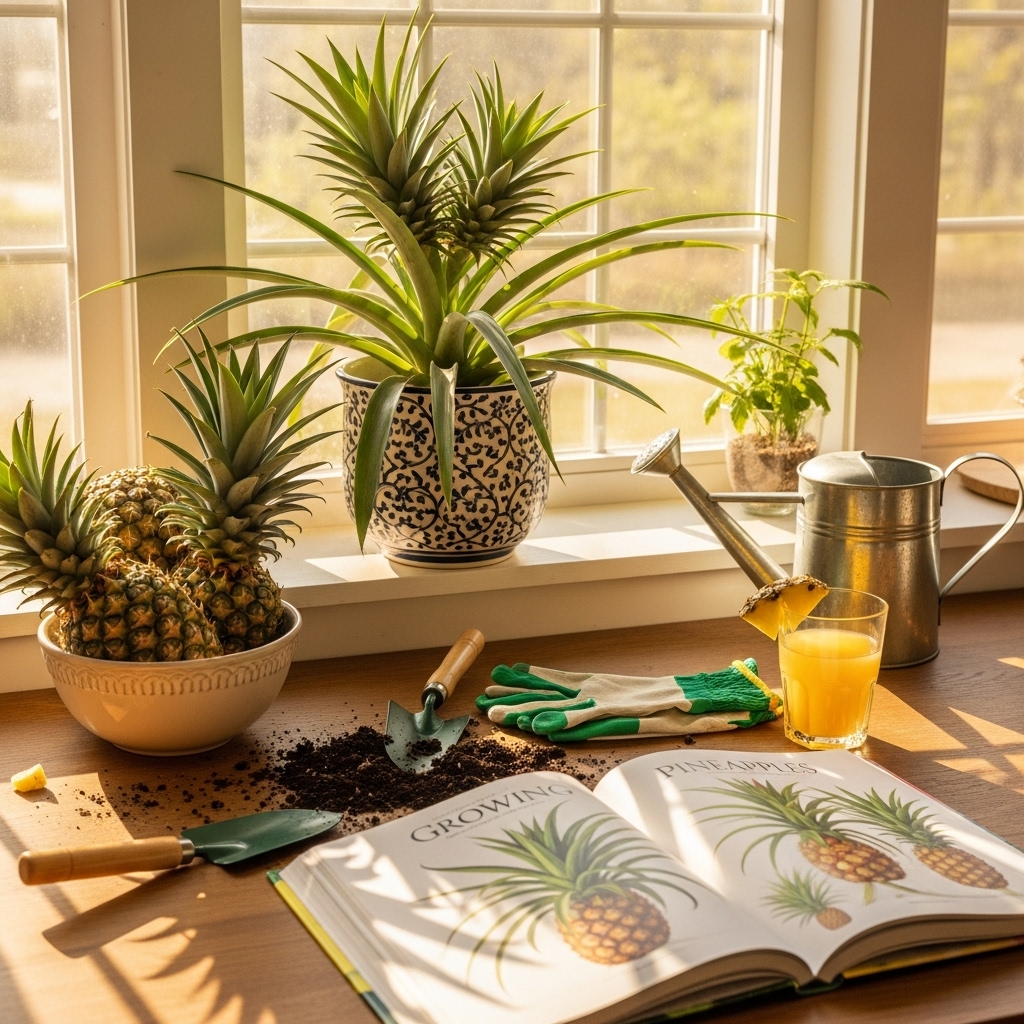
The pineapple plant is characterized by its rosette of long, sword-like leaves that can reach up to 4 feet in height. The leaves are sharp and can have a spiky edge, but they are also quite beautiful, with a rich green color that can brighten any space. The plant has a unique growth pattern: it features a central stalk that eventually produces a flower, which then develops into the fruit. When I first started learning about pineapple plants, I was fascinated to discover that the fruit is actually a cluster of many small berries fused together. This intricate botanical detail adds to the charm of growing your own pineapple.
Common Varieties of Pineapple
There are several varieties of pineapple, each with its own unique flavor, size, and growing requirements. The most common type is the ‘Queen’ pineapple, known for its sweet taste and small size. ‘Smooth Cayenne’ is another popular variety, often found in grocery stores, recognized for its larger fruit and high juiciness. There’s also the ‘Red Spanish,’ which has a slightly tangier flavor and is often used in cooking. I once tried growing a ‘Queen’ variety, and its sweet, aromatic flavor was delightful, making the effort to grow it even more rewarding. Understanding these different types can help you choose the right pineapple for your home growing project.
Growing Conditions for Pineapple Plants
Optimal Climate for Pineapple Growth
Pineapple plants thrive in warm, tropical climates, but they can also adapt to indoor conditions if you provide the right environment. Ideally, they prefer temperatures between 65°F and 95°F. I remember one winter when I left my pineapple plant near a drafty window; it didn’t fare well. It’s crucial to avoid cold drafts, as pineapple plants are sensitive to chilly temperatures. If you live in a cooler climate, consider growing your pineapple indoors or bringing it inside during the winter months. I’ve found that providing a consistent temperature helps my plants grow more vigorously. How to Grow a Pineapple Plant From the Top (Easy Guide)
Soil Requirements for Pineapple Plants
When it comes to soil, pineapple plants prefer well-draining soil with a slightly acidic pH between 4.5 and 6.5. I’ve learned from experience that pots with drainage holes are essential to prevent waterlogging, which can lead to root rot. A mixture of potting soil, sand, and perlite has worked well for me in the past; this combination provides the drainage and aeration that pineapple roots need to thrive. If you’re planting directly in the ground, make sure your soil isn’t heavy clay, as that can suffocate the roots.
Light Requirements and Sun Exposure
Light is another critical factor in growing healthy pineapple plants. They need a lot of bright, indirect sunlight, ideally around 6 to 8 hours a day. I’ve often placed my pineapple plant near a south-facing window, where it gets plenty of light without being scorched by direct sun. If you’re growing your pineapple outdoors, be mindful of the intense afternoon sun; providing some shade during the hottest part of the day can prevent leaf burn. I’ve found that a balance of light helps my plant grow strong and healthy.
Starting Your Pineapple Plant
How to Choose a Pineapple for Planting
Choosing the right pineapple to grow is the first step in your journey. I recommend selecting a fresh, healthy pineapple from the grocery store or farmer’s market. Look for one that is ripe, with a firm body and green leaves. The crown of the pineapple should be healthy and green, not wilted or brown. I once picked a pineapple that looked great on the outside, but it turned out to be overripe inside. Trust your instincts and select one that feels perfect to you.
Preparing the Pineapple Crown
Once you have your pineapple, the next step is preparing the crown for planting. Cut off the top of the pineapple, leaving about an inch or two of fruit attached to the crown. Remove the bottom few leaves to expose about an inch of the stem. This step is crucial because it allows the plant to develop roots more easily. After I prepared my pineapple crown for planting, I let it dry for a day or two to prevent rot. This drying process is something I learned the hard way; planting it immediately can lead to failure.
Rooting the Pineapple Crown
Rooting the pineapple crown is an exciting part of the process. You can either place the crown in a glass of water or directly into the soil. If you choose the water method, submerge the base of the crown in water, ensuring the leaves stay above the water line. Change the water every few days to keep it fresh. After a few weeks, you should notice small roots beginning to sprout. I’ve found that patience is key during this stage; some crowns root faster than others. If you opt to plant it directly in soil, ensure the soil is moist but not soggy, and keep it warm and bright.
Planting Your Pineapple
Best Time to Plant Pineapple
The best time to plant your pineapple crown is in the spring or early summer when temperatures are warming up, and daylight hours are longer. I always find that my plants thrive during these warmer months, producing strong growth. If you’re starting your plant indoors, you can begin anytime, but make sure to transition it outside when the weather is suitable.
How to Plant Pineapple in Soil
When your pineapple crown has developed roots, it’s time to plant it in soil. Choose a pot that’s at least 6-8 inches deep with good drainage. Fill the pot with your prepared soil mix, then make a hole in the center to place the crown. Ensure that the soil covers the base of the crown but doesn’t bury the leaves. Once planted, gently pat down the soil around the base to secure it, and give it a good drink of water. I usually keep my newly planted crown in indirect sunlight for a few days to help it adjust.
Transplanting Pineapple to a Pot
If you’ve started your pineapple crown in water and it has developed healthy roots, it’s time to transplant it into a pot. Choose a pot that is slightly larger than the crown’s root system. Carefully remove the crown from the water, being gentle with the roots. Place it in the pot, ensuring it’s secure in the soil. I’ve learned to always check the stability of my plant when transplanting; a wobbly crown can make it harder for the roots to establish themselves. Water the plant thoroughly after transplanting, and place it in a bright spot to encourage growth.
Caring for Your Pineapple Plant
Watering Your Pineapple Plant
Watering is one of the most crucial aspects of caring for your pineapple plant. I’ve learned that pineapple plants prefer to be on the drier side rather than overly wet. When I first started, I was a bit too generous with the watering and ended up dealing with some root rot. It’s essential to allow the soil to dry out between waterings. I usually stick my finger about an inch into the soil; if it feels dry, then it’s time to water. During the growing months, I find that watering every 1-2 weeks works well for my plants. In the winter months, I cut back a bit, as the plant’s growth slows down. I always use room temperature water to avoid shocking the roots.
Fertilizing Pineapple Plants
Feeding your pineapple plant can significantly impact its growth and fruit production. I discovered that using a balanced, water-soluble fertilizer every couple of months helps provide essential nutrients. I typically use a fertilizer with an N-P-K (Nitrogen-Phosphorus-Potassium) ratio of around 10-10-10 or similar. When I apply fertilizer, I dilute it to half-strength and water the plant lightly to avoid burning the roots. I remember the first time I fertilized my plant; I was amazed at how quickly the leaves perked up and became more vibrant. However, be cautious not to over-fertilize, as that can lead to nutrient burn, which I experienced once before, and it was quite disappointing.
Pest and Disease Management
Like any plant, pineapple can be susceptible to pests and diseases. I’ve encountered a few common pests like mealybugs and aphids. When I noticed some sticky residue on my leaves, I quickly realized I had a pest problem. I recommend checking the undersides of leaves regularly for any signs of pests. If you see any, a gentle spray with insecticidal soap or neem oil usually does the trick. I also learned that keeping the area around the plant clean can help prevent infestations. As for diseases, root rot is a significant concern, especially if the plant is overwatered. To avoid this, ensure your pot has good drainage. If you ever notice the leaves turning yellow, that’s usually a sign of overwatering or poor drainage.
Harvesting Pineapples
When to Harvest Pineapples
Harvesting your pineapple is the exciting part of the journey! It’s important to know when your pineapple is ripe. I remember the first time I saw my pineapple start to change color; it was such a thrill. Pineapples typically take about 18 to 24 months to produce fruit, and you’ll know it’s time to harvest when the fruit turns a golden yellow and gives off a sweet aroma. The leaves at the top will also begin to turn brown. I always give the fruit a gentle squeeze; if it feels firm but gives a little, it’s usually ready. I’ve also read that you can twist the fruit gently; if it comes off easily, then it’s perfect for picking.
How to Harvest Pineapples Properly
When it comes to harvesting, I find that using a sharp knife is crucial. Carefully cut the fruit from the plant, leaving a bit of the stem attached. I always wear gloves when doing this to protect myself from any sharp edges. After harvesting, it’s essential to avoid bruising the fruit, as that can affect its taste and shelf life. I usually place it on a soft cloth or in a basket lined with a towel to protect it during transport. I remember the joy of taking my first homegrown pineapple into the kitchen, ready to be sliced and enjoyed!
Post-Harvest Care of Pineapples
After you’ve harvested your pineapple, proper care can extend its freshness. I’ve learned that letting the pineapple rest for a day or two at room temperature before refrigerating can enhance its flavor. When I pop it in the fridge, I usually place it in a breathable bag to keep it fresh. Pineapples can last about a week in the fridge, but I find that they taste best when enjoyed fresh and soon after harvesting. I often share my homegrown pineapples with friends and family, and seeing their reactions when they taste the fruit is one of the best parts of growing them.
Common Challenges in Growing Pineapple Plants
Dealing with Slow Growth
Slow growth can be frustrating when you’re eagerly awaiting your pineapple harvest. I remember nurturing my pineapple plant and feeling a bit disheartened when it didn’t seem to grow as quickly as I hoped. From my experience, several factors can lead to slow growth. One of the main culprits is inadequate light. If your pineapple isn’t getting enough bright, indirect sunlight, it may struggle to thrive. Additionally, overwatering can be a significant issue; too much moisture in the soil can stunt growth and even lead to root rot. I’ve learned that keeping a close eye on my watering habits and ensuring my plant gets plenty of light can help speed things along. If you notice your plant is growing slowly, try repositioning it to a sunnier spot or adjusting your watering routine to see if that helps.
Identifying and Treating Diseases
Pineapple plants can fall victim to a few diseases, and recognizing them early is key to effective treatment. I once had a scare when I noticed some yellowing leaves on my plant. After doing some research, I found that yellowing can often be a sign of overwatering or nutrient deficiencies. Ensuring proper drainage and adjusting my fertilizer routine helped immensely. Another disease to watch out for is crown rot, which occurs when the crown of the plant rots due to excessive moisture. To manage this, I recommend letting your plant dry out a bit between waterings and ensuring that you don’t plant the crown too deeply. If you see any signs of rot, you might need to cut away the affected areas and repot the plant in fresh soil to help it recover.
Managing Pests Effectively
Pests can be a real headache when growing pineapples, and I’ve had my share of battles with these little critters. Mealybugs and aphids are among the most common pests I’ve encountered. They can be challenging to spot at first, but I find that examining the undersides of leaves regularly helps me catch them early. If I spot any, I usually spray the affected areas with a solution of insecticidal soap or neem oil. This method has worked well for me, as it’s less harsh than chemical pesticides. Keeping the area around the plant tidy also reduces the likelihood of infestations. I’ve learned that a clean environment is just as important as watering and feeding. If the pests become too overwhelming, I wouldn’t hesitate to remove heavily infested leaves to protect the rest of the plant.
Frequently Asked Questions (FAQs)
Can I grow pineapples indoors?
Absolutely! Growing pineapples indoors is entirely possible, and many people do it successfully. I have a couple of pineapple plants thriving in my sunniest window. The key is to provide them with enough bright, indirect sunlight, as they need a good amount of light to grow strong. Make sure to keep the room warm, as these plants love warmth and don’t do well in cold temperatures.
How long does it take for a pineapple to grow?
Patience is essential when growing pineapples! Typically, it takes about 18 to 24 months for a pineapple plant to produce fruit. I remember checking my plant weekly, anxiously waiting for signs of growth. The wait can feel long, but the reward of harvesting your own fruit makes it all worth it. During this time, providing consistent care can help ensure your plant is as healthy as possible.
Can I grow a pineapple plant from a store-bought pineapple?
Yes, you can! This is actually how I started my pineapple journey. You can grow a new plant from the crown of a fresh pineapple. Just follow the steps we discussed earlier: cut off the crown, remove some leaves, let it dry, and then root it in water or soil. It’s a fun and economical way to get started with growing your own pineapples.
What are the best pots for growing pineapples?
When choosing pots for your pineapple plants, I recommend selecting ones that are at least 6-8 inches deep with good drainage holes. Pineapple roots need space to spread out, and proper drainage is crucial to prevent waterlogging. I’ve had great success using terracotta pots, as they allow for airflow and help regulate moisture levels. Just make sure whatever pot you choose has adequate drainage to keep your plant healthy and happy.
Frequently Asked Questions
“`html
Can I grow pineapples indoors?
Absolutely! Growing pineapples indoors is entirely possible, and many people do it successfully. The key is to provide them with enough bright, indirect sunlight, as they need a good amount of light to grow strong. Make sure to keep the room warm, as these plants love warmth and don’t do well in cold temperatures.
How long does it take for a pineapple to grow?
Patience is essential when growing pineapples! Typically, it takes about 18 to 24 months for a pineapple plant to produce fruit. The wait can feel long, but the reward of harvesting your own fruit makes it all worth it. During this time, providing consistent care can help ensure your plant is as healthy as possible.
Can I grow a pineapple plant from a store-bought pineapple?
Yes, you can! You can grow a new plant from the crown of a fresh pineapple. Just follow the steps discussed: cut off the crown, remove some leaves, let it dry, and then root it in water or soil. It’s a fun and economical way to get started with growing your own pineapples.
What are the best pots for growing pineapples?
When choosing pots for your pineapple plants, it is recommended to select ones that are at least 6-8 inches deep with good drainage holes. Pineapple roots need space to spread out, and proper drainage is crucial to prevent waterlogging. Terracotta pots are a great option, as they allow for airflow and help regulate moisture levels.
What type of soil do pineapple plants prefer?
Pineapple plants prefer well-draining soil with a slightly acidic pH between 4.5 and 6.5. A mixture of potting soil, sand, and perlite is ideal for providing the drainage and aeration that pineapple roots need to thrive.
How much sunlight do pineapple plants need?
Pineapple plants need a lot of bright, indirect sunlight, ideally around 6 to 8 hours a day. If growing outdoors, be mindful of the intense afternoon sun and provide some shade during the hottest part of the day to prevent leaf burn.
How do I know when to harvest my pineapple?
You’ll know it’s time to harvest when the fruit turns a golden yellow and gives off a sweet aroma. The leaves at the top will also begin to turn brown. A gentle squeeze of the fruit can indicate ripeness; if it feels firm but gives a little, then it’s ready for picking.
What is the best way to water pineapple plants?
Pineapple plants prefer to be on the drier side rather than overly wet. It’s essential to allow the soil to dry out between waterings. During the growing months, watering every 1-2 weeks works well, while in winter, this should be reduced as the plant’s growth slows.
What are some common pests that affect pineapple plants?
Pineapple plants can be susceptible to pests like mealybugs and aphids. Regularly checking the undersides of leaves can help catch them early. Using insecticidal soap or neem oil can effectively manage these pests.
How should I care for my pineapple after harvesting?
After harvesting, letting the pineapple rest for a day or two at room temperature before refrigerating can enhance its flavor. When refrigerating, place it in a breathable bag to keep it fresh. Pineapples can last about a week in the fridge, but they taste best when enjoyed fresh and soon after harvesting.
“`