
Growing a pineapple plant from the top is a fun and rewarding process that can easily be done at home. With the right care, patience, and a little knowledge, you can enjoy your very own homegrown pineapples in a couple of years. For a detailed guide, check out How to Grow a Pineapple Plant From a Pineapple (Step-by-Step).
Table of Contents
Understanding Pineapple Plants
Botanical Classification
Pineapples belong to the Bromeliaceae family, which is known for its colorful and unique plants. The scientific name of the pineapple is Ananas comosus. It’s a fascinating plant because it’s a tropical fruit that can adapt to various environments, but it thrives best in warm, sunny conditions. I remember the first time I learned about its classification; it felt like uncovering a hidden layer of a plant I thought was just another fruit-bearing plant. You might be surprised to learn that pineapples are not citrus fruits despite their tangy flavor.
Growth Habits and Lifecycle
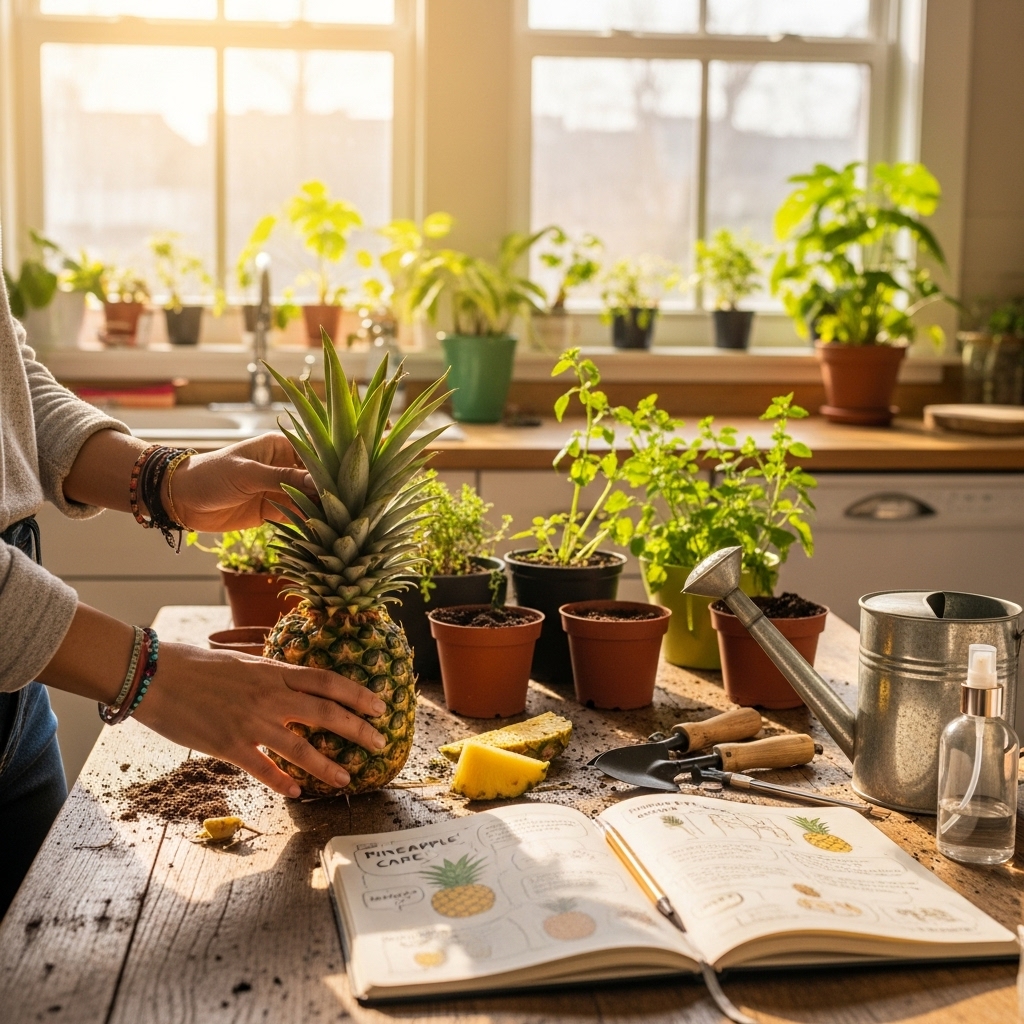
Pineapple plants have a fascinating growth habit. They are perennial plants, meaning they live longer than two years. The lifecycle begins with the pineapple top rooting, which can take several weeks. After that, the plant grows slowly, producing long, spiky leaves that form a rosette shape. I’ve seen many people underestimating this phase, but it’s essential to understand that patience is key. Eventually, after about 18 to 24 months, the plant begins to flower, leading to the fruit. This is a thrilling moment; knowing that all the care you’ve given is finally paying off!
Ideal Growing Conditions
To ensure a successful pineapple plant, it’s crucial to provide the right growing conditions. They prefer warm temperatures between 65°F and 95°F, with plenty of sunlight. I’ve found that placing my pineapple plant in a south-facing window works best, especially during the winter months. Additionally, pineapples thrive in well-drained soil that is slightly acidic. When I first started growing pineapples, I learned that good drainage is vital to prevent root rot, which can be a common issue with these plants.
Preparing to Grow a Pineapple Plant
Choosing the Right Pineapple
The journey of growing a pineapple begins with selecting the perfect fruit. When picking a pineapple, look for one with green, healthy leaves and a firm body. Avoid pineapples with brown spots or overly soft areas, as these can indicate overripeness or spoilage. I remember being excited about the selection process; I wanted the juiciest and freshest pineapple because it felt like I was choosing the foundation of my future plant. The flavor of the pineapple you choose will also be reflected in the plant’s growth, so this step is quite significant.
Tools and Materials Needed
Before diving into the planting process, gather the necessary tools and materials. Here’s what I recommend having on hand:
- A sharp knife for cutting the pineapple top.
- A container for rooting, like a glass or jar.
- Pots with drainage holes for planting.
- Potting soil suitable for bromeliads or succulents.
- Water for soaking the pineapple top.
Having everything ready makes the process much smoother. I learned the hard way that being unprepared can lead to missed steps or potential mistakes.
Preparing the Pineapple Top
Preparing the pineapple top is an essential step to kickstart the growth process. Start by cutting off the top of the pineapple, leaving about an inch of fruit attached to the leaves. It’s crucial to use a sharp knife to make a clean cut, as this helps prevent damage to the plant. After cutting, remove any excess fruit from the base of the top, as this can cause rot during the rooting process. I remember the first time I did this; I felt like a gardener crafting something special.
Next, let the pineapple top dry for a few days. This allows the cut end to callous over, reducing the risk of rot once you plant it. I often recommend placing it in a warm, dry spot, and if you’re like me, you might find joy in watching the tiny changes happen over those few days.
Step-by-Step Guide to Planting
Rooting the Pineapple Top
Now that your pineapple top is prepared, it’s time to start rooting it. Place the top in a glass of water, ensuring that the base is submerged while the leaves remain above water. I like to use a clear glass so I can monitor the root growth. Within a week or two, you should start to see roots developing. Patience is key here, as it may take a few more weeks for robust roots to form. Once the roots are about 2-3 inches long, it’s time to transfer the top to the soil.
Choosing the Right Soil
The right soil plays a vital role in the health of your pineapple plant. I recommend using a well-draining potting mix, ideally one designed for cacti or succulents. This type of soil allows for adequate drainage, which is essential to prevent root rot. When I first started growing my pineapple, I used regular potting soil and quickly learned that it held onto moisture too long, which was detrimental to the plant.
Planting Techniques
Planting the rooted pineapple top is a straightforward process. Fill a pot with your chosen potting mix, leaving about an inch of space at the top. Make a small hole in the center of the soil and gently place the rooted pineapple top into the hole, ensuring the roots are buried but the leaves remain above the soil. I remember carefully patting down the soil around it, feeling the excitement of starting a new plant. Water it lightly to settle the soil, but avoid overwatering, as this can disturb the roots.
Watering and Moisture Requirements
Watering is crucial during the early stages of growth. I usually water my pineapple plant once a week, allowing the soil to dry out slightly between waterings. Pineapples do not like soggy soil, so it’s essential to find that balance. I also learned that it’s helpful to water directly into the soil rather than on the leaves to prevent fungal issues. If you notice the leaves turning brown or crispy, it might be a sign of underwatering, while yellowing leaves can indicate overwatering. Keeping an eye on these signs helps ensure your plant stays healthy and vibrant.
Pineapple Plant Care and Maintenance
Light Requirements
Light is a crucial aspect of nurturing a healthy pineapple plant. I’ve found that these tropical beauties thrive in bright, indirect sunlight. If you have a sunny window, that’s the perfect spot! I usually place my pineapple plant where it gets plenty of light for most of the day, but I also make sure it’s not in direct, harsh sunlight for prolonged periods, especially during the peak hours of the day. Too much direct sunlight can scorch the leaves, which I learned the hard way when I first started growing pineapples. If you notice yellowing or browning edges on the leaves, it might be a sign that it’s getting too much sun. A little trial and error can help you find that sweet spot your plant loves!
Fertilization Schedule
Fertilizing your pineapple plant can make a significant difference in its growth and overall health. I recommend using a balanced fertilizer every 4-6 weeks during the growing season, which typically runs from late spring through summer. When I first fertilized mine, I learned that too much can be just as harmful as too little. I usually go for a diluted liquid fertilizer, following the instructions on the package to avoid overdoing it. It’s interesting to see how the plant responds to feeding; you might notice more vibrant leaves and even new growth. Just remember, during the fall and winter months, when the plant is resting, cut back on fertilization, as it doesn’t need as much during this time.
Pest and Disease Management
Keeping an eye out for pests is essential in maintaining a healthy pineapple plant. I’ve encountered my fair share of uninvited guests, like mealybugs and aphids. If you ever notice tiny white spots or a sticky residue on your leaves, it’s time to inspect for pests. I usually wipe the leaves with a damp cloth or use a gentle insecticidal soap if the infestation is significant. It’s also good to keep the plant area clean, as debris can attract pests. I’ve realized that taking preventive measures is easier than dealing with an infestation later on. Additionally, watch out for diseases like root rot, which can occur from overwatering. Keeping your plant in well-draining soil and only watering when necessary can help keep these issues at bay.
Common Challenges and Solutions
Slow Growth Issues
Experiencing slow growth in your pineapple plant can be frustrating. I’ve had moments where I just wanted to see some progress after all my care! Several factors can contribute to this, such as inadequate light, poor soil quality, or even the age of the plant. If you notice that your pineapple isn’t growing as quickly as you’d like, take a moment to assess its environment. I found that increasing the light exposure often helped mine. Also, make sure you’re using the right potting mix, as nutrient-deficient soil can stunt growth. Sometimes, just giving your plant a little extra love and attention can make a world of difference. If you’re interested in more gardening tips, consider checking out 10 Easy Fruits You Can Grow in Buckets.
Overwatering and Underwatering
Watering is one of the trickiest parts of caring for a pineapple plant. I’ve definitely experienced both overwatering and underwatering, and each has its own set of problems. Overwatering can lead to root rot, while underwatering might cause the leaves to droop and turn brown. I’ve learned to check the soil moisture by sticking my finger about an inch into the soil; if it feels dry, it’s time to water. If it’s still damp, I wait a few more days. Finding that balance took some time, but now it feels almost instinctive. If you ever find yourself in either situation, adjust your watering schedule gently and be patient. The plant will bounce back with a bit of care!
Pests to Watch Out For
As I mentioned earlier, pests can be a troublesome aspect of growing pineapple plants. Beyond mealybugs and aphids, I’ve also encountered spider mites and scale insects. Keeping a close watch on your plant and inspecting it regularly can help catch these pests early. I recommend using neem oil, which is a natural pesticide, if you notice any signs of infestation. It’s gentle on the plant and can effectively eliminate many common pests. Just remember to apply it in the evening or early morning to avoid leaf burn. The best approach I’ve found is to be proactive; regularly cleaning the leaves can deter pests, and a healthy plant is less likely to attract them.
Harvesting Your Pineapple
When to Harvest
The moment you’ve been waiting for—harvesting your homegrown pineapple! I remember the thrill of seeing the fruit finally develop. Generally, a pineapple is ready to harvest when it has turned a golden color and gives off a sweet aroma. I’ve found that the fruit should feel firm but slightly soft when you press it gently. If you’re unsure, you can always give it a twist; if it comes off easily, it’s time to enjoy your hard work!
How to Harvest Properly
When it comes to harvesting, I recommend using a sharp knife to cut the fruit from the plant. It’s important to leave a little bit of stem attached to the pineapple to help it store better. I’ve learned to be careful while cutting to avoid damaging the plant, as it can continue to produce more fruit from the remaining leaves. The excitement of finally holding that sweet fruit in my hands after all that patience and care is truly rewarding!
Post-Harvest Care
After harvesting, there’s a little more to consider. I like to let my pineapple sit for a day or two in a cool, dry place to allow any bruising to heal. This helps enhance its flavor when I finally slice into it. If you’re planning to eat it soon, store it in the refrigerator to keep it fresh. I’ve also discovered that if you leave the pineapple out at room temperature, it can continue to ripen, so choosing the right storage method is key to enjoying your fruit at its best!
Frequently Asked Questions
What family do pineapples belong to?
Pineapples belong to the Bromeliaceae family, and their scientific name is Ananas comosus.
How long does it take for a pineapple plant to produce fruit?
It takes about 18 to 24 months for a pineapple plant to flower and produce fruit after planting the top.
What are the ideal growing conditions for a pineapple plant?
Pineapple plants thrive in warm temperatures between 65°F and 95°F, with plenty of sunlight and well-drained, slightly acidic soil.
How should I prepare the pineapple top for planting?
Cut off the top of the pineapple, leaving about an inch of fruit attached to the leaves, and let it dry for a few days to callous over before rooting it.
What type of soil is best for growing a pineapple plant?
A well-draining potting mix, ideally designed for cacti or succulents, is the best choice for growing a pineapple plant to prevent root rot.
How often should I water my pineapple plant?
Water your pineapple plant once a week, allowing the soil to dry out slightly between waterings to avoid soggy conditions.
What signs indicate that my pineapple plant is receiving too much sun?
Yellowing or browning edges on the leaves may indicate that the pineapple plant is getting too much direct sunlight.
When is the right time to harvest my pineapple?
A pineapple is ready to harvest when it has turned a golden color, gives off a sweet aroma, and feels firm but slightly soft when pressed.
How should I properly harvest a pineapple?
Use a sharp knife to cut the fruit from the plant, leaving a little bit of stem attached to help it store better.
What should I do with my pineapple after harvesting?
Let the pineapple sit in a cool, dry place for a day or two to heal bruising, and store it in the refrigerator if you plan to eat it soon.