
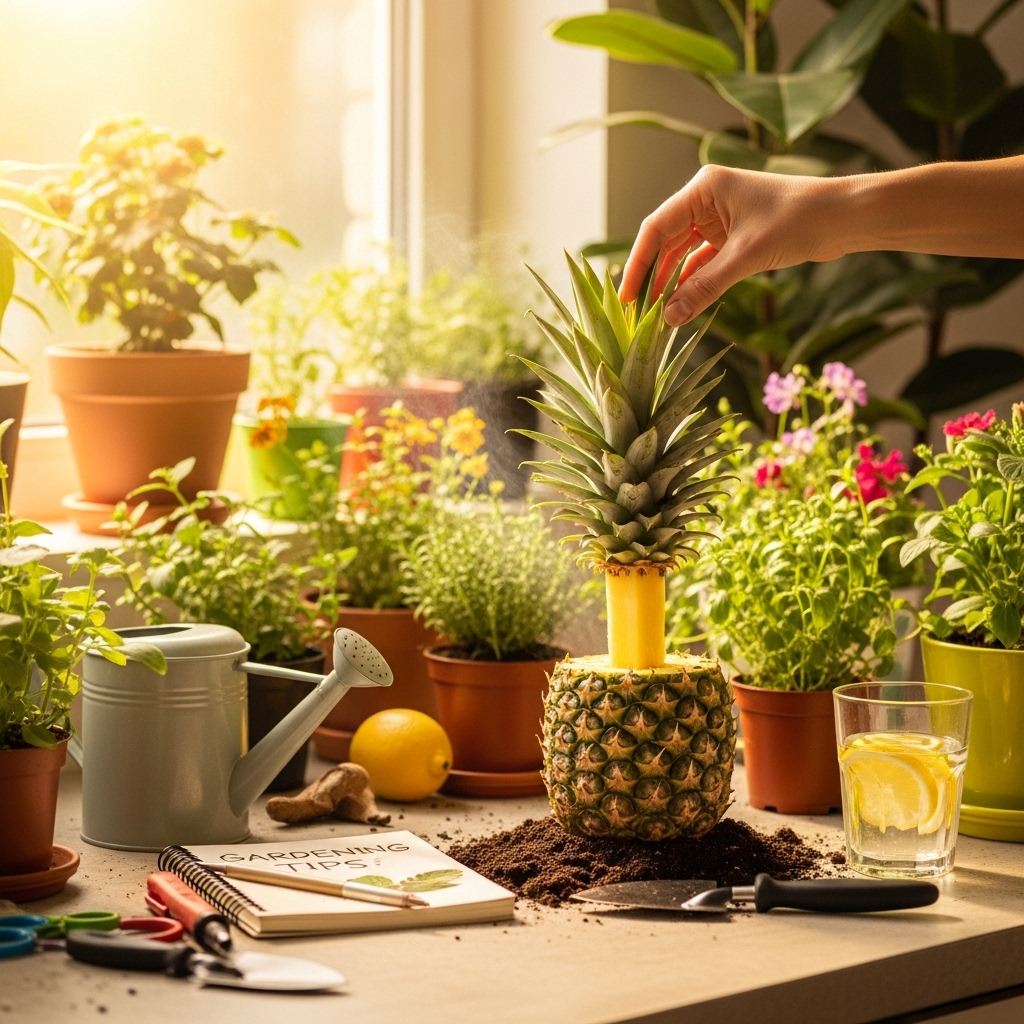
You can grow a pineapple plant from the top by cutting off the crown of a ripe pineapple and rooting it in water or soil. I’ve done this myself and found it to be a rewarding experience, watching the plant thrive over time. Read Interesting article: How to Grow a Plant From a Pineapple (Easy Guide)
Understanding Pineapple Plants
What is a Pineapple Plant?
The pineapple plant, scientifically known as Ananas comosus, is a tropical fruit-bearing plant indigenous to South America. It’s part of the Bromeliaceae family, which includes many other striking plants. I remember the first time I saw a pineapple plant; I was amazed by its unique appearance, with long, spiky leaves radiating from a central stalk. The plant can grow up to 5 feet in height and produces a single pineapple fruit after about 18-24 months of growth. This fruit is not only delicious but also packed with vitamins and enzymes, making it a healthy addition to any diet. If you’re curious about where pineapple plants grow, it’s fascinating to learn about the climates and regions they thrive in.
Botanical Classification and Varieties
Pineapples belong to the genus Ananas, and within this genus, there are several varieties. The most commonly known variety is the smooth cayenne, which is what you usually find in stores. There are also other types like the Queen and Red Spanish varieties, each offering a slightly different flavor and texture. I’ve tried growing different varieties, and while they all have their unique traits, I found that smooth cayenne tends to be the most forgiving for beginners.
Benefits of Growing Pineapples
Growing a pineapple plant can be incredibly rewarding. Not only do you get to enjoy fresh, home-grown fruit, but the process itself can be quite therapeutic. I find that tending to my plants provides a sense of calm and connection to nature. Additionally, pineapple plants are relatively low maintenance once established. They require less water than many other fruit-bearing plants and can thrive in a range of conditions. Plus, there’s something special about harvesting your own pineapple, knowing you nurtured it from just a top cutting. For more insights, check out How to Grow a Pineapple Plant From the Top Easily.
Preparing to Grow Pineapple from the Top
Materials Needed
Before diving into the growing process, it’s essential to gather the right materials. Here’s a list of what you’ll need:
- A ripe pineapple
- A sharp knife
- A glass or jar for rooting (if you choose the water method)
- Potting soil (preferably well-draining)
- A pot with drainage holes
- A spray bottle (for humidity)
When I first started, I didn’t have a spray bottle, and I noticed my pineapple plant could have benefited from the extra humidity. It’s a small investment that can make a significant difference!
Choosing the Right Pineapple
Choosing a good pineapple is crucial for success. Look for a pineapple that feels heavy for its size and has firm, green leaves. The skin should be slightly golden, indicating ripeness. I learned the hard way that overripe or under-ripe pineapples can lead to disappointing results. A fresh, healthy pineapple will have a strong, sweet aroma and should give slightly when pressed. These small details can make all the difference in your growing journey.
Identifying the Crown
The crown of the pineapple is the leafy top, and this is where our journey begins. When you look at a pineapple, the crown is easily identifiable by its tuft of leaves. It’s important to remove the crown carefully to ensure a good start for your new plant. I remember the first time I cut off the top; I felt a sense of excitement, knowing that something beautiful could grow from this simple act. To remove the crown, gently twist it off or use a sharp knife to cut around it, making sure to include a small section of the fruit. This helps the crown establish roots more efficiently.
Step-by-Step Guide to Growing Pineapple from the Top
Step 1: Cutting the Top Off the Pineapple
As mentioned, cutting the pineapple crown is your first step. After you’ve selected a ripe pineapple, make sure to use a clean, sharp knife. Cut about an inch below the leaves to ensure you have enough of the base to work with. I always felt a little nervous doing this, as it felt like a big commitment! But it’s essential to make a clean cut to avoid damaging the crown. Once you have your crown, set it aside to dry for a day or two. This helps to prevent rot when you plant it.
Step 2: Preparing the Pineapple Crown
Before planting, you’ll want to prepare the crown. Remove a few of the lower leaves to expose the inner part of the crown. This area is where the roots will grow from. I remember peeling away the leaves and feeling like I was unveiling potential greatness. After removing the leaves, let the crown sit for another day to dry out a bit. This step is crucial because it allows the cut area to callous over, reducing the risk of rot when you place it in soil or water.
Step 3: Rooting the Crown in Water
You can choose to root your pineapple crown in water or directly into soil. If you opt for water, fill a glass or jar with enough water to submerge the base of the crown but not the leaves. Place the crown in the water, ensuring it’s upright. I found rooting in water to be fascinating, as I could watch the roots grow over the weeks. Keep the jar in a warm, sunny spot, and change the water every few days to keep it fresh. You should start to see roots forming in about two weeks.
Step 4: Transplanting to Soil
Once the roots are about 2-3 inches long, it’s time to transplant your pineapple crown into soil. Choose a pot with good drainage and fill it with well-draining potting soil. Make a small hole in the center and gently place the rooted crown in the hole, covering the roots with soil. I remember how satisfying it felt to finally plant the crown! Water it lightly and place it in a warm, sunny location. Be patient; it will take some time for your new plant to settle in.
Growing a pineapple plant from the top is not only a fun project but also an opportunity to learn and connect with nature. I hope you find the same joy in this process as I have! In the next sections, we’ll explore optimal growing conditions and how to care for your pineapple plant to ensure a bountiful harvest.
Optimal Growing Conditions
Soil Requirements
To ensure your pineapple plant thrives, choosing the right soil is essential. Pineapples prefer well-draining soil that allows for good aeration. I found that using a mix of potting soil, sand, and perlite works wonders. This combination not only helps with drainage but also provides the nutrients necessary for healthy growth. When I initially used regular potting soil, I noticed that my plant struggled a bit. Once I made the switch to a well-draining mix, it took off! Aim for a slightly acidic pH level between 4.5 and 6.0 for optimal growth.
Light and Temperature Needs
Pineapples are tropical plants, so they love sunlight and warmth. I placed my pineapple plant in a south-facing window where it could soak up all the rays. Ideally, your pineapple should get around 6-8 hours of bright, indirect sunlight daily. If you live in a cooler climate, be mindful of the temperature. Pineapples prefer a warm environment, ideally between 65°F and 95°F. I remember the first winter, when I thought my plant could handle the draft from an open window. It didn’t take long for me to realize that keeping it warm and cozy was crucial for its health!
Watering Guidelines
Watering can be a bit tricky with pineapple plants. They don’t need as much water as many other houseplants, which I found out through trial and error. I typically water mine thoroughly, allowing the top inch of soil to dry out between waterings. Overwatering can lead to root rot, so it’s best to err on the side of caution. I also learned to water directly at the base of the plant rather than from above. This way, the crown stays dry, reducing the risk of rot. During the growing season, I tend to increase the frequency of watering, especially if I notice the leaves starting to droop. It’s become a routine that I enjoy, allowing me to check in on my plant regularly!
Caring for Your Pineapple Plant
Fertilization Tips
Feeding your pineapple plant is essential for vigorous growth and fruit production. I’ve experimented with different fertilizers and found that a balanced, water-soluble fertilizer works best. I usually begin fertilizing about a month after transplanting my crown into the soil. I remember the excitement of seeing new leaves sprouting after a good feeding. A diluted solution every 4-6 weeks during the growing season is ideal. I also like to add a bit of compost now and then for that extra nutrient boost. It’s amazing how a little care can lead to big results!
Pest and Disease Management
Like any plant, pineapple plants can attract pests and diseases. I’ve had my share of encounters with mealybugs and aphids. Initially, I felt overwhelmed, but I quickly learned that regular inspections can help catch issues early. If I see any pests, I simply wipe them off with a damp cloth or spray them with a mild soap solution. I also keep an eye out for signs of disease, such as yellowing leaves. If I notice any, I make sure to adjust my watering habits or check for root rot. Staying proactive has made a world of difference in my plant’s health!
Pruning and Maintenance
Pruning is another important aspect of caring for my pineapple plant. I typically remove any dead or damaged leaves to encourage new growth and keep the plant looking tidy. Pruning also helps improve airflow, which is crucial for preventing diseases. I always feel a sense of accomplishment after tidying up my plant. Additionally, I learned to be patient and let my pineapple grow naturally without excessive intervention. This balance between care and allowing it to thrive on its own has made my gardening experience much more enjoyable.
Common Challenges and Solutions
Slow Growth Issues
If you’re noticing that your pineapple plant isn’t growing as quickly as expected, don’t worry! I faced this issue early on, and it can often be attributed to factors like insufficient light or poor soil. Try moving your plant to a sunnier spot or checking the drainage in your pot. Sometimes, it’s just a matter of making a small adjustment to see significant improvement. I remember feeling frustrated when my plant seemed stagnant, but a little tweak here and there worked wonders!
Leaf Discoloration Problems
Leaf discoloration can be concerning. I once encountered yellowing leaves, and it turned out to be a sign of overwatering. If you see this happening, check the soil moisture right away. In contrast, if your leaves turn brown or crispy, it could be a sign of underwatering or too much direct sunlight. Whenever I notice discoloration, I take a step back and assess my watering routine and light conditions. Understanding these signs has helped me become a better caregiver for my pineapple.
Root Rot Prevention
Root rot is a common challenge that can be easily prevented. The key is ensuring your pot has proper drainage and that you’re not watering too much. I learned this lesson the hard way when I lost one of my early pineapple plants to root rot. Now, I make sure to use pots with drainage holes and to let the soil dry out between waterings. If I ever suspect root rot, I gently remove the plant from the pot, check the roots, and trim away any mushy parts before repotting it in fresh soil. This proactive approach has saved my plants more than once!
Harvesting Your Pineapple
Signs of Ripe Pineapple
After months of care and patience, the day will eventually come when you can look forward to harvesting your pineapple. It’s such an exhilarating moment! But how do you know when your pineapple is ready? I learned to look for a few key signs. A ripe pineapple will have a golden-yellow color on the bottom and will feel slightly soft to the touch. The leaves at the top should be green and healthy, not browning or wilting. When I pressed my ripe pineapple, it felt like it had just the right amount of give. There’s also that sweet, fragrant aroma that fills the air, signaling that it’s time to enjoy the fruits of your labor. Trust me, the anticipation makes it all the more rewarding!
How to Harvest Safely
When it comes time to harvest, I recommend using a sharp knife to avoid damaging the plant. I remember the first time I harvested my pineapple; I felt a mix of excitement and nervousness. Cut the fruit off about an inch from the base, where it meets the leaves. Make sure to wear gloves, as the sap can be a bit sticky, and be careful not to yank or pull the fruit. This can harm the plant and affect future growth. It’s best to take your time and make a clean cut. Once removed, I like to let the pineapple sit for a day or two before eating it; this helps enhance its sweetness. And trust me, the flavor of a home-grown pineapple is unparalleled!
Post-Harvest Care
After harvesting, it’s important to give your pineapple plant some TLC. I learned that while the fruit is gone, the plant can continue to thrive. You might notice that the leaves start to look a little tired, but don’t worry; this is normal. Give it a light watering and ensure it gets plenty of light as it prepares for its next growth cycle. I usually wait a few months before considering another harvest, as the plant needs time to rejuvenate. You can also start to see new pups—small offshoots that can be separated and planted to grow new pineapple plants! The cycle continues, and I just love the idea of nurturing more plants from one initial crown.
Frequently Asked Questions (FAQs)
How long does it take to grow a pineapple?
From my experience, growing a pineapple from the top can take anywhere from 18 to 24 months before you see a ripe fruit. It might sound like a long time, but the journey is so fulfilling. Each month, I found myself more invested in my plant’s growth, watching it transform from a simple crown to a thriving plant. I think the wait makes the eventual harvest even more satisfying.
Can I grow pineapples indoors?
Absolutely! Growing pineapples indoors can be a fantastic option, especially if you live in a cooler climate. I’ve successfully grown my pineapple plants indoors by placing them in a sunny spot, like a south-facing window. Just make sure they get plenty of light, warmth, and proper care, and they’ll thrive! It also adds a beautiful tropical touch to your home.
What are the best conditions for growing pineapples?
Pineapples thrive in warm, sunny environments. I’ve found that they prefer temperatures between 65°F and 95°F, so keeping them warm is key. They also enjoy well-draining soil with a slightly acidic pH. Regular watering—allowing the top inch of soil to dry out between waterings—along with adequate sunlight, will set your pineapple plant up for success. It’s all about creating a little paradise for your plant, and your efforts will be rewarded with delicious fruit!
Frequently Asked Questions
How can I grow a pineapple plant from the top?
You can grow a pineapple plant by cutting off the crown of a ripe pineapple and rooting it in water or soil. It’s important to ensure you have a healthy crown and to follow the steps for preparation and rooting.
What materials do I need to grow a pineapple?
You will need a ripe pineapple, a sharp knife, a glass or jar for rooting (if using water), potting soil (preferably well-draining), a pot with drainage holes, and a spray bottle for humidity.
How do I choose the right pineapple for planting?
Look for a pineapple that feels heavy for its size, has firm, green leaves, and a slightly golden skin indicating ripeness. A fresh pineapple will also have a strong, sweet aroma and should give slightly when pressed.
What are the signs of a ripe pineapple ready for harvest?
A ripe pineapple will have a golden-yellow color on the bottom, feel slightly soft to the touch, and have healthy green leaves. It will also emit a sweet, fragrant aroma when ready for harvest.
How long does it take to grow a pineapple?
Growing a pineapple from the top can take anywhere from 18 to 24 months before you see a ripe fruit. The process is rewarding as you watch the plant develop over time.
Can I grow pineapples indoors?
Yes, you can grow pineapples indoors by placing them in a sunny location, such as a south-facing window. They will thrive with adequate light, warmth, and care.
What soil conditions are best for growing pineapples?
Pineapples prefer well-draining soil that allows for good aeration, ideally a mix of potting soil, sand, and perlite. The pH level should be slightly acidic, between 4.5 and 6.0.
How should I water my pineapple plant?
Pineapple plants do not need as much water as many other houseplants. Water thoroughly and allow the top inch of soil to dry out between waterings to prevent root rot.
What should I do if I notice slow growth in my pineapple plant?
Slow growth can result from insufficient light or poor soil. Moving your plant to a sunnier spot or checking the drainage can help improve its growth.
How do I care for my pineapple plant after harvesting?
After harvesting, give your pineapple plant light watering and ensure it gets plenty of light as it prepares for its next growth cycle. Over time, you may also notice new pups that can be separated and planted.