
To grow sunflower plants with big blooms, ensure they are planted in well-draining soil, receive full sunlight, and are cared for through adequate watering and fertilization. My own experience growing sunflowers has shown me that the right conditions lead to stunning results. Read Interesting article: When to Plant Sunflowers for Big Healthy Blooms
Understanding Sunflowers
Botanical Classification
Sunflowers belong to the Helianthus genus, which includes around 70 different species. The most common one we often see in gardens is Helianthus annuus. These beautiful flowers are known for their large, round heads and tall stems, making them a favorite for many gardeners. I remember the first time I planted sunflowers, I was amazed at how quickly they grew and how their heads turned towards the sun, a behavior known as heliotropism. Understanding how plants reproduce can enhance our gardening knowledge.
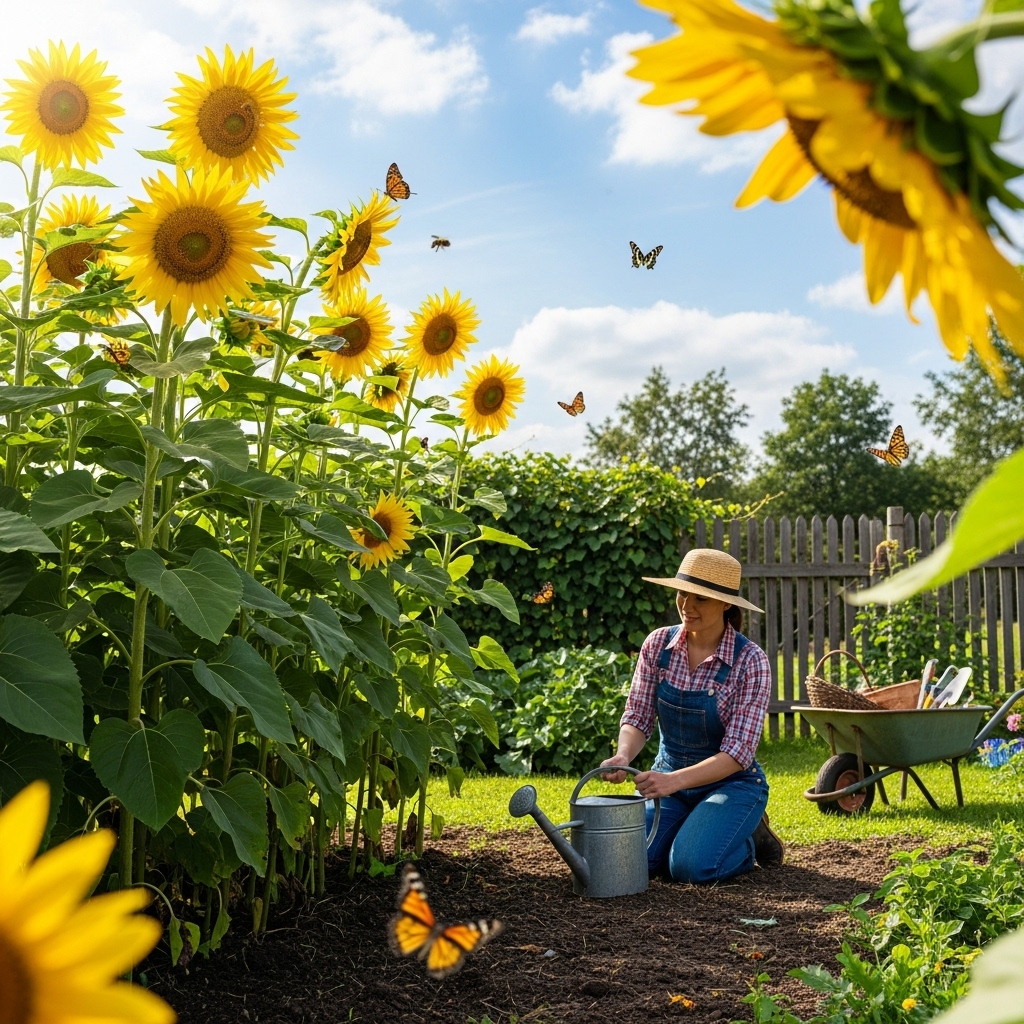
Varieties of Sunflowers
There are several varieties of sunflowers, each with its unique characteristics. Some of my favorites include:
- Giant Sunflowers: These can grow over 12 feet tall, producing massive blooms. They make a bold statement in any garden.
- Dwarf Sunflowers: Perfect for smaller spaces or containers, these typically grow to about 1-2 feet tall and still deliver stunning flowers.
- Multi-branching Sunflowers: These varieties produce multiple blooms on one plant, giving you a bouquet-like effect right from your garden.
Choosing the right variety depends on your space and what you want to achieve. I’ve enjoyed trying out different types to see which ones thrive in my garden’s unique conditions.
Sunflower Growth Stages
Sunflowers go through several stages from seed to bloom. Understanding these stages can help us provide the best care:
- Germination: This is when the seed absorbs water and begins to sprout. It usually takes about 7 to 10 days.
- Seedling: After germination, seedlings emerge and develop their first leaves. I find this phase exciting as it marks the start of their journey to becoming beautiful plants.
- Vegetative Stage: Here, the plant grows taller and develops more leaves. Adequate sunlight and nutrients are crucial during this period.
- Bud Formation: The plant starts to develop buds that will eventually bloom into flowers. This is a critical time to check for pests and diseases.
- Blooming: Finally, the sunflower blooms, creating a stunning display of yellow petals and seeds. This is the moment we’ve all been waiting for!
I’ve learned that each stage requires different levels of care, which has helped me produce healthier and more vibrant sunflowers.
Preparing to Grow Sunflowers
Choosing the Right Location
Location is key when it comes to growing sunflowers. They thrive in areas that get plenty of sunlight, ideally 6 to 8 hours a day. I remember when I planted my first batch; I chose a spot near my fence that was bathed in morning sunlight. The result? Beautiful, tall sunflowers that brightened up my garden. Look for a place that is sheltered from strong winds, as they can easily topple over.
Soil Requirements
Sunflowers prefer well-draining soil with a pH of 6.0 to 7.5. I used to think that any soil would do, but I quickly realized that good drainage is vital. Heavy, clayey soils can cause root rot, while sandy soils might not retain enough moisture. Mixing in compost or organic matter can really enhance soil quality. I’ve found that adding compost not only improves drainage but also provides essential nutrients for my sunflowers.
Sunlight Needs
As mentioned, sunflowers are sun-loving plants. They bask in the sun, and their growth is directly tied to sunlight exposure. I’ve always placed my sunflowers in the sunniest parts of my garden. Watching them stretch towards the sky is truly a sight! If you’re in a cooler climate, I suggest planting them in a spot where they’ll get the most warmth and light throughout the day.
Climate Considerations
Sunflowers grow best in warm climates, ideally with temperatures between 70°F and 78°F. I’ve learned that planting too early in spring can expose young plants to late frosts, which can be devastating. It’s essential to wait until the risk of frost has passed. In hotter climates, providing some afternoon shade can help prevent them from wilting. I’ve had success planting sunflowers in late spring, which allows them to bloom beautifully by summer.
Planting Sunflower Seeds
When to Plant Sunflower Seeds
Timing is everything when it comes to planting sunflower seeds. I’ve learned that the best time to plant them is after the last frost has passed, usually in late spring. In my experience, I wait until the soil temperature reaches about 55°F to 60°F. This ensures that the seeds have the best chance to germinate and thrive. I remember the anticipation I felt as I watched the weather forecasts, eagerly counting down the days until I could dig into the soil and start planting.
How to Plant Sunflower Seeds
Planting sunflower seeds is quite simple, which is one of the reasons I love them! I usually start by preparing the soil, loosening it with a rake to ensure it’s fluffy and well-aerated. Once that’s done, I create small holes about an inch deep for each seed. After dropping in the seeds, I cover them with soil and gently pat it down. I often water them lightly right after planting to encourage germination. My first attempts were a bit haphazard, but over time, I found a rhythm that worked for me.
Spacing and Depth Recommendations
When planting sunflowers, spacing is key. I usually plant seeds about 6 to 12 inches apart, depending on the variety. For giant sunflowers, I give them a bit more space since they spread out and need room to grow tall. As for depth, I stick to about 1 inch deep. I remember the first time I tried to plant them too deep; it was a learning experience when they struggled to push through the soil! Proper spacing and depth have helped me create a vibrant sunflower patch every year.
Using Seedlings vs. Direct Sowing
There are two ways to start sunflowers—using seedlings or direct sowing seeds. I’ve tried both methods and found that direct sowing is my preferred choice. It feels more natural to me, and I love watching the seeds transform into seedlings right in my garden. However, starting seedlings indoors can give you a head start, especially in cooler climates. I’ve seen friends successfully raise seedlings in small pots and then transplant them outside when the conditions are right. It all depends on your gardening style and local climate!
Sunflower Care and Maintenance
Watering Guidelines
Watering is crucial for sunflower health. I’ve discovered that sunflowers need about an inch of water per week, especially during dry spells. I usually water them deeply once a week instead of light sprinklings every day. This encourages deeper root growth, which makes them more resilient. I remember a summer when I had a few sunflowers wilting from the heat; I learned quickly that consistent watering is vital to keeping them happy.
Fertilization Tips
Fertilizing sunflowers can really make a difference in their growth and bloom size. I like to use a balanced fertilizer in the early stages, then switch to one higher in phosphorus as they start to bloom. This has worked wonders for me! I remember the first time I forgot to fertilize; my sunflowers looked a bit lackluster compared to my neighbor’s vibrant blooms. Since then, I’ve made it a point to keep a regular fertilization schedule.
Pest and Disease Management
Pests can be a challenge for sunflower growers. I’ve encountered aphids and caterpillars in my garden, but I’ve learned to manage them effectively. Regularly inspecting the plants helps catch any issues early. For me, a simple spray of soapy water has worked wonders in keeping pests at bay without harming the plants. I also like to plant companion flowers to attract beneficial insects, which helps create a balanced ecosystem in my garden.
Weed Control Strategies
Weeds can quickly take over if we’re not vigilant. I’ve found that mulching around my sunflowers not only helps retain moisture but also suppresses weeds. I usually apply a layer of straw or wood chips, which has made a noticeable difference. Plus, regular hand weeding keeps the plants healthy and looking their best. I remember the times when I didn’t stay on top of the weeds, and my sunflowers struggled to compete for nutrients!
Encouraging Big Blooms
Pruning and Deadheading Techniques
To encourage big blooms, I’ve learned that deadheading—removing spent flowers—can be incredibly beneficial. This redirects the plant’s energy towards producing more blooms. I usually visit my sunflower patch weekly to check for any dead or fading flowers and snip them off. It’s a small task that has a big payoff. I’ve noticed that my sunflowers continue to produce vibrant blooms throughout the season as long as I stay on top of this process.
Optimal Fertilizers for Bloom Size
Using the right fertilizers can make a significant difference in bloom size and health. I’ve had great success with fertilizers that are higher in potassium and phosphorus. I tend to apply these as the flowers begin to develop, which gives them that extra boost they need to shine. After experimenting with different fertilizers, I found that the right mix can lead to some really impressive sunflowers!
Supporting Tall Sunflowers
For those giant sunflowers that reach incredible heights, supporting them is essential. I often use stakes to help keep them upright, especially during windy days. I remember a storm that knocked a few of my taller sunflowers over, and since then, I’ve been diligent about providing support. It’s a simple step, but it has saved my sunflowers from being damaged by strong winds.
Harvesting Sunflowers
When to Harvest Sunflower Seeds
Harvesting sunflowers is one of the most rewarding parts of the growing process. I’ve learned that the right timing can make all the difference. Generally, you want to harvest when the back of the sunflower head turns brown and the seeds start to feel hard. I remember waiting eagerly for this moment last year—seeing the change in color was thrilling! For many varieties, this typically occurs in late summer or early fall. If you notice that the petals have fallen off, it’s a good sign that your sunflowers are ready for harvest.
How to Harvest Sunflower Heads
When it comes time to harvest, I usually grab a pair of garden shears and some gloves. It’s important to cut the head of the sunflower several inches below the flower. This gives you enough stem to handle later. I’ve made the mistake of cutting too close to the flower, which made it harder to manage when I brought it inside. Once harvested, I like to hang the sunflower heads upside down in a cool, dry place. This ensures the seeds will dry out properly, which I learned is essential to prevent mold.
Storing Sunflower Seeds
After the seeds have dried for a few weeks, it’s time to extract them. I usually rub the seeds between my hands or use a gentle brush to dislodge them from the flower head. It can be a bit messy, but I find it quite satisfying! Once I have the seeds, I rinse them off and let them dry completely before storing them. I like to keep them in a sealed container in a cool, dark place. Proper storage helps maintain their viability for the next planting season. Last year, I was able to store seeds from my sunflowers and plant them again this year. It felt great to see a new batch of blooms from last season’s harvest!
Uses for Sunflowers
Edible Seeds and Recipes
One of the best parts about sunflowers is their seeds. I’ve enjoyed roasting my sunflower seeds for a nutritious snack. It’s super easy! After harvesting, I rinse the seeds and toss them in a bit of olive oil, salt, and any other seasonings I fancy. Then, I spread them out on a baking sheet and roast them in the oven at 300°F for about 30 minutes. The aroma that fills the kitchen is heavenly! Roasted sunflower seeds make a perfect topping for salads or a crunchy addition to trail mix.
Sunflower Oil Production
Sunflower oil is another fantastic use for these vibrant plants. In my own experience, I’ve learned that the seeds can be pressed to create oil, which is commonly used in cooking and salad dressings. I once attended a local fair where I learned about the oil extraction process, and it amazed me how much flavor and nutrients come from sunflowers. If you enjoy cooking, incorporating sunflower oil can add a light flavor to your dishes!
Decorative Uses in Floral Arrangements
Beyond their practical uses, sunflowers are stunning in floral arrangements. I love bringing cut sunflowers indoors to brighten up my home. Their large, cheerful blooms make any room feel lively. I often mix them with other flowers from my garden, like zinnias and cosmos, to create beautiful bouquets. I’ve found that sunflowers can also be dried and used in wreaths or other crafts, adding a personal touch to my seasonal decorations. Each time I make a wreath, I remember the joy of harvesting from my own garden!
Common Sunflower Growing Challenges
Dealing with Weather Extremes
Growing sunflowers can be quite a journey, and sometimes, we face the challenges of weather extremes. I’ve had my fair share of ups and downs with unpredictable weather. For example, a sudden hailstorm once left my sunflowers looking battered. I learned that having a plan in place, like covering them with burlap or cloth during storms, can protect them. In extremely hot weather, I ensure to keep them well-watered, as sunflowers can get stressed and wilt quickly. Understanding how to adapt to weather patterns has helped me maintain a healthy garden.
Identifying Common Pests
Pests are an inevitable part of gardening, and sunflowers are no exception. I’ve encountered aphids and sunflower beetles before, and it’s always concerning to see them munching away at my plants. Regular inspections are key! I make it a habit to check the undersides of leaves and the stems. If I spot any pests, I use a soapy water spray, which is gentle yet effective. It’s satisfying to know that I can manage these issues without resorting to harsh chemicals.
Managing Nutrient Deficiencies
Nutrient deficiencies can also pose a challenge for sunflower growers. I’ve noticed that when my sunflowers show yellowing leaves, it’s usually a sign that they’re lacking nutrients. I’ve learned to amend the soil with compost or a balanced fertilizer early on to prevent this. Testing the soil occasionally helps me understand what my plants need. By being proactive, I can ensure my sunflowers stay vibrant and healthy throughout their growing season.
Sunflower Planting FAQs
What is the Best Time of Year to Plant Sunflowers?
The best time to plant sunflowers is after the last frost, usually in late spring. I often check my local frost dates to plan my planting schedule.
Can Sunflowers Grow in Containers?
Yes, sunflowers can thrive in containers! I’ve even grown dwarfs in pots on my patio. Just ensure the container has good drainage and enough soil depth for roots.
How Long Does It Take for Sunflowers to Bloom?
Sunflowers generally take about 70 to 100 days from planting to blooming, depending on the variety. I always mark my calendar so I can track their growth.
Are Sunflowers Perennials or Annuals?
Sunflowers are typically annuals, meaning they complete their life cycle in one growing season. I love planting them each year for fresh blooms!
What to Do If Sunflowers Don’t Bloom?
If your sunflowers aren’t blooming, check for issues like insufficient sunlight, nutrient deficiencies, or pests. I’ve found that addressing these problems quickly can help encourage blooms.
Frequently Asked Questions
What conditions are necessary for growing big blooms of sunflowers?
To grow sunflower plants with big blooms, they should be planted in well-draining soil, receive full sunlight, and be cared for through adequate watering and fertilization.
What are the common species of sunflowers?
The most common species of sunflowers is Helianthus annuus, which belongs to the Helianthus genus that includes around 70 different species.
What is the germination time for sunflower seeds?
Sunflower seeds usually take about 7 to 10 days to germinate after absorbing water and beginning to sprout.
How much sunlight do sunflowers need?
Sunflowers thrive in areas that receive plenty of sunlight, ideally 6 to 8 hours a day.
What is the ideal temperature range for growing sunflowers?
Sunflowers grow best in warm climates with temperatures between 70°F and 78°F.
When is the best time to plant sunflower seeds?
The best time to plant sunflower seeds is after the last frost has passed, usually in late spring, and when the soil temperature reaches about 55°F to 60°F.
How deep should sunflower seeds be planted?
Sunflower seeds should be planted about 1 inch deep in the soil.
What is the recommended watering schedule for sunflowers?
Sunflowers typically need about an inch of water per week, especially during dry spells, and it’s best to water them deeply once a week.
When should sunflower seeds be harvested?
Sunflower seeds should be harvested when the back of the sunflower head turns brown and the seeds start to feel hard, usually occurring in late summer or early fall.
What are some uses for sunflower seeds?
Sunflower seeds can be roasted for a nutritious snack, pressed to create sunflower oil for cooking, and used in floral arrangements to brighten up home decor.