
Identifying milkweed plants is crucial for supporting Monarch butterflies and maintaining healthy ecosystems. This guide will equip you with the knowledge to quickly and confidently recognize various milkweed species through visual traits, unique features, and ecological importance [1].
Table of Contents
Understanding Milkweed: Key Identification Features
Identifying milkweed plants relies on recognizing distinct visual characteristics. These features include leaf shape, stem structure, and the presence of milky sap. Mastering these traits will enable you to spot milkweeds quickly and confidently.
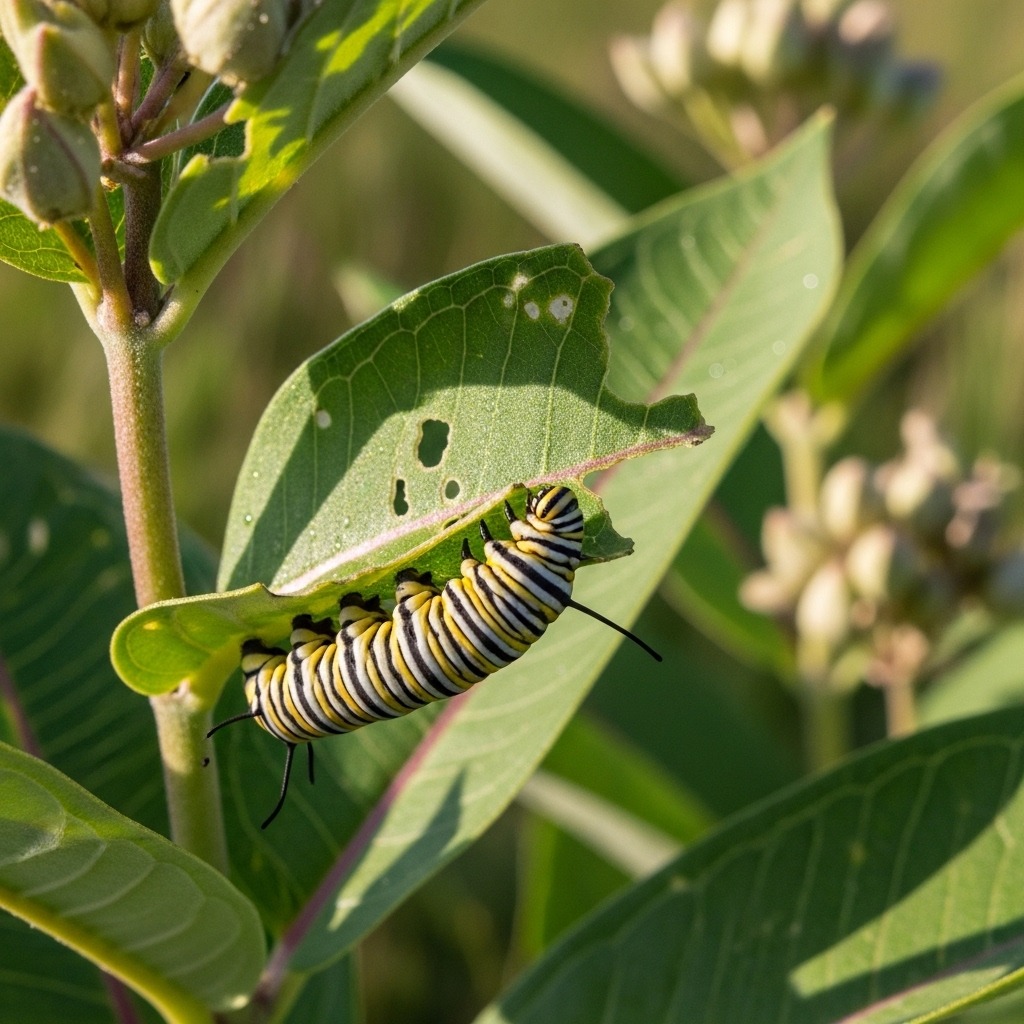
Visual Characteristics of Milkweed
Milkweed plants exhibit several notable visual traits:
- Flowers: Milkweed flowers are typically clustered and star-shaped. They can be pink, purple, or white, depending on the species.
- Seed Pods: Look for elongated, green pods that turn brown as they mature. These pods are thick and contain fluffy seeds, crucial for plant reproduction.
- Height: Most milkweed species grow between two to six feet tall, providing a significant visual cue.
The Importance of Milky Sap
One of the defining features of milkweed is its milky sap, a thick, white latex. This sap serves multiple purposes:
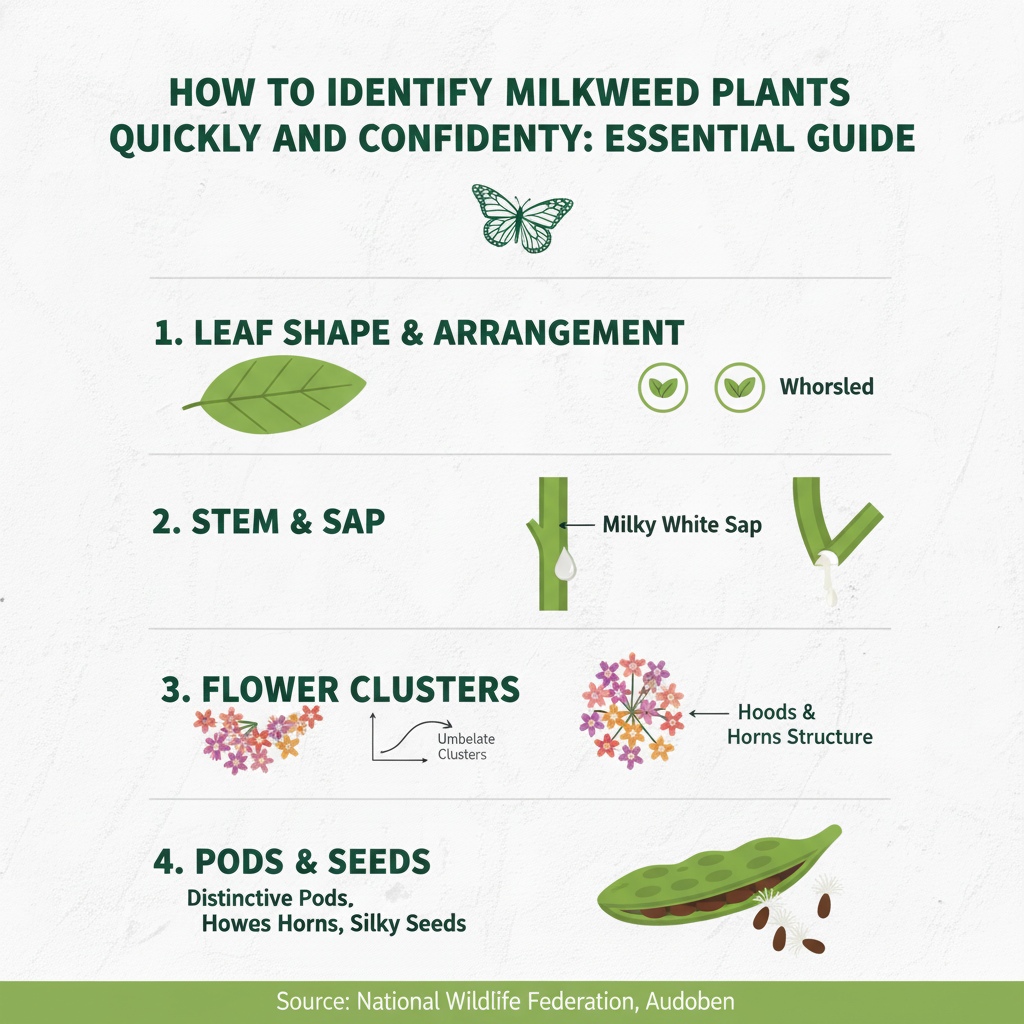
- Protection: The sap contains toxic compounds, known as cardenolides, which deter herbivores, including many insects. This toxicity is crucial for Monarch butterflies that rely on milkweed as their primary food source.
- Identification: When you snap a stem or leaf, the immediate exudation of milky sap confirms you are dealing with a milkweed species, except for Butterfly Weed (Asclepias tuberosa), which does not produce sap [3].
Leaf and Stem Structures
The leaf and stem characteristics of milkweed are essential for accurate identification:
- Leaf Shape: Milkweed leaves are generally smooth with either a broad oval shape or a narrow lance shape, depending on the species. Common Milkweed (Asclepias syriaca) features broad leaves, while Swamp Milkweed (Asclepias incarnata) has narrower leaves [1].
- Leaf Arrangement: Most milkweed varieties have leaves arranged oppositely on the stem. However, some species exhibit whorled arrangements with three or more leaves encircling the stem [2].
- Stem Structure: The stem of milkweed is stout and erect, typically green but may show reddish-purple hues. A hollow stem indicates it is indeed a milkweed species, as opposed to the solid-stemmed Dogbane (Apocynum spp.) [6].
Utilizing these key visual characteristics will empower you to identify milkweed confidently, enhancing your ability to contribute to conservation efforts effectively.
Recognizing Common Milkweed Varieties
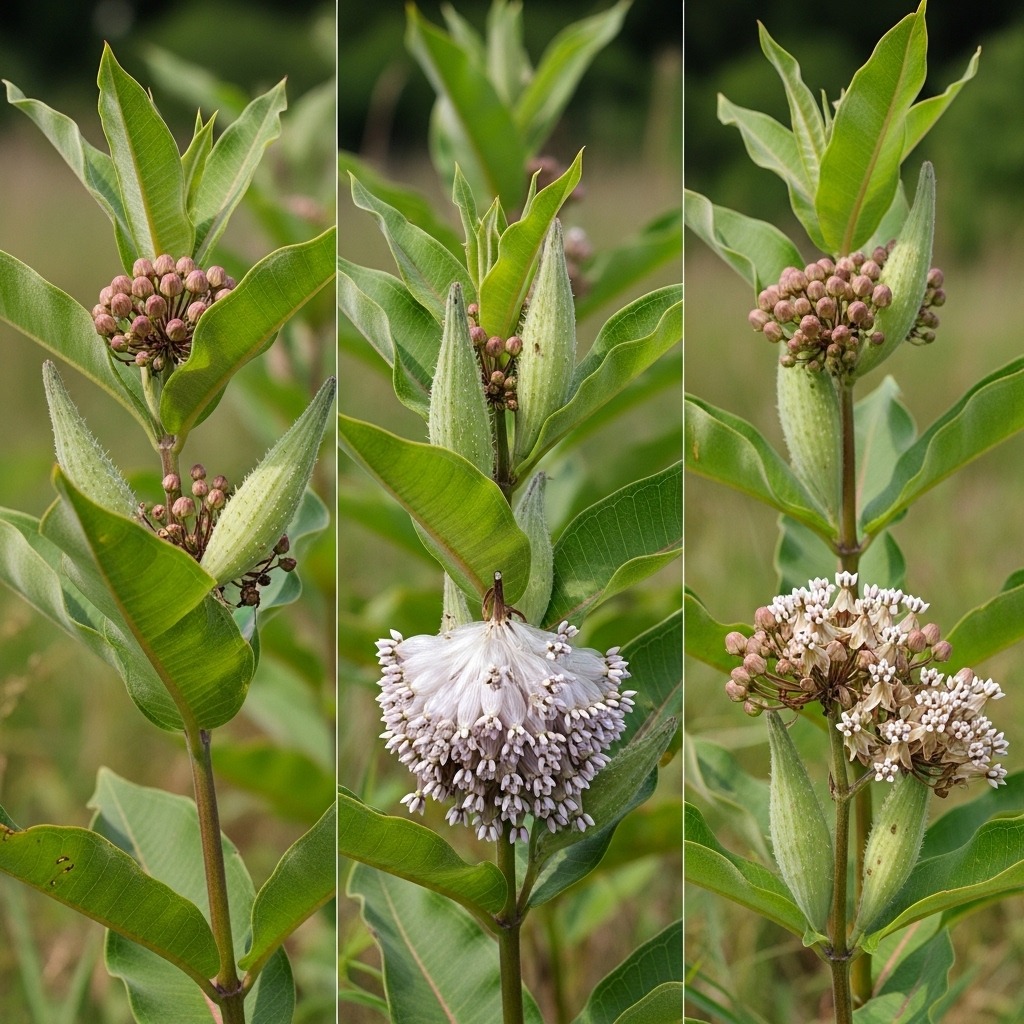
Identifying different milkweed species is essential for conservation efforts and supporting Monarch butterflies. This section provides detailed descriptions of Common Milkweed, Swamp Milkweed, and Butterfly Weed, aiding you in distinguishing between them quickly and confidently.
Common Milkweed (Asclepias syriaca)
Common Milkweed is one of the most recognizable milkweed species. It features broad, oval-shaped leaves and clusters of pinkish-purple flowers.
- Leaves: Broad, oval, can be up to 8 inches long. The underside is often hairy.
- Flowers: Clusters of star-shaped flowers, typically pink to purple.
- Stem: Thick and upright, often reaching heights of 3-4 feet. The stem is hollow.
- Sap: Produces a milky latex when cut, which contains toxic cardenolides.
Swamp Milkweed (Asclepias incarnata)
Swamp Milkweed thrives in moist environments, such as near streams and wetlands. It has distinct narrow leaves and a more delicate flower structure.
- Leaves: Narrow, lance-shaped, smooth edges, up to 5-6 inches long.
- Flowers: Bright pink or rose-purple, forming loose clusters at the top of the stem.
- Stem: Taller and often branching, can reach 4-5 feet in height.
- Sap: Also produces milky latex, but generally less toxic than Common Milkweed.
Butterfly Weed (Asclepias tuberosa)
Butterfly Weed is known for its vibrant orange flowers and drought tolerance. Unlike other milkweeds, it does not produce a milky sap.
- Leaves: Narrow, lance-shaped, and smooth, with a more upright growth habit.
- Flowers: Bright orange clusters that attract various pollinators, including butterflies.
- Stem: Sturdy and upright, typically reaching 1-2 feet in height.
- Sap: Does not exude milky latex, making it less irritating.
Comparison Table for Quick Reference
| Feature | Common Milkweed (A. syriaca) | Swamp Milkweed (A. incarnata) | Butterfly Weed (A. tuberosa) |
|---|---|---|---|
| Leaf Shape | Broad, oval | Narrow, lance-shaped | Narrow, lance-shaped |
| Flower Color | Pink to purple | Bright pink or rose-purple | Bright orange |
| Stem Height | 3-4 feet | 4-5 feet | 1-2 feet |
| Milky Sap | Yes | Yes | No |
Common Misidentification Issues
When identifying milkweed, pay attention to the sap. If it exudes a milky latex, you’re likely dealing with a true milkweed. In contrast, Dogbane, which is often confused with milkweed, has a solid stem and produces a different type of flower. Always check for the hollow stem characteristic of milkweed.
Understanding these identifying features will enhance your ability to recognize and protect these vital plants in your ecosystem.
Avoiding Misidentification: Common Lookalikes

Identifying milkweed can be straightforward, but confusion often arises with similar plants. Understanding the key differences will boost your confidence in recognizing true milkweed.
Identifying Milkweed vs. Lookalikes
1. Dogbane (Apocynum spp.)
- Flowers: Greenish-white, bell-shaped, small flowers.
- Leaves: Smaller and thinner than milkweed.
- Stem: Branches heavily in the upper half and is solid.
- Key Feature: Produces paired, slender pods that hang down, unlike milkweed’s stout, upright follicles.
2. Spurge (Euphorbia spp.)
- Flowers: Unique cluster of small flowers with a different structure.
- Sap: Produces a milky sap but lacks the characteristic seed pods of milkweed.
- Key Feature: Leaves are often waxy and smaller, creating a distinct appearance.
3. Common Milkweed (Asclepias syriaca)
- Confusion Point: While it is a milkweed, ensure proper identification by checking for its round leaves and large pods.
Key Differences to Note
- Stem Structure: Milkweed has a hollow stem. This is a definitive trait that distinguishes it from Dogbane, which has a solid stem.
- Sap Type: True milkweed exudes a milky latex when the stem is broken. Dogbane’s sap is different in consistency and appearance.
- Pod Shape: The pods of milkweed are thick and upright, while lookalikes like Dogbane produce slender, drooping pods.
Quick Identification Checklist
- Hollow stem: Yes for milkweed, No for Dogbane.
- Milky sap: Yes for milkweed, Different for Spurge.
- Pod appearance: Thick and upright for milkweed, Slender and drooping for Dogbane.
Using these identifiers will enhance your ability to spot true milkweed confidently, fostering better support for monarch conservation efforts. For instance, during field identification, if you see a plant with a hollow stem and milky sap, you can be assured you’ve found a milkweed species.
The Ecological Importance of Milkweed
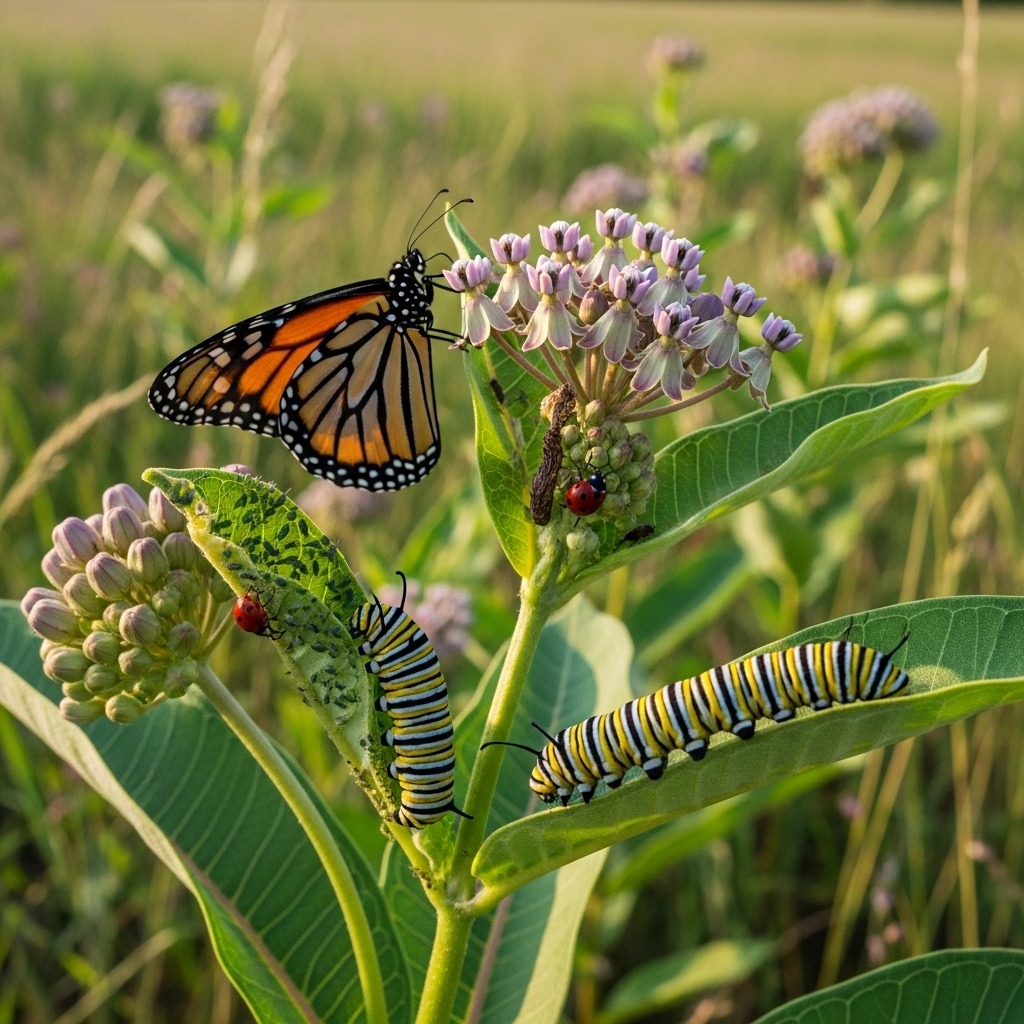
Milkweed is not just a plant; it is a cornerstone of many ecosystems. Its relationship with Monarch butterflies is particularly vital, providing both habitat and nourishment. Understanding this connection can enhance your ability to identify milkweed confidently.
Milkweed as a Habitat and Food Source
Milkweed serves as the exclusive host plant for Monarch butterflies. This means that Monarch larvae depend on milkweed for survival. The plant’s sap contains cardiac glycosides, which are toxic to predators but harmless to Monarchs. This toxicity offers a defense mechanism for the caterpillars, allowing them to thrive in the wild.
Key benefits of milkweed include:
- Nectar Source: Adult Monarchs and other pollinators feed on milkweed flowers for nectar.
- Larval Habitat: Monarch caterpillars rely solely on milkweed leaves for food.
- Biodiversity Support: Milkweed attracts various pollinators, enriching local ecosystems.
The Threat of Non-native Species
Planting non-native milkweed species can disrupt local ecosystems. Non-native varieties, such as Tropical Milkweed, may harbor diseases that affect Monarch populations. Furthermore, they can outcompete native species, diminishing biodiversity and habitat quality.
To ensure effective conservation, follow these guidelines:
- Choose Native Species: Native milkweed varieties promote healthier ecosystems and support local fauna.
- Monitor Growth: Regularly check for signs of disease or pests.
- Support Local Conservation Efforts: Participate in initiatives that promote native planting.
By understanding the ecological significance of milkweed, you reinforce your identification skills and contribute to Monarch conservation efforts. Remember, a healthy milkweed population fosters vibrant ecosystems, making your role as a gardener or conservationist crucial.
Practical Tips for Planting and Caring for Milkweed
Planting milkweed is essential for supporting Monarch butterflies and promoting biodiversity. Follow these guidelines to ensure successful growth and care for your milkweed plants.
Best Practices for Planting Milkweed
1. Select the Right Species: Choose native milkweed species for your region. For example, Common Milkweed (Asclepias syriaca) is prevalent in many areas, while Swamp Milkweed (Asclepias incarnata) thrives in wetter soils.
2. Optimal Planting Time: The best time to plant milkweed is in early spring after the last frost. This timing allows the plants to establish roots before the summer heat [12].
3. Soil Preparation: Milkweed prefers well-draining soil. Amend heavy clay or compacted soil with organic matter to enhance drainage and nutrient availability.
4. Spacing: Space plants 18 to 24 inches apart to allow for their natural growth and to facilitate airflow, which can help prevent disease.
5. Watering: Water newly planted milkweed thoroughly. Once established, they are drought-tolerant. However, regular watering during dry spells will encourage robust growth.
Caring for Your Milkweed Plants
1. Mulching: Apply a 2-3 inch layer of mulch around the base of the plants. This conserves moisture, suppresses weeds, and maintains stable soil temperatures.
2. Fertilization: Milkweed does not require heavy fertilization. If necessary, use a balanced, slow-release fertilizer in early spring to promote growth.
3. Pest Management: Monitor for aphids and other pests. Handpick them off or use insecticidal soap if infestations occur. However, be cautious to avoid harming beneficial insects like Monarch caterpillars.
Seasonal Considerations
- Spring: Focus on planting and establishing your milkweed. Fertilize and mulch as needed.
- Summer: Water regularly and check for pests. Monitor growth and the development of flowers.
- Fall: Allow seed pods to mature. Collect seeds for planting next year. Cut back dead stems in late fall to prevent disease and pests [13].
By following these practical tips, you will not only identify milkweed plants confidently but also cultivate a thriving habitat for Monarch butterflies and other pollinators.
Frequently Asked Questions
These quick answers cover the most common questions about this topic, including key details, practical tips, and common concerns.
How to identify milkweed without flowers?
Identifying milkweed without flowers relies on examining the plant’s other features. Look for a tall, erect stem that is hollow and produces a milky latex when broken. The leaves are typically broad, oval or lance-shaped, and arranged oppositely or in whorls around the stem. The plant’s height, leaf shape, and the presence of milky sap are key clues for identification even when flowers are not in bloom [1].
Why is milkweed illegal in the United States?
Milkweed itself is not illegal in the U.S.; however, certain non-native milkweed species, like Tropical Milkweed (Asclepias curassavica), are discouraged in some regions. They can harbor parasites harmful to Monarchs and outcompete native plants, disrupting local ecosystems. Always choose native species for planting to support conservation efforts [9].
Does milkweed cure warts?
There is no scientific evidence that milkweed cures warts. Historically, some cultures used plant extracts for medicinal purposes, but milkweed contains toxic compounds that can cause skin irritation or poisoning if misused. Do not use milkweed as a treatment for warts or other ailments without consulting a healthcare professional.
Should milkweed be cut down in the fall?
Yes, it is recommended to cut back milkweed plants in late fall after seed dispersal or when the plant has died back. This helps prevent disease and pests, encourages healthy growth the following season, and allows for seed collection if desired [13].
What are the benefits of planting milkweed?
Planting milkweed supports Monarch butterfly populations by providing essential habitat and food for caterpillars. It also attracts pollinators like bees and butterflies, enhances biodiversity, and contributes to ecosystem health. Native milkweed species are especially beneficial for local wildlife.
How does milkweed support Monarch butterflies?
Milkweed is the sole host plant for Monarch caterpillars. The plant’s leaves provide the necessary nutrition, while the toxins in the sap make the caterpillars and adult butterflies toxic to predators. This relationship is vital for Monarch survival and reproduction [10].
Can milkweed be grown in pots?
Yes, many milkweed species can be grown in containers, especially smaller varieties like Butterfly Weed. Use well-draining soil and place the pot in a sunny location. Container-grown milkweed requires regular watering and occasional fertilization but can be a good option for limited space or urban gardens.
What time of year is best for planting milkweed?
The optimal time to plant milkweed is in early spring after the last frost. This allows the plants to establish roots during the growing season. If planting from seeds, stratify them first or purchase pre-grown plants for immediate planting [12].
References
1. Common milkweed – Cornell CALS
2. COMMON MILKWEED – PLANTS Database
3. Milkweed | Home and Garden Education Center
4. Common Milkweed (Asclepias syriaca L.)
5. Asclepias incarnata (Marsh Milkweed, Swamp Butterfly Weed …
6. Butterfly Weed, Asclepias tuberosa – Wisconsin Horticulture
7. Common Milkweed and its Doppelgänger – BYGL (osu.edu)
8. Spreading milkweed, not myths | U.S. Fish & Wildlife Service
10. The Connection Between Milkweed and Monarch Butterflies
11. Native Gardening
12. Growing Common Milkweed Plants from Seeds
13. Plant Milkweed for Monarchs
14. Milkweed Plug Planting Instructions