
The best way to kill bamboo plants permanently is to use a combination of chemical herbicides, manual removal, and smothering techniques. I’ve tried various methods over the years and found that a strategic approach works best to eliminate these stubborn plants. Read Interesting article: Chopstick Seedling Support: Useful Tip for Young Plants
Understanding Bamboo Plants
Bamboo may look beautiful and exotic in gardens, but it can quickly turn into a nightmare for gardeners. I remember the first time I planted bamboo; I thought it would add a lovely touch to my yard. Little did I know how invasive and relentless these plants could be. Let’s take a closer look at what bamboo really is, its various types, and why it can become problematic in our gardens.
Types of Bamboo: Clumping vs. Running
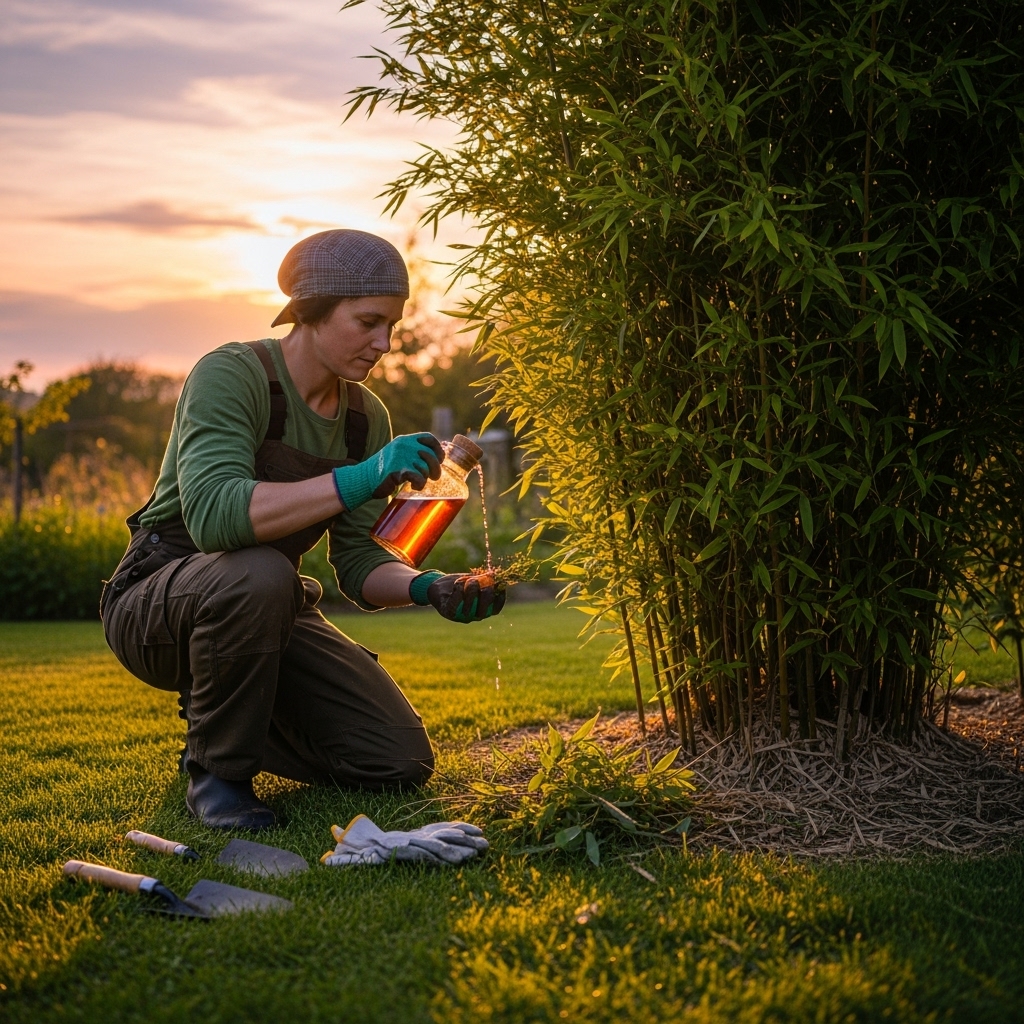
There are two main types of bamboo: clumping and running. Clumping bamboo, as the name suggests, grows in tight clusters and spreads slowly. This type can be quite manageable and is often recommended for smaller gardens. I’ve seen clumping bamboo create beautiful, dense privacy screens without taking over the entire yard.
On the other hand, running bamboo is notorious for its aggressive growth. It spreads through underground rhizomes, creating a network that can invade large areas quickly. The first time I encountered running bamboo, I was amazed at how fast it spread. It felt like I was fighting a losing battle, as it seemed to pop up overnight. Understanding the difference between these types is crucial for anyone considering planting bamboo.
Growth Patterns and Characteristics
Bamboo is one of the fastest-growing plants in the world. Some species can grow up to 35 inches in a single day! I once measured a shoot that seemed to grow visibly taller within hours. This rapid growth can be exciting at first, but it often leads to the plant outgrowing its designated space.
Another characteristic of bamboo is its extensive root system. The rhizomes can spread up to 30 feet from the original plant, making it a formidable opponent for gardeners. I learned the hard way that if you don’t contain it early on, you’ll find yourself in a constant struggle to keep it in check.
Why Bamboo Can Be Problematic in Gardens
Bamboo might add a striking visual element to gardens, but it can also choke out other plants and disrupt the local ecosystem. I remember one summer when my clumping bamboo suddenly turned into a sprawling mess, overshadowing my beloved flower beds. The competition for nutrients and sunlight can harm neighboring plants, leading to a decline in their health. This is a crucial point for anyone considering planting bamboo or already dealing with it.
Furthermore, bamboo can create challenges for maintenance. Regular pruning and cutting back are necessary to keep it contained, which can become quite labor-intensive. I found myself dedicating entire weekends just to keep the bamboo in check, which was frustrating and exhausting. For more insights on pruning, check out Pruning Bamboo for Artistic and Creative Landscaping.
In addition, the dense growth can create shelter for pests and diseases, further complicating garden management. I’ve seen my bamboo attract unwanted insects, which then spread to my other plants. The time and effort spent managing bamboo can sometimes outweigh the benefits it provides in aesthetics.
Signs That Bamboo is Taking Over Your Garden
If you’re like I was, you might be wondering if your bamboo is getting out of control. I’ve learned to recognize a few key signs that indicate it’s time to take action. Here are some things to look out for.
Rapid Growth and Spread
One of the most apparent signs is the rapid growth of bamboo. If you notice new shoots popping up around your garden more frequently than you can manage, it’s time to take a closer look. I remember being shocked at how quickly my bamboo spread, as it seemed to be everywhere! No matter how much I pruned it, it seemed to bounce back stronger.
Invasive Roots and Rhizomes
When bamboo grows aggressively, it sends out rhizomes that can invade neighboring garden spaces. If you find bamboo roots creeping into your flower beds or lawn, you need to act fast. I learned that allowing these roots to spread can lead to a bigger problem down the line, creating an even more challenging situation to manage.
Impact on Other Plants and Ecosystem
Lastly, take note of how your other plants are faring. If you notice them struggling to thrive due to overcrowding or competition for resources, bamboo might be the culprit. I once lost several beautiful perennials because they couldn’t compete with the aggressive spread of my bamboo. It’s crucial to assess the overall health of your garden continually if you have bamboo plants nearby.
Best Methods to Kill Bamboo Permanently
After realizing bamboo was taking over my garden, I started looking for effective ways to eliminate it. I’ve tried a mix of methods, and I can say that each has its own pros and cons. Here’s what I found that worked best for me.
Chemical Herbicides
Chemical herbicides can be a powerful tool in your fight against bamboo. While I prefer to use more natural methods when possible, there are times when herbicides can save you a lot of time and effort. The key is knowing how to choose and apply them properly.
Choosing the Right Herbicide
When selecting a herbicide, I learned it’s important to choose one specifically designed for tough plants like bamboo. Glyphosate-based products are common and can be very effective. I recommend looking for a systemic herbicide, which means it will be absorbed by the plant and work its way down to the roots. Always read the label carefully to ensure it’s suitable for your needs and safe for the surrounding environment.
Application Techniques
Timing is everything! I found that applying herbicides in late summer or early fall, when the bamboo is actively growing, yields the best results. I usually mix the herbicide with a little water and apply it directly to the leaves using a sprayer or sponge. This helps ensure that the chemical reaches the plant’s system. Make sure to follow the recommended dosage and take precautions to protect nearby plants, as herbicides can be harmful to them too.
Manual Removal
Manual removal is another effective method, but it can be labor-intensive. I often found that getting my hands dirty yielded satisfying results, especially when it came to understanding the roots of the problem—literally!
Digging Out the Rhizomes
To manually remove bamboo, you need to dig out the entire root system. I remember spending a sunny afternoon with a shovel, determined to get every last rhizome. It’s vital to dig deep—bamboo roots can extend quite far, sometimes up to 30 feet! I always made sure to check for any leftover pieces, as even a small segment can sprout a whole new plant.
Tools Needed for Effective Removal
Having the right tools makes manual removal much easier. I recommend using a sharp spade or a garden fork to cut through the roots effectively. A sturdy pair of gloves is essential to protect your hands, and a wheelbarrow can help you transport those stubborn rhizomes away from your garden. If you have a lot to remove, consider enlisting a friend or family member to make the process more manageable—and more fun! For those serious about gardening, investing in Essential Garden Gear: Must-Have Tools for Serious Gardeners can make a difference.
Smothering Techniques
If you prefer a less hands-on approach, smothering techniques can be quite effective. I discovered that sometimes, nature just needs a little nudge to take care of things.
Using Tarps and Mulch
To smother bamboo, I covered the affected areas with heavy tarps or mulch. This blocks sunlight from reaching the plants, essentially starving them. I found that thick layers of organic mulch worked well, but you need to keep an eye on it and replace it if it starts to break down. This method may take some time, but it can be a useful way to control growth without chemicals.
Blocking Sunlight for Control
In addition to tarps, using cardboard or black plastic can effectively block sunlight. I remember spreading cardboard over my bamboo and weighing it down with rocks. After a few months, I noticed a significant reduction in growth. Just make sure you check periodically and remove any new shoots that manage to peek through.
Natural Remedies
For those who prefer eco-friendly solutions, natural remedies can also help tackle bamboo. I’ve tried a few, and while they may not be as immediately effective as chemicals, they can be a good option.
Vinegar and Salt Solutions
Mixing vinegar and salt is one of my favorite natural solutions. The acetic acid in vinegar combined with salt creates an environment that’s hostile to plants. I usually mix equal parts of both ingredients and spray the solution directly onto the bamboo leaves. Just be careful where you apply it, as it can harm other plants in the vicinity.
Boiling Water Method
Another method I’ve found effective is pouring boiling water over the bamboo. It’s simple and requires no special ingredients. I remember boiling a pot of water and carefully pouring it onto the bamboo roots. The heat kills the plant quickly, but like the other methods, you might need to repeat it a few times to fully eliminate it.
Using these methods, I’ve managed to control bamboo in my garden effectively. It’s a journey, but with persistence, I’ve seen significant improvements. If you’re battling bamboo, I hope you find these methods helpful too!
Preventing Bamboo Regrowth
Once I managed to get my bamboo under control, I quickly learned that preventing regrowth is just as important as eliminating it in the first place. After all, the last thing I wanted was to go through that labor-intensive battle again! Here are some strategies I’ve found effective in keeping bamboo from coming back.
Installing Barriers
One of the most effective ways to prevent bamboo from regrowing is to install physical barriers. I discovered that these can help contain the plant and stop its invasive roots in their tracks.
Root Barriers and Their Effectiveness
Root barriers are specifically designed to block the underground rhizomes of bamboo. When I decided to install a root barrier, I learned that it’s crucial to choose a material that is at least 30 inches deep. I opted for a high-density polyethylene barrier, which is durable and can withstand the pressure from bamboo roots. Setting it up involved digging a trench around the bamboo area and placing the barrier vertically in the ground, ensuring that it was tall enough to prevent any sneaky rhizomes from escaping. This has worked wonders for me; I feel more secure knowing that I’ve taken steps to prevent those relentless roots from creeping into my garden again.
Regular Maintenance and Monitoring
Even with barriers in place, regular maintenance is key to keeping bamboo at bay. I found that making it a part of my gardening routine significantly reduces the chances of regrowth.
How Often to Check for Regrowth
I set aside time every month to inspect the areas where bamboo used to thrive. During my checks, I look for any new shoots or signs of rhizome activity. If I spot any, I immediately take action—whether that means digging them out or applying one of my natural remedies. I’ve learned that being proactive is essential; the earlier I catch any signs of regrowth, the easier it is to manage. I also encourage my friends to keep an eye on their gardens, as I know how quickly bamboo can re-establish itself if given the chance.
Alternative Planting Options
If you’re thinking about planting something new in your garden, it’s essential to consider non-invasive plants. After my bamboo experience, I became more aware of the potential impact of new additions to my garden.
Choosing Non-Invasive Plants
I started researching plants that would flourish without taking over my garden space. I found that there are plenty of beautiful options out there that won’t threaten my other plants. For instance, I fell in love with ornamental grasses that provide similar aesthetic appeal without the aggressive growth patterns of bamboo. I also discovered some lovely flowering shrubs that add color without becoming invasive. By choosing these types of plants, I’ve been able to create a vibrant garden without worrying about a takeover.
In my experience, prevention is the best cure when it comes to bamboo. By installing barriers, maintaining a regular check-up routine, and opting for non-invasive alternatives, I’ve made my garden a more harmonious place. It’s a lot of work, but the peace of mind that comes from knowing I’ve taken the right steps is well worth it!
Frequently Asked Questions (FAQs)
Can I kill bamboo without chemicals?
Absolutely! There are several natural methods to kill bamboo, like manually removing the rhizomes, using vinegar and salt solutions, or pouring boiling water. I’ve had success with these techniques, but they may require persistence and multiple applications.
How long does it take to kill bamboo completely?
It can vary depending on the method used. With chemical herbicides, you might see results within a few weeks, while natural methods often take longer. Personally, I found that manual removal can take several months, especially if you’re trying to get every last rhizome.
What should I do if bamboo keeps coming back?
If you notice regrowth, it’s essential to act quickly. Check for any rhizomes that might have been left behind and remove them immediately. I also recommend re-evaluating your prevention methods, like checking barriers or increasing the frequency of your monitoring.
Are there any eco-friendly methods to remove bamboo?
Yes! Some effective eco-friendly methods include using vinegar and salt solutions, boiling water, and smothering techniques with tarps or cardboard. These methods can be gentle on the environment while still controlling unwanted growth.
Frequently Asked Questions
What are the two main types of bamboo?
The two main types of bamboo are clumping and running. Clumping bamboo grows in tight clusters and spreads slowly, while running bamboo spreads aggressively through underground rhizomes.
How fast can bamboo grow?
Bamboo is one of the fastest-growing plants in the world, with some species capable of growing up to 35 inches in a single day.
What methods can be used to kill bamboo permanently?
The best methods to kill bamboo permanently include using chemical herbicides, manual removal, and smothering techniques.
What is the recommended type of herbicide for killing bamboo?
Glyphosate-based products are commonly recommended for killing bamboo, especially systemic herbicides that are absorbed by the plant and work their way down to the roots.
What are some natural methods to control bamboo growth?
Natural methods to control bamboo growth include using vinegar and salt solutions, pouring boiling water over the bamboo, and smothering techniques with tarps or cardboard.
How deep should a root barrier be to prevent bamboo regrowth?
A root barrier should be at least 30 inches deep to effectively block the underground rhizomes of bamboo.
What signs indicate that bamboo is taking over a garden?
Signs that bamboo is taking over a garden include rapid growth and spread, invasive roots and rhizomes encroaching on other plants, and negative impacts on the health of neighboring plants.
What tools are recommended for manually removing bamboo?
Recommended tools for manually removing bamboo include a sharp spade or garden fork, gloves for hand protection, and a wheelbarrow for transporting rhizomes.
How often should I check for bamboo regrowth after removal?
It is advisable to check for bamboo regrowth at least once a month to catch any new shoots or signs of rhizome activity early on.
What are some alternative planting options to avoid invasive growth?
Non-invasive plants such as ornamental grasses and flowering shrubs are good alternatives to bamboo, providing aesthetic appeal without the aggressive growth patterns.