
Planting and harvesting garlic is a rewarding experience that can yield delicious bulbs for your kitchen. With the right knowledge, anyone can grow their own garlic successfully, regardless of gardening experience. If you’re interested in expanding your gardening skills, you might also want to learn how to plant raspberries for bigger harvests.
Table of Contents
Understanding Garlic Varieties
Before diving into the planting process, it’s important to understand the different types of garlic available. The variety you choose can significantly impact your growing experience and ultimate yield. I remember when I first started, I was overwhelmed by the options, but once I did a little research, everything became clearer.
Hardneck vs. Softneck Garlic
Garlic generally falls into two main categories: hardneck and softneck. Hardneck garlic, as the name suggests, has a stiff central stem, or “neck,” and produces fewer, but larger cloves. This variety typically has a more robust flavor and is known for its complex taste. I’ve found that hardneck varieties often do better in colder climates, which is a plus for those of us living in northern regions.
On the other hand, softneck garlic lacks a hard stem and can produce a larger number of smaller cloves. This variety is commonly found in grocery stores and is known for its long shelf life. I personally tend to favor softneck varieties for their ease of storage and milder flavor, perfect for everyday cooking.
Popular Garlic Varieties to Grow
- German White: A hardneck variety that’s known for its strong flavor and large cloves.
- Music: Another hardneck type, this one is renowned for its spicy taste and resilience.
- California Early: A softneck garlic that grows well in various climates and has a mild taste.
- Silverwhite: A softneck variety that’s popular for its storage capabilities and versatility in cooking.
I’ve tried a few of these myself, and each brings its unique flavor profile to the table. When deciding on a variety, think about what you enjoy most in your cooking and what will thrive in your local conditions.
Choosing the Right Garlic for Your Climate
Your local climate plays a crucial role in determining what garlic variety will thrive in your garden. Hardneck varieties are generally better suited for cooler climates, while softneck varieties can handle warmer temperatures. I learned this the hard way when I tried to grow a hardneck variety in a hot summer, and let’s just say, the results were less than stellar!
In addition to temperature, consider the length of your growing season. If you have a shorter season, opt for early maturing varieties. I found that checking with local gardening groups or extension services can provide valuable insights into what works best in your area. For instance, if you’re also interested in root vegetables, you might explore how to plant potatoes for bigger harvests.
Preparing to Plant Garlic
Once you’ve chosen your garlic variety, it’s time to prepare for planting. This stage is crucial for ensuring a successful harvest. I always find that taking the time to prepare properly pays off in the end.
When to Plant Garlic
Timing is everything when it comes to planting garlic. The best time to plant garlic is in the fall, about 4-6 weeks before the ground freezes. This allows the roots to establish before winter sets in. In my experience, I like to plant my garlic between late September and early November, depending on the weather. If you miss the fall window, you can also plant in early spring, but fall planting generally yields a better harvest.
Choosing the Right Location
Garlic loves sunlight, so choosing the right location in your garden is key. I’ve learned that a spot that receives at least 6-8 hours of direct sunlight each day works best. Additionally, garlic prefers well-draining soil, so avoid areas where water tends to pool after rain. I had a patch that looked perfect but was too soggy, which led to some disappointing results.
Soil Requirements and Preparation
Healthy garlic starts with good soil. Garlic thrives in loamy, fertile soil with a pH between 6.0 and 7.0. Before planting, I recommend adding organic matter like compost or well-rotted manure to enrich the soil. This not only provides nutrients but also improves drainage. I usually mix in a few inches of compost into the top layer of soil, and it makes a noticeable difference in growth.
Testing your soil can also be beneficial. There are simple kits available at garden centers, and they can help you understand what nutrients your soil lacks. In my case, I found that my soil was low in nitrogen, so I added a bit of organic fertilizer before planting.
Gathering Necessary Tools and Supplies
Before you start planting, gather all the tools you’ll need. Here’s a quick checklist of what I usually prepare:
- Garlic bulbs (of course!)
- A garden trowel or spade
- Rake for soil preparation
- Mulch (like straw or leaves)
- Watering can or hose
Having everything ready makes the planting process smoother. I’ve found that when I’m organized, I can enjoy the experience of gardening much more, rather than scrambling for tools mid-planting!
How to Plant Garlic
Now that you’re prepared, let’s dive into the actual planting process. This is where the magic begins, and I always feel a sense of excitement when it’s time to plant.
Preparing Garlic Cloves for Planting
Start by breaking apart the garlic bulbs into individual cloves. Ensure you do this carefully to avoid damaging them. I usually plan to plant the biggest cloves, as they tend to yield the best results. It’s also important to keep the papery skins on the cloves until you’re ready to plant; this helps protect them from rot and disease.
Planting Methods: Direct vs. Raised Beds
Garlic can be planted directly into the ground or in raised beds. I prefer raised beds for better drainage and soil control. If you’re planting directly into the ground, make sure the soil is well prepared and loose. For raised beds, the same soil requirements apply, but I find them easier to manage and weed throughout the growing season.
Planting Depth and Spacing Guidelines
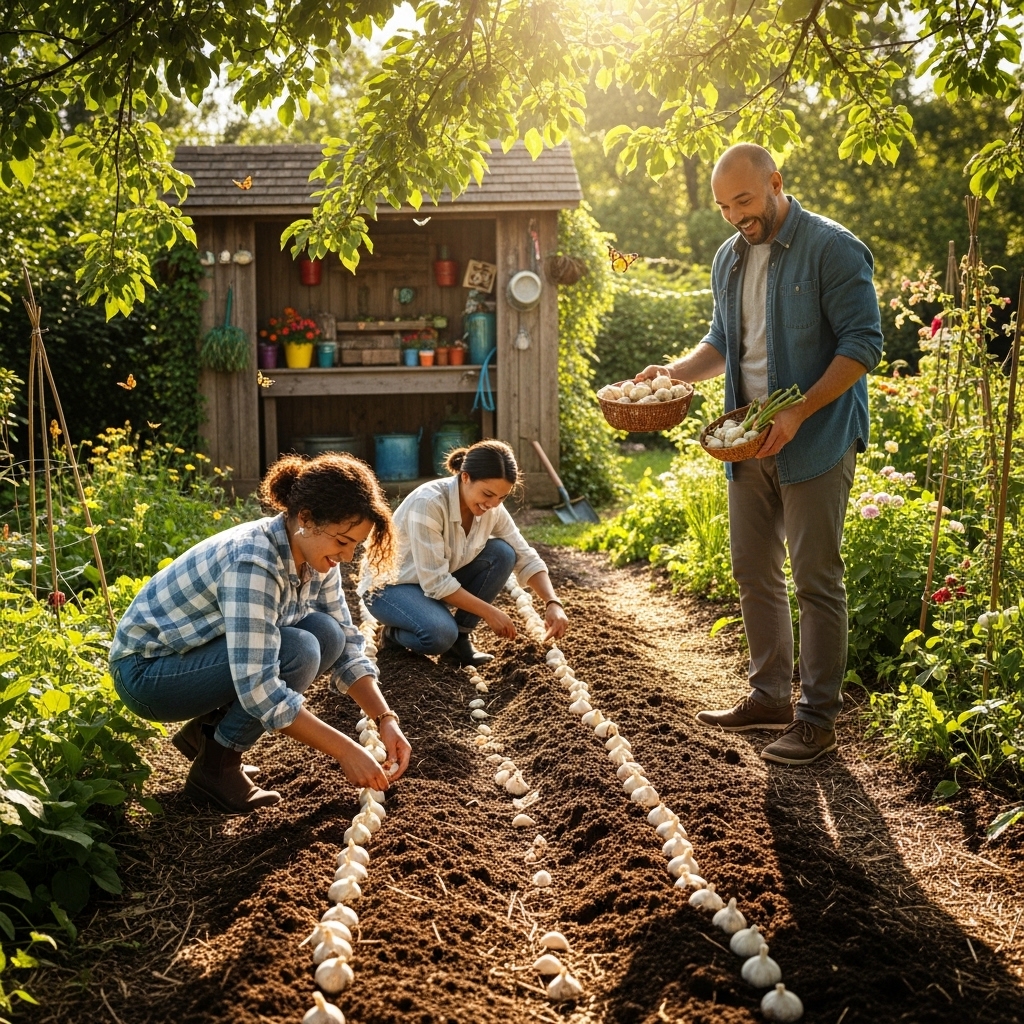
When planting garlic, it’s important to plant the cloves with the pointed end facing up. I usually plant them about 2 inches deep and spaced about 6 inches apart. This spacing allows for good air circulation and room for the bulbs to grow. I’ve spaced them too close before, and the result was smaller bulbs—definitely not what I was hoping for!
Caring for Garlic After Planting
After you’ve planted your garlic, water it well. I like to give them a deep watering right after planting to help settle the soil around the cloves. Then, I usually cover my planting area with mulch to retain moisture and suppress weeds. This is one of the best gardening tricks I’ve learned; it saves so much time on weeding later!
Garlic Care Throughout the Growing Season
Once your garlic is in the ground, the next phase begins: caring for it throughout the growing season. I’ve learned that this is a critical time, as the right care can make a world of difference in the size and flavor of your garlic bulbs come harvest time.
Watering Guidelines
Watering is essential, especially in the early stages after planting. Garlic roots need moisture to establish themselves. I usually aim to keep the soil consistently moist but not soggy. Too much water can lead to rot, while too little can hinder growth. A general rule I follow is to water about once a week, adjusting based on rainfall. As the growing season progresses and the plants start to develop, I reduce watering to encourage the bulbs to mature. I remember the first year I grew garlic; I was so eager to see results that I overwatered, resulting in a disappointing yield!
Fertilizing Garlic Plants
Feeding your garlic plants properly is vital for their growth. I typically apply a balanced organic fertilizer in early spring when the garlic starts to sprout. This gives them a nutrient boost when they need it most. I’ve learned to follow the instructions on the fertilizer packaging, as too much can harm the plants. Additionally, I like to side-dress with compost throughout the growing season. It’s a simple way to provide ongoing nutrition without overwhelming the plants. I’ve found that healthy, well-fed garlic tends to have a richer flavor and larger bulbs.
Pest and Disease Management
Pests and diseases can be a gardener’s nightmare, but I’ve discovered that being proactive is key. I often inspect my plants regularly for signs of trouble. Common pests like aphids or thrips can be managed with insecticidal soap or natural remedies like neem oil. I’ve had success using garlic spray, which sounds a bit ironic, doesn’t it? Keeping the garden clean helps prevent diseases, too. I’ve learned to remove any yellowing or dying leaves, which can harbor pathogens. If I ever notice any unusual spots or signs of disease, I make sure to act quickly to contain the problem.
Weed Control Strategies
Weeds can compete with my garlic for nutrients and moisture, so I take weed control seriously. I’ve found that mulching can be one of the easiest solutions. Layering straw or grass clippings around my garlic not only suppresses weeds but also retains moisture in the soil. I try to keep the mulch a few inches away from the garlic plants themselves to avoid any rot. If I see any weeds popping up, I pull them out by hand. I prefer hand weeding because it allows me to inspect the plants closely and gives me a bit of exercise, too! I remember the first time I neglected weeding, and my garlic suffered for it; now I make it a priority.
Signs of Garlic Maturity
As summer rolls on, I start to watch for signs that my garlic is maturing. Knowing when to harvest is crucial, and I’ve picked up a few tricks over the years to help me determine the right time.
How to Know When Garlic is Ready to Harvest
One of the first signs that garlic is ready to harvest is when the lower leaves begin to yellow and die back, while the upper leaves remain green. I usually look for about half of the leaves to be yellowing. I’ve learned to resist the urge to pull them too early, as harvesting too soon can lead to smaller bulbs and a less intense flavor. When I see the right amount of yellowing, I can’t help but get excited; it feels like a reward for all the hard work!
Factors Affecting Harvest Time
The time it takes for garlic to mature can vary based on the variety and local growing conditions. Hardneck varieties typically take longer than softneck ones. I’ve found that weather patterns can also influence maturity. If it’s been a particularly hot and dry season, I might need to harvest a bit earlier to avoid stressing the plants. I keep a close eye on the weather and adjust my expectations accordingly. It’s all part of the gardening learning curve, and I’ve come to appreciate the uniqueness of each season’s garlic harvest.
Harvesting Garlic
Best Practices for Harvesting Garlic
When the time comes to harvest garlic, I feel a mix of excitement and a bit of anxiety. It’s like waiting for a surprise party to unfold. To ensure I get the best yield, I’ve learned several best practices that make the process smoother. First, I always choose a dry, sunny day for harvesting. Wet conditions can lead to rotting, and we definitely don’t want that! I also try to take my time when pulling the bulbs from the ground; a gentle tug helps avoid breaking the necks. I remember my first year when I was too eager and ended up snapping several necks, which wasn’t ideal for storage.
Tools Needed for Harvesting
Having the right tools on hand can make all the difference during the harvest. I typically use a garden fork or a spade for loosening the soil around the garlic bulbs. This makes it easier to pull them out without damaging the bulbs. I also keep a pair of gloves handy to protect my hands from dirt and sharp edges. After lifting the bulbs, I like to have a basket or container ready to carry them inside. I find that keeping the bulbs in a single layer helps prevent bruising and preserves their quality.
How to Handle Harvested Garlic
Once I’ve harvested the garlic, the next step is all about handling it properly. I avoid washing the bulbs right away; instead, I gently shake off any excess dirt. Washing them can introduce moisture that promotes rot. I usually lay them out in a single layer in a shaded, airy spot. This allows them to dry out a bit before curing. I remember the first time I harvested, I was so excited that I washed them immediately, thinking it would be better. I learned my lesson the hard way! Allowing them to dry helps preserve their flavor and extends their shelf life.
Post-Harvest Garlic Care
Curing Garlic for Storage
Curing garlic is an essential step that I’ve come to appreciate over time. Proper curing enhances the flavor and ensures that the garlic can be stored for months. I typically tie the garlic plants together in small bundles, using the leaves as natural ties. Then, I hang them in a cool, dry, and dark place with good air circulation. A shed or a basemínkat works perfectly for this. I let them cure for about two to four weeks, depending on the humidity levels. Once the outer skins feel dry and papery, I know they’re ready for the next step. It’s a bit of a waiting game, but the results are well worth it!
How to Store Garlic Properly
After curing, I need to think about storage. I’ve found that garlic stores best in a cool, dark place with good ventilation. A mesh bag or a basket allows for air circulation, which is crucial to prevent mold. I usually avoid storing garlic in the refrigerator, as the moisture can encourage sprouting. Instead, I keep mine in a pantry or a cupboard. For me, it’s like having a culinary treasure trove waiting to be used. When I reach for my garlic, I can feel the satisfaction of knowing I grew it myself.
Using Garlic: Culinary and Health Benefits
Not only is garlic a staple in my kitchen for its flavor, but I also love its health benefits. It’s packed with antioxidants and has been linked to various health improvements, including better heart health and immune support. I often toss raw garlic into salad dressings or use it to flavor roasted vegetables. The taste is just so vibrant! Cooking with garlic transforms dishes in ways that I never get tired of.
Additionally, I’ve discovered that garlic can be used in many forms. I often roast whole bulbs to create a sweet and creamy spread for bread. I also enjoy making garlic-infused oils, which add a wonderful flavor to my dishes. It’s remarkable how versatile this humble plant can be!
Frequently Asked Questions
What are the two main categories of garlic?
Garlic generally falls into two main categories: hardneck and softneck. Hardneck garlic has a stiff central stem and produces fewer, larger cloves, while softneck garlic lacks a hard stem and produces a larger number of smaller cloves.
Which garlic varieties are recommended for cooler climates?
Hardneck varieties are generally better suited for cooler climates, making them a good choice for gardeners in northern regions.
When is the best time to plant garlic?
The best time to plant garlic is in the fall, about 4-6 weeks before the ground freezes. If you miss this window, you can also plant in early spring, but fall planting typically yields a better harvest.
What is the ideal location for planting garlic?
Garlic loves sunlight and should be planted in a location that receives at least 6-8 hours of direct sunlight each day. It also prefers well-draining soil, so avoid areas where water tends to pool.
How deep should garlic cloves be planted?
Garlic cloves should be planted about 2 inches deep with the pointed end facing up and spaced about 6 inches apart to allow for good air circulation and room for the bulbs to grow.
What are some effective weed control strategies for garlic?
Mulching with straw or grass clippings can suppress weeds and retain moisture in the soil. Hand weeding is also effective, as it allows for close inspection of the garlic plants.
How can I tell when my garlic is ready to harvest?
Garlic is ready to harvest when the lower leaves begin to yellow and die back, while the upper leaves remain green. Typically, about half of the leaves should be yellowing.
What should I do immediately after harvesting garlic?
After harvesting, gently shake off any excess dirt without washing the bulbs, and lay them out in a single layer in a shaded, airy spot to dry before curing.
How should garlic be cured for storage?
Garlic should be tied in small bundles using the leaves and hung in a cool, dry, and dark place with good air circulation for about two to four weeks until the outer skins feel dry and papery.
What are the culinary benefits of using garlic?
Garlic adds a vibrant flavor to dishes and is packed with antioxidants, contributing to better heart health and immune support. It can be used in various forms, such as roasted for spreads or infused in oils.