
Planting asparagus is a rewarding endeavor that involves selecting the right spot, preparing the soil, and choosing between seeds or crowns. From my experience, with the right guidance, anyone can successfully grow this nutritious vegetable. Read Interesting article: Non-Cruciferous Vegetables: A List of Nutrient-Rich Selection
Understanding Asparagus: An Overview
What is Asparagus?
Asparagus is a perennial vegetable known for its unique spear-like shape and rich flavor. Belonging to the lily family, it is one of the first vegetables to emerge in spring, making it a delightful addition to any garden. I still remember the first time I tasted freshly harvested asparagus; the crispness and earthy flavor were unlike any store-bought version I’d ever had!
Health Benefits of Asparagus
Not only is asparagus delicious, but it also packs a significant nutritional punch. It’s low in calories and high in essential vitamins and minerals, including vitamins A, C, E, and K, as well as folate and fiber. I learned that asparagus is also a natural diuretic and contains antioxidants, which can help reduce the risk of chronic diseases. Adding this nutrient-rich vegetable to our diet has certainly been a game-changer for my family’s health. For more information on nutrient-rich options, check out Non-Cruciferous Vegetables: A List of Nutrient-Rich Selection.
Types of Asparagus (Green, Purple, White)
When it comes to asparagus, there are three main types to consider: green, purple, and white. Green asparagus is the most common and grows in sunlight, which gives it its vibrant color. Purple asparagus, on the other hand, is sweeter and has a unique flavor, making it a favorite for many chefs. White asparagus is grown underground, away from sunlight, resulting in its pale color and a more delicate taste. During my gardening journey, I’ve experimented with all three, and each type brings its own charm to the table!
Choosing the Right Location for Planting Asparagus
Sunlight Requirements
Sunlight is crucial for growing healthy asparagus. I’ve found that a sunny spot receiving at least 6-8 hours of direct sunlight daily is ideal. This helps the plants thrive and ensures a bountiful harvest. If you’re unsure about your garden’s sunlight exposure, consider observing it throughout the day or using a sunlight meter. Trust me, a well-lit area can make all the difference!
Soil Type and Quality
Asparagus prefers well-draining, sandy loam soil with a pH level between 7.0 and 7.5. I remember the first time I planted asparagus in heavy clay soil, and it didn’t turn out well. It’s essential to amend your soil with organic matter, like compost, to improve its quality. Testing your soil before planting can help you determine what amendments are needed. I recommend using a simple soil test kit to get started.
Drainage Considerations
Good drainage is vital for asparagus because soggy roots can lead to rot. I learned this the hard way when a heavy rain resulted in waterlogged soil, damaging my plants. To ensure proper drainage, I recommend planting asparagus in raised beds or on sloped areas where water can run off. Adding organic matter to the soil can also improve drainage and help retain moisture during dry spells.
Preparing to Plant Asparagus
When to Plant Asparagus
The timing of planting asparagus is key to successful growth. I usually plant my asparagus crowns in early spring as soon as the soil can be worked, which is typically when the frost has passed. If you’re starting from seed, you might want to start them indoors about 12 weeks before the last frost date. Patience is essential when growing asparagus, as it takes a few years to establish, but the rewards are worth it!
Asparagus Planting Zones
Asparagus grows best in USDA Hardiness Zones 3 to 11, depending on the variety. I’ve found that checking my local climate zone helps me understand what varieties will thrive in my garden. If you’re unsure about your zone, you can easily find a zone map online. This knowledge will guide you in selecting the right asparagus types to plant.
Tools and Supplies Needed
Before diving into planting, it’s good to gather the necessary tools and supplies. Here’s a quick list of what I always keep handy:
- Garden spade or shovel
- Rake
- Garden fork
- Soil test kit
- Organic compost
- Asparagus crowns or seeds
- Mulch (optional)
Having the right tools not only makes the process smoother but also more enjoyable. Plus, I’ve found that it’s easier to tackle the preparation work when everything is in one place!
How to Plant Asparagus
Starting from Seed vs. Crowns
When it comes to planting asparagus, you have two main options: seeds or crowns. I started with crowns, which are one-year-old plants, because they are easier and yield faster results. However, if you’re feeling adventurous, starting from seed can be rewarding, albeit a bit more challenging. Seeds require a longer growing season and more care. For beginners, I usually recommend starting with crowns for quicker gratification!
Step-by-Step Planting Instructions
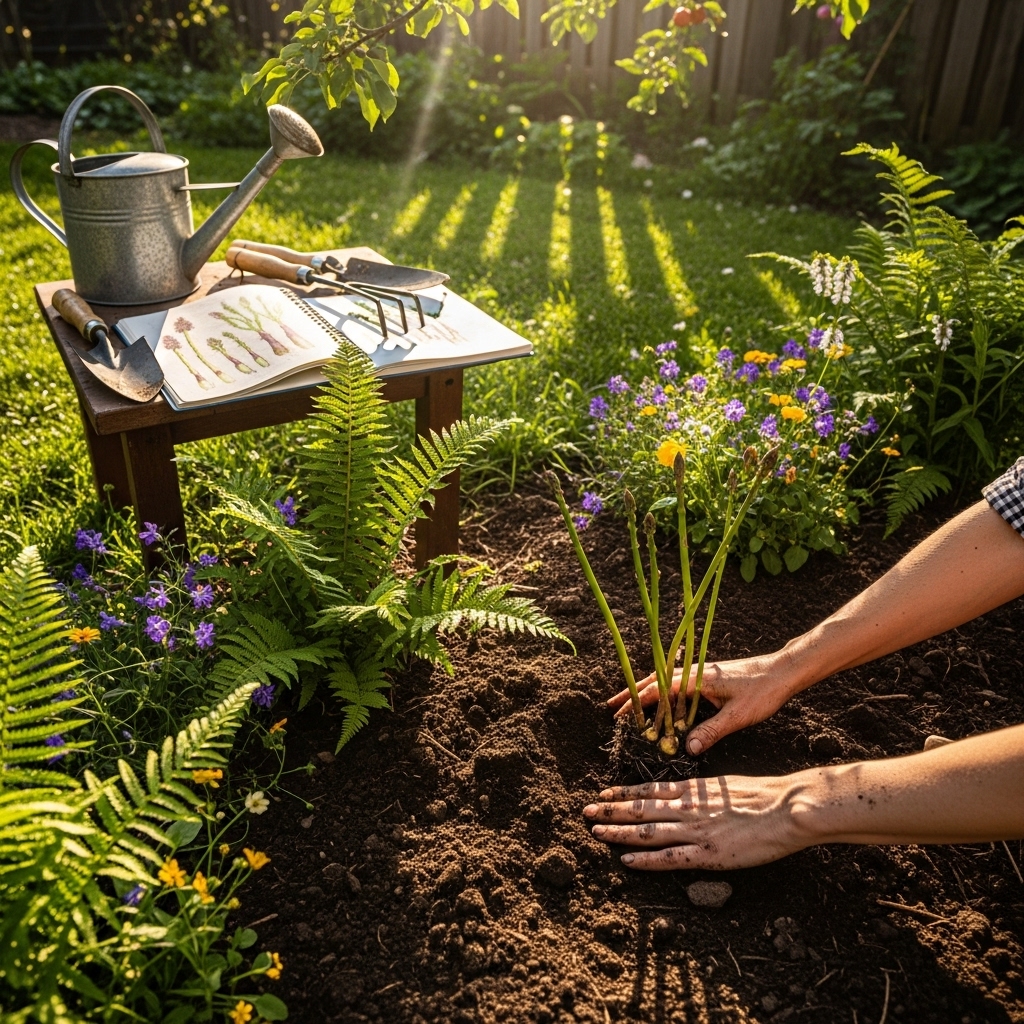
Now, let’s get into the nitty-gritty of planting asparagus. Here’s how I do it:
- Prepare the soil by tilling it to a depth of about 12 inches and mixing in organic compost.
- Dig trenches about 12 inches wide and 6-8 inches deep. Space them 3-4 feet apart.
- Place the crowns in the trench, spreading the roots out gently. Make sure the buds are facing up!
- Cover the crowns with about 2 inches of soil and water gently.
- As the plants grow, gradually fill in the trench with soil until it’s level with the ground.
Following these steps has always led to strong, healthy asparagus plants in my garden!
Spacing and Arrangement of Plants
Proper spacing is crucial for healthy growth. I like to space my asparagus crowns at least 12-18 inches apart within the trench. This gives each plant room to grow without competing for nutrients. When planting in rows, keeping about 4-5 feet between rows allows for easy access during harvesting and maintenance. Trust me, you’ll be grateful for that space later on!
Asparagus Care and Maintenance
Watering Guidelines
Watering asparagus is crucial, especially in the early stages of growth. I’ve learned that asparagus plants prefer consistent moisture but don’t like to sit in soggy soil. So, I make sure to water them deeply but infrequently. During the first couple of years, I aim for about an inch of water per week, either from rainfall or supplemental watering. As the plants mature, they become more drought-tolerant, but I still keep an eye on them during particularly dry spells. I remember one summer when I neglected to water them enough, and I could see the stress in the plants. I quickly adjusted my routine and saw them bounce back! Keeping a regular watering schedule has been key for me.
Fertilization Tips
Fertilizing asparagus can seem daunting, but I’ve found it to be quite straightforward. I apply a balanced fertilizer in the spring as the plants start to emerge. I usually opt for an organic option, like compost or well-rotted manure, which helps nourish the soil over time. After the first growing season, I learned to be cautious about over-fertilizing, as this can lead to excessive leaf growth but less spears. I typically feed my asparagus again in late summer after the harvest period, which helps prepare them for the next growing season. It’s all about giving them the nutrients they need without overwhelming them!
Weed Control Strategies
Weeds can become a serious issue in an asparagus garden if not managed properly. I’ve experienced firsthand how invasive weeds can choke out young asparagus plants. To combat this, I’ve developed a two-fold approach. First, I apply a thick layer of mulch around the plants after planting. This not only suppresses weeds but also helps retain moisture in the soil. I use straw or wood chips, which has worked wonders for me. Secondly, I hand-pull any weeds that do pop up, especially in the first year. I make it a ritual to check for weeds every few weeks. I find that being proactive really pays off in the long run.
Pest and Disease Management
Like any garden, my asparagus patch is not immune to pests and diseases. I remember the first time I spotted aphids on my plants; it was a bit alarming! However, I found that a simple solution was to spray them off with a strong stream of water. For more persistent pests, I’ve turned to insecticidal soap, which is a safer option that doesn’t harm beneficial insects. Additionally, I keep a close watch for signs of diseases like rust or blight. I’ve learned that good air circulation and avoiding overcrowding help prevent these issues. Each spring, I prune back any dead or damaged foliage, which has really helped keep my plants healthy.
Harvesting Asparagus
When to Harvest Asparagus
Harvesting asparagus correctly is vital to enjoying its deliciousness. I usually begin to harvest spears in their second or third year, as this is when they start producing enough for a good pick. The key to knowing when to harvest is to look for spears that are about 6-8 inches tall. I’ve found that if I wait too long, the spears can become tough and woody. Timing is everything! I typically harvest for about 6-8 weeks in the spring before letting the plants grow and establish themselves for the next season. It can be tempting to keep picking, but I’ve learned that allowing some spears to grow into ferns helps the plant store energy for future years.
How to Harvest Asparagus Properly
When it comes to actually harvesting the asparagus, I’ve discovered the best method is to snap the spears at ground level. You want to avoid cutting them with scissors or knives, as this can damage the plant and lead to disease. The spears will naturally break at a weak point, which also helps with ensuring a clean cut. I remember the thrill of my first harvest; it felt like a little victory each time I snapped off a spear! I also make sure to harvest in the morning when the spears are crisp and full of moisture for the best flavor.
Post-Harvest Handling and Storage
After harvesting, I like to handle my asparagus with care to ensure it stays fresh. I usually place the freshly cut spears upright in a glass of water, similar to how you would with flowers, until I’m ready to use them. This keeps them hydrated and crisp. If I can’t use them immediately, I typically wrap them in a damp paper towel and store them in a plastic bag in the fridge. From my experience, this method helps maintain their freshness for about a week. I’ve also experimented with blanching and freezing asparagus for later use, which is a great way to enjoy them long after the season has ended!
Common Challenges and Solutions
Dealing with Poor Soil Conditions
One of the biggest challenges I faced when growing asparagus was dealing with poor soil conditions. Initially, my garden soil was compacted and had low fertility, which I learned was not ideal for asparagus. To tackle this, I started by improving the soil structure. I added plenty of organic matter like compost and well-rotted manure, which not only increased fertility but also improved drainage. I remember being amazed at how quickly the soil transformed! If you’re in a similar situation, consider conducting a soil test to see what specific nutrients are lacking. This way, you can tailor your amendments for better results. Over time, I’ve seen my asparagus thrive as I continued to enrich the soil, proving that with a little effort, you can turn poor soil into a flourishing garden bed.
Managing Pests and Diseases
Pests and diseases can be a gardener’s nightmare, and I’ve certainly had my share of encounters. One year, my asparagus plants were plagued by asparagus beetles, which were munching away on the leaves. I quickly learned that the best defense is a good offense. I started monitoring my plants regularly and removing any pests by hand whenever I spotted them. Additionally, I introduced beneficial insects like ladybugs to help control the pest population naturally. For diseases, practicing crop rotation and ensuring good air circulation around the plants has been crucial. I’ve found that keeping my asparagus bed clean and tidy by removing any dead foliage has really helped minimize disease issues over the years.
Seasonal Challenges
Asparagus is a resilient plant, but it’s not immune to seasonal challenges. For instance, I’ve experienced issues during extreme weather fluctuations, particularly late frosts in spring that can damage young spears. To safeguard my plants, I’ve learned to cover them with a frost cloth on particularly chilly nights. Similarly, during hot summer months, I’ve noticed that my asparagus can struggle without enough moisture. To combat this, I implemented a drip irrigation system, which ensures consistent watering while conserving water. I’ve come to understand that being proactive rather than reactive is essential in gardening, and addressing these seasonal challenges early has made a significant difference in the health of my asparagus plants.
Additional Tips for Successful Asparagus Gardening
Companion Planting with Asparagus
Companion planting has become one of my favorite strategies in the garden, especially when it comes to asparagus. I’ve found that planting asparagus alongside certain herbs and vegetables can actually boost its growth and deter pests. For example, basil and parsley are great companions that can enhance the flavor of asparagus while also repelling harmful insects. I also like to plant tomatoes nearby; they seem to thrive together. However, I’ve learned to avoid planting asparagus near onions and garlic, as they can compete for nutrients and inhibit each other’s growth. Experimenting with companion planting has not only been fun but has also created a more balanced ecosystem in my garden!
Long-term Care for Asparagus Beds
Asparagus is a long-term investment, and taking care of the beds properly is crucial for ongoing success. I’ve found that annual maintenance is essential to keep the plants healthy. After each harvest season, I make it a point to let the ferns grow for the rest of the year. This allows the plants to store energy for the next growing season. Additionally, I apply a layer of mulch in the fall to protect the crowns over winter, which has helped me avoid frost damage. I’ve also learned that periodically dividing older crowns can rejuvenate the bed, leading to even better production. Regular attention and care have turned my asparagus bed into a productive source of fresh spears year after year!
Planning for Future Seasons
Planning ahead is not just for the short-term; it’s vital for the long-term success of your asparagus garden. I’ve learned to keep a gardening journal where I note down what worked well and what didn’t each season. This has helped me make informed decisions for the following years. I also plan for crop rotation and consider which varieties of asparagus to plant based on past performance and climate conditions. It’s fascinating to think about how a little planning can lead to even greater yields in the future. I believe that by being mindful of what I’ve learned and adjusting my approach, I can continue to enjoy bountiful harvests for many years to come!
Frequently Asked Questions
What is asparagus?
Asparagus is a perennial vegetable known for its unique spear-like shape and rich flavor. It belongs to the lily family and is one of the first vegetables to emerge in spring.
What are the health benefits of asparagus?
Asparagus is low in calories and high in essential vitamins and minerals, including vitamins A, C, E, and K, as well as folate and fiber. It is a natural diuretic and contains antioxidants, which can help reduce the risk of chronic diseases.
What types of asparagus are there?
There are three main types of asparagus: green, purple, and white. Green asparagus is the most common, purple asparagus is sweeter and has a unique flavor, while white asparagus is grown underground and has a more delicate taste.
How much sunlight does asparagus need?
Asparagus needs at least 6-8 hours of direct sunlight daily for healthy growth. A well-lit area is crucial for a bountiful harvest.
What type of soil is best for growing asparagus?
Asparagus prefers well-draining, sandy loam soil with a pH level between 7.0 and 7.5. Improving soil quality with organic matter, like compost, is essential.
When should I plant asparagus?
Asparagus crowns should be planted in early spring as soon as the soil can be worked, typically after the frost has passed. If starting from seed, plant indoors about 12 weeks before the last frost date.
How far apart should I space asparagus crowns?
Asparagus crowns should be spaced at least 12-18 inches apart within the trench, with about 4-5 feet between rows to allow for easy access during harvesting and maintenance.
How should I water asparagus?
Asparagus prefers consistent moisture but does not like to sit in soggy soil. During the first couple of years, aim for about an inch of water per week, either from rainfall or supplemental watering.
When is the best time to harvest asparagus?
Harvesting typically begins in the second or third year when spears are about 6-8 inches tall. It’s best to harvest for about 6-8 weeks in the spring before allowing the plants to grow and establish for the next season.
What are some common challenges in growing asparagus?
Common challenges include poor soil conditions, pests like asparagus beetles, and seasonal issues such as late frosts or droughts. Improving soil quality, monitoring for pests, and implementing proactive measures can help manage these challenges.