
Cocoa beans can be planted in Minecraft by finding a jungle biome and planting them on the side of jungle logs. I’ve enjoyed growing cocoa beans in my Minecraft world, and it’s a fun way to enhance your gameplay. Read Interesting article: How to Plant Cocoa Beans in Minecraft (Beginner Guide)
Understanding Cocoa Beans in Minecraft
What Are Cocoa Beans?
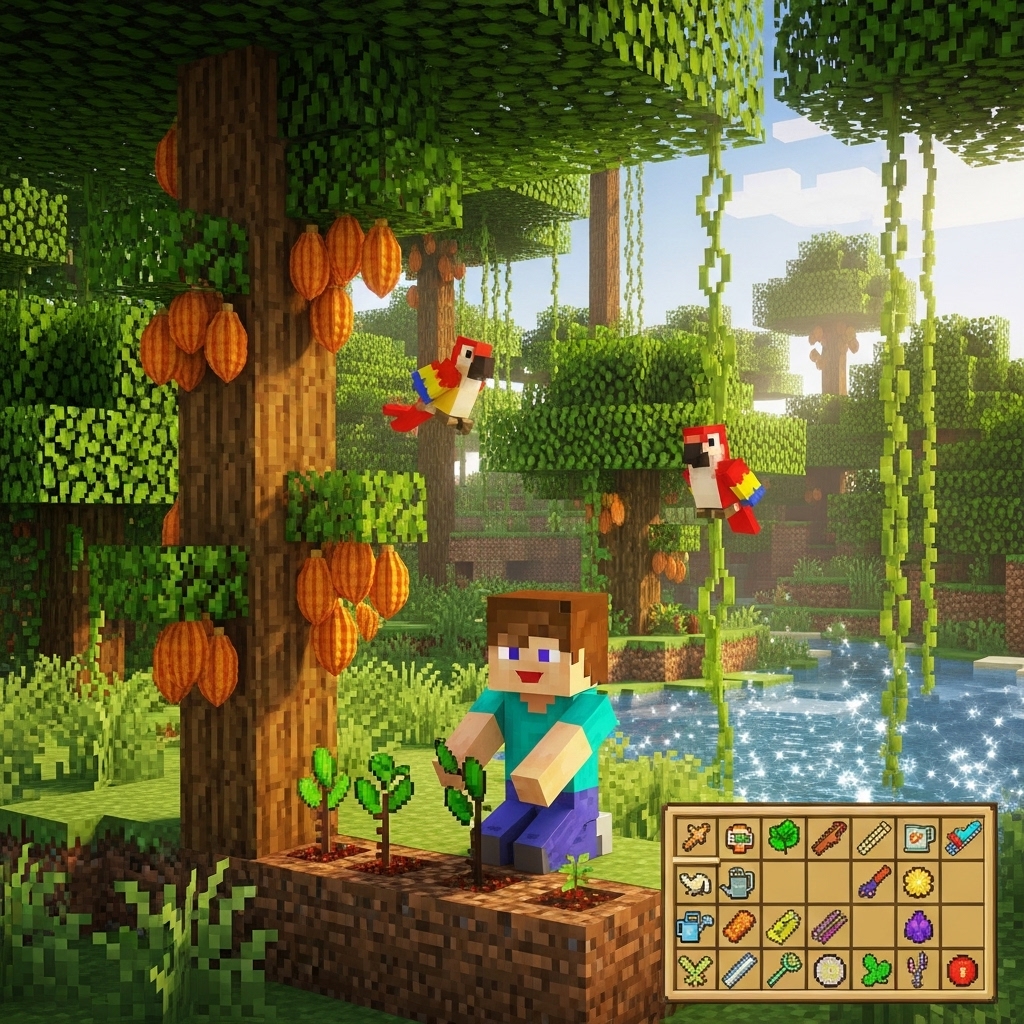
Cocoa beans are an essential item in Minecraft, introduced in the game as part of the 1.2 update. They are primarily used for crafting and can be found only in jungle biomes. I remember the first time I discovered cocoa beans; I was exploring a vibrant jungle filled with towering trees, and I noticed these little pods hanging off the sides of the logs. They looked so inviting! Cocoa beans are a unique resource since they are the only items that can be planted on logs, making them different from other crops that require soil.
Uses of Cocoa Beans
Cocoa beans serve several purposes in Minecraft, and knowing these is crucial for any player looking to maximize their use. One of the primary uses is crafting chocolate cookies, which are a great food source in the game. Additionally, cocoa beans can be turned into brown dye, allowing players to color various items, like wool or leather armor. I found that having a supply of brown dye helped me create some unique designs for my builds. Plus, if you’re into decorative elements, you can use the dye on banners to personalize your Minecraft style! Read Interesting article: How to Plant Cocoa Beans in Minecraft (Easy Guide)
Cocoa Bean Growth Stages
Understanding the growth stages of cocoa beans is vital for planting and harvesting them effectively. When you first plant cocoa beans on a jungle log, they start as small green pods. Over time, they grow through three stages:
- Stage 1: The initial small green pod.
- Stage 2: The pod becomes larger and changes color, indicating it’s maturing.
- Stage 3: The pod turns a rich brown, which means it’s ready for harvesting.
I’ve waited eagerly for my cocoa beans to reach that third stage since harvesting them feels so rewarding! Each pod can drop 2-3 cocoa beans, so it’s worth your while to keep an eye on them as they grow.
Preparation for Planting Cocoa Beans
Gathering Cocoa Beans
Before you can plant cocoa beans, you need to gather some. The best way to do this is by exploring jungle biomes. I suggest taking a boat or making a trek through dense foliage to find these biomes, as they are quite unique and filled with other resources like melons and bamboo. When you find a jungle log with cocoa beans on it, simply break the pods to collect them. A little tip: don’t forget to bring an axe to speed up the process of breaking the logs; it makes gathering much easier!
Choosing the Right Location
Location is crucial when planting cocoa beans. As mentioned earlier, cocoa beans can only be planted on the sides of jungle logs. I learned this the hard way when I tried planting them on other types of wood or even dirt—nothing worked! Look for a spot with plenty of jungle trees, as they will not only support your cocoa bean growth but also provide shade, which can be beneficial. Make sure the area has enough space for growth; it can get a bit crowded if you plant too close together.
Required Tools and Materials
Gathering the right tools and materials will set you up for successful cocoa bean planting. Here’s a quick list of what you’ll need:
- Cocoa Beans: Obviously, you need these to start! Collect as many as you can.
- Axe: To break down jungle logs quickly, a wooden or stone axe will suffice.
- Jungle Logs: These are essential since cocoa beans only grow on them.
- Optional: Bone Meal: This can help speed up the growth process if you want to see results faster.
I always keep a few extra cocoa beans in my inventory, just in case I want to expand my cocoa bean farm later on. It’s always great to plan ahead!
Steps to Plant Cocoa Beans
Finding Jungle Biomes
Finding a jungle biome can be quite the adventure! I remember spending hours in my world just searching for one. They can be somewhat rare, so be prepared for a long journey. Look for tall, dark-green trees with vines hanging down, and keep an eye out for parrots and ocelots—these critters often signal you’re in the right area. If you’re having trouble finding a jungle biome, I recommend using a map or a seed that spawns you near one.
Planting on Jungle Logs
Once you find your jungle logs, it’s time to plant your cocoa beans. Approach a jungle log and look at the side of it, then simply right-click (or tap if you’re on mobile) to plant a cocoa bean. I love how the pods instantly appear on the log—it makes the whole process feel rewarding. It’s worth noting that you can place up to three cocoa beans on one log, so don’t be shy about maximizing your space! Just be sure you have enough logs to plant on; the more pods you have, the better your yield will be.
Water and Light Requirements
Although cocoa beans don’t require water like other crops, it’s still essential to consider their growth environment. Cocoa beans thrive in light, so make sure the area is well-lit. Natural sunlight works wonders, and I’ve often found that planting them in areas where they receive direct sunlight helps them grow faster. If you’re planning to grow them indoors, make sure to use torches or glowstone to provide enough light. I’ve even experimented with different lighting setups, and I can say, the brighter, the better!
Caring for Cocoa Beans
Growth Conditions
Caring for your cocoa beans is just as important as planting them. I’ve learned that the growth conditions significantly affect how quickly and successfully they mature. Cocoa beans thrive in warm, humid environments, similar to their real-life counterparts. While they don’t need water, keeping the area free from any obstructions can help them grow better. I often clear away any tall grass or other plants nearby to give my cocoa pods ample room to breathe. They need a little extra love, especially during the early growth stages!
Fertilizing Cocoa Beans
While cocoa beans don’t require traditional fertilizers like other crops, using bone meal can speed up their growth process. I remember when I first discovered this tip—it was a game changer! You can apply bone meal directly to the cocoa pods, and it can instantly advance their growth stage. Just be aware that this might not work on every pod, but it’s definitely worth a try. If you’re like me and impatiently waiting for your beans to mature, having some bone meal on hand is a wise choice. Plus, it adds a bit of excitement to the planting process!
Common Issues and Solutions
While growing cocoa beans is usually straightforward, I’ve encountered a few common issues that can pop up. One of the most significant problems is growth stalling. This happened to me when I accidentally planted my cocoa beans in an area that didn’t receive enough light or was too crowded. If you notice your cocoa pods not progressing through their stages, check the surrounding area. Make adjustments as needed, like removing nearby blocks or increasing light sources. I’ve found that sometimes just giving them a little more space can make all the difference!
Another issue I faced was pests. While Minecraft doesn’t have pests in the traditional sense, I’ve had to deal with mobs trampling my cocoa beans. I recommend keeping an eye out for any hostile mobs nearby and lighting up the area with torches or other light sources to deter them. It not only protects your cocoa beans but also makes exploring the area more inviting. In my experience, a well-lit farm feels safer and more enjoyable to work in!
Harvesting Cocoa Beans
When to Harvest
Knowing when to harvest your cocoa beans is crucial for maximizing your yield. I’ve learned to keep a close eye on my cocoa pods as they transition through their growth stages. It’s when they reach that rich brown color that you know they are ready for harvesting. I usually wait a little longer than I think necessary, just to ensure I’m getting the most out of each pod. Patience pays off, and there’s nothing quite like the satisfaction of seeing a full harvest waiting for you!
How to Harvest Cocoa Beans
Harvesting cocoa beans is simple and straightforward. When the pods are ripe, just approach a pod and break it by clicking on it (or tapping for mobile users). Each pod can drop 2-3 cocoa beans, which is a nice little bonus. I’ve made it a habit to harvest my cocoa beans regularly. Not only does it keep my inventory full, but it also allows me to manage my farm effectively. I often find myself excitedly running around my cocoa farm, breaking pods and gathering my bounty!
Maximizing Your Yield
If you want to maximize your cocoa bean yield, consider a few strategies. First, plant multiple cocoa beans on as many jungle logs as you can. I’ve found that having a larger area dedicated to cocoa farming ensures a steady supply of beans. Additionally, I like to stagger my planting. By planting some cocoa beans a few blocks apart, I can keep my farming process continuous, always having some ready to harvest while others grow. This technique has kept my inventory stocked and my cookie recipes flowing!
Another tip is to always replant any cocoa beans you harvest. It’s easy to forget about the cycle of planting and harvesting, but I’ve made it a habit to replant a portion of my harvested beans immediately. This not only keeps my farm sustainable but also ensures I’m always working toward expanding my cocoa bean empire in Minecraft. Who wouldn’t want a thriving cocoa farm, right?
Using Cocoa Beans in Minecraft
Crafting with Cocoa Beans
Cocoa beans aren’t just for farming; they open up a world of crafting possibilities! One of my favorite uses is creating brown dye. This allows me to add a personal touch to my builds. Whether it’s coloring wool for cozy blankets or dyeing leather armor for a unique look, cocoa beans have been my creative sidekick. I remember when I first dyed my sheep brown—it was such a fun little project! I felt like a true Minecraft artist.
Making Brown Dye
To make brown dye, you only need to place a cocoa bean in your crafting grid. It’s that simple! The best part is that you can use this dye in various ways. I love dyeing my banners and beds to match my builds or even creating intricate designs. Experimenting with colors is part of the joy of Minecraft, and cocoa beans can help you achieve that warm, earthy tone that adds character to your creations.
Creating Cookies
Of course, one of the most delicious uses for cocoa beans is crafting cookies! Combining cocoa beans with wheat and making sweet treats has become a staple in my Minecraft diet. I’ve hosted little gatherings with friends where we bake cookies together, and it’s always a hit! Cookies are not only a fun food item but also a great way to replenish health. I love to keep a stack of cookies on hand for those mining expeditions or battles with mobs; they keep me fueled and ready for anything!
Frequently Asked Questions
Can You Grow Cocoa Beans in Any Biome?
No, cocoa beans can only be grown in jungle biomes. When I first started playing, I was a bit confused about this limitation. I remember trying to plant them in a few other biomes, thinking that perhaps they could adapt like other crops. However, the game is quite strict about where cocoa beans can thrive. They only grow on the sides of jungle logs, which is a unique aspect of these beans. Exploring jungles is part of the fun, and every time I find one, it feels like discovering a hidden treasure!
How Long Does It Take for Cocoa Beans to Grow?
The growth time for cocoa beans can vary but generally takes about 5 to 6 Minecraft days to mature fully. I’ve learned over time that the growth process can be influenced by light levels and the surrounding area. If you have the right conditions—enough light and space—the pods can grow faster. I often check in on my cocoa beans throughout the day cycle, eagerly watching as they progress through their stages. It’s a bit like waiting for my favorite plant to bloom; I just can’t help but get excited every time I see a change!
Can Cocoa Beans Be Farmed?
Absolutely! Cocoa beans can be farmed effectively, and I’ve developed several techniques to maximize my cocoa bean production. By planting them on multiple jungle logs and ensuring they are well cared for, I’ve managed to create a thriving cocoa bean farm. It’s all about managing your space wisely and keeping a steady cycle of planting and harvesting. I often find that the more I farm them, the more I enjoy the process. It’s satisfying to see my farm flourish and produce an abundance of cocoa beans, which I can then use for crafting or trading.
Tips for Advanced Cocoa Bean Farming
Creating a Cocoa Bean Farm
If you’re looking to take your cocoa bean farming to the next level, consider setting up a dedicated cocoa bean farm. I’ve found that having a designated area just for cocoa beans allows me to manage resources better. Choose a spot within the jungle biome that has a good amount of logs and access to sunlight. I like to create rows of logs, making it easy to walk between them while harvesting. This setup also helps organize the space and keeps things looking neat. It’s satisfying to see everything laid out, and it makes the harvesting process more efficient!
Automating Cocoa Bean Farms
For those who really want to step up their game, automating your cocoa bean farm can be an exciting project. I’ve experimented with redstone mechanics to create automatic harvesting systems. While it requires some knowledge of redstone, the results can be rewarding. Setting up pistons to push down the cocoa pods or utilizing water streams to collect beans can save you a lot of time. It was a bit of a learning curve for me, but once I got the hang of it, I was able to harvest large quantities of cocoa beans with minimal effort. Plus, it feels pretty cool to watch the system work flawlessly!
Utilizing Cocoa Beans in Trading
Another aspect I enjoy is trading cocoa beans with villagers. Certain villagers, especially farmers, often trade for cocoa beans. I’ve found this to be a great way to earn emeralds while also clearing out my inventory. Whenever I have an excess of cocoa beans, I head over to the nearest village to see what trades are available. It’s a win-win situation: I get a return on my farming efforts, and I can gather useful items or resources in exchange. It’s interesting to see how my cocoa beans can play a role in the economy of the game!
Fun Facts About Cocoa Beans in Minecraft
Cocoa Beans and Real Life
I love how Minecraft sometimes reflects real-life elements, and cocoa beans are a perfect example. In reality, cocoa beans are used to make chocolate, which is a treat that many of us enjoy. It’s fascinating to think about how the game mirrors this process, allowing us to craft cookies and dye using cocoa beans. This connection makes farming them feel even more rewarding, as I can relate it back to something I enjoy in the real world. Who doesn’t love a good cookie, right?
Historical Context in the Game
Cocoa beans were introduced to Minecraft in the 1.2 update, which added a variety of features and biomes to explore. I remember when this update rolled out, and it felt like a whole new adventure began. The addition of cocoa beans opened up new crafting possibilities, enhancing the gameplay experience. It’s always interesting to see how updates evolve the game and add depth to the mechanics we enjoy. Each new feature adds layers of excitement to our Minecraft journeys!
Cocoa Beans in Community Creations
I’ve seen some amazing community creations that utilize cocoa beans in clever ways. From beautiful pixel art to intricate builds that incorporate cocoa bean farms, players have found creative ways to showcase these pods. Checking out these builds can be inspiring and can give you ideas for your own projects. I often spend time scrolling through forums and social media, admiring how others use cocoa beans in their designs. It’s a reminder of the creativity that thrives within the Minecraft community, and it keeps me motivated to explore and create more in my own world!
Frequently Asked Questions
What Are Cocoa Beans in Minecraft?
Cocoa beans are an essential item introduced in Minecraft as part of the 1.2 update. They are primarily used for crafting and can only be found in jungle biomes. They are unique because they can be planted on logs, unlike other crops that require soil.
How Can You Gather Cocoa Beans?
You can gather cocoa beans by exploring jungle biomes. Look for jungle logs with cocoa pods and break them to collect the beans. It’s recommended to bring an axe to speed up the process of breaking the logs.
Where Can Cocoa Beans Be Planted?
Cocoa beans can only be planted on the sides of jungle logs. They will not grow on other types of wood or on dirt.
What Are the Growth Stages of Cocoa Beans?
Cocoa beans go through three growth stages: Stage 1 is a small green pod, Stage 2 is a larger pod that changes color, and Stage 3 is a rich brown pod that is ready for harvesting.
Do Cocoa Beans Require Water to Grow?
No, cocoa beans do not require water to grow. However, they thrive in well-lit areas, so it’s essential to ensure they receive sufficient light.
What Can You Craft with Cocoa Beans?
Cocoa beans can be crafted into brown dye, which is used to color various items like wool and leather armor. They are also used to craft cookies, which are a popular food source in the game.
How Can You Maximize Your Cocoa Bean Yield?
To maximize your yield, plant multiple cocoa beans on as many jungle logs as possible. Staggering your planting and regularly replanting harvested beans will also help maintain a steady supply.
What Common Issues Might Arise When Growing Cocoa Beans?
Common issues include growth stalling due to insufficient light or overcrowding. Make sure the area is well-lit and clear of obstructions. Additionally, keep an eye out for hostile mobs that may trample your cocoa beans.
How Long Does It Take for Cocoa Beans to Fully Grow?
The growth time for cocoa beans generally takes about 5 to 6 Minecraft days to mature fully, depending on light levels and the surrounding area.
Can Cocoa Beans Be Used in Trading?
Yes, cocoa beans can be traded with certain villagers, especially farmers. Trading them can earn you emeralds and help manage your inventory effectively.