
To plant cucumbers for fast growth and high yield, choose the right variety for your climate and provide optimal growing conditions, including well-draining soil, plenty of sunlight, and consistent watering. I’ve found that when these elements align, cucumbers thrive and produce an abundant harvest. Read Interesting article: 12 Best Plants You Can Grow Using Buckets
Understanding Cucumbers: Types and Varieties
When it comes to cucumbers, understanding the different types and varieties can make a world of difference in what grows best in your garden. I remember when I first started growing cucumbers; I was overwhelmed by all the options. I quickly learned that selecting the right variety suited to my climate and preferences was crucial for a successful crop. Let’s dive into the most common varieties and how to choose the best one for your situation.
Common Cucumber Varieties
Cucumbers come in several varieties, each with unique characteristics. The two main categories we see are slicing cucumbers and pickling cucumbers. Slicing cucumbers, like the popular ‘English cucumber,’ are long, smooth, and ideal for salads. They have fewer seeds and are generally sweeter. On the other hand, pickling cucumbers, such as the ‘Kirby’ variety, are shorter and bumpier, making them perfect for canning.
Then, there are the burpless cucumbers, which are known for being easier on the stomach, and the Armenian cucumber, technically a melon but often treated like a cucumber in the kitchen. Each variety has its own flavor profile and uses, so think about what you’ll be using them for when you choose.
Choosing the Right Variety for Your Climate
Climate is a huge factor in successfully growing cucumbers. In my experience, I found that some varieties thrive better in specific weather conditions. For example, if you’re in a warmer climate, look for heat-resistant varieties like ‘Straight Eight’ or ‘Marketmore 76.’ These varieties can handle the heat and still produce a beautiful crop. Conversely, if you’re in a cooler region, you might want to consider varieties like ‘Lemon cucumber,’ which can tolerate lower temperatures better than others.
Understanding the growing season in your area is also vital. Some cucumbers can be grown as early as late spring, while others may need to wait until the soil has warmed up more. I remember the excitement of seeing my first sprouts after carefully choosing the right variety for my local climate. It made all the planning worth it!
Ideal Conditions for Growing Cucumbers
Now that we’ve covered the varieties, let’s talk about the ideal conditions for growing cucumbers. I’ve learned that cucumbers thrive when their environmental needs are met, leading to quicker growth and better yields. Here are the key factors to consider.
Soil Requirements
Cucumbers prefer rich, well-draining soil. When I first started gardening, I learned that the soil’s pH should ideally be between 6.0 and 7.0. To achieve this, I often mixed in organic matter like compost or aged manure. This not only improves soil structure but also provides essential nutrients for the plants. I remember when I added compost to my soil; it felt like I was giving my cucumbers a nutrient-packed feast!
Additionally, ensuring that the soil is loose and light helps the roots to grow more freely. Heavy clay soil can stifle growth, so if you’re dealing with that, consider raised beds or amended soil to provide a better foundation for your cucumbers to flourish.
Temperature and Sunlight Needs
Cucumbers are warm-weather crops that love the sun! Ideally, they need temperatures between 70°F and 95°F for optimal growth. I learned the hard way that planting too early, when nights are still cool, can stunt their growth. So, I always wait until the danger of frost has passed and the soil has warmed up sufficiently.
Sunlight is equally important. Cucumbers thrive in full sun, meaning they need at least 6-8 hours of direct sunlight each day. In my garden, I noticed that the cucumbers grown in sunny spots produced much more fruit than those in shaded areas. If you’re tight on space, consider vertical gardening techniques to maximize sunlight exposure!
Watering Guidelines
Consistent watering is key to growing cucumbers successfully. They have a high water requirement, especially when they start to fruit. I’ve found that deep watering once or twice a week is better than shallow daily watering. This encourages the roots to grow deeper into the soil.
A tip I picked up along the way is to water at the base of the plant to avoid wetting the leaves, as this can lead to diseases. I often use a drip irrigation system, which not only conserves water but also ensures even moisture levels. Keeping a close eye on the weather helps me adjust my watering schedule; if it’s particularly hot, I might increase my watering frequency to keep the plants happy.
Establishing the right conditions for growing cucumbers can set you up for success, leading to healthier plants and bountiful harvests. I’ve learned that the more attention you give to these details, the more rewarding your gardening experience will be!
Preparing Your Garden for Cucumber Planting
Once I understood the types of cucumbers and the ideal conditions for growth, the next step was preparing my garden for planting. This part of the process was equally exciting and, I believe, sets the stage for a flourishing cucumber crop. Here are the essential parts of garden preparation that I found valuable.
Choosing the Right Location
Finding the right spot in my garden made a significant difference in how my cucumbers performed. I learned that cucumbers thrive in areas that receive full sun for most of the day. In my garden, I found that a south-facing location worked best because it captured sunlight consistently. Avoiding shaded areas from trees or buildings was crucial, as I noticed that cucumbers in partial shade didn’t grow as well and were more prone to diseases.
Another consideration was ensuring the location had good air circulation. I quickly realized that planting cucumbers too close together could lead to unhealthy plants. Giving each plant enough space to breathe not only promotes growth but also helps minimize the chances of fungal diseases. I recommend stepping back and observing your garden space to identify the best spot for cucumbers!
Soil Preparation Techniques
Preparing the soil was one of my favorite parts of gardening. I remember the satisfaction of turning the soil and breathing in the earthy scent. To prepare my garden bed, I first cleared away any weeds and debris. This step is vital because weeds compete for the resources that cucumbers need.
Then, I would loosen the soil with a garden fork or tiller. This process not only aerated the soil but also made it easier for roots to penetrate. I found that adding organic matter, such as compost or aged manure, during this stage improved the soil structure significantly. Mixing in these materials created a nutrient-rich environment that made my cucumbers thrive.
Using Compost and Fertilizers
I can’t stress enough how much I love using compost! It’s like giving my plants a nutritious boost. When preparing my garden for cucumbers, I would often create a layer of compost on top of the soil before planting. This approach not only increases the nutrient content but also helps retain moisture in the soil. I’ve found that cucumbers enjoy rich soil, so I always made sure to use well-balanced organic fertilizers too, especially during the growing season.
In my experience, a slow-release fertilizer applied at planting can help provide continuous nourishment. I usually looked for fertilizers with a balanced N-P-K (Nitrogen-Phosphorus-Potassium) ratio to ensure my cucumbers received all the essential nutrients they needed to grow strong and healthy.
Planting Cucumbers: Step-by-Step Guide
When to Plant Cucumbers
The anticipation of planting cucumbers is truly special! I learned that timing is everything. Cucumbers are sensitive to frost, so I always waited until the last frost date in my area had passed. Generally, I’d wait until the soil temperature reached at least 60°F. I remember using a soil thermometer to check the warmth, and it felt rewarding to plant once the conditions were right.
Direct Sowing vs. Transplanting
I’ve tried both direct sowing and transplanting, and each method has its perks. Direct sowing was my go-to for cucumbers because it felt more natural. I would plant seeds directly in the garden bed, ensuring they had enough space to grow. I learned that sowing seeds about an inch deep and spacing them about 12 inches apart worked best for me.
On the other hand, when I wanted to get a head start, I would transplant seedlings. Starting seeds indoors a few weeks earlier allowed me to plant them in the garden once the weather warmed up. I found that transplanting worked well in cooler climates, giving cucumbers a jumpstart on the growing season.
Planting Depth and Spacing
Getting the planting depth and spacing right was crucial for healthy cucumber growth. I usually planted my seeds about 1 inch deep, and if I was transplanting, I made sure to plant the seedlings at the same depth they were growing in their pots. This consistency helped avoid any transplant shock.
As for spacing, I aimed for about 36 to 42 inches between rows. This spacing allowed room for the cucumber vines to spread out and ensured good airflow around the plants. I remember how excited I felt watching those little sprouts push through the soil, knowing I had set them up for success!
Supporting Cucumber Growth
Using Trellises and Supports
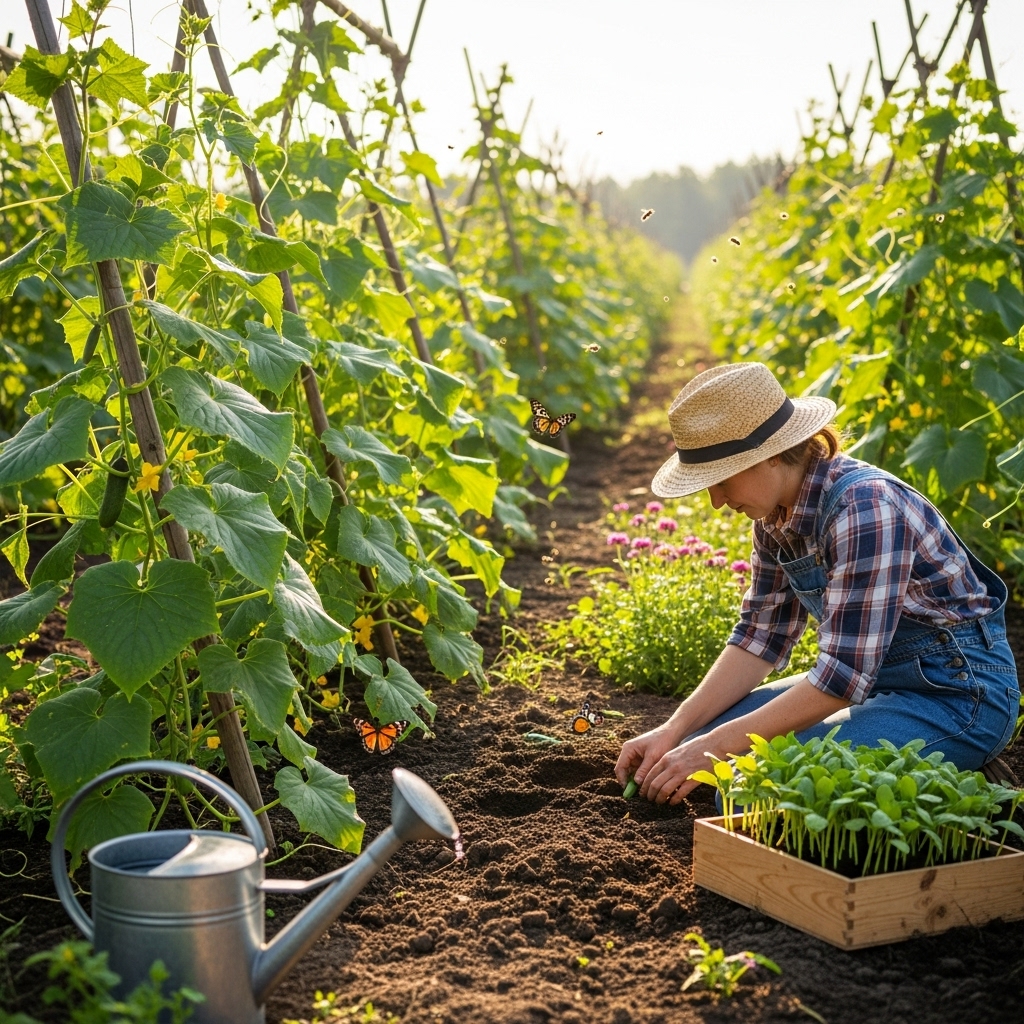
As I delved deeper into cucumber gardening, I discovered that supporting my plants with trellises made a big difference in their growth and yield. Cucumbers are natural climbers, and when I gave them a structure to climb on, I noticed that they thrived. Using a trellis not only saved space but also improved air circulation around the plants, which helped reduce the risk of mildew and other diseases. I remember building a simple trellis using wooden stakes and twine, and it was such a rewarding project!
I found that various types of trellises work well for cucumbers. A-frame trellises, vertical grids, or even simple wire fencing can all provide sturdy support. When I first started, I opted for a vertical trellis that allowed the cucumbers to grow upward, making it easier for me to harvest them. I learned that when cucumbers grow off the ground, they are less likely to get bruised, and the fruits come out cleaner. It’s a small change that has a big impact!
Mulching Techniques
Another practice I embraced was mulching around my cucumber plants. I’ll admit, I was initially hesitant about mulching, thinking it might be more work than it was worth. However, once I tried it, I quickly realized its benefits! Applying a layer of organic mulch, like straw or shredded leaves, helped retain soil moisture and keep the roots cool during hot days.
I also noticed that mulching reduced the number of weeds in my garden. Weeds can compete with cucumbers for nutrients and water, and by keeping them at bay, my plants had a better chance to flourish. Plus, as the mulch broke down, it added even more nutrients back into the soil. It felt like a win-win situation!
Companion Planting for Better Growth
Companion planting was another strategy I explored that proved beneficial for my cucumbers. I learned that certain plants could enhance cucumber growth by attracting beneficial insects or repelling pests. For example, planting marigolds nearby helped deter aphids and other harmful bugs. I remember being pleasantly surprised to see how vibrant and healthy my cucumbers were when I included companion plants in their vicinity.
Another great companion for cucumbers is corn. The tall corn plants provided shade, which helped protect the cucumbers from the intense afternoon sun. I also tended to plant radishes alongside cucumbers. Not only did radishes grow quickly and wouldn’t compete with the slower-growing cucumbers, but they also helped to break up the soil, improving aeration. Experimenting with companion planting became an exciting aspect of my gardening journey, and I encourage you to give it a try! Read Interesting article: Can You Plant Spinach With Carrots?
Watering and Maintenance for Optimal Growth
Watering Frequency and Techniques
Watering my cucumbers correctly became a priority as I learned more about their needs. Cucumbers thrive on consistent moisture, especially as they start to fruit. I discovered that watering deeply and less frequently encouraged the roots to grow deeper into the soil. This method not only helped the plants withstand dry spells but also made them stronger overall.
In my garden, I used a combination of drip irrigation and soaker hoses. This approach kept the moisture level consistent and targeted the base of the plants without wetting the leaves, which I found crucial in preventing diseases. I also paid attention to the weather; during hotter days, I increased my watering schedule to ensure my cucumbers stayed hydrated and happy.
Fertilization Schedule
As my cucumbers grew, I quickly learned that they needed regular feeding to reach their full potential. I followed a fertilization schedule that aligned with their growth stages. Early on, I would apply a balanced fertilizer to support the initial growth. Then, as the plants started to flower and fruit, I switched to a fertilizer high in potassium and phosphorus to promote fruit development.
I remember the excitement of watching my cucumbers swell and grow, knowing I was providing them with the nutrients they needed. Every couple of weeks, I would check on my plants, and if they seemed to need a boost, I wouldn’t hesitate to feed them again. It felt like nurturing a new friend through their growth journey!
Pest Management Strategies
Along with watering and fertilization, pest management became a crucial part of my cucumber gardening experience. I quickly learned that cucumbers are prone to pests like cucumber beetles and aphids. Early detection was key, so I made it a habit to inspect my plants regularly. When I found pests, I used a gentle spray of insecticidal soap or neem oil to manage them without harming beneficial insects.
Additionally, I implemented physical barriers, like row covers, to protect my young plants from pests. I found that these coverings were especially helpful early in the season when the pest populations were just beginning to rise. With these strategies, I felt empowered to tackle any pest problems that came my way!
Disease Prevention and Treatment
Disease prevention was another area I focused on while caring for my cucumbers. I learned that proper spacing, good air circulation, and avoiding overhead watering helped minimize the risk of fungal diseases like powdery mildew. I remember feeling relieved when I realized that simply adjusting my watering technique could significantly reduce disease pressure.
If I did notice signs of disease, such as yellowing leaves or unusual spots, I wouldn’t panic. Instead, I would promptly remove affected leaves and apply a fungicide if necessary. The key was staying proactive and observant. Each season brought new lessons, and I found that maintaining a healthy garden environment was the best defense against diseases.
Frequently Asked Questions
What are the main types of cucumbers?
The main types of cucumbers are slicing cucumbers and pickling cucumbers. Slicing cucumbers, like the ‘English cucumber,’ are long and smooth, while pickling cucumbers, such as the ‘Kirby’ variety, are shorter and bumpier.
How do I choose the right cucumber variety for my climate?
Choosing the right cucumber variety depends on your climate. For warmer climates, look for heat-resistant varieties like ‘Straight Eight’ or ‘Marketmore 76.’ In cooler regions, consider varieties like ‘Lemon cucumber,’ which can tolerate lower temperatures better.
What soil conditions are ideal for growing cucumbers?
Cucumbers prefer rich, well-draining soil with a pH between 6.0 and 7.0. Mixing organic matter like compost or aged manure can improve soil structure and provide essential nutrients.
What temperature and sunlight do cucumbers need for optimal growth?
Cucumbers thrive in temperatures between 70°F and 95°F and need at least 6-8 hours of direct sunlight each day to grow well.
How often should I water my cucumber plants?
Consistent watering is crucial for cucumbers, especially when they start to fruit. Deep watering once or twice a week is better than shallow daily watering, and it’s best to water at the base of the plant to avoid wetting the leaves.
What is the best way to prepare my garden for cucumber planting?
To prepare your garden for planting cucumbers, choose a location that receives full sun and has good air circulation. Clear away any weeds, loosen the soil, and mix in organic matter like compost to create a nutrient-rich environment.
When is the best time to plant cucumbers?
The best time to plant cucumbers is after the last frost date in your area and when the soil temperature has reached at least 60°F.
Should I sow cucumber seeds directly or transplant seedlings?
Both methods have their advantages. Direct sowing is natural and allows seeds to grow in the garden bed, while transplanting seedlings can give cucumbers a head start, especially in cooler climates.
What support systems can I use for growing cucumbers?
Using trellises can significantly benefit cucumber growth. Trellises save space, improve air circulation, and reduce the risk of mildew. Various types of trellises, such as A-frame or vertical grids, can provide sturdy support for cucumber plants.
How can I manage pests and diseases in my cucumber garden?
Pest management involves early detection and using gentle sprays like insecticidal soap or neem oil. Proper spacing, good air circulation, and avoiding overhead watering can help prevent diseases like powdery mildew.