
The key to planting dahlias for big blooms lies in choosing the right tubers, preparing the soil, and providing proper care. I’ve learned that with a little knowledge and effort, these stunning flowers can bring joy to any garden. Read Interesting article: When to Plant Dahlias for the Best Blooms
Understanding Dahlias: The Basics
What Are Dahlias?
Dahlias are vibrant, flowering plants that belong to the Asteraceae family. Originating from Mexico, these perennial beauties are known for their bushy foliage and stunning blooms that come in various shapes and sizes. I remember the first time I saw a dahlia garden; the colors were so vivid, and the variety of blooms was mesmerizing. Dahlias are typically grown from tubers, which are swollen underground stems that store nutrients. With the right care, these flowers can bloom from summer through fall, making them a favorite among gardeners.
Types of Dahlias for Big Blooms
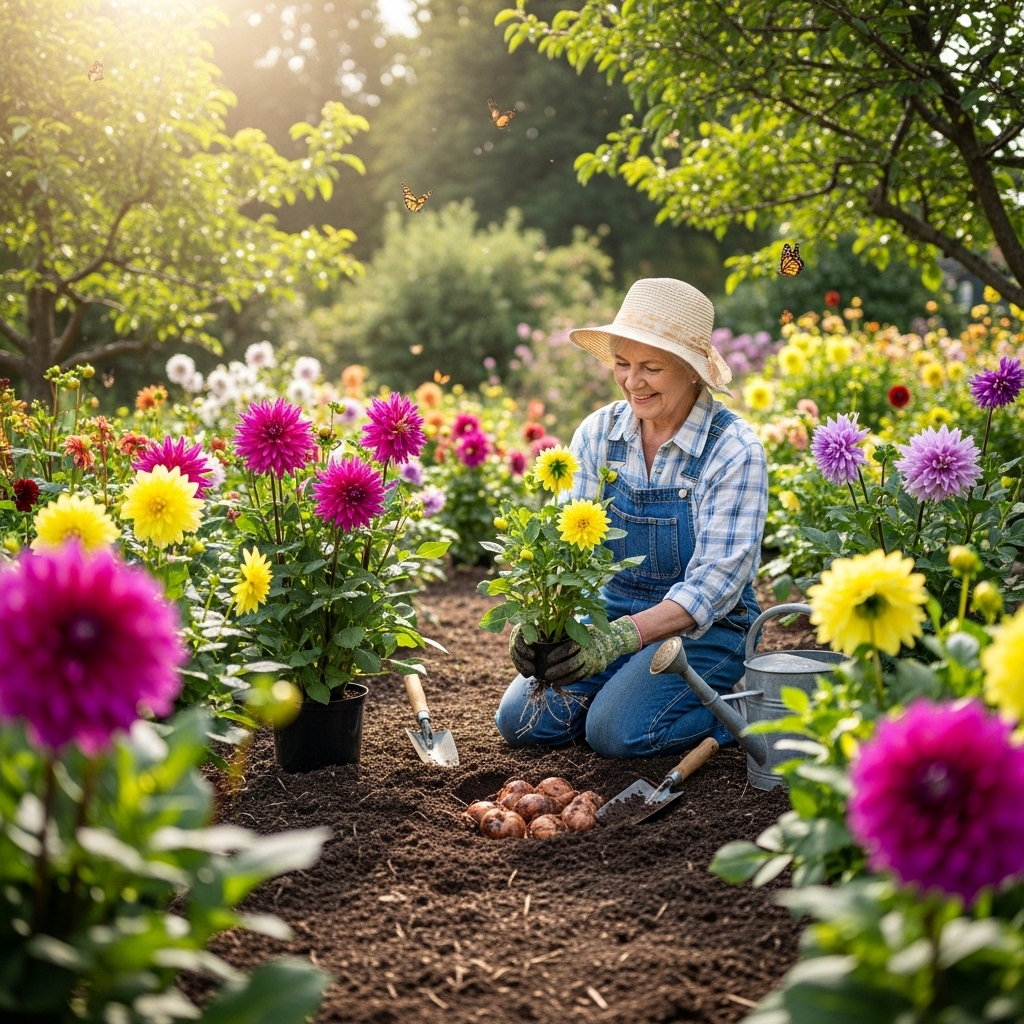
When it comes to dahlias, the type you choose can significantly impact the size of the blooms. Some popular types known for their impressive flowers include:
- Decorative Dahlias: These tend to have broad petals and come in various colors, making them a popular choice for gardeners wanting big, bold blooms.
- Cactus Dahlias: With their spiky petals, these dahlias can reach impressive sizes and add a unique texture to any garden.
- Ball Dahlias: Round and full, these flowers often create a stunning visual presence with their compact blooms.
Each of these types has its unique charm, but I’ve found that decorative dahlias often yield the biggest blooms in my own garden. Choosing the right type for your space and preferences is essential for achieving those spectacular results.
Dahlia Colors and Varieties
One of the most exciting aspects of dahlias is their wide range of colors and varieties. From deep purples to bright yellows, dahlias can fit into any color scheme. I often spend hours browsing through catalogs or local nurseries, admiring the stunning shades and patterns. Some popular dahlia varieties include:
- ‘Cafe Au Lait’: This variety is known for its large, creamy blooms that fade to a soft pink as they mature.
- ‘Bishop of Llandaff’: With striking red flowers and dark foliage, this is a favorite for its dramatic appearance.
- ‘Thomas Edison’: A stunning purple dahlia that produces big, showy blooms with a unique look.
In my experience, planting a mix of these varieties not only creates a colorful display but also allows me to enjoy different shapes and sizes throughout the blooming season.
Choosing the Right Location
Sunlight Requirements
One of the first things I consider when planting dahlias is their need for sunlight. These flowers thrive in full sun, which means they require at least six to eight hours of direct sunlight each day. I remember planting my dahlias in a spot that only received partial sun, and while they still bloomed, the flowers were smaller and less vibrant than I had hoped. If you want those big, stunning blooms, make sure to find a sunny spot in your garden.
Soil Quality and Preparation
The soil quality can make a significant difference in the health and blooming potential of dahlias. They prefer well-drained soil that is rich in organic matter. To prepare my garden bed, I usually mix in compost or well-rotted manure to improve soil fertility. This not only helps with drainage but also provides the nutrients the plants need to produce those big blooms. I’ve learned that taking the time to prepare the soil pays off in the long run, as healthy plants are more resistant to pests and diseases.
Drainage Considerations
Good drainage is crucial for dahlias. They don’t like “wet feet,” which can lead to tuber rot. If you have heavy clay soil, consider elevating your planting area or using raised beds. I once planted my dahlias in a low area where water tended to pool, and I quickly learned that it was a mistake. The plants struggled, and I lost a few tubers. Now, I always ensure that my planting site has excellent drainage to keep my dahlias healthy and thriving.
When to Plant Dahlias
Ideal Planting Timeframes
Timing is everything when it comes to planting dahlias. I usually wait until the last frost date in my area has passed, which typically falls around mid to late spring. This allows the soil to warm up, which is essential for the tubers to thrive. From my experience, planting too early can lead to disappointing results if the tubers are exposed to cold temperatures. Read Interesting article: What to Plant in July (Best Crops & Flowers)
Climate Considerations
Understanding your local climate is key to successful dahlia planting. Dahlias love warm weather and can struggle in overly humid or extremely hot conditions. In my case, I’ve found that dahlias do best in a temperate climate with consistent rain and warm days. It’s always a good idea to research the specific needs of the dahlias you choose to ensure they thrive in your environment.
Frost Dates and Their Impact
Frost can be deadly for dahlias, especially when they’re just starting to grow. I always keep an eye on local weather forecasts as I approach the planting season. If there’s a late frost warning, I have a few frost cloths on hand to cover my young plants. Being proactive about potential frost threats helps me protect my dahlias, allowing them to grow strong and healthy.
Preparing to Plant Dahlias
Choosing the Right Tubers
Choosing the right tubers is the first step to ensuring big blooms. I usually look for plump, firm tubers with at least one “eye,” which is where the plant will sprout. I once made the mistake of buying shriveled tubers, thinking they would still grow, but they didn’t produce much at all. Now, I always inspect my tubers carefully before purchasing, ensuring they’re healthy and ready to thrive.
Pre-Planting Treatments
Before planting my tubers, I like to give them a little extra care. I soak them in water for a few hours to hydrate them and sometimes even dust them with a fungicide to prevent rot. This simple step has made a noticeable difference in my success rate. I’ve found that starting off on the right foot can help set my dahlias up for a successful growing season.
Tools Required for Planting
Having the right tools on hand makes the planting process smoother. Here’s what I typically use:
- Garden spade: Essential for digging holes and breaking up soil.
- Rake: Useful for leveling the soil and removing debris.
- Watering can or hose: Important for giving the newly planted tubers a good drink right after planting.
Equipping myself with these tools ensures that I can plant my dahlias efficiently and give them the best chance for success.
Planting Dahlias Step-by-Step
How to Dig the Right Hole
Digging the right hole for my dahlias has become a bit of an art form over the years. I’ve learned that the size of the hole is crucial. Typically, I aim for a hole that’s about 6 to 8 inches deep and roughly 12 inches wide. This gives the tubers plenty of room to spread out and establish roots without feeling cramped. When I dig, I make sure to loosen the soil at the bottom, as this helps encourage healthy root growth. I remember once not digging deep enough, and my dahlias ended up struggling because they lacked the space they needed to thrive. Now, I always take my time with this step to ensure my plants start off strong.
Spacing Between Plants
Spacing is another important factor I focus on when planting dahlias. I usually space my dahlias about 18 to 24 inches apart. This distance allows each plant to get enough sunlight and airflow, reducing the risk of mildew and other diseases. I often mark the spots with small stakes or flags, which helps me visualize the layout before I start planting. When I tried to cram my dahlias too close together one year, I ended up with a tangled mess of plants that just didn’t flourish. Now, I embrace the idea of giving each dahlia its own space to shine in my garden.
Planting Depth and Orientation
Getting the planting depth right is crucial for the success of my dahlias. I place the tuber in the hole with the “eye” facing up, ensuring that it’s about 4 to 6 inches deep, just enough to cover it with soil but not too deep to hinder its growth. I remember the first time I planted dahlias, I buried them too deeply, thinking it would help them secure better. Instead, they struggled to break through the soil. Now, I make sure to check the orientation carefully, as it can really determine how well the plant establishes itself. Once I’ve positioned the tuber correctly, I gently backfill the hole with soil, making sure not to compact it too much since that can impede growth.
Caring for Dahlias Post-Planting
Watering Guidelines
Watering my dahlias properly post-planting is one of the most critical steps to ensure their success. Right after planting, I give them a good soak to help settle the soil and encourage the tubers to start sprouting. After that initial watering, I try to keep the soil consistently moist but not soggy. I’ve learned that dahlias prefer a deep watering less frequently, rather than shallow watering every day. I usually aim for about 1 to 2 inches of water per week, adjusting based on rainfall. I’ve seen that overwatering can lead to tuber rot, so I keep a close eye on the soil moisture level.
Fertilizing for Optimal Growth
Fertilizing has become a key component in my dahlia care routine. I typically start with a balanced fertilizer right after planting to give my dahlias a boost. I’ve found that a fertilizer with a low nitrogen ratio works best, as too much nitrogen can lead to lush foliage at the expense of blooms. As my dahlias begin to grow, I switch to a phosphorus-rich fertilizer to encourage those big, beautiful blooms. I remember one year when I forgot to fertilize, and my dahlias were okay but not nearly as vibrant or bountiful as they could have been. Now, I set reminders to fertilize at regular intervals throughout the growing season.
Pest and Disease Management
Pest and disease management is something I’ve become quite vigilant about over the years. Dahlias can attract a few common pests, like aphids and slugs. I’ve learned to regularly inspect my plants for any signs of trouble. If I spot any pests, I usually spray them with a mixture of water and dish soap, which has worked well for me. Additionally, I make sure to keep my garden clean, as removing any dead leaves and debris helps prevent diseases. I remember losing a few dahlias to powdery mildew in a particularly humid season, which taught me the importance of good air circulation. Now, I’m careful to prune any crowded areas to promote airflow.
Encouraging Big Blooms
Deadheading Techniques
One of the best tips I can share for encouraging big blooms is deadheading. I always make it a habit to remove spent flowers, as this redirects the plant’s energy into producing new blooms instead of seeds. I typically pinch or cut off the faded flowers right above the first set of leaves. It’s rewarding to see how quickly my dahlias respond; they seem to bloom even more vibrantly after a good deadheading session. I’ve seen firsthand how this simple act can lead to an abundance of flowers throughout the season.
Supporting Tall Varieties
If you’re growing taller dahlia varieties, support is essential. I’ve learned the hard way that without proper staking, they can topple over in windy weather. I usually use bamboo stakes or metal supports, placing them in the ground shortly after planting my dahlias. This way, I can gently tie the stems to the stakes as they grow without damaging the plants. I remember a windy day when I didn’t support my taller dahlias; they ended up bent and broken, which was quite disheartening. Now, I make sure they have the support they need to stand tall and proud!
Pruning for Better Blooms
Pruning has also played a significant role in my dahlia care. While it might seem counterintuitive to cut back healthy stems, I’ve found that selectively pruning can promote better air circulation and more substantial blooms. I usually remove any weak or spindly stems to focus the plant’s energy on the strongest ones. I remember being hesitant to prune at first, but after seeing the results, I now look forward to the process. It’s a chance to nurture my dahlias and help them reach their full potential.
Frequently Asked Questions
What are dahlias?
Dahlias are vibrant, flowering plants that belong to the Asteraceae family, originating from Mexico. They are known for their bushy foliage and stunning blooms that come in various shapes and sizes, typically grown from tubers.
What types of dahlias are known for big blooms?
Popular types of dahlias known for their impressive flowers include Decorative Dahlias, Cactus Dahlias, and Ball Dahlias. Decorative dahlias often yield the biggest blooms.
What are some popular dahlia varieties?
Some popular dahlia varieties include ‘Cafe Au Lait’, known for its large, creamy blooms; ‘Bishop of Llandaff’, which features striking red flowers and dark foliage; and ‘Thomas Edison’, a stunning purple dahlia.
How much sunlight do dahlias need?
Dahlias thrive in full sun and require at least six to eight hours of direct sunlight each day for optimal blooming.
What type of soil do dahlias prefer?
Dahlias prefer well-drained soil that is rich in organic matter. Mixing in compost or well-rotted manure can improve soil fertility and drainage.
When is the ideal time to plant dahlias?
The ideal time to plant dahlias is after the last frost date in your area, which typically falls around mid to late spring, allowing the soil to warm up for the tubers to thrive.
How do I choose the right tubers for planting?
When choosing tubers, look for plump, firm ones with at least one “eye” where the plant will sprout. Healthy tubers are essential for successful growth.
What is the recommended spacing for planting dahlias?
Dahlias should be spaced about 18 to 24 inches apart to allow each plant enough sunlight and airflow, reducing the risk of mildew and other diseases.
How can I encourage big blooms in my dahlias?
To encourage big blooms, practice deadheading by removing spent flowers to redirect the plant’s energy into producing new blooms, and ensure proper support and pruning for taller varieties.
What watering guidelines should I follow for dahlias?
Water dahlias deeply but less frequently, aiming for about 1 to 2 inches of water per week, while keeping the soil consistently moist but not soggy to avoid tuber rot.