
To plant garlic cloves for bigger garlic, choose the right variety, prepare your soil properly, and ensure you plant at the right time and depth. A well-planned approach can significantly increase your garlic yield and size. Read Interesting article: When to Plant Garlic for Bigger Heads
Understanding Garlic Varieties
When it comes to growing garlic, understanding the different varieties is essential. I learned that not all garlic is created equal, and the type you choose can significantly impact your harvest. There are two main categories: hardneck and softneck garlic, each with its unique characteristics and advantages.
Hardneck vs. Softneck Garlic
Hardneck garlic tends to have a stronger flavor and produces a flower stalk, known as a scape, which I find can be delicious in cooking. These varieties are generally more cold-hardy, making them suitable for areas with harsh winters. However, they don’t store as well as softneck varieties. Softneck garlic, on the other hand, is more commonly found in grocery stores and has a milder flavor. It stores better, making it a favorite among many gardeners, including myself. I’ve grown both types and enjoy the variety they offer in terms of flavor and culinary uses.
Choosing the Right Variety for Your Climate
Choosing the right garlic variety for your climate is crucial for successful growth. I live in a region with cold winters, so hardneck garlic is my go-to choice. I’ve noticed that softneck varieties thrive in milder climates. It’s essential to consider your local weather patterns when selecting your garlic. Additionally, local gardening groups or extension services can provide specific advice tailored to your area. I once made the mistake of planting a variety that didn’t suit my climate, and my harvest suffered as a result.
Preparing to Plant Garlic
Once I’ve chosen the right variety, the next step is preparation. Planting garlic isn’t just about putting cloves in the ground; it’s about setting them up for success. Timing, soil quality, and location can all affect how my garlic grows.
When to Plant Garlic: Timing and Seasons
Timing is everything when it comes to planting garlic. I usually plant my garlic in the fall, about 4–6 weeks before the ground freezes. This allows the cloves to establish roots but not to sprout too soon. In warmer climates, spring planting can also work, but I’ve found that fall-planted garlic produces bigger bulbs. The garlic needs a cold period to trigger bulb formation, which is why fall is ideal for most of us growing in cooler regions.
Soil Requirements for Garlic Cultivation
Good soil is vital for healthy garlic growth. I’ve learned that garlic prefers well-draining soil with a pH between 6.0 and 7.0. Before planting, I like to amend my garden bed with compost or well-rotted manure. This enriches the soil with nutrients and improves drainage. I remember when I skipped soil preparation in one of my gardening seasons, and the difference in garlic size was noticeable. Testing your soil for nutrients and pH can help you determine what amendments you may need.
Choosing the Right Location in Your Garden
Location is another critical factor. Garlic thrives in full sun, so I always look for a spot that gets at least six hours of sunlight each day. I’ve noticed that areas with good air circulation help prevent diseases as well, something I learned the hard way after a particularly damp season. Avoiding low-lying areas where water tends to pool is also something I keep in mind, as garlic doesn’t like soggy roots.
Planting Garlic Cloves
With everything prepared, it’s finally time to plant! This is the moment when all the planning starts to pay off. I feel a sense of excitement as I place each clove in the soil, knowing that in a few months, I’ll be reaping the rewards.
How to Select Quality Garlic Bulbs
Before planting, it’s crucial to select high-quality bulbs. I always look for bulbs that are firm and free of blemishes or mold. I prefer buying organic garlic from local farmers or reputable garden centers. I’ve found that store-bought garlic may not always be ideal for planting, as many are treated to prevent sprouting. In my experience, planting cloves from my previous crop or purchasing from trusted sources yields the best results.
Preparing Garlic Cloves for Planting
Once I have my bulbs, I separate the cloves without damaging the skins. I usually plant the larger cloves because they tend to grow bigger bulbs. I’ve learned that smaller cloves can also produce smaller bulbs, so I focus on size. Additionally, I let the cloves sit out for a day or two before planting, as this allows them to dry slightly, which can help prevent rot.
Planting Depth and Spacing Guidelines
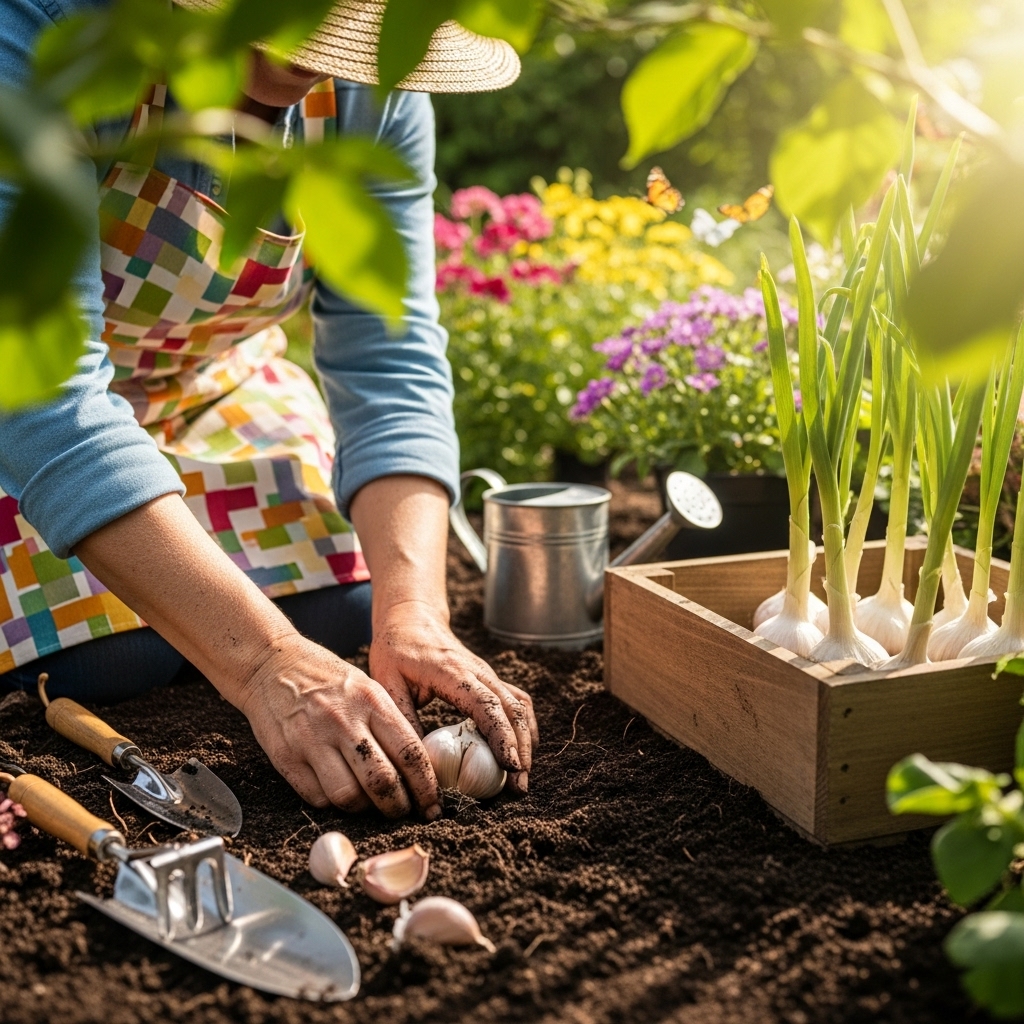
When it comes to planting depth, I usually go for about 2 inches deep. I’ve found that placing the pointed end of the clove facing up ensures proper growth. Spacing is also essential; I typically plant my cloves about 6 inches apart. This gives each plant room to grow without competing for nutrients. I remember when I planted them too closely once, and the bulbs ended up being smaller because they didn’t have enough space to develop.
Watering Techniques After Planting
After planting, I give the garlic a good watering. I’ve learned that keeping the soil moist but not waterlogged is key. Too much water can lead to rot, while too little can hinder growth. I usually check the soil moisture regularly, especially during dry spells. Garlic doesn’t require constant watering, and I find that letting the top inch of soil dry out between waterings encourages strong root development.
Caring for Garlic Plants
Caring for garlic plants after planting is just as important as the planting process itself. I’ve found that diligent care during the growing season can lead to a bountiful harvest, and it’s a thrilling experience to see those plants flourish. Here are some essential aspects of garlic care that I’ve learned over the years.
Fertilizing Garlic for Optimal Growth
Fertilizing garlic can make a huge difference in the size and quality of the bulbs. I usually start with a high-nitrogen fertilizer right after planting. This gives the cloves a boost as they establish roots. I often use well-rotted compost or organic fertilizers, as I believe they provide a slow release of nutrients without the risk of burning the plants. I typically fertilize my garlic again in the spring when the plants start to grow more vigorously. I’ve learned that keeping an eye on the color of the leaves is a good indicator of whether they’re getting enough nutrients. If they start to look pale, it’s time to consider another round of fertilizer.
Pest and Disease Management
Keeping my garlic healthy means being vigilant about pests and diseases. I remember when I first started growing garlic; I was caught off guard by some pesky aphids. Now, I regularly inspect my plants for signs of trouble. I’ve found that encouraging beneficial insects, like ladybugs, can help keep pests at bay. If I notice an infestation, I often use insecticidal soap, which is effective and safe for the environment. Additionally, I’ve learned to rotate my garlic crops each year to minimize the risk of soil-borne diseases. This practice has proven helpful in keeping my plants healthy and productive.
Weed Control Strategies
Weeds can be quite a nuisance, especially when they compete with garlic for nutrients and water. I’ve tried a few different methods for controlling weeds in my garlic beds. Mulching is one of my favorite strategies. I apply a thick layer of straw or grass clippings around my garlic plants after planting. This not only suppresses weeds but also helps retain moisture in the soil. I also make it a point to hand-pull weeds when I see them, particularly when they’re small, so they don’t have the chance to spread. Staying on top of weed control has made a noticeable difference in my garlic’s overall health and yield.
Harvesting Garlic
As summer rolls around, the excitement builds because it’s almost time to harvest garlic! I get a thrill from watching my plants grow and knowing that soon I’ll be enjoying the fruits of my labor. But knowing when and how to harvest garlic is crucial to ensure I get the best quality bulbs.
Signs That Garlic is Ready to Harvest
Knowing when to harvest garlic can be a bit tricky, but I’ve picked up some signs over the years that help me. Typically, I watch for the leaves to start turning yellow and browning. I usually see that about two-thirds of the leaves have turned brown, which is my cue that the garlic is ready. Another sign I pay attention to is the size of the bulbs. If I dig down and find good-sized bulbs with firm skins, I know it’s time to pull them up. I remember when I was too eager to harvest too early once, and the bulbs ended up being much smaller than I’d hoped.
Correct Harvesting Techniques
When it’s finally time to harvest, I take care to do it gently. I use a garden fork to lift the bulbs from the soil instead of pulling them by the leaves, which can damage the plant. I gently loosen the soil around the bulbs and then lift them out. After harvesting, I brush off any excess soil, but I’m careful not to wash them until I’m ready to store them. I’ve learned that washing can lead to rot if they aren’t thoroughly dried.
Post-Harvest Curing and Storage Tips
Once harvested, curing garlic is a critical step that I never skip. I usually bundle my garlic in groups of about six to ten and hang them in a cool, dark, and well-ventilated area. Curing allows the outer skins to dry out, which helps preserve the garlic for longer. I’ve found that curing for about two to three weeks is ideal. After curing, I trim the roots and tops, and store the garlic in a mesh bag or a crate in a cool, dry place. I’ve made the mistake of storing garlic in plastic bags before, and that led to some unfortunate spoilage.
Taking care of garlic plants, harvesting them at the right time, and ensuring proper post-harvest handling have all contributed to my success in garlic gardening. I can’t wait to share more tips on avoiding common mistakes and enhancing garlic size and quality in the next sections!
Common Mistakes to Avoid
As I’ve delved deeper into garlic gardening, I’ve encountered my fair share of mistakes. Each misstep has been a valuable lesson, teaching me how to care for my plants more effectively. Here are some common pitfalls that I believe every garlic grower should be aware of to ensure a successful harvest.
Overwatering and Underwatering Issues
One of the biggest mistakes I made early on was not understanding the watering needs of garlic. Garlic is quite particular; it doesn’t like to sit in soggy soil. I remember a season when I got overly enthusiastic and watered my garlic too frequently, thinking it would help them grow faster. Instead, I ended up with bulbs that were smaller and rotting at the roots. I learned that garlic prefers consistent moisture but thrives best when the top inch of soil dries out between waterings. Now, I always check the soil moisture before watering and adjust based on the weather. During rainy spells, I hold back on watering to prevent any waterlogging.
Planting Too Close Together
Another mistake I made was planting my garlic cloves too closely. I was eager to maximize my harvest, so I crammed them into every available space. The result? Smaller bulbs that didn’t have room to grow. I learned that garlic needs space to expand its roots and form larger bulbs. Now, I make sure to stick to the recommended spacing of about 6 inches apart. This not only allows each plant to thrive but also makes it easier to care for them as they grow. I’ve noticed that giving each plant enough room has significantly improved the size and quality of my garlic bulbs.
Neglecting Soil Health
Soil health is something I didn’t take seriously until I saw the impact it had on my garlic yield. Initially, I thought just planting garlic would yield great results without considering the soil’s nutrient content. I remember when I neglected to amend my soil one season, thinking it would be fine. The garlic I harvested was smaller and less flavorful than usual. Now, I prioritize soil health by testing its pH and nutrient levels before planting. I regularly amend my garden beds with compost and organic matter to ensure my garlic has a nutrient-rich environment to grow in. This commitment to soil health has truly transformed the quality of my garlic.
Enhancing Garlic Size and Quality
After overcoming the learning curve of garlic gardening, I started exploring ways to enhance the size and quality of my garlic bulbs. It’s fascinating how some simple strategies can make a real difference in the final product. Here are a couple of methods I’ve found effective over the years.
Companion Planting for Larger Garlic
Companion planting has become one of my favorite strategies. I discovered that certain plants can actually benefit garlic and promote its growth. For instance, planting garlic alongside carrots or lettuce not only helps deter pests but also allows for better use of space in the garden. I’ve found that herbs like basil and cilantro can encourage healthy growth as well. The combination of garlic and these companions seems to create a thriving ecosystem in my garden. I make a point to plant garlic near these beneficial crops, and I’ve noticed a marked improvement in bulb size and flavor. Read Interesting article: Buzz Off! 25 Incredible Plants That Naturally Repel Mosquitoes
Crop Rotation Benefits for Garlic
Crop rotation is another practice I’ve embraced to enhance my garlic yield. Rotating crops each season helps prevent the buildup of pests and diseases in the soil. I learned this the hard way after planting garlic in the same spot two years in a row, resulting in a frustrating decline in bulb quality. Now, I alternate garlic with other crops like beans or peas, which enrich the soil with nitrogen. This rotation not only keeps my garlic healthy but also boosts its size and flavor. I’ve seen firsthand how a little planning can lead to a bountiful harvest.
Through my experiences in garlic gardening, I’ve gathered these essential tips to avoid common mistakes and enhance the quality of my harvest. It’s exciting to see how small changes can lead to significant improvements in both size and taste. I look forward to sharing even more insights and techniques that can elevate our garlic-growing game!
Frequently Asked Questions
What are the two main categories of garlic varieties?
The two main categories of garlic varieties are hardneck and softneck garlic, each with unique characteristics and advantages.
When is the best time to plant garlic?
The best time to plant garlic is in the fall, about 4–6 weeks before the ground freezes. In warmer climates, spring planting can also be effective, but fall-planted garlic generally produces bigger bulbs.
What soil conditions are ideal for growing garlic?
Garlic prefers well-draining soil with a pH between 6.0 and 7.0. It’s beneficial to amend the soil with compost or well-rotted manure before planting.
How deep should garlic cloves be planted?
Garlic cloves should be planted about 2 inches deep, with the pointed end facing up.
How far apart should garlic cloves be spaced when planting?
Garlic cloves should be spaced about 6 inches apart to give each plant enough room to grow without competing for nutrients.
What type of fertilizer is best for garlic?
A high-nitrogen fertilizer is recommended for garlic, typically applied right after planting and again in the spring when the plants start growing more vigorously.
What are some common mistakes to avoid when growing garlic?
Some common mistakes include overwatering or underwatering, planting cloves too closely together, and neglecting soil health.
How can companion planting benefit garlic growth?
Companion planting can enhance garlic growth by deterring pests and promoting better use of space in the garden. For instance, planting garlic alongside carrots or lettuce can lead to improved bulb size and flavor.
What are the signs that garlic is ready to be harvested?
Garlic is typically ready to harvest when about two-thirds of the leaves have turned brown, and the bulbs have grown to a good size with firm skins.
What is the importance of curing garlic after harvest?
Curing garlic is crucial as it allows the outer skins to dry out, which helps preserve the garlic for a longer period. It is typically done by bundling the garlic and hanging it in a cool, dark, and well-ventilated area for about two to three weeks.