
To plant garlic for bigger heads, select the right variety, prepare your soil well, and follow proper planting techniques. I’ve found that with the right care, garlic can thrive and produce impressive bulbs. Read Interesting article: When to Plant Garlic for Bigger Heads
Table of Contents
Understanding Garlic Varieties
When I first started growing garlic, I was overwhelmed by the different varieties available. Each type has its own characteristics, and understanding these can make a significant difference in your harvest.
Hardneck vs. Softneck Garlic
Garlic comes in two main types: hardneck and softneck. Hardneck garlic has a stiff central stalk and typically produces larger cloves. It’s known for its robust flavor and is often preferred by gourmet chefs. I remember my first hardneck variety, which produced some of the largest heads I’ve ever seen! On the other hand, softneck garlic has a more flexible neck, making it ideal for braiding and storing. It tends to have a milder taste and can be more suitable for warmer climates.
In my experience, if you’re looking to grow bigger heads, I recommend trying both types to see which works best in your garden. Hardneck garlic does well in cooler climates, while softneck can thrive in warmer areas.
Choosing the Right Variety for Your Climate
The climate in your area plays a huge role in the success of your garlic. For instance, I live in a region with cold winters, and I’ve found that planting hardneck varieties like ‘Rocambole’ or ‘Porcelain’ yields fantastic results. They can withstand the frost and produce large bulbs.
If you’re in a warmer climate, softneck varieties such as ‘California Early’ or ‘Inchelium Red’ might be your best bet. I’ve learned that checking local gardening groups can provide insights into which varieties do well in your area. They often share their successes and failures, which can save you a lot of time and effort.
Popular Garlic Varieties for Bigger Heads
Some garlic varieties are known for their ability to produce larger heads. One of my favorites is ‘Music’, a hardneck variety that not only gives big bulbs but also has an incredible flavor. Another excellent choice is ‘Purple Stripe’, which produces beautiful purple-skinned cloves that are not only impressive in size but also in taste.
For softneck options, ‘Nootka Rose’ is a variety I’ve enjoyed growing. It produces big heads and stores well, making it perfect for those who want to keep garlic on hand for cooking throughout the year.
Keep in mind that the best variety for you might depend on your local growing conditions and your personal taste preferences. I recommend experimenting with a couple of varieties each season to discover which ones yield the best results for your garden.
Preparing for Planting
Once you’ve chosen the right garlic variety, it’s time to prepare for planting. The preparation process is crucial and can set the stage for bigger, healthier heads.
Best Time to Plant Garlic
Timing is everything when it comes to planting garlic. I’ve found that the best time to plant garlic is in the fall, about 4-6 weeks before the ground freezes. This allows the garlic to establish roots before winter hits. In my garden, I usually aim for late September to early October, depending on the weather.
If you miss the fall window, you can still plant garlic in early spring, but the heads may not grow as large as those planted in the fall. I’ve tried both methods, and the fall-planted garlic always seems to outperform the spring-planted ones.
Choosing the Right Location
Garlic loves full sun and well-drained soil. I’ve learned that choosing the right location in my garden has a big impact on how well my garlic grows. Look for a spot that gets at least 6-8 hours of sunlight a day. Avoid areas where water tends to pool, as garlic doesn’t like soggy roots.
I remember one year, I planted garlic in a shady spot, thinking it would be fine. The heads were small and lacked flavor. Now, I always scout for the sunniest areas and make sure to rotate my crops each year to give my soil a break.
Soil Preparation and Testing
Before planting, it’s important to prepare your soil. I recommend testing your soil to check its pH and nutrient levels. Garlic prefers a slightly acidic to neutral soil (pH 6.0 to 7.0). You can purchase a simple soil test kit online or at your local garden center.
After testing, I usually amend my soil based on the results. If it’s too acidic, adding lime can help. If it’s lacking nutrients, I often incorporate compost or well-rotted manure. Having nutrient-rich soil is essential for growing bigger garlic heads.
Amending Soil for Optimal Growth
Once I know what my soil needs, I get to work on amending it. I like to blend in organic matter like compost or aged manure, which not only improves soil structure but also provides the nutrients garlic needs to thrive. You can also add bone meal or a balanced fertilizer to ensure your garlic has everything it needs for robust growth.
In my garden, I mix these amendments into the top 6-8 inches of soil using a garden fork or tiller. This process not only prepares the soil for planting but also helps create a nutrient-rich environment for the garlic to establish strong roots.
Taking the time to prepare my soil properly has truly made a difference in the size of my garlic heads. I’ve seen firsthand how well-prepared soil can lead to larger, healthier bulbs, and I believe it’s one of the most important steps in the planting process.
By focusing on understanding garlic varieties and taking the time to prepare for planting, we can set ourselves up for a successful garlic harvest. In the next sections, I’ll dive deeper into the step-by-step planting process and how to maintain garlic growth for those big, beautiful heads we all want!
Planting Garlic: Step-by-Step Guide
Planting garlic might seem pretty straightforward, but I’ve learned that there are some key steps that can really make a difference in the outcome. When I first got started, I made a few mistakes that I learned from, and I’d love to share the process with you so you can get it right from the start.
How to Select Garlic Cloves
Choosing the right cloves is essential for a successful garlic harvest. I’ve discovered that not all garlic bulbs are created equal. I always prefer to use certified seed garlic rather than grocery store bulbs. The reason? Seed garlic is specifically grown to be disease-free and is often more vigorous. I remember once using a bulb from the supermarket, and it ended up being a waste of time because the plants didn’t thrive.
When selecting cloves, I look for those that are firm and plump, avoiding any that feel soft or look shriveled. Larger cloves usually yield bigger bulbs, so I tend to opt for the biggest ones from the bulb. I also make sure not to use any that show signs of mold or damage, as this can affect the growth of my garlic.
Breaking Apart the Bulbs
Once I have my selected garlic bulbs, the next step is breaking them apart. I gently separate the cloves from the bulb a day or two before planting. This helps to ensure they are healthy and gives them a little time to dry out, which can prevent rot once they’re in the ground.
When I break apart the bulbs, I try to keep the papery skins intact around each clove. This protective layer helps to retain moisture and keeps the cloves healthy during the initial stages of growth. I always mark the variety of each bulb if I’m planting different types, so I know what I’m working with later on.
Planting Depth and Spacing
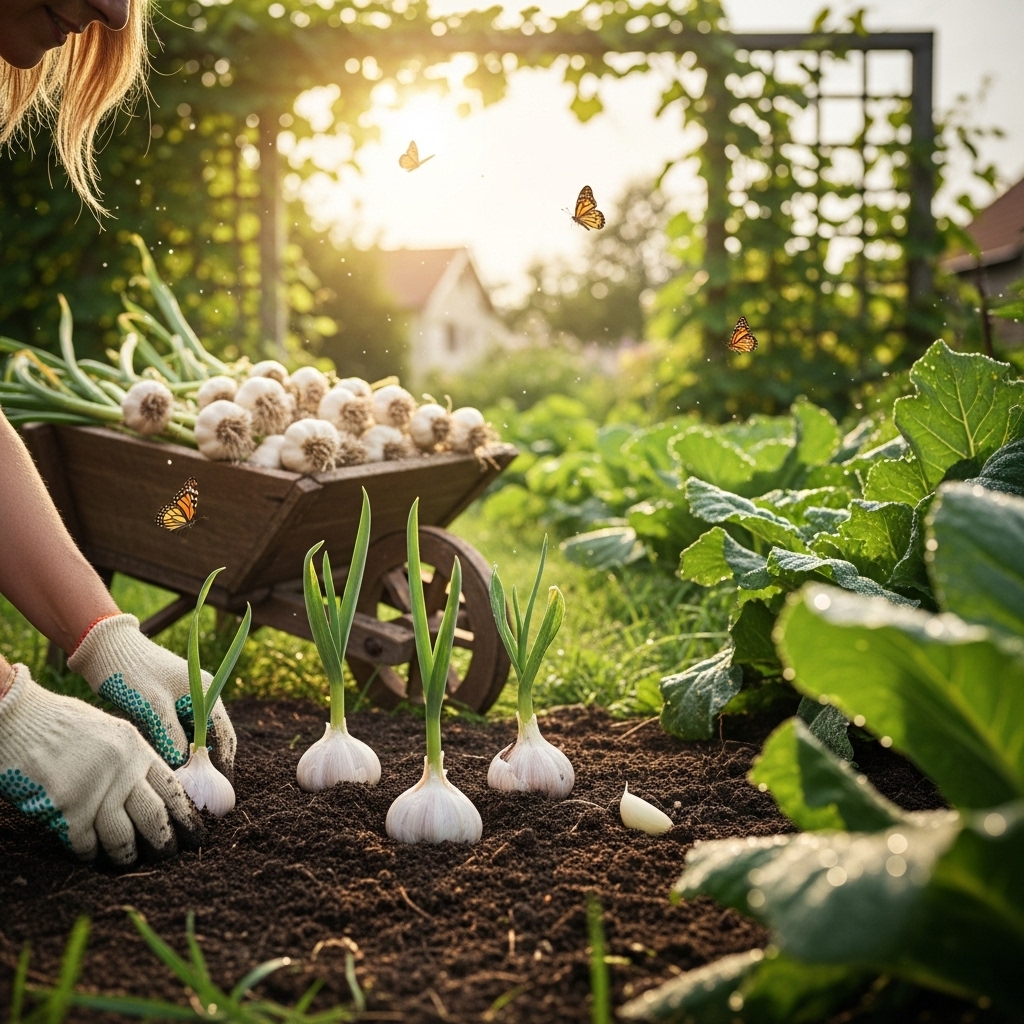
The depth and spacing of your garlic cloves are crucial for their growth. From my experience, I plant the cloves about 2 inches deep and 4-6 inches apart in rows that are around a foot apart. This spacing allows the plants to have enough room to grow without competing for nutrients.
When I plant, I always make sure the pointed end of the clove is facing up. I find that it helps with faster sprouting. One year, I accidentally planted a few cloves upside-down, and while they still grew, they took longer to break the surface.
After planting, I gently cover the cloves with soil and press down lightly to remove any air pockets. This step is often overlooked, but I believe it helps the cloves to make better contact with the soil, promoting better growth right from the start. Read Interesting article: How Deep to Plant Garlic for Bigger Harvest
Watering Techniques for New Plantings
Watering is an important part of the planting process, and I’ve learned that timing and technique are everything. After planting my garlic, I water the area thoroughly to help settle the soil around the cloves. However, I always keep in mind that garlic doesn’t like soggy conditions, so I ensure that the soil drains well.
In the early stages, I check the soil moisture regularly. I usually water again if the top inch of soil feels dry. I’ve found that a soaker hose or drip irrigation system works best for me, as it provides consistent moisture without oversaturating the soil.
During the fall months, I don’t need to water as frequently since the cooler weather helps retain moisture. But once spring arrives and the weather warms up, I adjust my watering schedule to keep the soil consistently moist. This balance has always worked well for me, ensuring the garlic gets what it needs to grow strong and healthy.
Maintaining Garlic Growth
Once your garlic is in the ground, it’s time to focus on maintaining its growth. This part of the process is just as important as planting and can greatly influence the size and quality of your garlic heads.
Fertilization and Nutrient Needs
I’ve found that garlic is a heavy feeder, meaning it requires a good amount of nutrients to thrive. I usually apply a balanced fertilizer in early spring, right as the garlic starts to grow actively. I’ve had great results with organic options, like fish emulsion or a slow-release granular fertilizer, which I apply according to package instructions.
In my experience, it’s crucial not to over-fertilize, as it can lead to excessive leaf growth at the expense of bulb development. I like to keep a close eye on my plants and adjust based on how they’re growing. Healthy green leaves are a good sign, but if they start to look too lush and leafy, I know to ease back on the fertilizer.
Watering Schedule and Techniques
As the garlic grows, I stick to a consistent watering schedule. I aim for about an inch of water per week, either from rainfall or supplemental watering. I’ve learned that it’s better to water deeply and less frequently rather than giving it a little water every day. Deep watering encourages the roots to grow down into the soil, which helps the plants access nutrients better.
During the hot summer months, I pay extra attention to the garlic, ensuring it doesn’t dry out. I often set up a regular watering routine for those particularly dry spells. I check the soil moisture with my finger; if it feels dry an inch down, I know it’s time to water.
Pest and Disease Management
Garlic is relatively hardy, but I’ve still encountered a few pests and diseases along the way. One pest that I’ve had to deal with is the garlic borer. I’ve learned to keep an eye out for any holes in the stems or unusual wilting, as this can be a sign of infestation. I’ve successfully managed pests by introducing beneficial insects like ladybugs and lacewings into my garden, as they help control the population without harming my plants.
For diseases like white rot, I’ve found that crop rotation is vital. I try to avoid planting garlic in the same spot every year, which helps prevent disease build-up in the soil. If I notice any sick plants, I remove them immediately to keep the problem from spreading.
Weeding and Mulching Strategies
Weeds can be a real problem for garlic, as they compete for nutrients and water. I’ve learned that keeping the area around my garlic clean is crucial. I usually pull weeds by hand, being careful not to disturb the garlic plants too much.
Mulching has also been a game-changer for me. I like to cover my garlic beds with straw or wood chips after planting. This not only helps suppress weeds but also retains moisture in the soil—a win-win! I always check the mulch after heavy rains to ensure that it hasn’t compacted too much, as this can create a barrier for the garlic to push through.
By maintaining proper care throughout the growing season, we can encourage our garlic to thrive, leading to those impressive bulbs we all desire. Up next, I’ll share the best practices for harvesting garlic to maximize its size and flavor.
Frequently Asked Questions
What are the main types of garlic?
The main types of garlic are hardneck and softneck. Hardneck garlic has a stiff central stalk, larger cloves, and is known for its robust flavor, while softneck garlic has a flexible neck, is ideal for braiding, and typically has a milder taste.
Which garlic varieties are recommended for colder climates?
For colder climates, hardneck varieties like ‘Rocambole’ or ‘Porcelain’ are recommended, as they can withstand frost and produce large bulbs.
What are some garlic varieties known for producing bigger heads?
Some varieties known for producing bigger heads include ‘Music’ and ‘Purple Stripe’ for hardneck options, and ‘Nootka Rose’ for softneck garlic.
When is the best time to plant garlic?
The best time to plant garlic is in the fall, about 4-6 weeks before the ground freezes, typically from late September to early October. If missed, it can still be planted in early spring, but heads may not grow as large.
What type of soil does garlic prefer?
Garlic prefers well-drained soil that is slightly acidic to neutral, with a pH level between 6.0 and 7.0. Testing the soil before planting is recommended to determine its pH and nutrient levels.
How should garlic cloves be selected for planting?
When selecting garlic cloves, choose certified seed garlic over grocery store bulbs for disease-free and vigorous plants. Look for firm, plump cloves and avoid those that are soft, shriveled, or show signs of mold.
What is the recommended planting depth and spacing for garlic cloves?
Garlic cloves should be planted about 2 inches deep and spaced 4-6 inches apart, in rows that are around a foot apart, with the pointed end facing up.
How often should garlic be watered after planting?
Garlic should be watered thoroughly after planting and the soil moisture should be checked regularly. Water again if the top inch of soil feels dry, ensuring not to oversaturate the soil.
What are some common pests and diseases that affect garlic?
Common pests include the garlic borer, which can be managed by introducing beneficial insects like ladybugs. Diseases such as white rot can be prevented through crop rotation and prompt removal of sick plants.
What are effective strategies for weeding and mulching garlic?
Weeds can be managed by hand-pulling while being careful not to disturb the garlic. Mulching with straw or wood chips after planting helps suppress weeds and retain soil moisture.